How to Fertilize Indoor Herbs the Right Way
Indoor herbs often start strong, with vibrant leaves, upright stems, and steady growth during the first few weeks.
Then something changes: new leaves become smaller, growth slows, and the plant produces new shoots less frequently.
In many cases, the issue isn’t watering or sunlight but nutrient depletion in the container soil.
Indoor herbs grow in containers with a limited nutrient supply, and watering gradually washes those nutrients away over time.
Over time, watering and plant growth gradually reduce those nutrients. When this happens, plants may struggle to maintain healthy growth.
Proper fertilization restores these nutrients and supports steady leaf production without harming delicate roots.
In this guide, you will learn how to fertilize indoor herbs step by step.
Why Indoor Herbs Need Fertilizer
Outdoor plants benefit from natural nutrient cycles.
Rain redistributes minerals, soil organisms break down organic matter, and roots can explore large volumes of soil. These natural systems continuously replenish nutrients.
Indoor herbs do not have these advantages.
Instead, nutrients slowly disappear from container soil because:
- plants absorb minerals during growth
- watering washes nutrients through drainage holes
- potting mix gradually breaks down
As nutrients decline, herbs may begin showing changes such as:
- slower growth
- smaller leaves
- reduced aroma or flavor
- pale foliage
Understanding how nutrients influence plant growth makes it easier to choose the right fertilizer and apply it correctly.
Many beginners assume herbs only need water and sunlight, but skipping proper feeding is one of the common indoor herb gardening mistakes that can slow plant growth.
Differences Between Indoor and Outdoor Herb Nutrition
Indoor plants behave differently from outdoor plants when it comes to nutrient availability.
Outdoor soil contains microorganisms and organic matter that recycle nutrients continuously.
Container soil indoors has fewer biological processes, so nutrients gradually decline.
Because of this difference, indoor herbs benefit from occasional fertilization once the original nutrients in the potting mix begin to diminish.
The soil composition also influences how nutrients move within the container. The guide on Best Soil for Indoor Herbs explains which is the right soil depending upon the herbs you have selected.
When to Fertilize Indoor Herbs
Knowing when to fertilize herbs is just as important as selecting the right fertilizer.
Applying nutrients at the correct time helps herbs grow steadily without causing root stress.
Ideal Fertilizing Schedule for Indoor Herbs
Most indoor herbs benefit from light feeding during active growth periods.
A practical schedule for many homes looks like this:
Season | Fertilizing Frequency |
|---|---|
Spring | Every 3–4 weeks |
Summer | Every 2–3 weeks |
Autumn | Every 4–6 weeks |
Winter | Minimal or none |
This schedule maintains nutrient balance while preventing excessive buildup in the soil.
Seasonal Fertilization Adjustments
Herb growth changes throughout the year depending on light levels.
During winter months, shorter daylight hours slow plant growth. Because plants use fewer nutrients during this time, fertilizing should be reduced.
As daylight increases in spring and summer, herbs typically resume faster growth and may benefit from occasional feeding.
Growth Stage Based Fertilization
Young herbs planted in fresh potting mix often contain enough nutrients for several weeks.
As plants mature and begin producing more foliage, nutrient demand increases.
Fertilization becomes helpful when herbs start showing steady new growth or when the original nutrients in the soil begin declining.
Once the timing is clear, the next step is applying fertilizer safely so herbs can absorb nutrients without root damage.
How to Fertilize Indoor Herbs the Right Way (Step-by-Step)
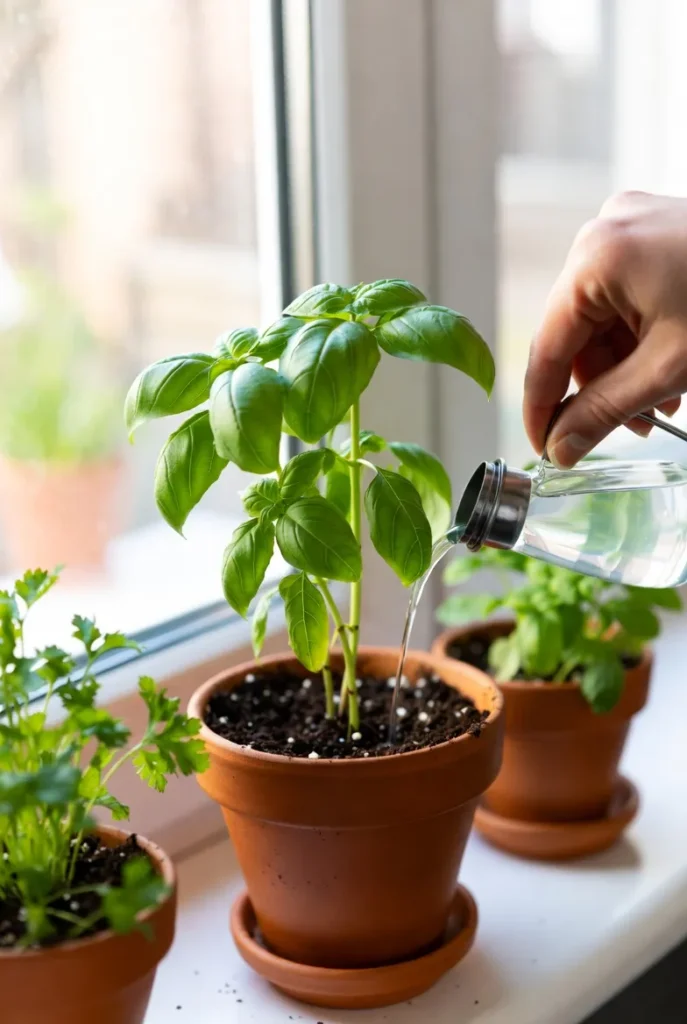
Applying fertilizer carefully protects plant roots and improves nutrient absorption.
Follow these simple steps to fertilize your indoor herbs safely and effectively
Step 1: Check Soil Moisture First
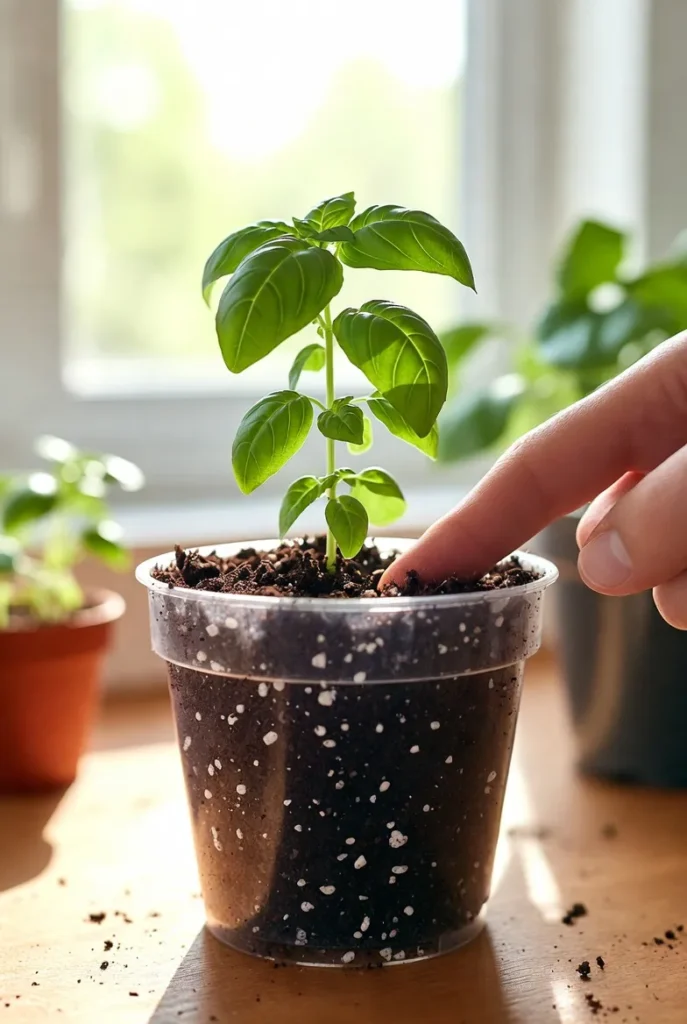
Before adding fertilizer, examine the soil.
Insert your finger about one inch into the soil surface.
- If the soil feels slightly moist or lightly dry, fertilizing is safe.
- If the soil is very wet, wait a day or two.
Fertilizing saturated soil can cause nutrient accumulation and root stress.
Soil that stays too wet can sometimes lead to fungal issues. If you notice white patches on the soil surface or leaves, it may indicate mold on indoor herbs.
Step 2: Choose a Balanced Fertilizer
Indoor herbs generally respond well to balanced fertilizers that contain nitrogen, phosphorus, and potassium.
Balanced formulas support:
- healthy leaf growth
- strong roots
- stable plant development
Leafy herbs such as basil, parsley, and cilantro often benefit from balanced feeding because nitrogen supports foliage production.
Step 3: Dilute the Fertilizer Solution
Indoor herbs prefer gentle nutrition rather than strong feeding.
Most fertilizers should be diluted before application.
Dilution reduces nutrient concentration and helps prevent:
- fertilizer burn
- salt buildup in the soil
- overly rapid leaf growth
Using diluted fertilizer is one of the safest ways to feed indoor plants.
Step 4: Water the Plant Before Fertilizing
A helpful technique used by many gardeners is watering the plant lightly before applying fertilizer.
Moist soil helps distribute nutrients evenly and prevents concentrated fertilizer from damaging dry roots.
Dry roots can absorb fertilizer too quickly, which may stress delicate tissues.
Step 5: Apply Fertilizer Around the Soil Surface
Pour the diluted fertilizer slowly around the base of the plant.
Allow the solution to soak into the soil rather than applying it directly onto leaves.
Applying fertilizer evenly across the soil surface helps roots absorb nutrients gradually.
Step 6: Allow Excess Water to Drain
Proper drainage is essential when fertilizing container plants.
After applying fertilizer, allow the liquid to flow through the pot and exit through drainage holes.
This step helps:
- distribute nutrients evenly
- prevent nutrient buildup
- maintain oxygen in the root zone
Avoid letting containers sit in standing water.
Step 7: Monitor Plant Growth
Observe your herbs during the week following fertilization.
Healthy responses may include:
- deeper green leaves
- steady new shoots
- stronger stems
If growth becomes excessively soft or rapid, reduce fertilizing frequency.
Indoor herbs usually perform best with mild feeding every few weeks rather than frequent fertilization.
Newly propagated plants need gentle care, so it’s helpful to first learn how to start herbs from cuttings successfully indoors.
Choosing the Right Fertilizer Strength
The strength of fertilizer determines how concentrated the nutrients are.
Indoor herbs generally perform best with mild fertilizer solutions.
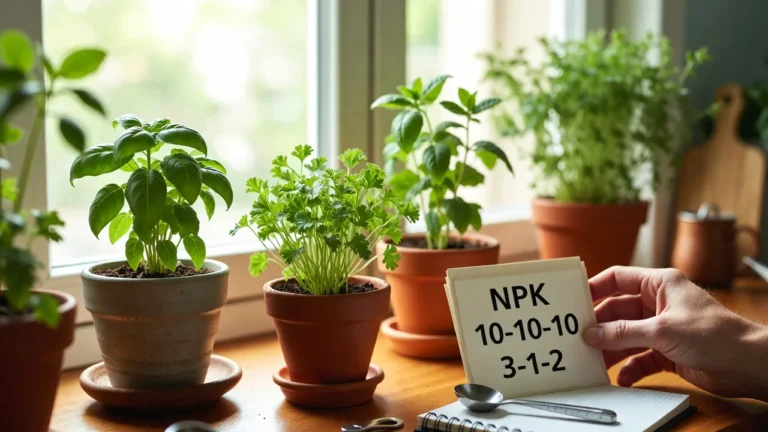
Before applying any fertilizer, it’s essential to understand what fertilizer numbers mean and how NPK ratios work.
Dilution Ratios for Indoor Plants
Many fertilizers provide instructions for mixing concentrate with water.
Indoor gardeners often use diluted mixtures to ensure gentle feeding.
Lower concentrations supply nutrients gradually while protecting plant roots.
Avoiding Fertilizer Burn
Too much fertilizer can damage plant roots and interfere with water absorption.
Symptoms of fertilizer burn may include:
- brown leaf edges
- dry leaf tips
- slowed growth
Diluted fertilizer solutions help prevent these issues.
Adjusting Strength for Small Containers
Small containers contain less soil, which means nutrients become concentrated more easily.
Because of this, herbs growing in small pots should receive lighter fertilization.
Gentle feeding helps maintain balanced nutrients while protecting roots.
The size of the pot also influences how nutrients stay in the soil. This guide explains how to choose the best containers for indoor herbs.
Signs Your Indoor Herbs May Need Fertilizer
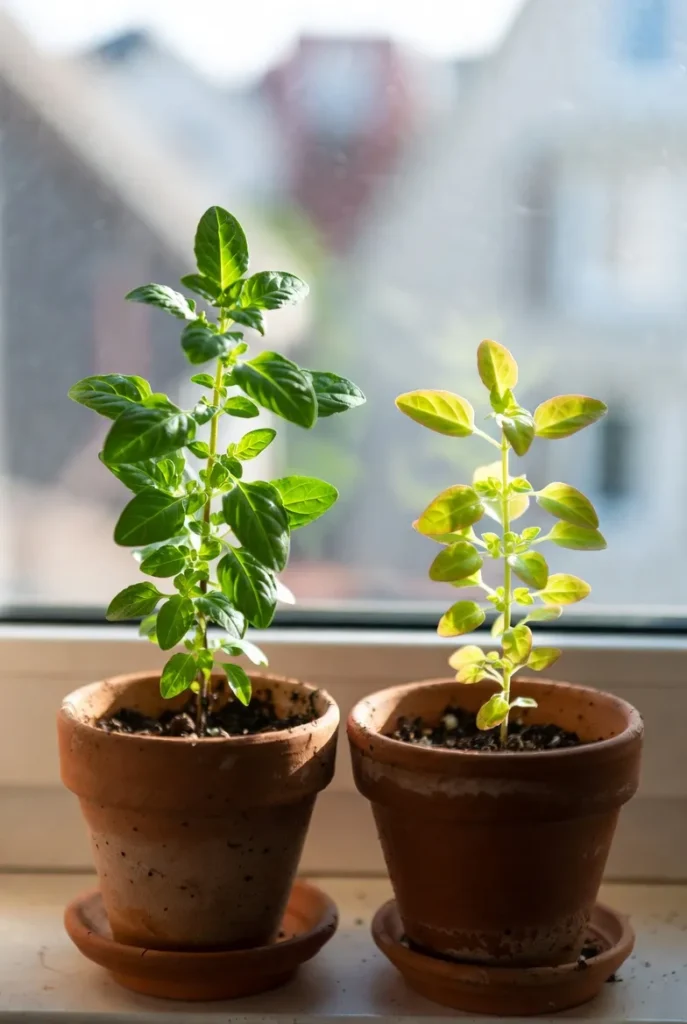
Even with a regular feeding schedule, plants sometimes show signs that nutrient levels are dropping.
Knowing when to fertilize is key, but it’s also important to recognize the signs your herbs are asking for nutrients.
Some common signals include:
- pale or yellowing leaves
- smaller new leaves
- slow growth
- thin stems
However, similar symptoms can also appear when watering habits are inconsistent. This guide on How to Water Indoor Herbs Properly explains how moisture levels influence plant health.
Common Fertilizing Mistakes
Even experienced gardeners sometimes make fertilizing errors.
Understanding these mistakes helps prevent plant stress.
Overfertilizing
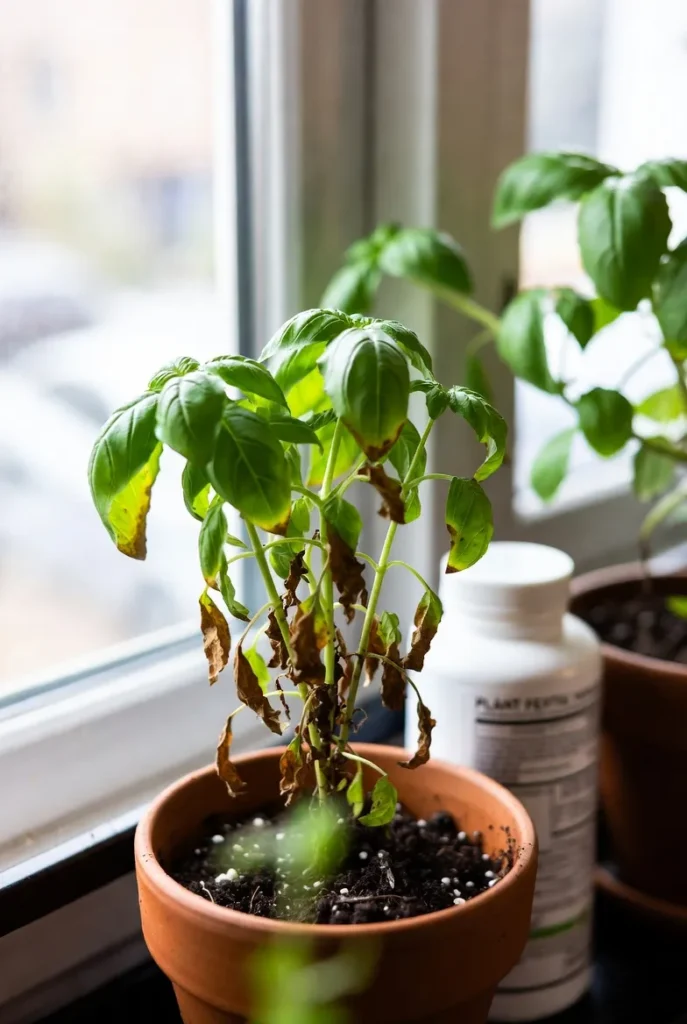
Excess fertilizer can cause:
- root damage
- salt buildup in soil
- weak plant structure
Indoor herbs grow more slowly than outdoor plants, so they require lighter feeding.
Fertilizing Dry Soil
Applying fertilizer to completely dry soil may damage roots.
Moist soil distributes nutrients more safely.
Using Outdoor Garden Fertilizers
Some fertilizers designed for outdoor crops contain stronger nutrient concentrations.
Indoor herbs generally respond better to milder fertilizer formulas.
Ignoring Plant Growth Stages
Young plants growing in fresh potting mix usually require little fertilizer.
As herbs mature and produce more leaves, nutrient demand increases.
Environmental Factors That Affect Fertilizing
Indoor conditions vary widely between homes, and these conditions influence how nutrients behave in container soil.
Cold Climates
In colder regions, indoor heating often dries the air and soil faster. This may increase nutrient movement through the container.
Warm Climates
Warmer environments may require more frequent watering, which can also wash nutrients from the soil more quickly.
Humid Regions
In humid climates, soil moisture may remain stable longer, reducing the need for frequent fertilization.
Understanding these environmental factors helps maintain balanced plant nutrition.
If natural sunlight becomes limited during winter months, using the Best Grow Lights for Indoor Herbs can help maintain steady plant growth indoors.
A Simple Fertilizing Routine for Beginners
To make fertilizing even easier, here’s a straightforward routine for beginners.
- Use a balanced fertilizer
- Feed lightly every 3–4 weeks during active growth
- Reduce feeding during winter months
- Water plants before fertilizing
- Monitor plant response after feeding
This approach supports healthy growth without overwhelming plant roots.
FAQs
1. Do indoor herbs really need fertilizer?
Yes. Container soil gradually loses nutrients, so occasional fertilization helps maintain healthy plant growth.
2. How often should indoor herbs be fertilized?
Most indoor herbs benefit from light feeding every two to four weeks during active growth.
3. What nutrients do herbs need most?
Herbs require nitrogen, phosphorus, and potassium. Nitrogen supports leaf production, which is especially important for culinary herbs.
4. Can herbs grow without fertilizer?
Yes. Fresh potting mix contains nutrients initially, but plants may eventually grow more slowly as those nutrients decline.
5. Is organic fertilizer better for herbs?
Organic fertilizers release nutrients gradually and often improve soil health, making them popular for edible plants.
6. Can fertilizer damage herbs?
Yes. Excess fertilizer can burn roots and reduce plant health if applied too frequently or too strongly.
What fertilizer works best for basil indoors?
Balanced fertilizers applied lightly during active growth work well for basil.
Conclusion
As a gardening enthusiast and author with years of experience cultivating indoor herbs, I’ve found that observing your plants closely and adjusting care routines thoughtfully yields the best results.
Indoor herbs thrive when their basic needs remain balanced: light, water, soil structure, and nutrients.
Because container plants grow in limited soil, nutrients gradually decline over time. Correct fertilization restores those nutrients and helps herbs maintain steady growth.
By applying fertilizer gently, observing plant responses, and adjusting feeding schedules according to season and environment, indoor herbs can remain productive for many months.
Once your herbs are growing well, learning How to Harvest Indoor Herbs helps keep plants productive while encouraging new growth.

Hi, I’m Rimsha, founder of Urban Bloomer 🌱
I grow herbs and plants in a small apartment and share what actually works in limited indoor spaces. Over the past few years, I’ve tested different setups, from lighting and soil to watering routines, to find simple methods that make indoor gardening easier.
Here, you’ll find practical, beginner-friendly advice based on real experience, not complicated gardening systems.