10 Best Herbs to Grow Indoors for Beginners (Easy Herbs for Kitchen Gardens)
Imagine cooking dinner and simply reaching over to your kitchen windowsill to snip fresh basil or parsley. No grocery store trip. No wilted herbs in the fridge.
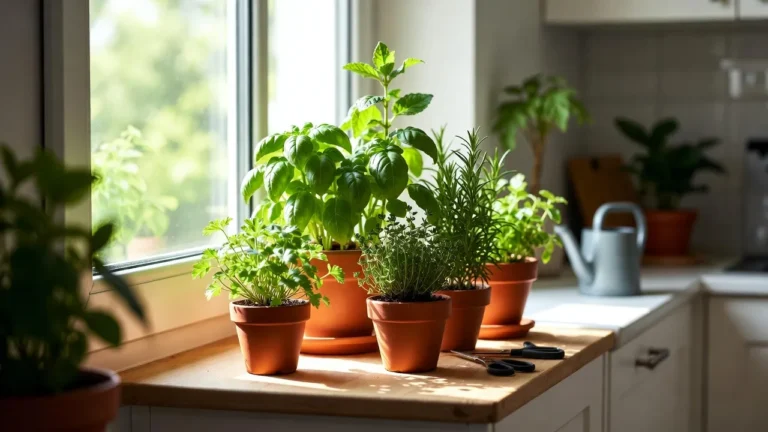
Indoor herb gardening makes that possible, even if you live in a small apartment or have never grown a plant before.
Many beginners start with herbs because they are easier to manage than most houseplants and provide immediate benefits in cooking.
Some herbs are forgiving, grow quickly, and survive beginner mistakes. Others are slower or need more sunlight. Knowing which herbs to start with makes indoor gardening much easier.
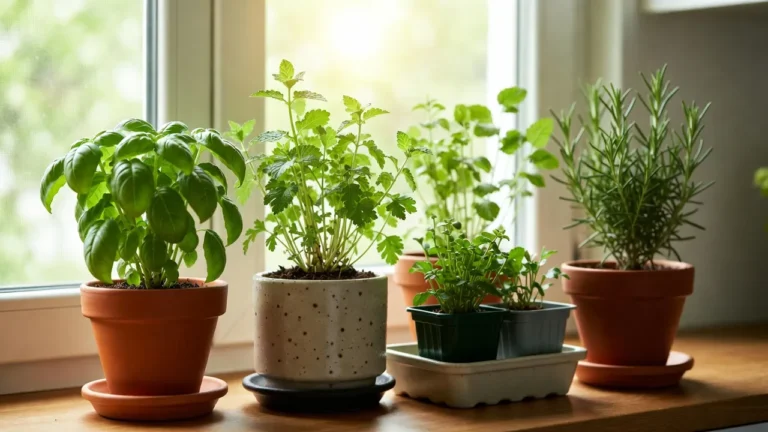
This guide focuses on the best herbs to grow indoors for beginners, why they succeed in containers, and how to choose the right ones for your kitchen or apartment.
If you’re completely new to growing herbs indoors, our Indoor Herb Gardening Beginner Guide explains how to set up containers, lighting, and soil so your plants start strong.
What Makes a Herb Good for Indoor Growing?
Herbs that grow well indoors usually share a few characteristics that help them adapt to containers and indoor environments.
They tend to:
- Grow well in containers or small pots
- Tolerate limited indoor sunlight
- Regrow after trimming
- Stay relatively compact
- Adapt to indoor temperatures
Many indoor herbs also come from Mediterranean climates, where plants are used to dry soil and sunny conditions. This is why herbs like thyme, oregano, and rosemary often do well in pots.
For beginners, herbs that grow quickly and recover easily from mistakes are the safest choices.
The type of potting mix matters more than many beginners realize, and choosing the Right Soil for Indoor Herbs can make a huge difference in root health and drainage.
Why Some Herbs Adjust Faster Than Others
When you bring a plant indoors, it goes through a short adjustment phase.
Some herbs handle this transition better because they can tolerate small changes in light, temperature, and watering.
Others react more noticeably and may slow down or drop leaves at first.
Fast-adjusting herbs usually:
- recover quickly after being moved
- continue growing without major changes
- handle small mistakes without visible stress
This is one of the reasons certain herbs are considered beginner-friendly.
Quick List: The Easiest Herbs to Grow Indoors
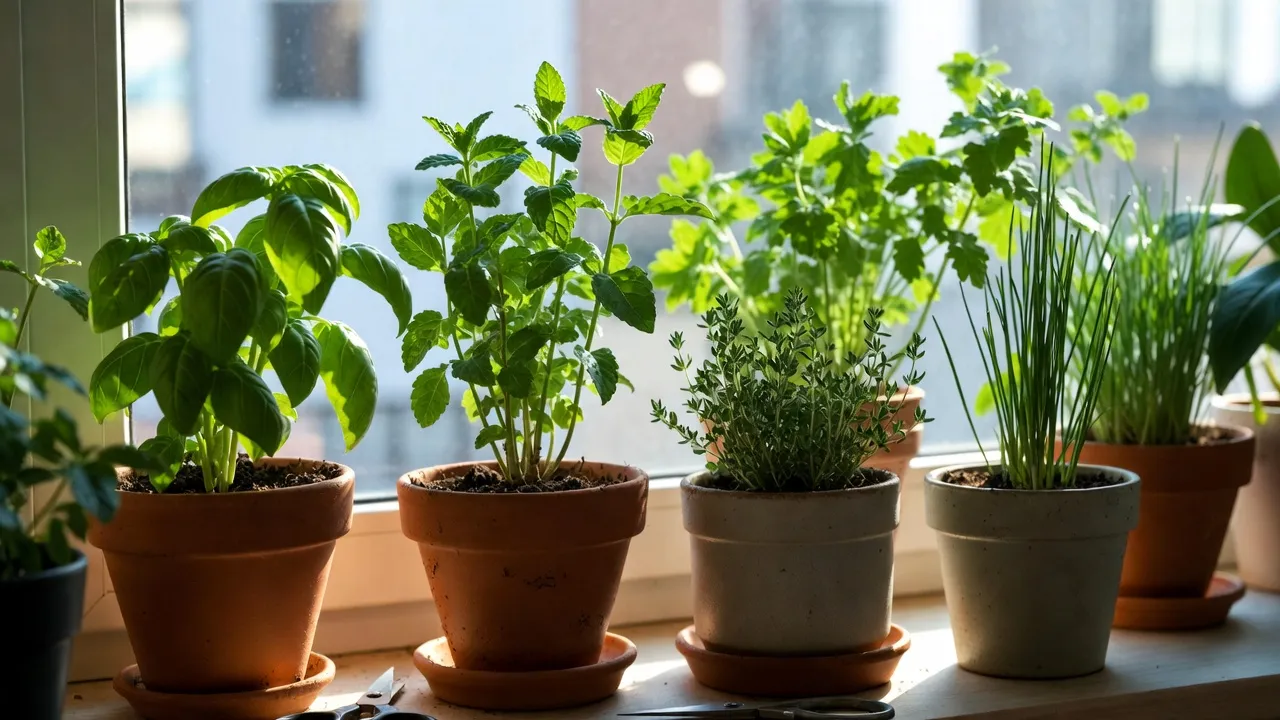
If you’re unsure where to begin, the following herbs are widely considered the easiest options for indoor gardening.
- Basil
- Mint
- Parsley
- Chives
- Cilantro
- Thyme
- Oregano
- Rosemary
- Dill
- Sage
All of these herbs grow well in containers and are widely used in cooking.
10 Best Herbs to Grow Indoors for Beginners
1. Basil (Ocimum basilicum)
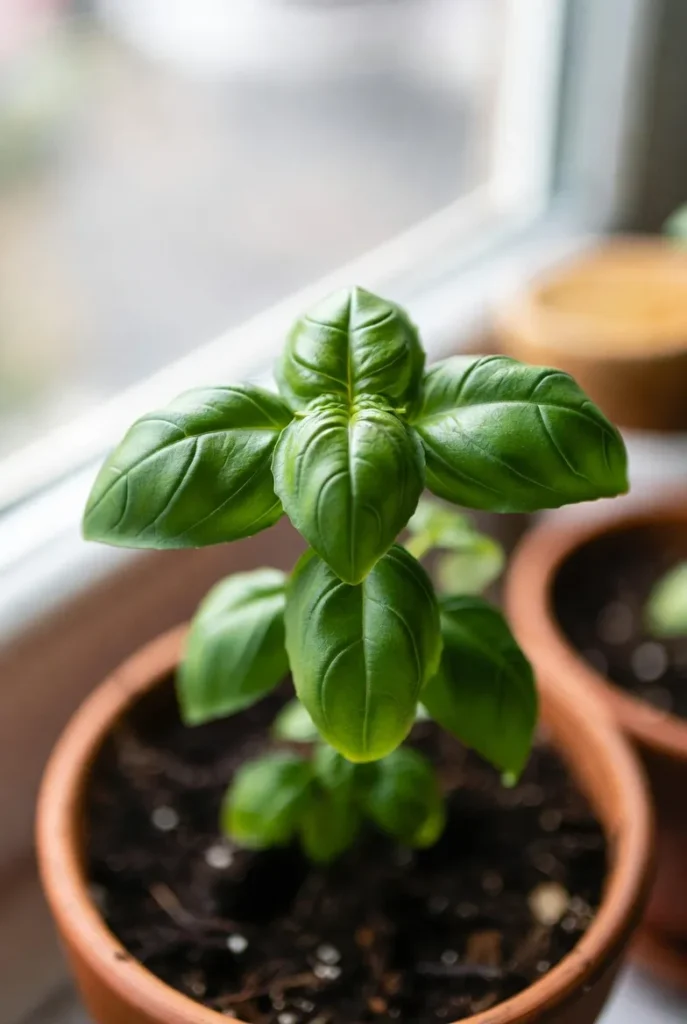
Basil is one of the most popular herbs for indoor gardening. It grows quickly and produces fragrant leaves used in many dishes. Here’s a complete step-by-step guide on how to grow basil indoors for fast and healthy growth.
Basil is commonly used in:
- pasta sauces
- salads
- pesto
- pizza
Basil adapts well to windowsill gardens and container gardening. Regular trimming encourages new leaves, which makes it productive indoors.
According to research from the Royal Horticultural Society, basil grows best when it receives plenty of light and consistent harvesting, which encourages new leaf growth.
Why Basil Responds So Quickly to Care
Basil reacts quickly to changes in its environment.
If conditions improve, you’ll often see new growth within days. If something is off, like low light or overwatering, it also shows signs quickly.
This responsiveness makes basil useful for learning, because it gives clear feedback.
2. Mint (Mentha)
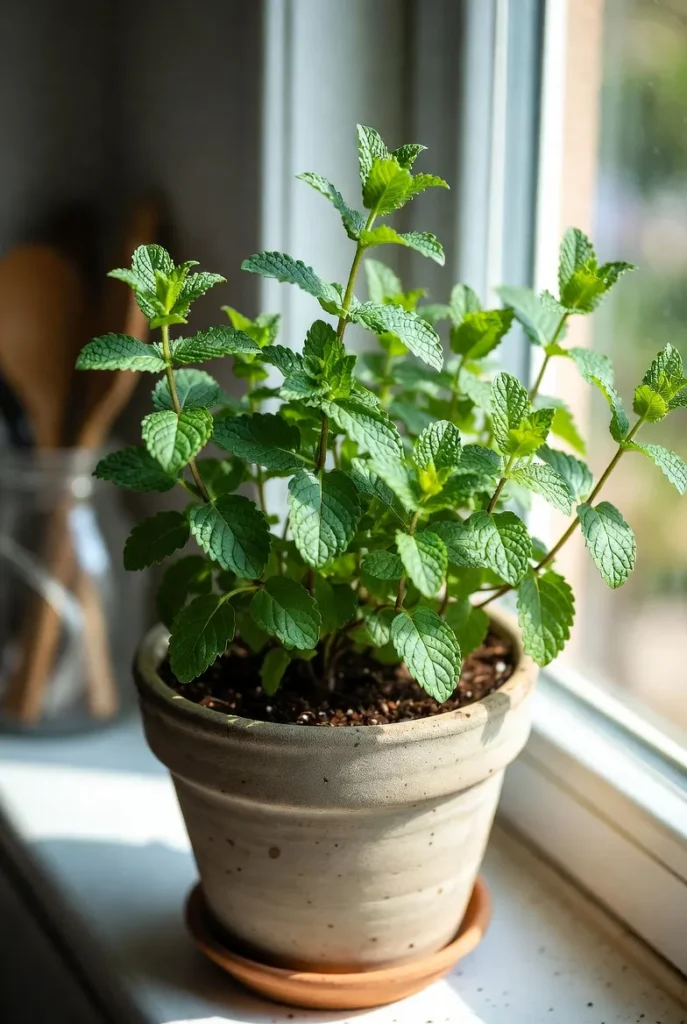
Mint is known for being extremely resilient. It grows fast and tolerates different indoor conditions better than many herbs.
This fast growth makes mint especially rewarding for beginners.
Common uses include:
- herbal teas
- desserts
- drinks
- salads
Mint spreads aggressively outdoors, but in a potted herb planter indoors it stays manageable.
For beginners worried about killing plants, mint is one of the safest herbs to start with.
3. Parsley (Petroselinum crispum)
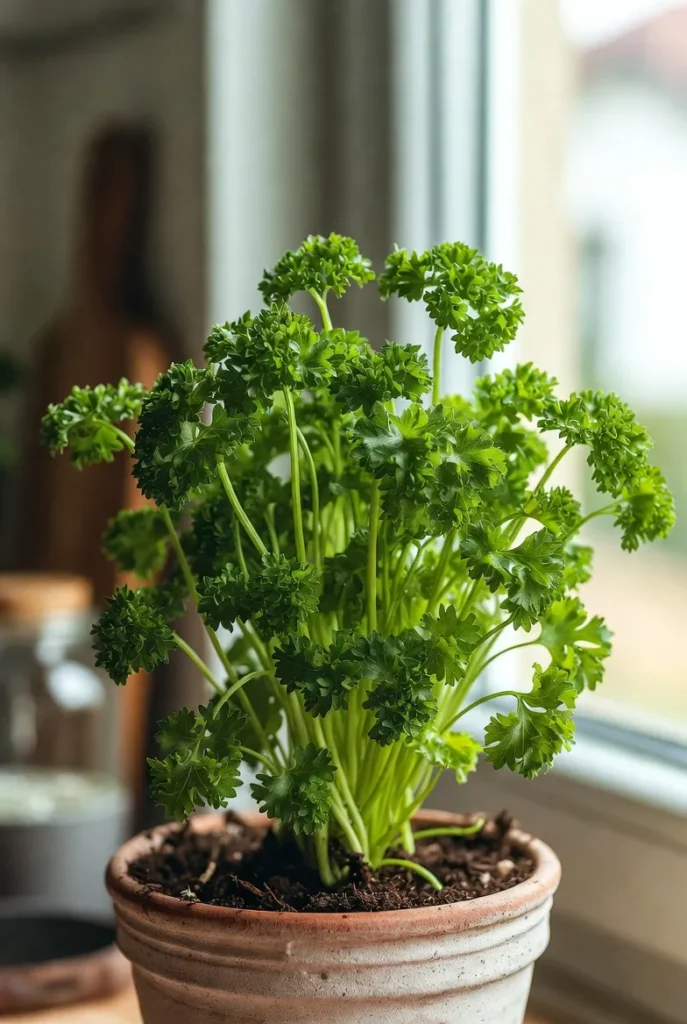
Parsley is a versatile herb used across many cuisines.
You’ll often find it in:
- soups
- salads
- sauces
- garnishes
Unlike some Mediterranean herbs, parsley tolerates slightly lower light conditions, which makes it suitable for many apartments and kitchens.
Its rich green leave also make it an attractive addition to an indoor herb garden.
4. Chives (Allium schoenoprasum)
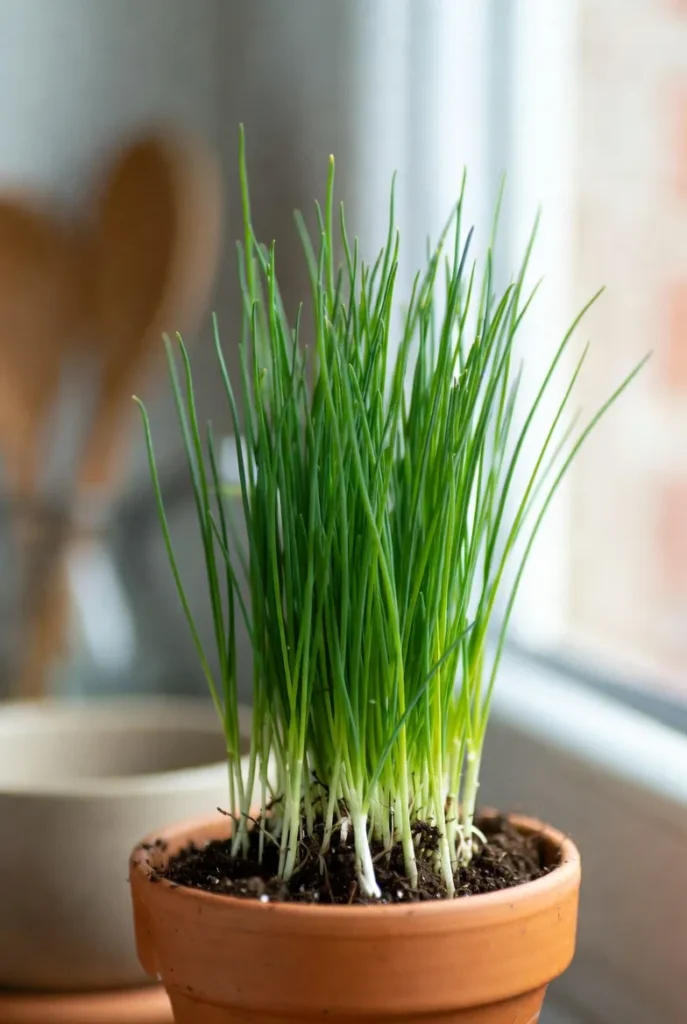
Chives are one of the most compact herbs you can grow indoors.
Their mild onion flavor works well in:
- scrambled eggs
- baked potatoes
- salads
- dips
Chives regrow quickly after harvesting. Simply snip the leaves and new growth appears within days.
Because of their small size, they’re ideal for small pots or windowsill herb gardens.
5. Cilantro (Coriandrum sativum)
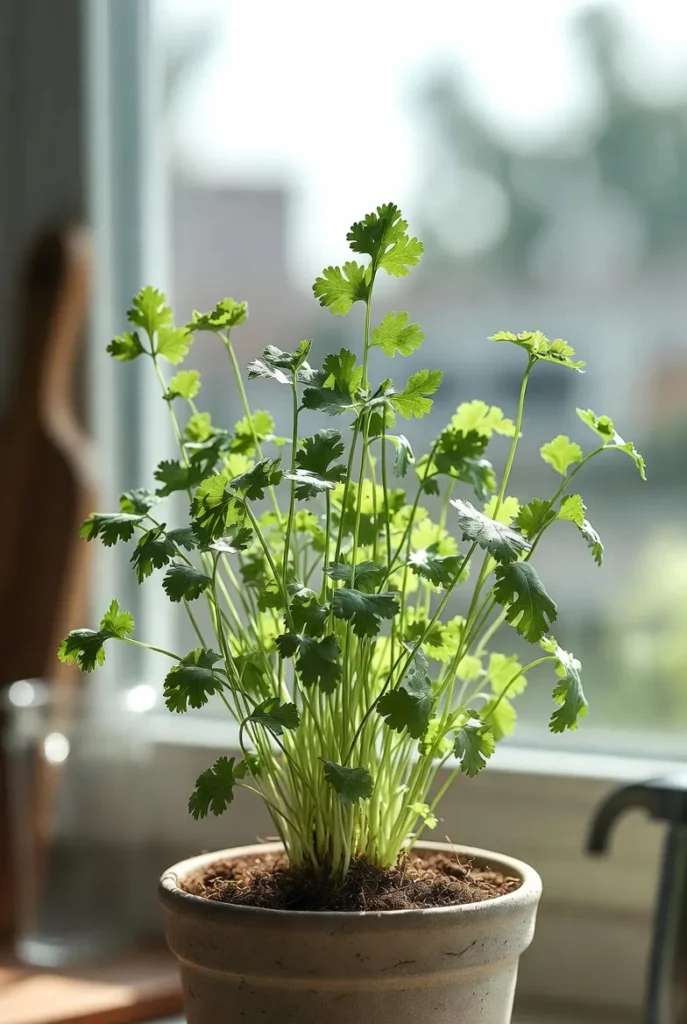
Cilantro, also known as coriander leaves, is popular in many global cuisines.
It’s frequently used in:
- Mexican dishes
- Asian cooking
- salsas
- curries
Cilantro grows quickly and produces flavorful leaves early. However, it prefers slightly cooler indoor environments compared with Mediterranean herbs. In warm indoor spaces, cilantro may bolt more quickly.
6. Thyme (Thymus vulgaris)
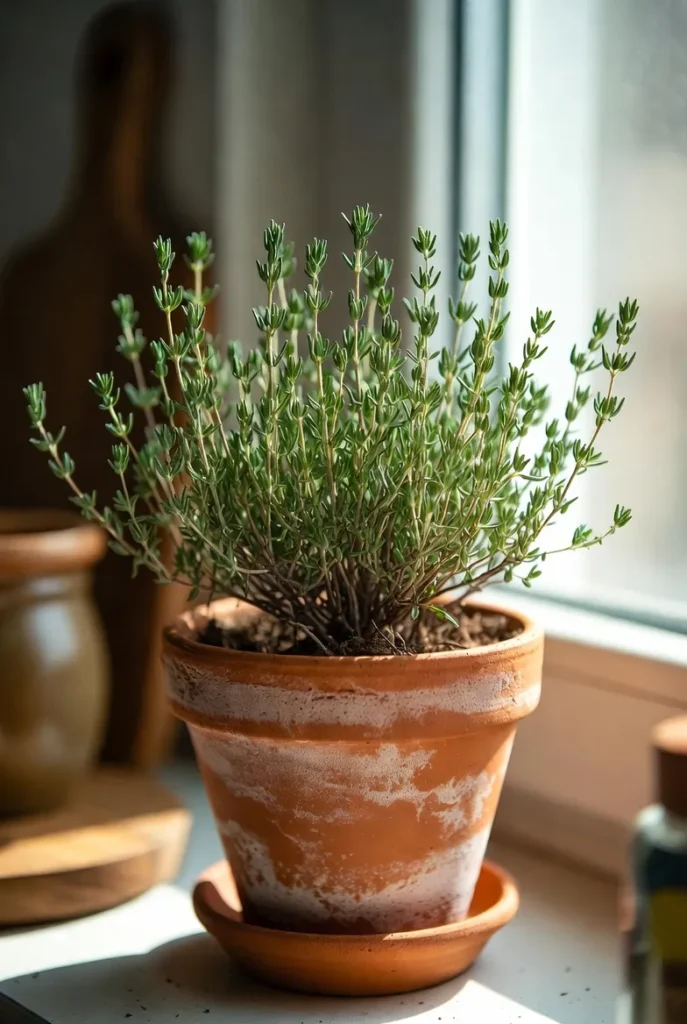
Thyme is a classic Mediterranean herb with a strong aroma and flavor.
It pairs well with:
- roasted vegetables
- chicken dishes
- soups
- sauces
Thyme plants remain small and compact, making them perfect for container gardening indoors.
Because thyme tolerates drier soil, it’s also forgiving if beginners occasionally forget to water.
7. Oregano (Origanum vulgare)
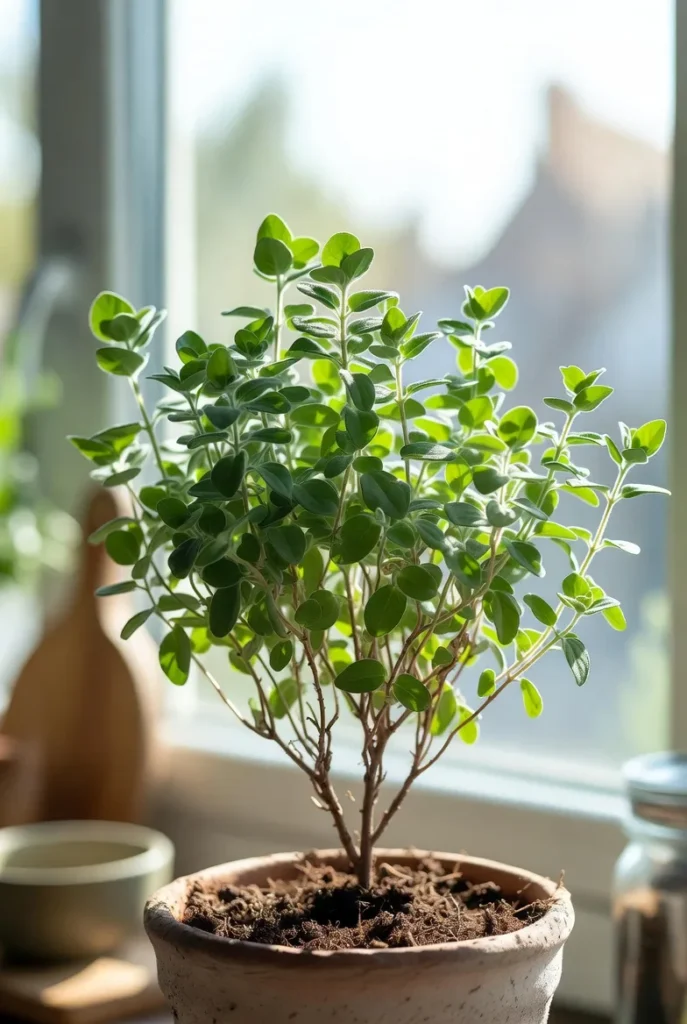
Oregano is a staple herb in Mediterranean and Italian cooking.
It’s commonly used for:
- pizza sauce
- pasta dishes
- grilled meats
- roasted vegetables
Like thyme, oregano grows well in pots and prefers well-drained soil.
Its hardy nature makes it a strong candidate for beginner indoor gardeners.
8. Rosemary (Salvia rosmarinus)
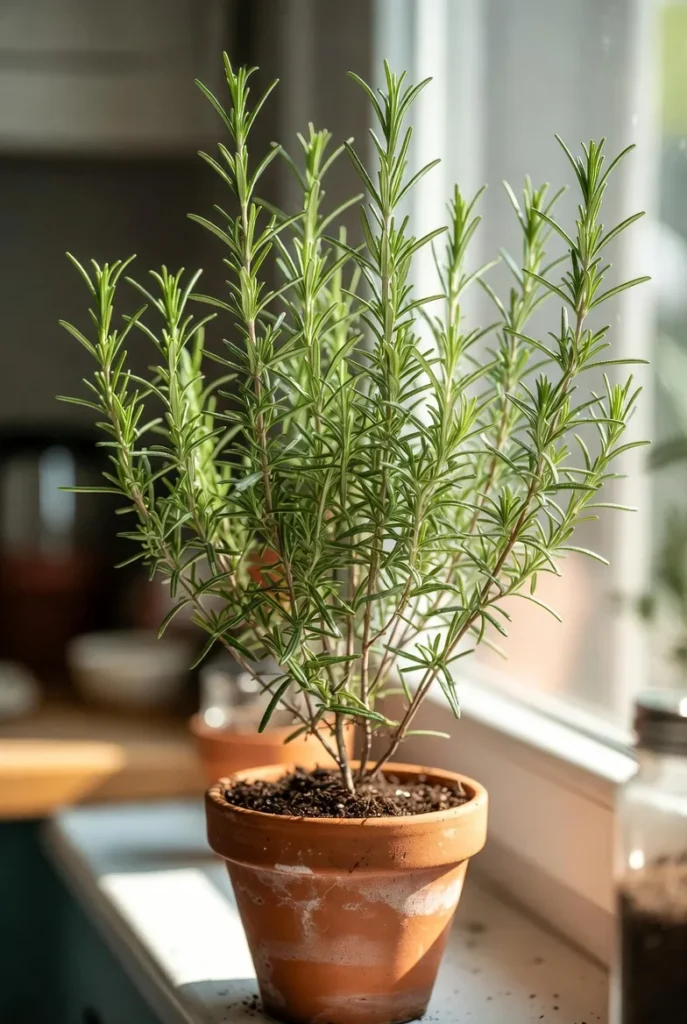
Rosemary is slightly more demanding than some other herbs but still grows well indoors with adequate light.
Its woody stems and needle-like leaves add fragrance and flavor to dishes such as:
- roasted potatoes
- lamb
- breads
- marinades
Rosemary plants also look decorative in kitchens and living spaces.
Because rosemary grows slowly, a single plant can remain productive for a long time.
9. Dill (Anethum graveolens)
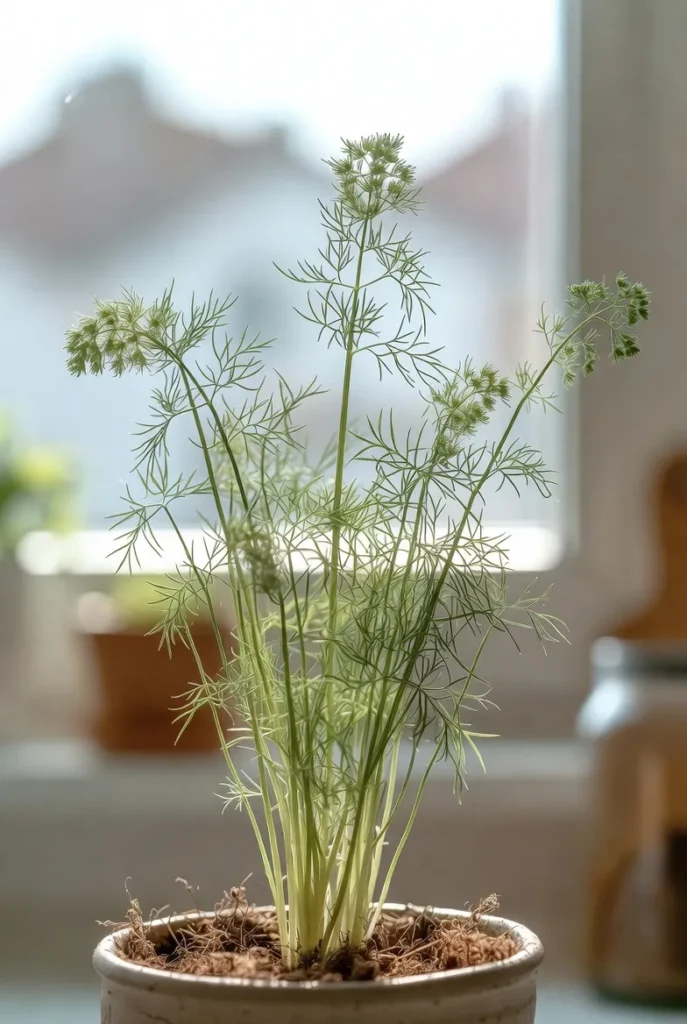
Dill has delicate feathery leaves and a fresh flavor.
It’s commonly used with:
- fish dishes
- pickles
- salads
- yogurt sauces
Dill grows quickly and produces aromatic leaves early.
In indoor gardens, it works best in slightly deeper containers because of its longer roots.
10. Sage (Salvia officinalis)
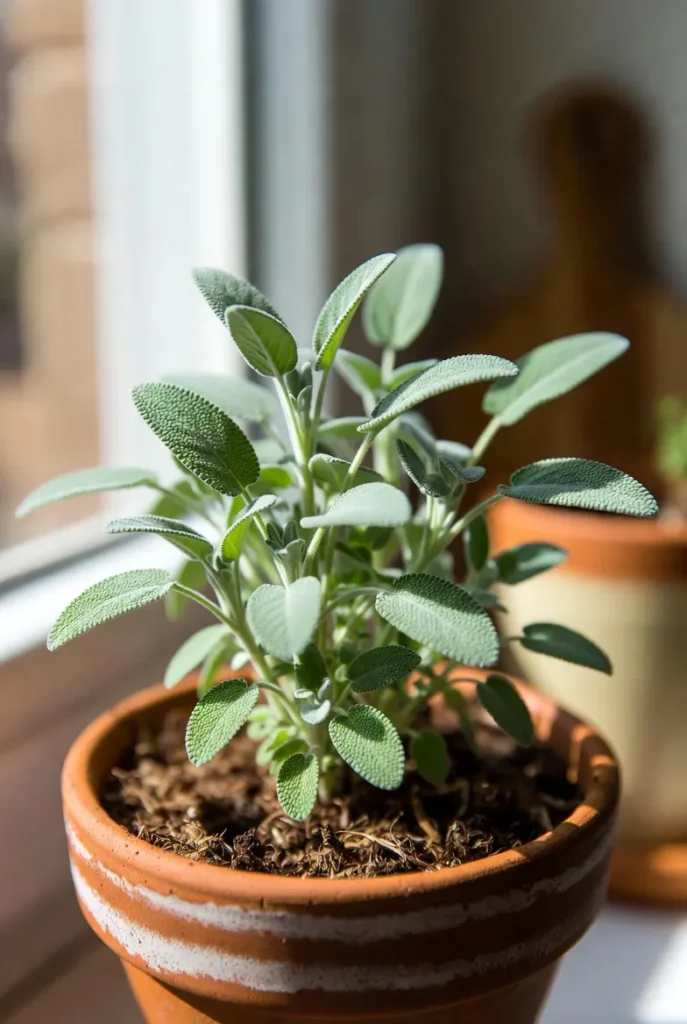
Sage has soft gray-green leaves and a strong earthy flavor.
It is often used in:
- stuffing
- roasted meats
- sauces
- pasta dishes
Sage plants remain compact, which makes them suitable for indoor herb planters.
Because sage prefers slightly dry soil, it tends to adapt well to container environments.
Choosing the Right Indoor Herbs for Your Space
Different herbs perform better depending on where you plan to grow them.
The following table can help beginners choose herbs based on their living space and kitchen setup.
Situation | Recommended Herbs |
|---|---|
Kitchen windowsill | Basil, chives, parsley |
Small apartment | Mint, thyme, oregano |
Limited sunlight | Parsley, mint |
Cooking herbs | Basil, cilantro, oregano |
Compact pots | Chives, thyme |
Selecting herbs that match your space greatly improves success for beginners.
Herbs That Grow Well Together Indoors
Some herbs share similar growing preferences, which means they can thrive near each other in an indoor herb garden.
Grouping herbs with similar growing needs makes indoor plant care easier.
Good combinations include:
Mediterranean herbs
- thyme
- oregano
- rosemary
- sage
These herbs prefer similar conditions and well-drained potting mix.
Soft leafy herbs
- basil
- parsley
- cilantro
- chives
These herbs typically need slightly more moisture and grow well in kitchen herb gardens.
Grouping herbs this way helps simplify plant care.
Fast-Growing Herbs for Quick Harvest
Many beginners enjoy herbs that grow quickly.
These herbs produce usable leaves relatively fast:
- basil
- cilantro
- mint
- dill
- chives
These herbs often produce harvestable leaves within just a few weeks.
Fast-growing herbs make indoor gardening more rewarding because you can begin harvesting sooner.
Herbs That Regrow After Harvesting
One helpful feature of many herbs is their ability to regrow after trimming.
Herbs known for continuous harvest include:
- basil
- mint
- chives
- parsley
- oregano
Regular harvesting encourages fresh growth and keeps plants productive.
Herbs That May Struggle Indoors
While many herbs adapt well to indoor environments, a few can be more challenging.
These include:
- lavender
- fennel
- large outdoor shrubs
These herbs often require stronger sunlight or more space than most indoor environments provide.
For beginners, sticking with well-known indoor herbs increases the chances of success.
Common Beginner Mistakes When Choosing Indoor Herbs
Many people struggle with indoor herbs not because of poor care but because they start with the wrong plants.
Common mistakes include:
Choosing herbs that require full outdoor sunlight
Some herbs need more light than indoor spaces can provide.
Starting with too many herbs
Beginners often succeed more easily by starting with two or three plants.
Ignoring plant size
Certain herbs grow much larger than expected in small containers.
Choosing herbs known for indoor success avoids many of these problems.
Many beginner problems are actually related to watering habits, which is why understanding How to Water Indoor Herbs Properly is essential for healthy roots.
FAQS
1. What herbs grow best in a kitchen herb garden?
Herbs that grow well in kitchen herb gardens include basil, parsley, chives, mint, and thyme. These herbs stay compact, grow well in containers, and are commonly used in everyday cooking.
2. What herbs grow best indoors year round?
Herbs that grow well indoors year round include basil, mint, parsley, chives, thyme, oregano, and rosemary. These herbs adapt well to container gardening and indoor environments.
3. What is the easiest herb to grow indoors?
Mint is often considered the easiest herb to grow indoors. It grows quickly, tolerates different indoor conditions, and recovers easily from beginner mistakes.
4. Can herbs grow on a kitchen windowsill?
Yes. Many herbs grow well on kitchen windowsills as long as they receive sufficient light. Basil, chives, parsley, and thyme are especially popular windowsill herbs.
5. What herbs grow well in pots?
Most culinary herbs grow well in pots, including basil, mint, oregano, thyme, parsley, rosemary, dill, and sage. Container gardening works well because herbs naturally prefer well-drained soil.
6. Which herbs grow best in small apartments?
Herbs that stay compact are best for apartments. Good choices include chives, thyme, oregano, basil, and parsley because they grow well in small containers.
7. Do indoor herbs need direct sunlight?
Most herbs prefer several hours of sunlight daily. However, herbs like parsley and mint tolerate lower light levels better than Mediterranean herbs.
8. Which herbs grow fastest indoors?
Fast-growing indoor herbs include basil, cilantro, dill, mint, and chives. These herbs produce harvestable leaves relatively quickly.
Conclusion
Growing herbs indoors is one of the easiest ways to start gardening, even in a small apartment or kitchen.
Even beginners with limited space can successfully grow fresh herbs with the right plant choices.
By choosing beginner-friendly herbs such as basil, mint, parsley, chives, oregano, and thyme, you can enjoy fresh flavors without needing outdoor garden space.
Many of these herbs grow well in simple containers, adapt to indoor temperatures, and regrow after harvesting.
Starting with a few reliable herbs makes indoor gardening simple, rewarding, and surprisingly productive.
Once you’ve chosen your herbs, you can follow this guided 60-day indoor herb growing challenge to grow them successfully from start to harvest.

Hi, I’m Rimsha, founder of Urban Bloomer 🌱
I grow herbs and plants in a small apartment and share what actually works in limited indoor spaces. Over the past few years, I’ve tested different setups, from lighting and soil to watering routines, to find simple methods that make indoor gardening easier.
Here, you’ll find practical, beginner-friendly advice based on real experience, not complicated gardening systems.