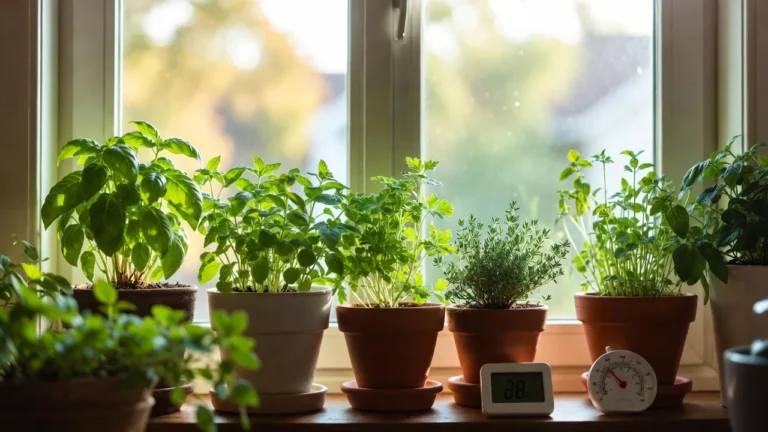
10 Herbs That Help Purify Indoor Air Naturally
The air inside your home might not be as clean as you think. From cooking fumes to furniture chemicals, indoor spaces often trap pollutants that affect your comfort and health.
That’s why many people are now turning to indoor herbs for air purification, a natural and affordable way to make their living spaces feel fresher and healthier.
But do herbs really work? And if they do, which ones should you choose?
In this guide, you’ll discover 10 powerful herbs that help improve indoor air quality, how they actually work, and how to grow them successfully, even if you’re a beginner living in a small apartment.
Before choosing the right herbs, it’s important to understand how they actually affect indoor air.
If you’re new to indoor gardening, you can also read our guide on how to start an indoor herb garden for beginners to build a strong foundation.
Do Herbs Really Purify Indoor Air?
Short answer: Herbs can improve indoor air quality in small but meaningful ways by absorbing certain pollutants, releasing oxygen, and reducing odors.
The Science Behind It
Indoor plants including herbs interact with air through:
- Photosynthesis: Converting carbon dioxide into oxygen
- Absorption of VOCs (Volatile Organic Compounds): These are harmful gases released from paints, furniture, and cleaning products
- Microbial activity in soil: Helpful microbes break down toxins
- Humidity balance: Plants release moisture, improving dry indoor air
In practical indoor environments, the effect of a single plant is limited, but combining multiple herbs can noticeably improve how a space feels and smells over time.
Reality Check
While herbs contribute to cleaner air, their effect is gradual and limited. You would need many plants to fully purify a large room.
However, they still offer valuable benefits:
- Fresher-smelling air
- Reduced mild odors
- Improved mood and mental clarity
- A calming, natural indoor environment
While studies like the NASA Clean Air Study suggest plants can remove toxins in controlled environments, real homes have constant airflow and varying conditions.
This means herbs should be viewed as supportive rather than primary air-cleaning solutions.
Why Soil Plays a Bigger Role Than Expected
The plant itself isn’t the only part interacting with air. The soil contains microorganisms that help break down organic compounds.
These microbes contribute to:
- reducing certain odors
- processing trace pollutants
- supporting overall plant health
In some cases, the soil environment plays just as important a role as the plant leaves.
10 Herbs That Help Purify Indoor Air Naturally
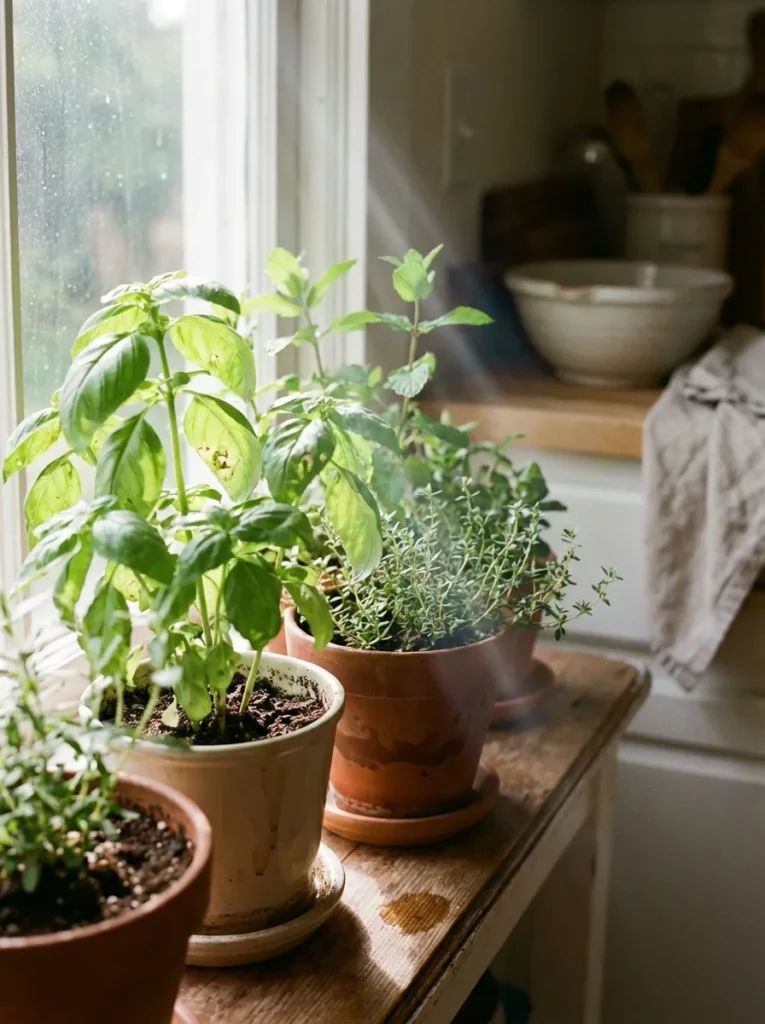
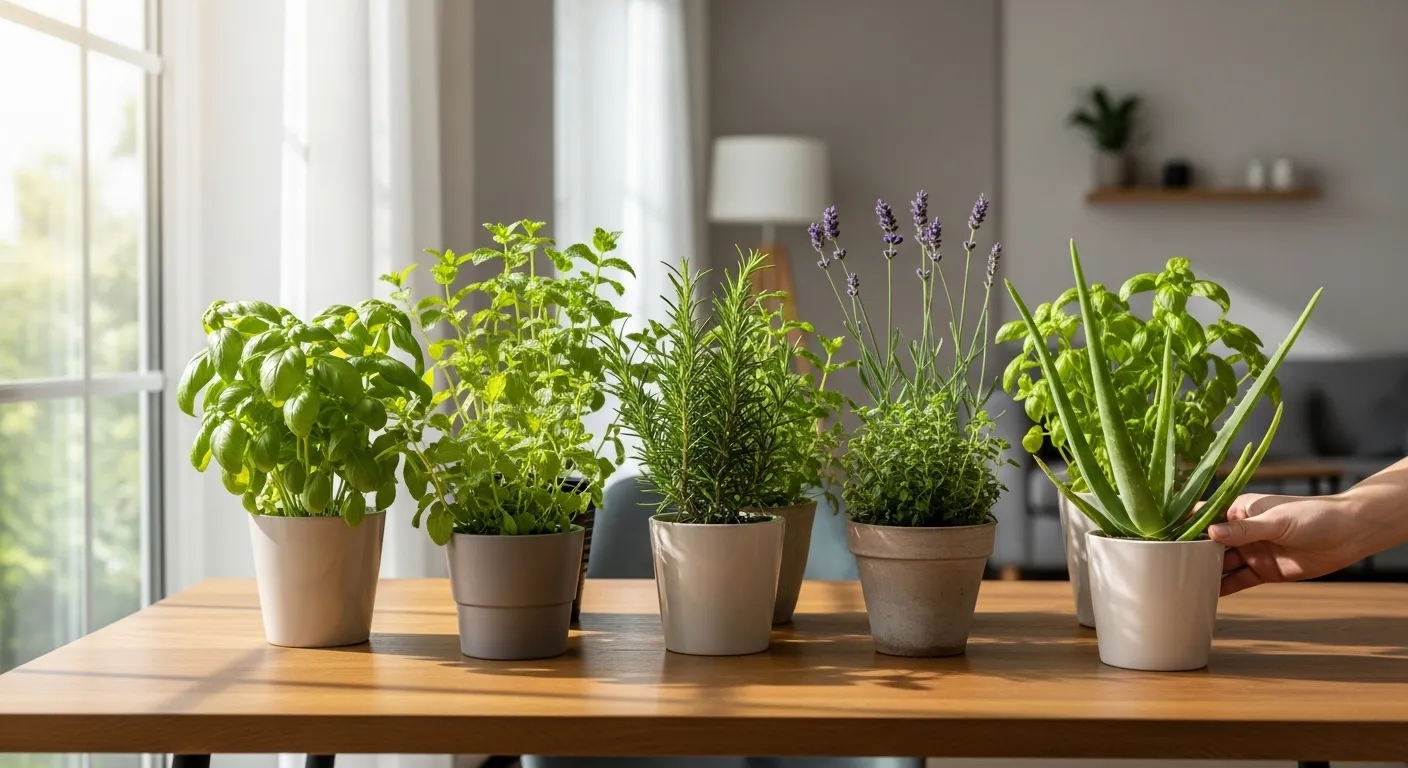
Now that you know what to expect, let’s look at the best herbs you can grow at home.
1. Basil (Ocimum basilicum)
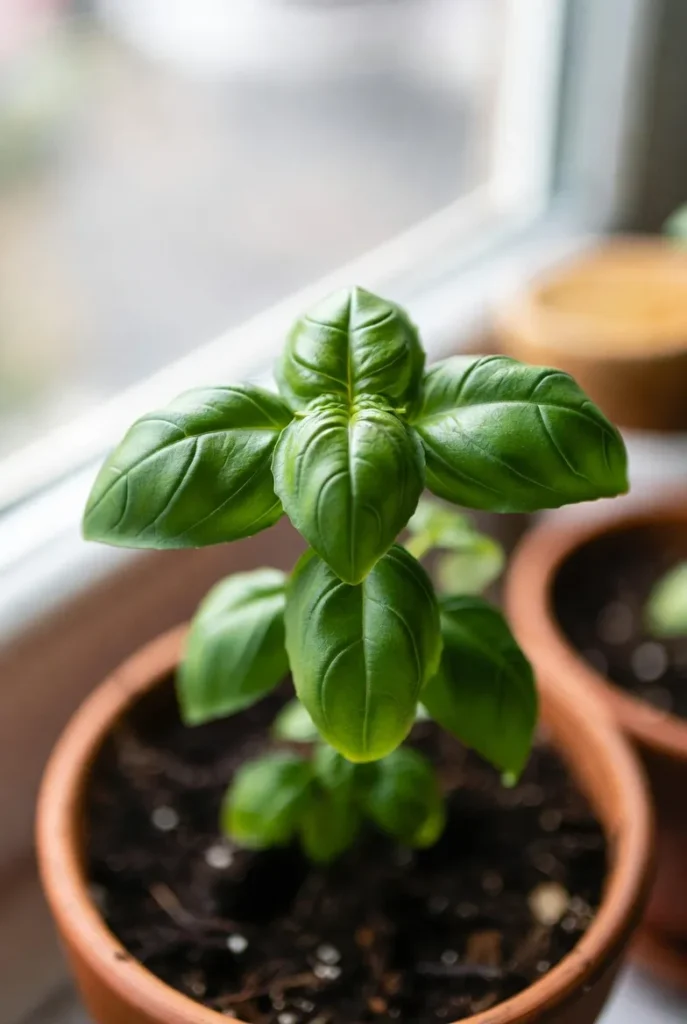
Basil is one of the most popular indoor herbs because it combines air benefits with practical use in cooking.
- Helps absorb minor airborne pollutants
- Releases a refreshing scent
- Thrives in sunlight
Best placement: Kitchen windows or sunny corners
Why Basil Makes Spaces Feel Fresher Quickly
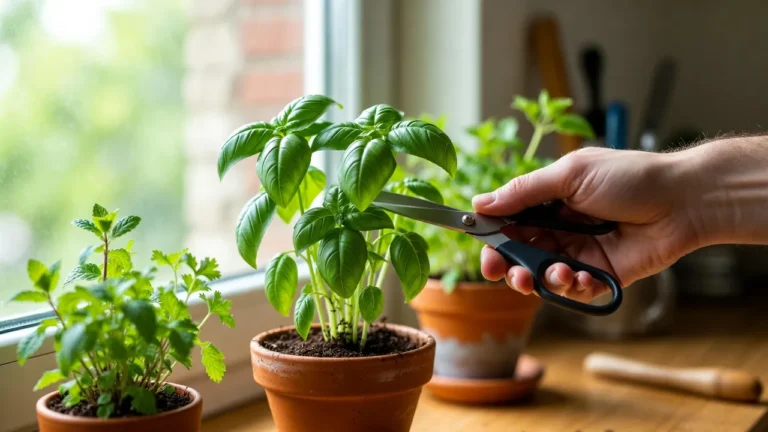
Basil releases a strong natural aroma, especially when leaves are touched or slightly trimmed. This immediate scent can mask mild indoor odors and make the air feel cleaner.
That’s why basil often feels effective even in small spaces.
2. Mint (Mentha)
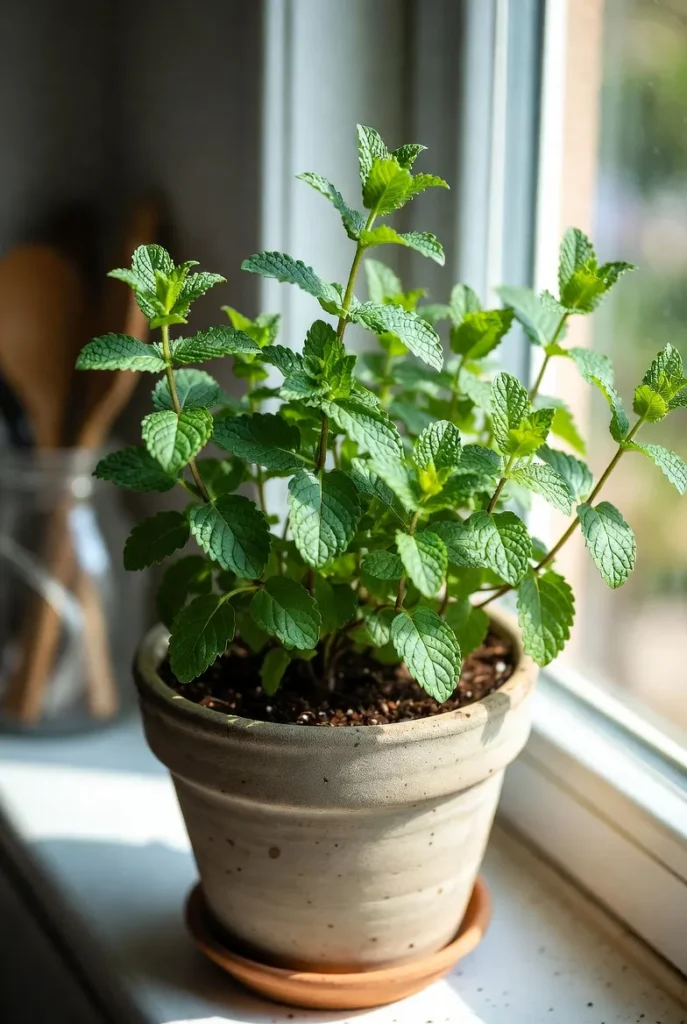
Mint is a fast-growing herb known for its cooling aroma and odor-neutralizing properties.
- Reduces unpleasant smells
- Contains mild antibacterial compounds
- Very easy to grow
Best placement: Bathrooms, kitchens, or humid areas
Why Mint Works Well in Busy Areas
Mint has a sharp, cooling scent that stands out even in rooms with other smells. This makes it especially useful in areas like kitchens where odors build up quickly.
Its fast growth also means more leaves contributing to that effect over time.
3. Rosemary (Rosmarinus officinalis)
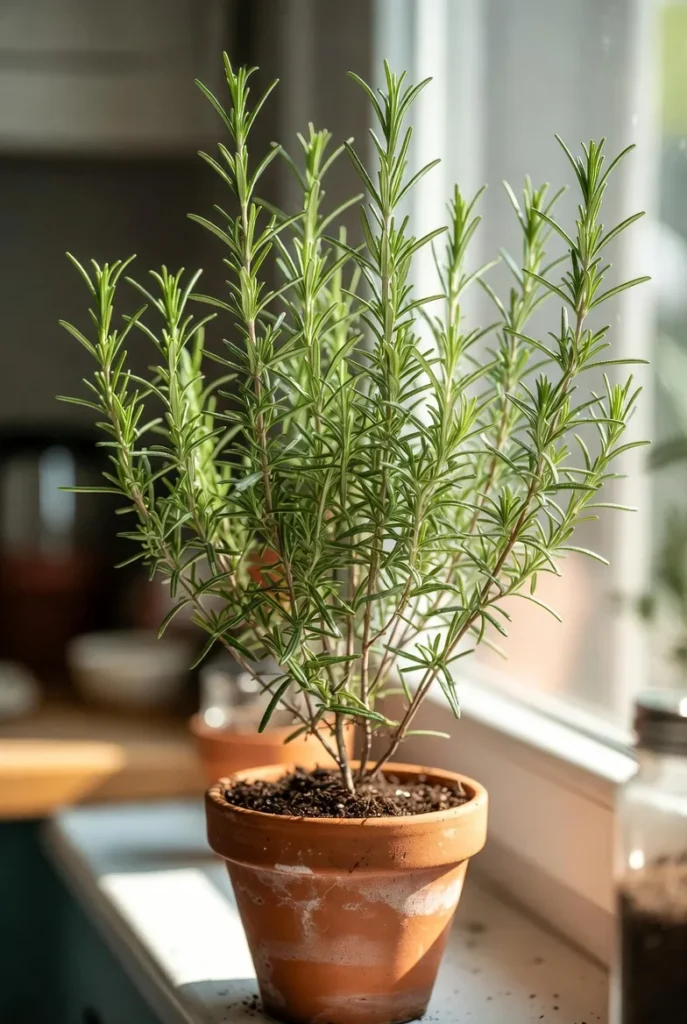
Rosemary not only improves air freshness but is also linked to better concentration and memory.
- Releases a clean, woody scent
- Supports mental clarity
- Needs bright light
Best placement: Work desks or study rooms
4. Lavender (Lavandula)
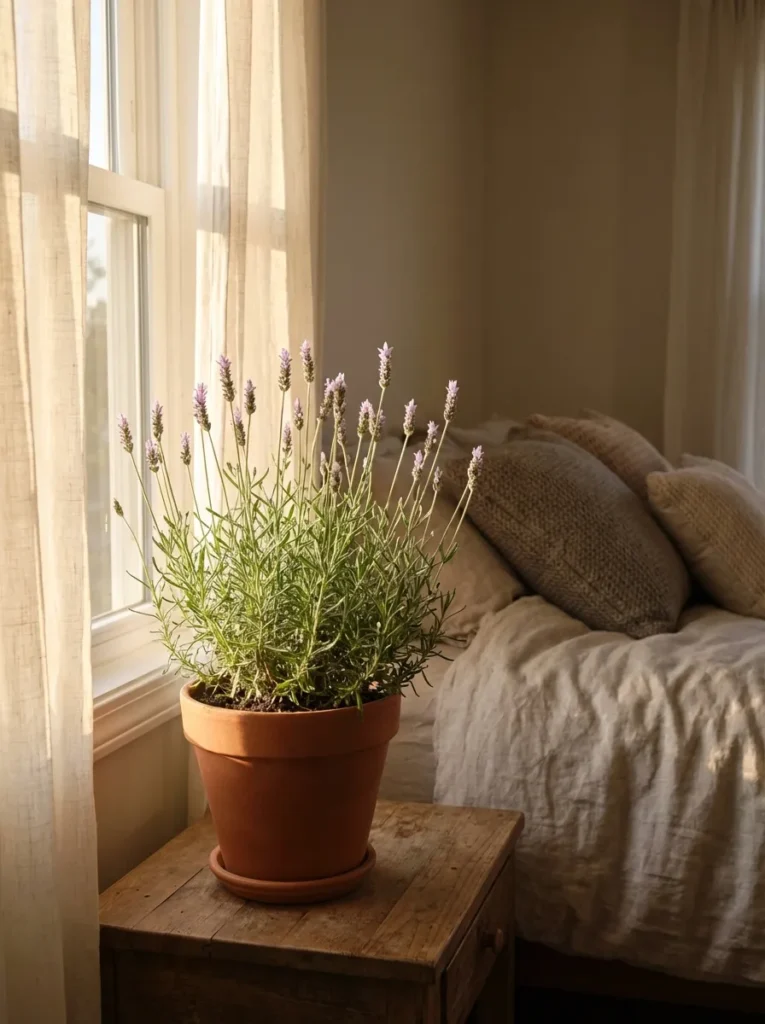
Lavender is widely used for its calming effects and gentle air-cleansing properties.
- Helps reduce airborne microbes
- Promotes relaxation and better sleep
- Adds a pleasant floral scent
Best placement: Bedrooms
5. Aloe Vera
Aloe vera is a low-maintenance plant that’s ideal for beginners.
- Absorbs certain toxins like formaldehyde
- Releases oxygen at night
- Requires minimal care
Best placement: Bedrooms or low-light areas
6. Thyme (Thymus vulgaris)
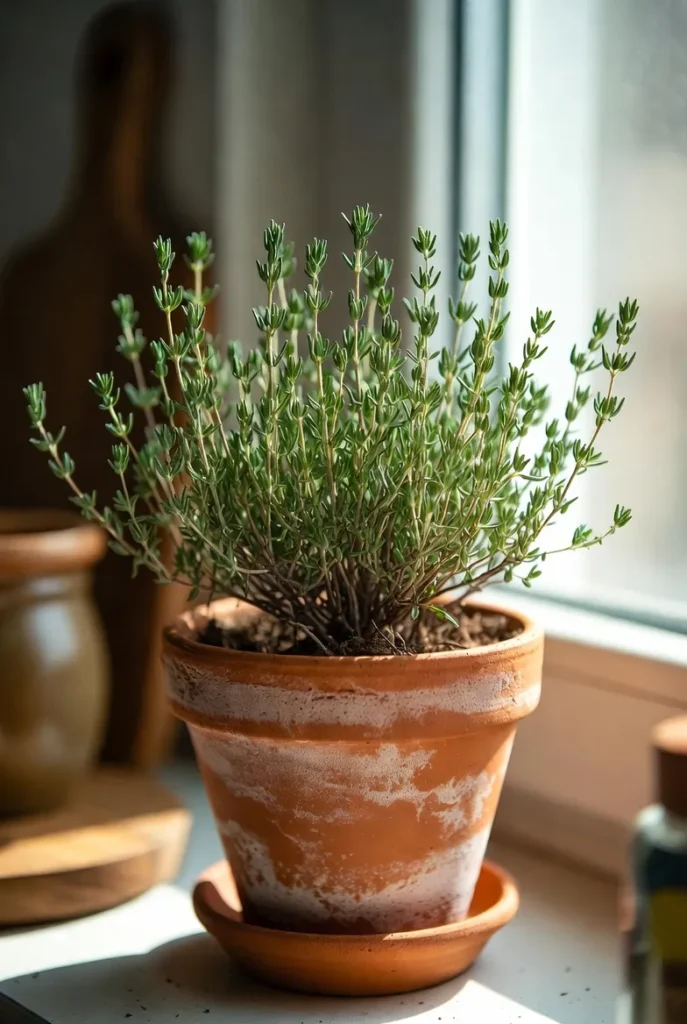
Thyme contains essential oils with antibacterial properties that can support cleaner air.
- Helps reduce airborne bacteria
- Compact and easy to grow
- Needs sunlight
Best placement: Kitchen shelves
7. Lemongrass (Cymbopogon)
Lemongrass is known for its strong citrus fragrance, which makes indoor air feel instantly fresher.
- Improves perceived air quality
- Repels insects naturally
- Requires bright light
Best placement: Living rooms or near windows
8. Sage (Salvia officinalis)
Sage has been traditionally used for purification and has mild antibacterial effects.
- Adds a herbal, earthy aroma
- Supports air freshness
- Easy to maintain
Best placement: Living spaces or entryways
9. Parsley (Petroselinum crispum)
Parsley is one of the easiest herbs to grow indoors and contributes to oxygen exchange.
- Beginner-friendly
- Compact and space-saving
- Useful in cooking
Best placement: Small apartments or kitchen counters
10. Cilantro (Coriandrum sativum)
Cilantro grows quickly and adds freshness to indoor air.
- Absorbs minor toxins
- Fast-growing
- Easy to maintain
Best placement: Kitchen windows
Comparison Table: Choosing the Right Herb
To make your choice easier, here’s a quick comparison of these herbs:
Herb | Main Benefit | Light Needs |
|---|---|---|
Basil | Fresh scent | Medium |
Mint | Odor control | Low-Medium |
Rosemary | Mental clarity | High |
Lavender | Relaxation | High |
Aloe Vera | Toxin absorption | Low |
Thyme | Antibacterial | High |
Lemongrass | Air freshness | High |
Sage | Mild purification | Medium |
Parsley | Oxygen support | Medium |
Cilantro | Detox support | Medium |
Expectation vs Reality
It’s also important to set realistic expectations when using herbs for air improvement.
What Herbs Can Do
- Improve indoor air freshness
- Reduce light odors
- Add oxygen and humidity
- Enhance mood and comfort
What They Cannot Do
- Replace mechanical air purifiers
- Remove heavy pollution instantly
- Clean large rooms effectively
Think of herbs as natural enhancers, not complete solutions.
How to Grow Indoor Herbs Successfully
Once you’ve chosen your herbs, proper care is key to getting the best results.
Simple Step-by-Step Process
- Select herbs based on available light
- Use well-draining soil and pots
- Place plants near sunlight
- Water when soil feels dry
- Rotate pots for even growth
- Ensure ventilation in the room
For a complete setup, read our step-by-step guide on indoor herb gardening.
Why Healthy Plants Have a Bigger Impact
A struggling plant won’t contribute much to air quality.
Healthy herbs:
- produce more leaves
- release stronger aromas
- maintain steady growth
Focusing on plant health improves both appearance and environmental benefit.
Best Herbs Based on Your Needs
For Beginners
- Mint
- Parsley
- Aloe vera
For Low Light Homes
- Mint
- Aloe vera
For Relaxation
- Lavender
- Basil
For Small Spaces
- Thyme
- Cilantro
Where to Place Herbs for Maximum Effect
Kitchen
- Basil, parsley, cilantro
- Helps reduce cooking smells
Bedroom
- Lavender, aloe vera
- Supports relaxation and sleep
Living Room
- Lemongrass, sage
- Improves overall freshness
Workspace
- Rosemary
- Boosts focus and productivity
Still unsure where to place the herbs? Check our detailed guide on choosing the right location for indoor herbs.
Why Placement Changes Perceived Freshness
Where you place herbs affects how noticeable their impact is.
For example:
- near entry points → first impression of freshness
- near cooking areas → reduces food odors
- near seating areas → improves comfort
Placement doesn’t change the plant itself, but it changes how you experience the space.
Common Mistakes to Avoid
- Overwatering plants (most common issue)
- Keeping herbs in dark areas
- Using poor-quality soil
- Expecting fast results
- Not pruning herbs regularly
Avoid beginner errors by reading our full guide on common indoor plant mistakes and how to fix them.
Herbs vs Air Purifiers
Feature | Herbs | Air Purifiers |
|---|---|---|
Cost | Low | High |
Effectiveness | Moderate | High |
Maintenance | Medium | Low |
Natural Appeal | High | Low |
For best results, combine both methods.
Extra Tips for Better Indoor Air
- Open windows daily for ventilation
- Avoid synthetic air fresheners
- Keep your space clean and dust-free
- Use multiple plants instead of just one
Some herbs like lavender and sage may not be safe for pets if ingested.
Always check pet compatibility before placing plants within reach of animals.
FAQs
1. Do herbs really purify indoor air?
Yes, but only slightly. They improve air freshness and reduce minor pollutants.
2. Which herb is best for air purification?
Aloe vera, basil, and mint are among the most effective options.
3. How many plants do I need per room?
Around 3 to 5 plants are enough for noticeable improvement in small rooms.
4. Can herbs replace air purifiers?
No, they work best as a natural supplement, not a replacement.
5. Which herbs are easiest to grow indoors?
Mint, parsley, and cilantro are beginner-friendly choices.
6. Do herbs work in apartments?
Yes, especially in small spaces where their effects are more noticeable.
7. Are indoor herbs safe for pets?
Some are safe, but always check each plant before placing it near pets.
Conclusion
Growing herbs indoors is one of the simplest ways to make your home feel fresher and more inviting. While they won’t completely purify the air, they offer a natural boost to your indoor environment.
Start small with easy herbs like mint, basil, or aloe vera, place them in well-lit areas, and build your indoor garden over time.
A well-placed collection of herbs won’t replace modern air systems, but it can significantly enhance the comfort and natural feel of your indoor space.

Hi, I’m Rimsha, founder of Urban Bloomer 🌱
I grow herbs and plants in a small apartment and share what actually works in limited indoor spaces. Over the past few years, I’ve tested different setups, from lighting and soil to watering routines, to find simple methods that make indoor gardening easier.
Here, you’ll find practical, beginner-friendly advice based on real experience, not complicated gardening systems.