Best Fertilizers for Indoor Herbs: How to Choose the Right Plant Food for Healthy Growth
Many indoor herb gardens begin with vigorous growth. Fresh leaves appear quickly, stems stay upright, and the plant looks healthy on the windowsill.
However, after several weeks, growth may slow down. Leaves appear smaller, and new shoots emerge less frequently.
This change often happens because the nutrients inside container soil gradually decline. Unlike outdoor gardens, indoor herb pots have a limited supply of nutrients, and regular watering slowly removes minerals from the soil.
Applying the right fertilizer replenishes nutrients and supports ongoing leaf production.
This guide explains what makes a good herb fertilizer, which fertilizer types work best indoors, and how to choose safe plant food for basil, mint, parsley, and other container herbs.
Understanding the best fertilizer for your indoor herbs is crucial for promoting robust growth and maximizing yield.
If you’re still setting up your indoor herb garden, it may help to review the basics first. The Indoor Herb Gardening for Beginners guide explains how lighting, containers, and placement influence herb growth indoors.
What Makes a Good Herb Fertilizer
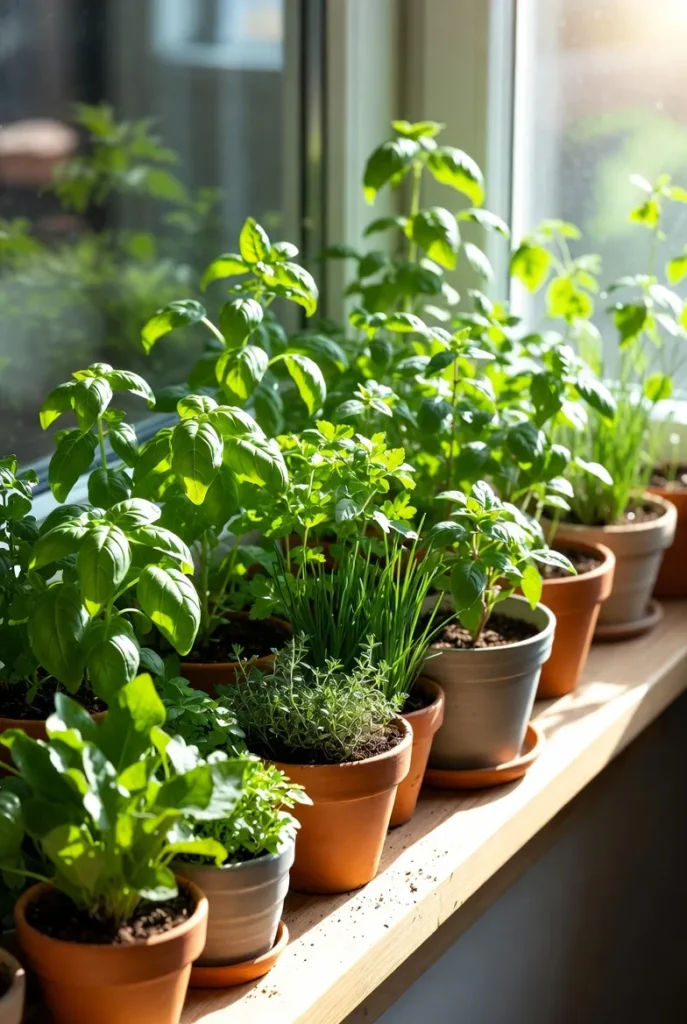
Choosing fertilizer for indoor herbs is different from fertilizing outdoor crops. Herbs grown in containers require gentle nutrition rather than heavy feeding.
Several characteristics define a good fertilizer for indoor herbs.
Balanced Nutrient Content
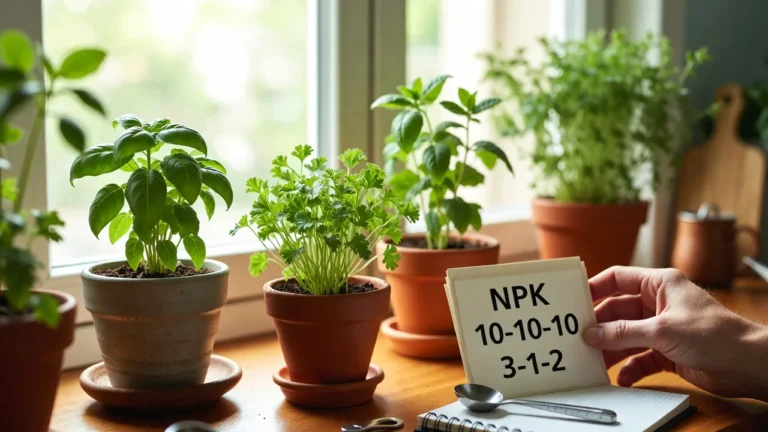
Most fertilizers contain three primary nutrients known as NPK.
Nutrient | Function | Importance for Herbs |
|---|---|---|
Nitrogen (N) | Promotes leaf growth | Essential for leafy herbs |
Phosphorus (P) | Supports root development | Helps in establishing strong roots |
Potassium (K) | Improves plant resilience | Supports overall plant health |
Leafy herbs such as basil, parsley, cilantro, and mint rely particularly on nitrogen because their edible portion is the leaf.
If you’re unsure what labels like 10-10-10 mean, this guide on what fertilizer numbers mean for healthy plant growth will help you choose better.
Fertilizers Suitable for Containers
Indoor herb containers require fertilizers that release nutrients gently. Fast nutrient spikes can overwhelm roots in small pots.
Balanced fertilizers or mild organic fertilizers generally work best.
Ingredients to Avoid
Certain fertilizer characteristics may cause problems indoors.
Avoid fertilizers that:
- contain extremely high nitrogen levels
- release nutrients too aggressively
- accumulate salts quickly in container soil
Indoor herbs grow more slowly than outdoor plants, so strong fertilizers are rarely necessary.
Why Container Herbs Lose Nutrients Over Time
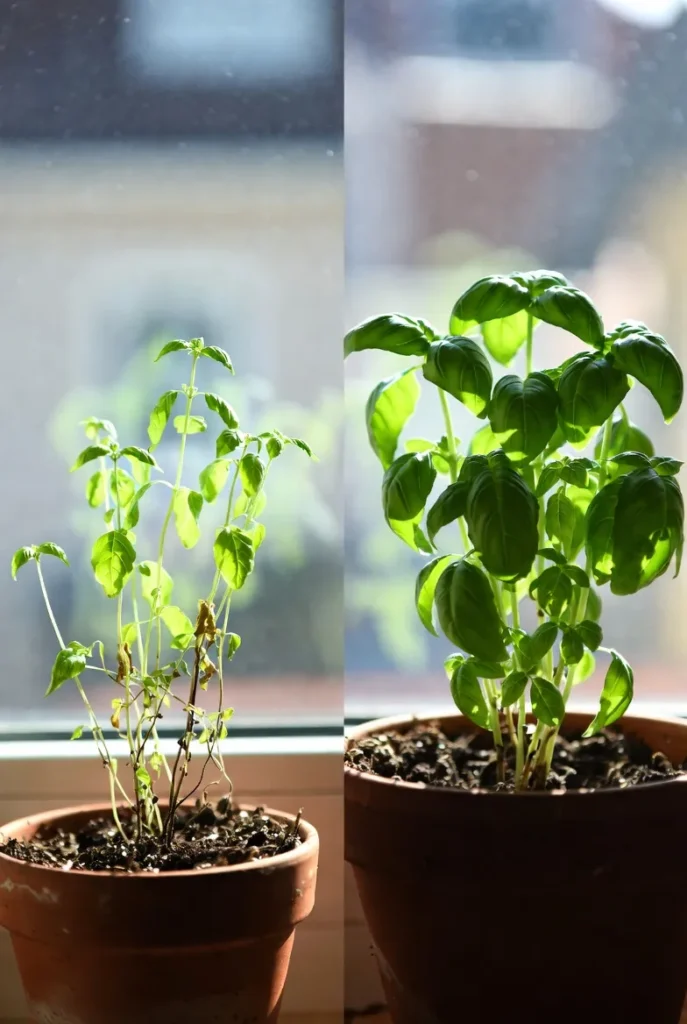
Container gardening behaves differently from outdoor gardening.
Outdoor soil contains natural nutrient cycles involving microorganisms, organic matter, and decomposing plant material. These systems continuously replenish soil nutrients.
Indoor pots do not have these natural processes.
Instead, nutrients gradually decline because:
- watering washes minerals through the drainage hole
- plant roots absorb nutrients during growth
- potting mix slowly decomposes
Over time, the original nutrients in potting soil become less available.
The structure of the potting mix also influences how nutrients are retained. A well-aerated mix can hold nutrients more effectively. The article on Best Soil for Indoor Herbs explains how soil ingredients influence both nutrient retention and root health.
How Nutrient Deficiencies Show Up in Indoor Herbs
Indoor herbs often show visible signs when specific nutrients become limited.
Recognizing these patterns helps you correct problems early instead of guessing.
Common deficiency signs:
- Nitrogen deficiency
Older leaves turn pale green or yellow
Growth becomes slow and weak - Phosphorus deficiency
Stunted growth
Darker or slightly purplish leaves (less common indoors) - Potassium deficiency
Leaf edges may turn brown or dry
Plants become less resilient
In container herbs, nitrogen deficiency is the most common because leafy growth consumes nitrogen quickly.
Common Types of Fertilizers for Indoor Herbs
Choosing the right type of fertilizer depends on how quickly your herbs use nutrients and how much maintenance you prefer.
Several fertilizers work well for container-grown herbs. Each type delivers nutrients in a slightly different way.
Liquid Fertilizers
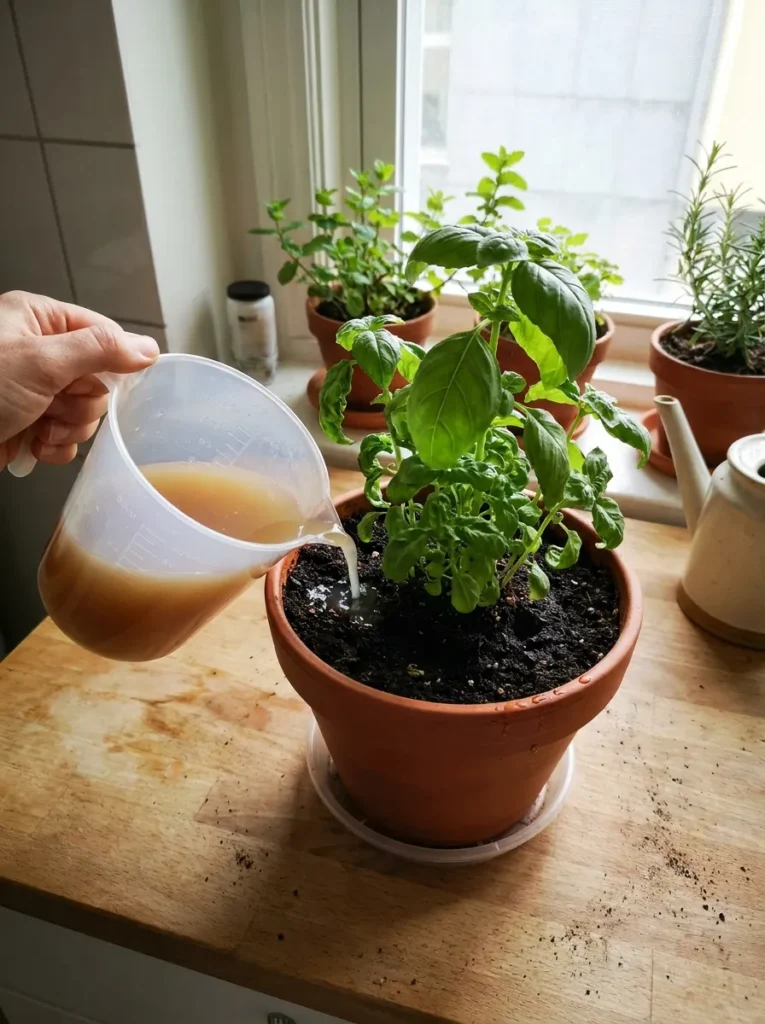
Liquid fertilizers dissolve in water and are applied while watering plants.
Advantages include:
- rapid nutrient availability
- easy control of fertilizer strength
- precise application in small pots
Because indoor herb containers are relatively small, liquid fertilizers allow gardeners to adjust feeding strength easily.
Slow-Release Fertilizers
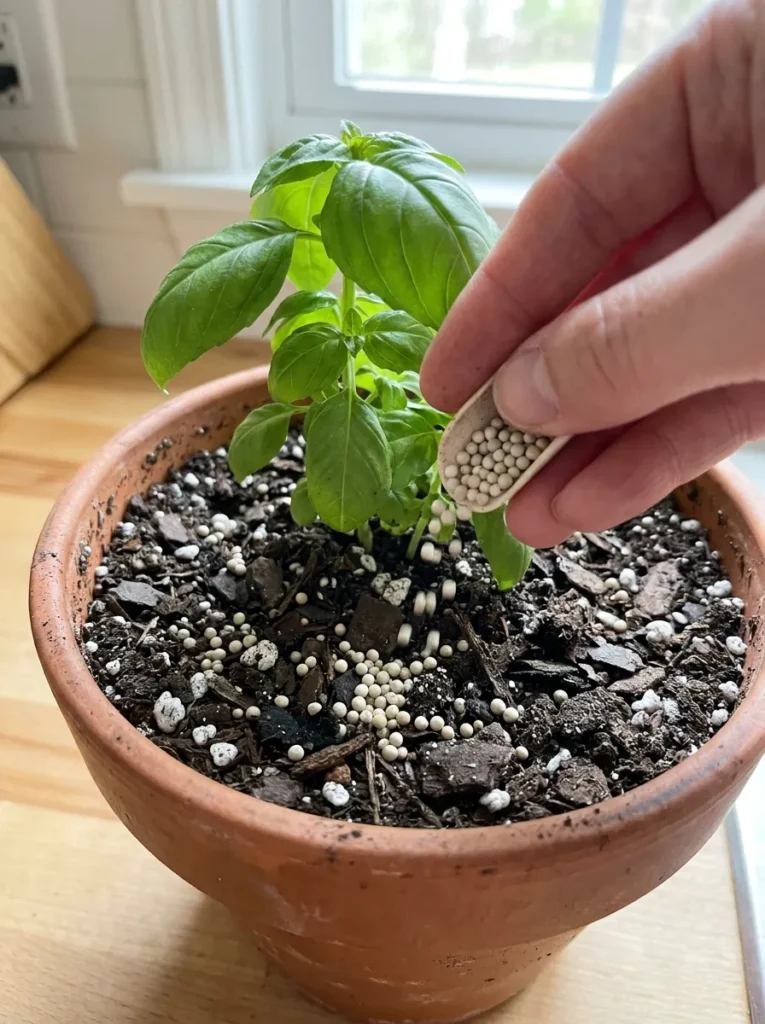
Slow-release fertilizers gradually release nutrients over several weeks.
Benefits include:
- steady nutrient supply
- reduced need for frequent feeding
- consistent plant nutrition
These fertilizers can be useful for gardeners who prefer minimal maintenance.
However, excessive use may lead to nutrient accumulation in small containers.
Water-Soluble Fertilizers
Water-soluble fertilizers dissolve completely in water and are absorbed quickly by plant roots.
Advantages include:
- rapid nutrient uptake
- precise nutrient delivery
- easy mixing with watering routines
Because they act quickly, these fertilizers are often used in diluted form for indoor herbs.
Organic Fertilizers
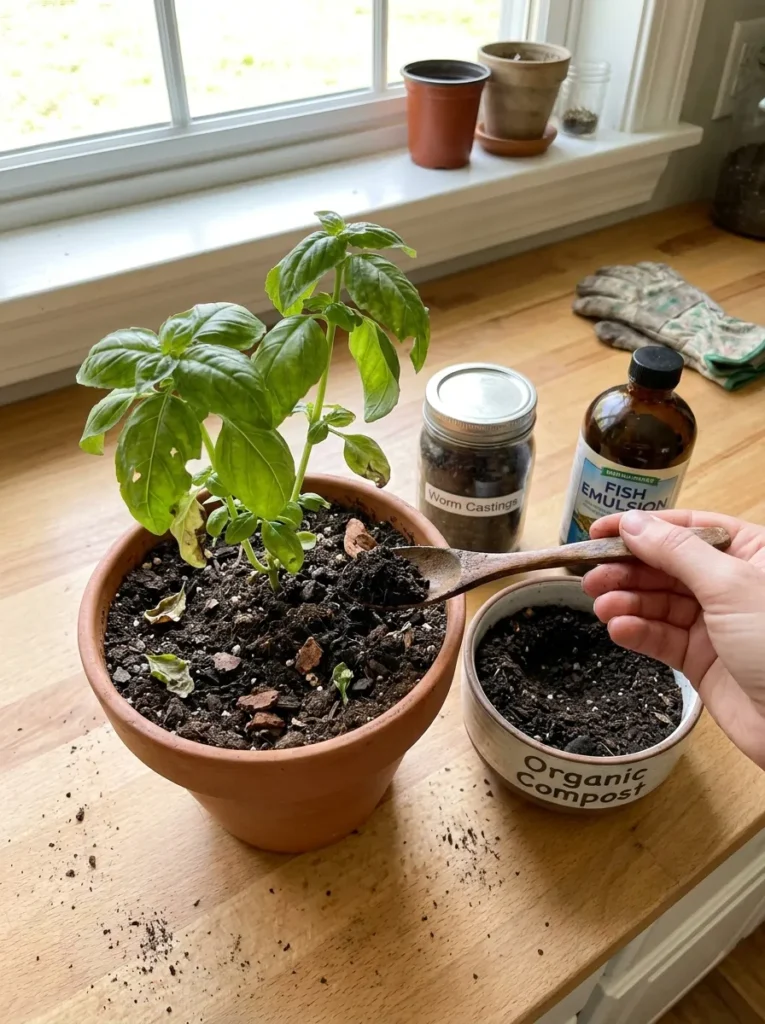
Organic fertilizers come from natural materials and release nutrients gradually.
Common examples include:
- compost-based fertilizers
- worm castings
- fish emulsion
- seaweed extract
Organic fertilizers often improve soil structure while supplying nutrients.
Many gardeners prefer them for edible plants because they provide gentle nutrition.
Organic vs Synthetic Fertilizers for Indoor Herbs
Indoor gardeners often debate whether organic fertilizers are better than synthetic fertilizers.
Both can support plant growth, but they behave differently.
Factors | Organic Fertilizers | Synthetic Fertilizers |
|---|---|---|
Nutrient release | Gradual | Immediate |
Soil improvement | Supports soil microbes | Minimal soil impact |
Precision | Less exact nutrient ratios | Precise nutrient formulas |
Risk of overfeeding | Lower | Higher |
For indoor herbs, organic fertilizers are often preferred because they release nutrients slowly and reduce the risk of excessive feeding.
Research from the University of California Agriculture & Natural Resources highlights that organic fertilizers improve soil microbial activity, which enhances nutrient uptake and supports sustainable indoor herb growth.
How Fertilizer Strength Affects Root Health
In small containers, fertilizer concentration matters more than the type.
Roots are confined, so excess nutrients build up faster than in open soil.
If fertilizer is too strong:
- Roots can experience “fertilizer burn”
- Leaf tips turn brown
- Growth may slow instead of improve
If properly diluted:
- Nutrients are absorbed gradually
- Roots remain healthy
- Growth stays consistent
This is why indoor herbs are usually fed with weaker solutions compared to outdoor plants.
Best Fertilizers by Herb Type
Different herbs have unique growth rates and nutrient requirements, so the choice of fertilizer should match each herb’s needs.
Fertilizers for Leafy Herbs
Leafy herbs grow quickly and produce frequent new foliage.
Examples include:
- basil
- parsley
- cilantro
- chives
- mint
These plants usually benefit from balanced fertilizers that provide moderate nitrogen.
Fertilizers for Woody Herbs
Woody Mediterranean herbs grow naturally in nutrient-poor soils.
Examples include:
- rosemary
- thyme
- oregano
- sage
These herbs prefer lighter fertilization and may develop stronger aroma when nutrients remain modest.
Fertilizing Fast-Growing Herbs
Some herbs grow rapidly and produce large numbers of leaves.
Examples include basil and mint.
These herbs may benefit from occasional fertilization to maintain steady growth.
Too much fertilizer can actually reduce the flavor intensity of these herbs.
To make it easier, here’s a quick reference for the best fertilizer type and strength for some common indoor herbs.
Herb | Ideal Fertilizer Type |
|---|---|
Basil | Balanced liquid fertilizer |
Mint | Balanced liquid or organic |
Parsley | Balanced liquid fertilizer |
Cilantro/Coriander | Balanced liquid or organic |
Chives | Balanced liquid |
Thyme | Light organic or diluted |
Oregano | Light organic or diluted |
Sage | Light organic or diluted |
Rosemary | Light organic or diluted |
Tarragon | Light organic or diluted |
Beginner-Friendly Fertilizer Options
For beginners, overfeeding is a common concern.
Fortunately, several low-risk options exist.
Balanced Fertilizers
Balanced fertilizers provide equal proportions of nitrogen, phosphorus, and potassium.
They supply nutrients without heavily favoring one element.
Diluted Feeding
Many gardeners dilute fertilizer solutions to reduce nutrient strength.
This approach helps prevent fertilizer burn and allows gradual feeding.
Mild Organic Fertilizers
Organic fertilizers often release nutrients slowly, making them forgiving for beginners.
These fertilizers support plant growth while reducing the chance of overfeeding.
When NOT to Fertilize Indoor Herbs
Fertilizer is helpful, but there are times when it should be avoided.
Do not fertilize when:
- The plant is newly repotted (fresh soil already has nutrients)
- The plant is stressed (wilting, root damage, pest issues)
- Growth is naturally slow (cool seasons or low light conditions)
Feeding a stressed plant can make the problem worse instead of fixing it.
How to Choose the Right Fertilizer
Choosing the right fertilizer is simple if you follow a step-by-step evaluation process.
Step 1: Read the Fertilizer Label
Fertilizer labels typically display an NPK ratio, which indicates the relative amounts of nitrogen, phosphorus, and potassium.
Balanced ratios provide general nutrition for most herbs.
Step 2: Match Fertilizer to Herb Type
Leafy herbs usually benefit from moderate nitrogen, while Mediterranean herbs prefer lighter feeding.
Choosing fertilizer strength according to herb type improves plant health.
Step 3: Consider the Growing Environment
Indoor climate conditions also influence fertilizer behavior.
Frequent watering, warm temperatures, and strong light may increase nutrient use, while cooler environments may require less feeding.
Fertilizer Comparison for Indoor Herbs
Fertilizer Type | Nutrient Speed | Ease of Use | Best For |
|---|---|---|---|
Liquid fertilizer | Fast | Easy | Beginners |
Slow-release fertilizer | Moderate | Very easy | Low-maintenance gardeners |
Compost-based fertilizer | Slow | Moderate | Organic gardening |
Worm castings | Slow | Easy | Improving soil health |
Each option can support healthy herb growth when applied carefully.
When herbs get proper nutrients, they grow faster and produce more leaves for cooking. To keep plants producing continuously, it’s important to learn how to harvest indoor herbs without damaging the plant.
FAQS
1. What is the best fertilizer for indoor herbs?
Balanced fertilizers containing nitrogen, phosphorus, and potassium generally work well for most indoor herbs.
2. Do indoor herbs always need fertilizer?
Fresh potting soil contains nutrients initially, but container plants eventually benefit from light fertilization as nutrients decline.
3. Are organic fertilizers better for herbs?
Organic fertilizers release nutrients gradually and improve soil structure, which makes them popular for edible plants.
4. Which fertilizer works best for basil?
Basil usually responds well to balanced fertilizers that provide moderate nitrogen for leafy growth.
5. How often should indoor herbs be fertilized?
Many indoor herbs benefit from mild feeding every few weeks during active growth.
6. Can herbs grow without fertilizer?
Yes. Herbs can grow without fertilizer in fresh potting mix, but growth may slow as nutrients are depleted.
7. Can too much fertilizer damage herbs?
Yes. Excess fertilizer can burn roots and reduce overall plant health.
Conclusion
The health of indoor herbs depends on the nutrients available in their containers.
Over time, watering and plant growth gradually reduce the nutrient supply inside potting soil. The right fertilizer restores those nutrients and supports continued plant development.
Understanding fertilizer types, nutrient balance, and herb preferences makes it easier to choose a safe feeding method for basil, mint, parsley, and other culinary herbs.
With careful fertilization and observation, indoor herbs can remain productive and healthy throughout the year, even in small kitchen gardens or apartment spaces.
If your herbs continue struggling despite regular feeding, the issue may not be fertilizer alone. Our guide on Common Indoor Herb Gardening Mistakes explains several common care issues that can affect indoor plant health.

Hi, I’m Rimsha, founder of Urban Bloomer 🌱
I grow herbs and plants in a small apartment and share what actually works in limited indoor spaces. Over the past few years, I’ve tested different setups, from lighting and soil to watering routines, to find simple methods that make indoor gardening easier.
Here, you’ll find practical, beginner-friendly advice based on real experience, not complicated gardening systems.