How to Harvest Indoor Herbs Without Killing the Plant (Step-by-Step Guide)
Many indoor gardeners accidentally kill their herbs not by neglect, but by harvesting them incorrectly.
You water the plant, give it sunlight, and it grows beautifully. Then one day you pick a handful of leaves for cooking, and suddenly the plant stops growing, becomes leggy, or starts dying.
The truth is simple: herbs need to be harvested properly. Cutting them the right way actually encourages the plant to grow faster and fuller.
When herbs are harvested correctly, they follow a natural cut-and-come-again growth pattern, meaning the plant keeps producing fresh leaves for months.
This guide explains exactly how to harvest indoor herbs step by step without damaging the plant, including the right tools, timing, herb-specific techniques, and common mistakes to avoid.
If you are new to growing herbs indoors, start by learning the basics. This Indoor Herb Gardening for Beginners guide explains how to start and care for herbs successfully.
Why Proper Herb Harvesting Matters
Harvesting herbs is not just about collecting leaves. It is also a form of pruning, which helps guide plant growth.
When done properly, trimming herbs improves the health and productivity of the plant.
Encourages Continuous Growth
Cutting stems above the correct point stimulates branching. Instead of one stem growing taller, the plant produces two new stems.
This makes herbs like basil, mint, and oregano grow fuller rather than tall and weak.
Improves Flavor and Aroma
Young leaves usually contain stronger essential oils, which are responsible for the aroma and taste of herbs.
Regular harvesting keeps plants producing these fresh, flavorful leaves.
Keeps Plants Healthy
Removing older stems improves airflow and allows more light to reach new growth.
This helps prevent disease and reduces plant stress.
Herbs that are trimmed regularly stay compact, which is ideal for indoor herb gardens and windowsill planters.
Even small trimming errors can slow plant growth. If you want to avoid damaging your herbs, read about common indoor herb harvesting mistakes and how to fix them.
What Happens to a Plant After You Cut It
When you trim a herb plant, it doesn’t just lose leaves. The plant actually redirects its energy.
Instead of continuing to grow upward from a single stem, it begins producing side shoots from the nearest node. That’s what makes the plant look fuller over time.
If you keep cutting from the right spots, the plant keeps repeating this pattern. If you cut randomly or too low, that pattern breaks, and growth slows down instead of improving.
Signs Your Indoor Herbs Are Ready to Harvest
Now that you know why harvesting is important, the next step is learning when herbs are actually ready to be harvested.
Harvesting too early is one of the most common mistakes beginners make.
Before trimming your plant, check for these signs.
Plant Height
Most herbs should be 6–8 inches tall before the first harvest.
This ensures the plant has strong roots and enough leaves to recover.
Leaf Growth
Look for multiple sets of leaves along the stem. A plant with only a few leaves should be allowed to grow longer.
Healthy Appearance
The plant should have:
- strong stems
- bright green leaves
- steady upward growth
Typical Growth Time for Common Herbs
Herb | Ready for Harvest |
|---|---|
Basil | 4–6 weeks |
Mint | 3–4 weeks |
Parsley | 5–6 weeks |
Cilantro | 3–4 weeks |
Thyme | 6–8 weeks |
Oregano | 5–6 weeks |
Growth time may vary depending on light, soil quality, and watering conditions.
Once your herbs are ready for harvesting, using the right tools helps prevent damage to the plant.
Tools You Need for Harvesting Indoor Herbs
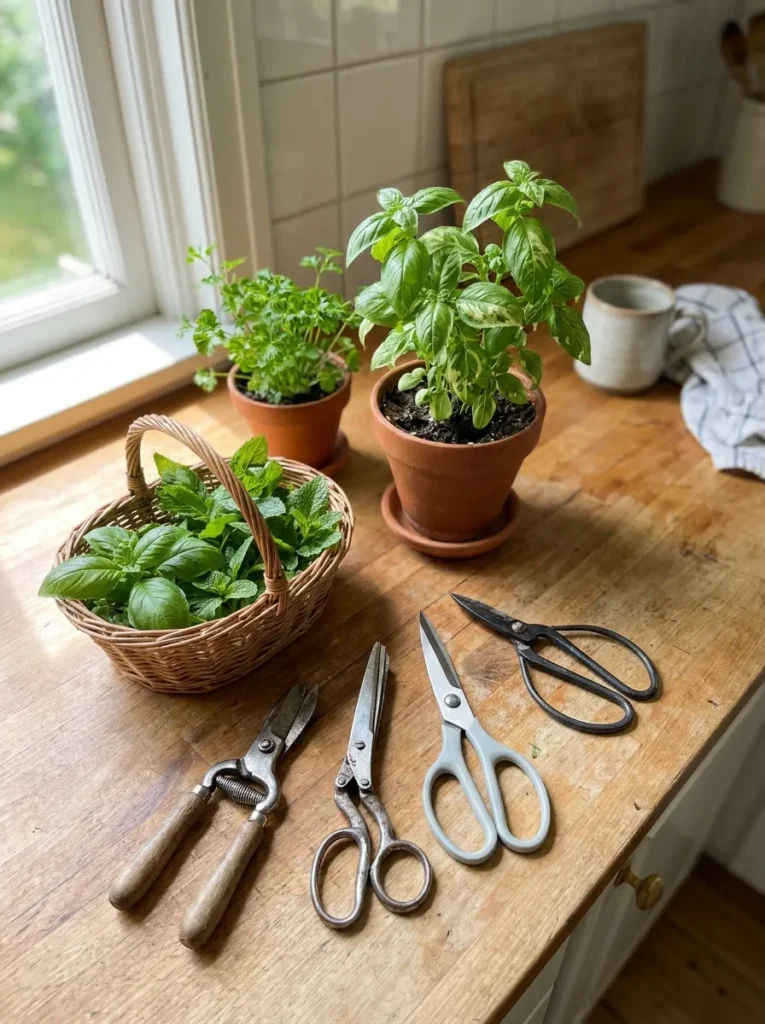
Once your herbs are mature enough for harvesting, using the right tools ensures clean cuts and prevents plant damage.
Using the right tools prevents stem damage and keeps plants healthy.
You do not need expensive equipment, but tools should always be sharp and clean.
Recommended Tools
- herb scissors
- pruning shears
- garden snips
- clean kitchen scissors
- small harvest basket
Why Clean Tools Matter
Dirty tools can spread bacteria or fungal infections between plants.
Before harvesting, wipe the blades with alcohol or warm soapy water. This simple step protects your indoor herb garden.
Once you have the right tools ready, the next step is understanding where to cut on the plant.
If you are setting up your herb garden for the first time, this Indoor Herb Garden Supplies Checklist explains the essential tools and materials beginners should have.
How to Identify a Leaf Node on Herbs
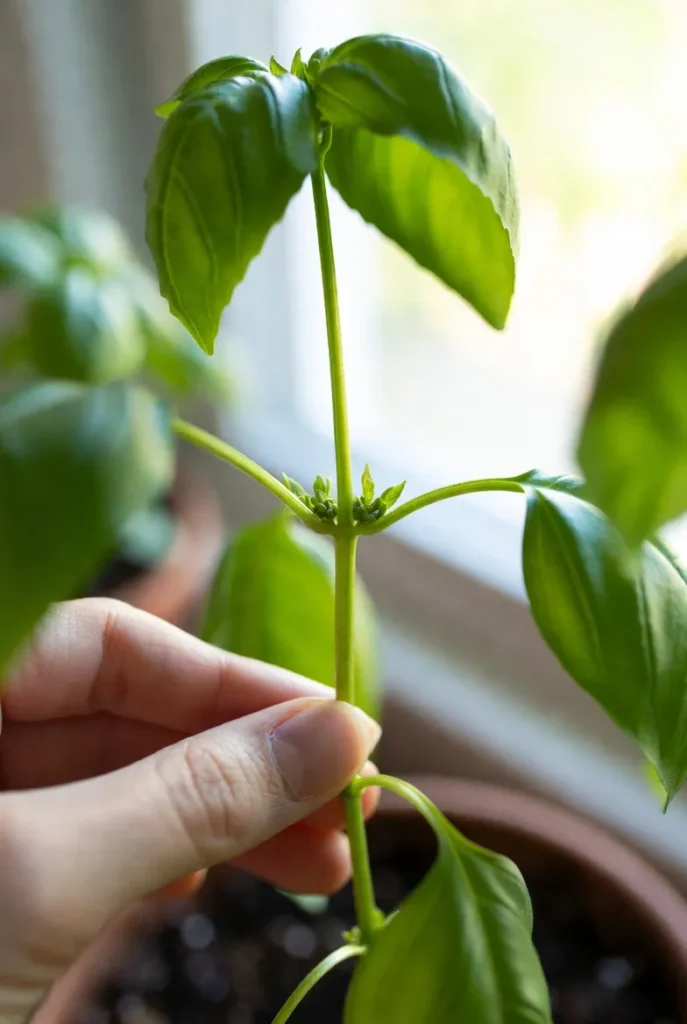
A leaf node is the point on the stem where new leaves and branches grow.
To find a leaf node:
• look for the spot where two leaves emerge from the stem
• small buds may be visible between the leaves
• the stem is usually slightly thicker at this point
When harvesting herbs, always cut just above this location. This allows the plant to send out two new shoots from the same spot.
How to Recognize Strong vs Weak Growth Points
Not every node produces the same quality of growth.
Stronger nodes usually:
- sit on thicker parts of the stem
- have healthy, full leaves
- are positioned where light reaches easily
Weaker nodes tend to:
- sit on thin, stretched stems
- produce smaller leaves
- grow in shaded areas
Cutting above stronger nodes usually leads to better branching.
How to Harvest Indoor Herbs Step by Step
Now you understand leaf nodes and proper tools, let’s go through the exact harvesting process step by step.
Step 1: Choose the Right Time of Day
Morning is the best time to harvest herbs.
During early hours:
- essential oils are strongest
- leaves are hydrated
- flavors are more intense
Avoid harvesting when plants look dry or stressed.
According to horticulture research, herbs harvested in the early morning typically contain higher concentrations of aromatic oils.
Step 2: Identify the Growth Node
Look along the stem for the point where two leaves emerge from the stem.
This point is the growth node.
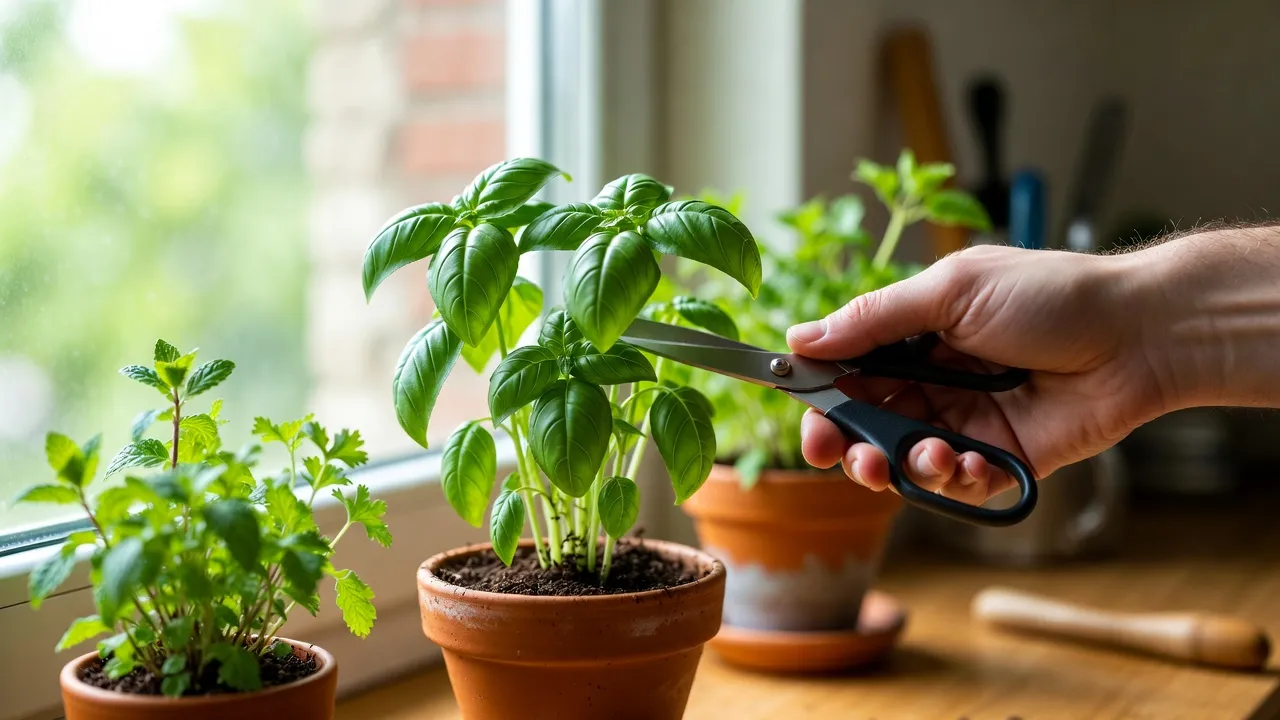
Always cut slightly above the node.
This allows the plant to branch and produce more leaves.
Step 3: Start with Mature Leaves
Harvest larger outer leaves first.
Leave small center leaves untouched so they can continue growing.
This approach helps plants maintain strong growth.
Step 4: Cut Instead of Pulling
Never pull leaves from the stem.
Pulling can tear the plant tissue and damage roots.
Use herb scissors or pruning snips to make a clean cut.
Step 5: Follow the One-Third Rule
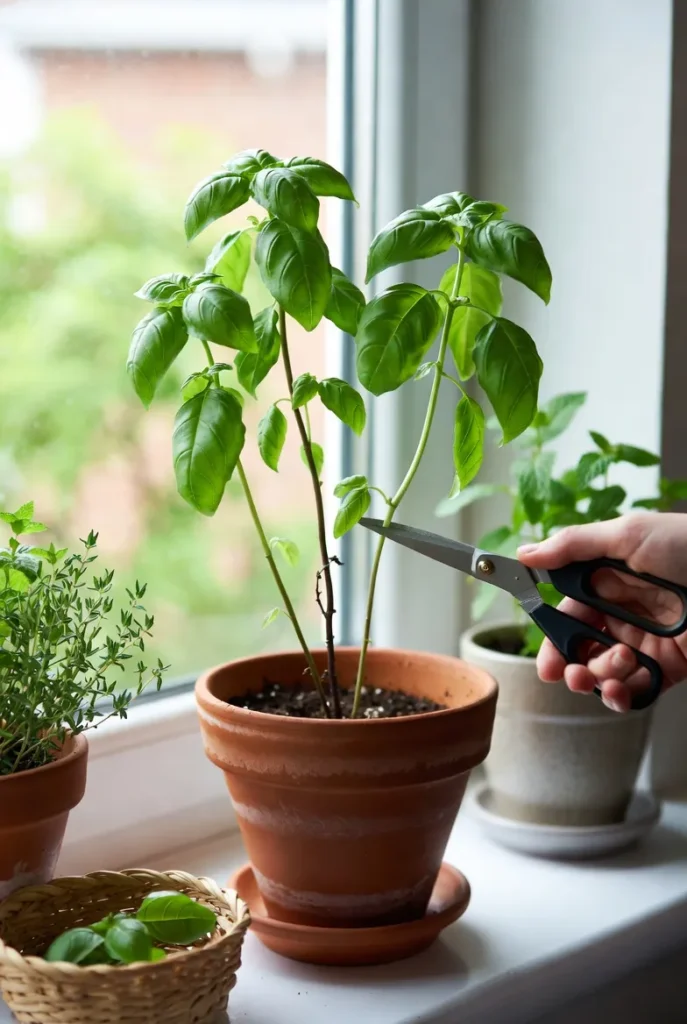
A key rule in herb gardening:
Never remove more than one-third of the plant at a time.
Plants need enough leaves to continue photosynthesis, which provides energy for regrowth.
Removing too much at once can slow recovery.
Step 6: Trim Above a Leaf Pair
Cutting above a pair of leaves encourages two new stems to grow.
This method encourages fuller plants and steady leaf production.
Step 7: Remove Flowers if They Appear
Some herbs begin to flower as they mature.
Flowering signals the plant to stop producing leaves.
If you see flower buds on herbs like basil, pinch them off immediately to maintain leaf production.
Herb-Specific Harvesting Tips
While the basic harvesting method is similar for most herbs, different herbs grow in slightly different ways, which means their harvesting techniques can vary.
Basil
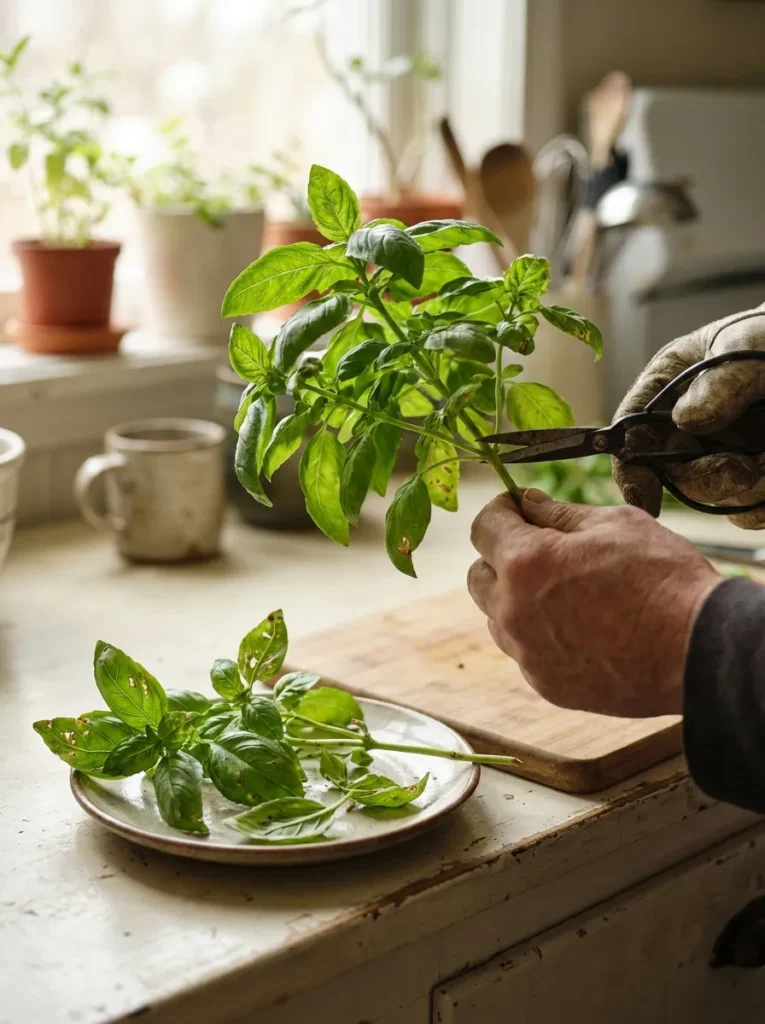
Basil responds extremely well to frequent trimming.
Harvest by:
- cutting stems above leaf nodes
- removing flower buds early
- trimming top growth regularly
This encourages bushy basil plants.
Mint
Mint grows quickly and can tolerate heavier harvesting.
Cut mint stems about halfway down the plant.
This encourages new shoots to grow from the lower stems.
Parsley
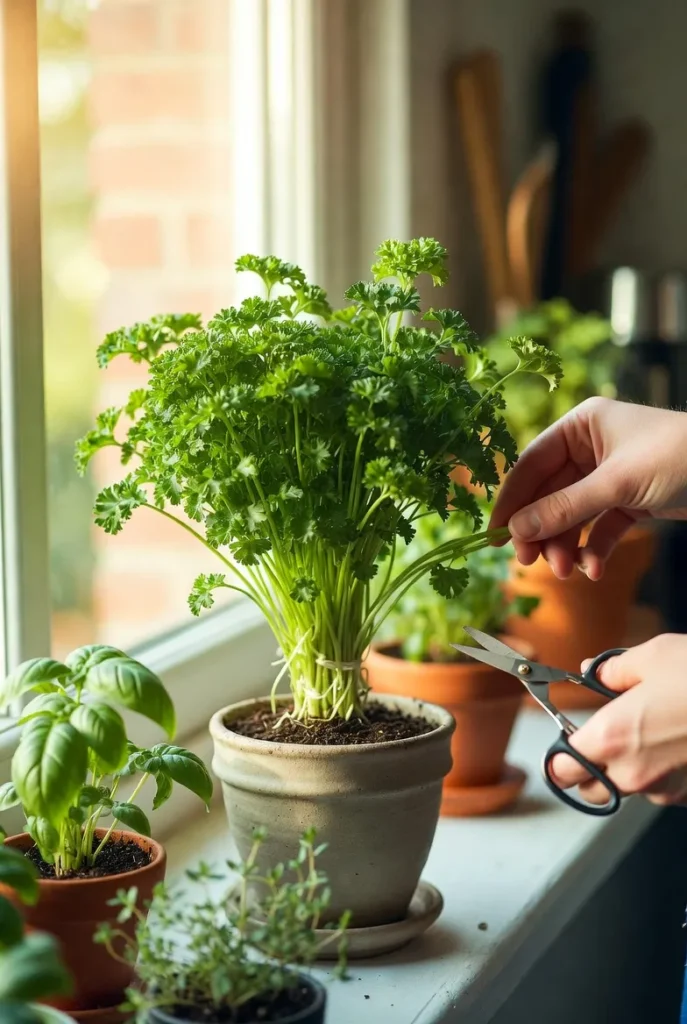
Parsley grows from a central base called a crown.
The best approach is to:
- harvest outer stems first
- leave the center intact
This allows new leaves to develop in the middle.
Cilantro
Cilantro grows quickly but tends to flower early.
To harvest cilantro:
- cut entire stems near the base
- harvest before flowering begins
Regular harvesting slows down bolting.
Thyme and Oregano
These herbs develop woody stems over time.
Harvest by:
- trimming soft upper tips
- avoiding woody lower stems
Frequent light trimming encourages new growth.
How Often You Should Harvest Indoor Herbs
Different herbs grow at different speeds.
Typical Harvesting Schedule
Herb | Harvest Frequency |
|---|---|
Basil | Every 1–2 weeks |
Mint | Every 1–2 weeks |
Parsley | Every 2 weeks |
Cilantro | Every 2 weeks |
Thyme | Every 3 weeks |
Oregano | Every 2–3 weeks |
Frequent trimming keeps herbs in the cut-and-come-again growth cycle.
Common Harvesting Mistakes That Damage Indoor Herbs
Avoiding these mistakes will greatly improve plant health.
1. Harvesting Too Early
Young plants need time to establish roots.
Wait until herbs reach 6 inches or more before cutting.
2. Removing Too Much at Once
Taking too many leaves causes plant stress.
Always follow the one-third harvesting rule.
3. Pulling Leaves Instead of Cutting
Pulling can damage stems and roots.
Use scissors or garden snips for clean cuts.
4. Ignoring Flower Growth
Once herbs flower, leaf production declines and flavor may become bitter.
Remove flower buds early.
5. Using Dull Tools
Dull scissors crush stems rather than cutting them.
Sharp blades help plants heal faster.
Many plant problems are caused by simple beginner mistakes. This guide on Common Indoor Herb Gardening Mistakes explains how to avoid them.
How to Help Indoor Herbs Grow Back After Harvesting
After trimming herbs, a few simple care practices help plants recover quickly.
1. Provide Enough Light
Indoor herbs need 6–8 hours of light per day.
Place plants near a bright window or use a grow light if natural light is limited.
Healthy herbs grow faster and produce more leaves when they receive consistent light. This guide to indoor herb grow lights explains how to provide the right lighting conditions year-round.
2. Water Properly
Keep soil slightly moist but not soggy.
Overwatering can damage roots and slow plant growth.
Proper watering habits are essential for healthy herbs. This guide explains How to Water Indoor Herbs Properly to avoid overwatering or root damage.
3. Feed Plants Occasionally
A balanced liquid fertilizer every 2–4 weeks helps replace nutrients used during growth.
Choosing the right nutrients can make a big difference in herb growth. This guide explains the Best Fertilizers for Indoor Herbs and when to use them.
4. Rotate Pots
Turning the pot every few days ensures all sides receive equal sunlight.
This keeps plants growing evenly.
5. Continue Light Pruning
Regular trimming encourages plants to grow fuller and produce more leaves.
What New Growth Should Look Like
After a proper harvest, new growth usually appears within a few days.
You’ll notice:
- small shoots forming near the cut point
- brighter green leaves
- slightly faster growth than before
If nothing changes after a week or two, it usually means something else (light, water, or nutrients) needs adjustment.
How to Store Fresh Herbs After Harvesting
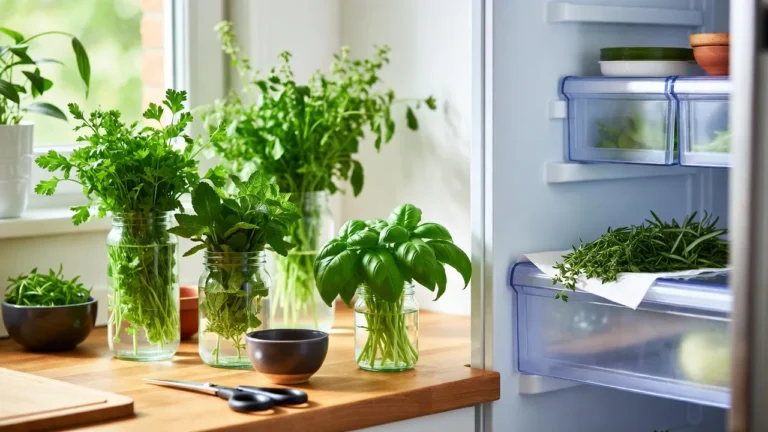
After harvesting fresh herbs, the next step is preserving their flavor and freshness.
Short-Term Storage
To keep herbs fresh:
- wrap them in a slightly damp paper towel
- place them in a container or bag
- store in the refrigerator
Most herbs stay fresh 5–7 days this way.
Freezing Herbs
Freezing is an easy long-term storage method.
Common techniques include:
- chopping herbs and freezing them in olive oil
- using ice cube trays
- storing in airtight containers
Frozen herbs maintain flavor for several months.
Drying Herbs
Some herbs dry very well.
Good herbs for drying include:
- thyme
- oregano
- rosemary
Hang small bundles in a warm, dry space until the leaves crumble easily.
Indoor Herb Harvesting Chart
This quick reference chart summarizes common herbs.
Herb | Harvest Time | Method |
|---|---|---|
Basil | 4–6 weeks | Cut above leaf nodes |
Mint | 3–4 weeks | Trim stems |
Parsley | 5–6 weeks | Cut outer stems |
Cilantro | 3–4 weeks | Cut whole stems |
Thyme | 6–8 weeks | Trim tips |
Oregano | 5–6 weeks | Cut soft stems |
When to Pause Harvesting
Sometimes it’s better to stop harvesting temporarily.
Give your plant time to recover if you notice:
- Slower new growth
- Smaller leaves than usual
- Weak or thin stems
A short break allows the plant to rebuild strength before the next harvest.
FAQs
1. Can indoor herbs regrow after harvesting?
Yes. Most herbs regrow quickly when cut above a leaf node. The plant responds by producing new stems and leaves.
2. How much of an herb plant can you harvest?
Never remove more than one-third of the plant at once. This ensures the plant still has enough leaves to continue growing.
3. Why are my herbs dying after harvesting?
Common causes include cutting too low, harvesting too much, poor lighting, or lack of nutrients.
4. Should herbs be washed before storing them?
Yes, but dry them completely before placing them in the refrigerator to prevent moisture buildup.
5. What is the best way to harvest basil?
Cut basil stems just above a leaf pair. This encourages two new stems to grow, making the plant bushier.
6. Can you harvest herbs every week?
Fast-growing herbs like basil and mint can be harvested weekly if the plant is healthy.
7. Do herbs taste better before flowering?
Yes. Herbs typically have the strongest flavor before flowering begins because essential oils are more concentrated.
8. Can You Harvest Herbs Without Killing the Plant?
Yes, herbs are designed to tolerate regular trimming.
In fact, most culinary herbs grow better when harvested frequently. Cutting stems properly encourages branching and prevents plants from becoming tall and weak.
Conclusion
Harvesting indoor herbs correctly is one of the most important skills for keeping plants healthy and productive.
By following a few simple rules such as cutting above leaf nodes, harvesting top growth, and removing only a portion of the plant, you allow herbs to regrow again and again.
Whether you are growing basil, mint, parsley, cilantro, thyme, or oregano, regular and gentle harvesting helps plants stay full, flavorful, and productive.
With practice, you will learn exactly where to cut and how often to harvest, turning your indoor herb garden into a steady source of fresh ingredients all year long.

Hi, I’m Rimsha, founder of Urban Bloomer 🌱
I grow herbs and plants in a small apartment and share what actually works in limited indoor spaces. Over the past few years, I’ve tested different setups, from lighting and soil to watering routines, to find simple methods that make indoor gardening easier.
Here, you’ll find practical, beginner-friendly advice based on real experience, not complicated gardening systems.