Where to Place Indoor Herbs: Choosing the Best Location for Healthy Growth
Many people start growing herbs indoors with excitement, only to watch their plants become weak, pale, or leggy within a few weeks.
The problem usually isn’t watering or soil. It’s location.
Indoor herbs depend almost entirely on their environment. If they don’t receive enough sunlight, stable temperatures, and fresh airflow, their growth slows down and the leaves lose flavor.
Choosing the right spot inside your home makes a huge difference. With the right placement, herbs like basil, mint, parsley, thyme, and rosemary can grow strong and productive throughout the year.
This guide explains exactly how to choose the best location for indoor herbs, including sunlight requirements, window direction, airflow, and the ideal rooms in your home.
Quick Answer: Best Place for Indoor Herbs
The best place for indoor herbs is near a south-facing window that receives at least 6–8 hours of sunlight per day. Herbs should be kept within 1–2 feet of the window and placed in a room with stable temperatures and gentle airflow for healthy growth.
Why Location Matters for Indoor Herbs
Plants rely on photosynthesis, the process where sunlight is converted into energy for plant growth. Outdoors, herbs naturally receive plenty of sunlight and airflow. Indoors, these conditions must be recreated.
A poor location can cause:
- slow or stunted growth
- thin, weak stems
- pale leaves
- reduced flavor
- increased risk of mold or fungus
When herbs receive the right environment, they produce dense foliage and stronger aroma.
The best location combines four essential factors:
- bright sunlight
- stable temperature
- fresh airflow
- easy access for regular care
While arranging your herbs indoors, remember that not all plants grow well together. Some herbs should never be planted in the same pot to avoid poor growth.
Sunlight Requirements for Indoor Herbs
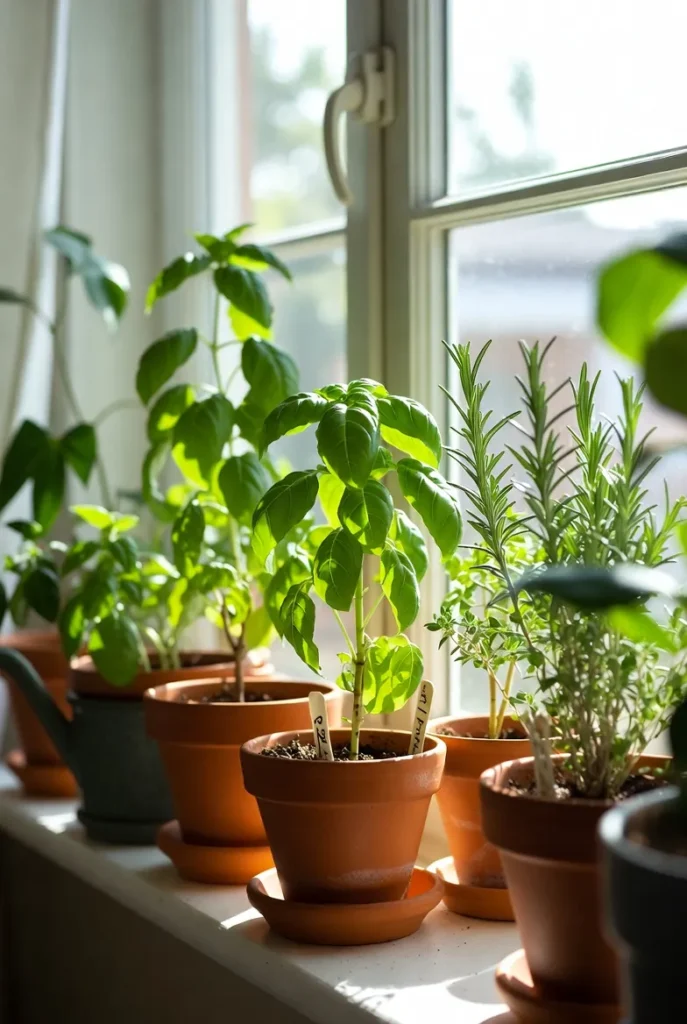
Most culinary herbs are sun-loving plants. They naturally grow in sunny outdoor gardens and need similar light indoors.
How Much Light Do Herbs Need?
Most indoor herbs require 6–8 hours of bright light every day.
Examples:
Herb | Light Requirement |
|---|---|
Basil | Full sun |
Rosemary | Full sun |
Thyme | Full sun |
Oregano | Full sun |
Parsley | Moderate light |
Mint | Moderate light |
Without enough sunlight, plants stretch toward the light source and become leggy.
Signs Your Indoor Herbs Are in the Wrong Location
Even if you water and care for your herbs regularly, poor placement can still cause growth problems. When herbs do not receive enough light or proper conditions, they often show visible warning signs.
Common signs include:
• pale or yellowing leaves
• slow or stalled growth
• plants leaning toward the window
• long, weak stems
• reduced aroma or flavor in the leaves
If you notice one or more of these symptoms, the plant may not be receiving enough light or may be placed too far from the window. Moving the herb closer to a brighter location can often restore healthy growth.
If your herbs continue struggling even after moving them to a brighter spot, you may want to explore this guide on common beginner mistakes in indoor herb gardening.
The Best Window Direction for Indoor Herbs
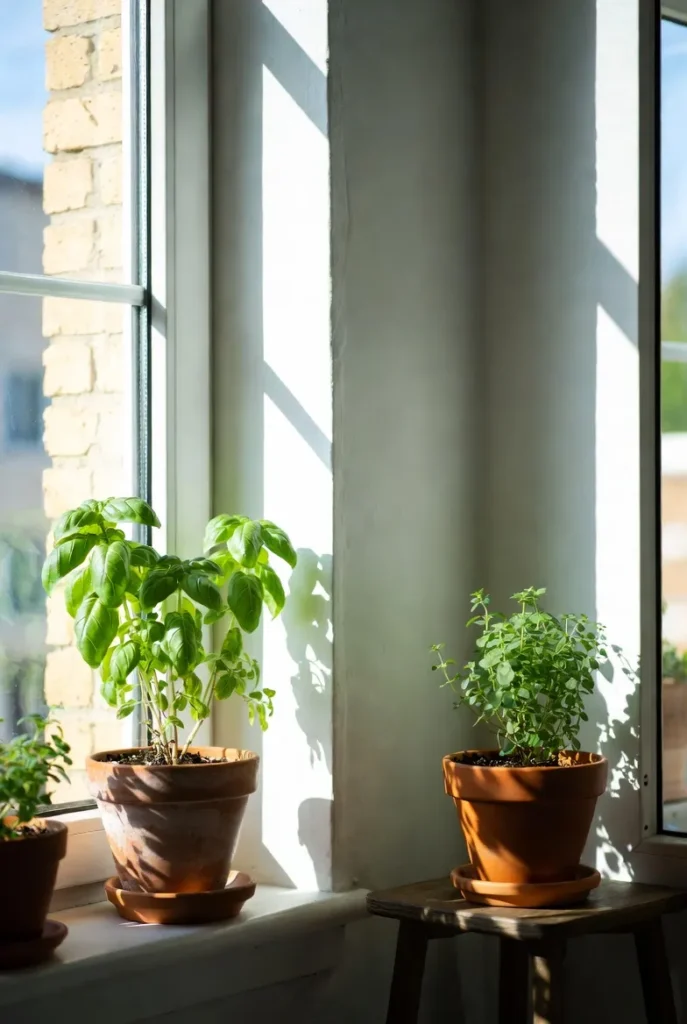
Not all windows provide the same amount of sunlight. The direction your window faces can dramatically affect how much light your herbs receive.
Window Direction Comparison
Window Direction | Light Level | Suitability for Herbs |
|---|---|---|
South-facing | Strong sunlight all day | Best option |
West-facing | Bright afternoon light | Good |
East-facing | Gentle morning light | Moderate |
North-facing | Low light | Usually not enough |
A south-facing window is typically the best location for indoor herbs because it provides the longest duration of sunlight.
West-facing windows can also work well, especially for herbs that tolerate strong afternoon light.
The Best Rooms in Your Home for Indoor Herbs
Once you understand how sunlight works indoors, the next step is choosing the right room for your herb garden.
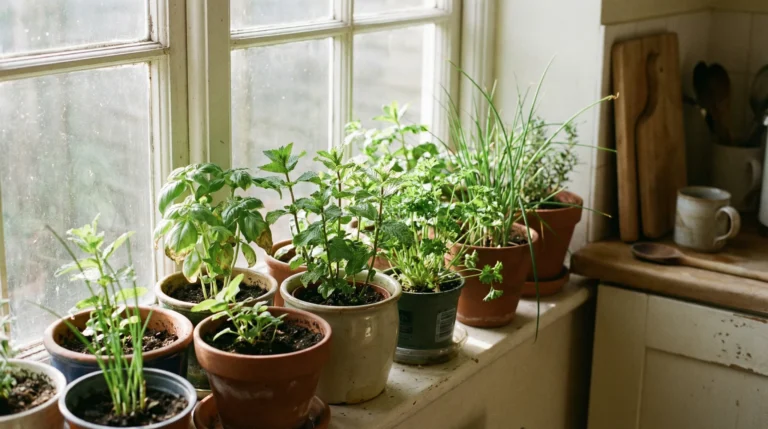
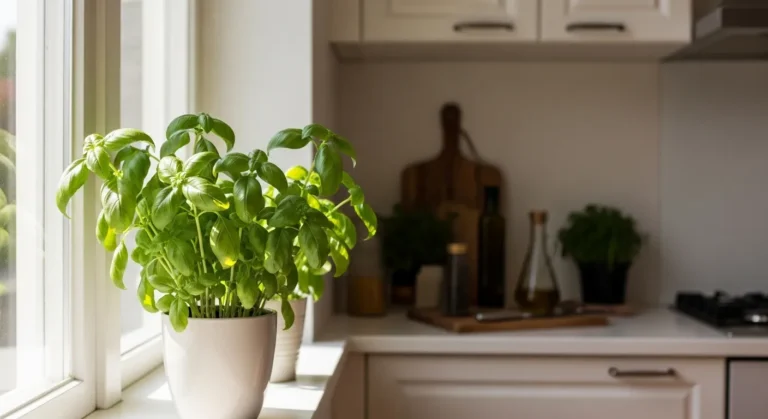
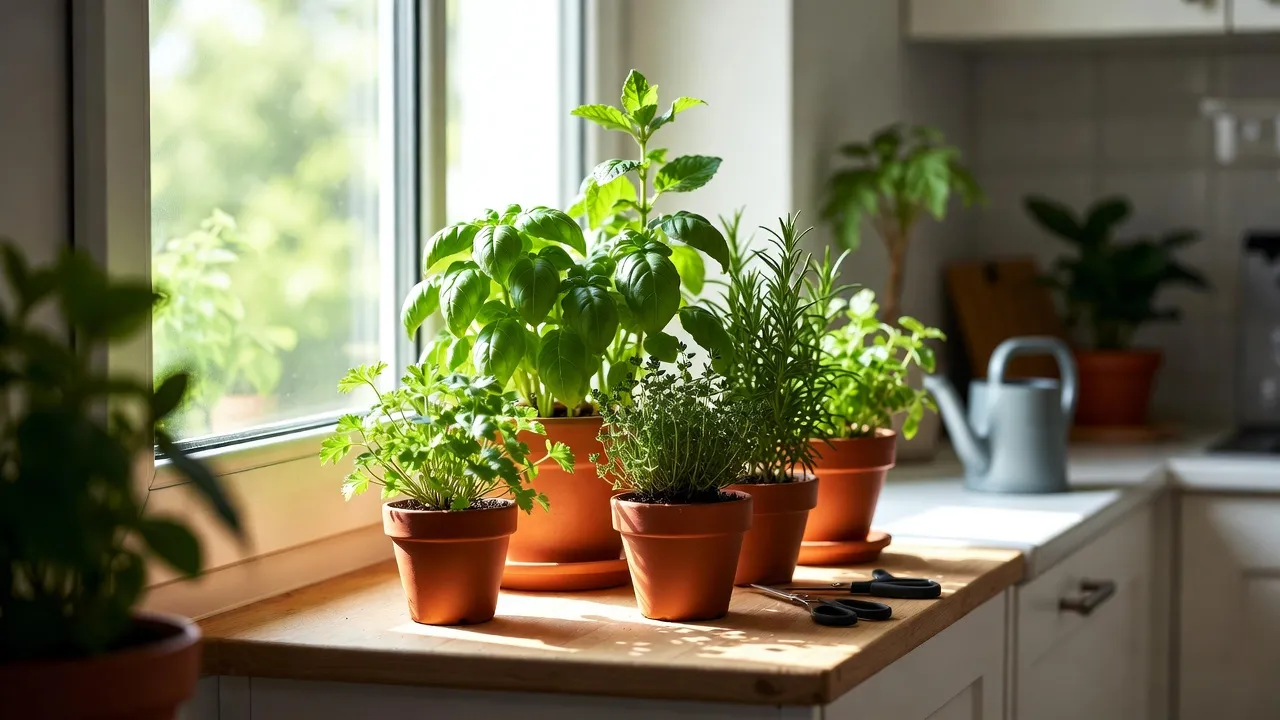
Kitchen Windowsill
The kitchen is one of the most popular places to grow herbs.
Benefits include:
- easy harvesting while cooking
- warm indoor temperatures
- convenient watering
Common herbs grown on kitchen windowsills include basil, parsley, oregano, and chives.
However, the kitchen only works well if the window receives enough sunlight.
Living Room Near a Bright Window
Living rooms often have larger windows that allow more natural light.
A bright living room window can support herbs like:
- rosemary
- thyme
- oregano
- basil
Using plant shelves or window planters helps position herbs closer to natural light sources.
Balcony Door or Patio Window
Homes with balcony doors or glass patio entrances often receive excellent sunlight.
This location offers:
- strong natural light
- improved airflow
- stable indoor temperatures
These conditions can support a productive indoor herb garden.
If you’re just getting started with indoor gardening, this beginner guide to growing herbs indoors can help you set up your first herb garden successfully.
How to Test Light in Your Home
Many rooms look bright but actually provide limited light for plants.
A simple method called the shadow test can help evaluate light intensity.
The Shadow Test
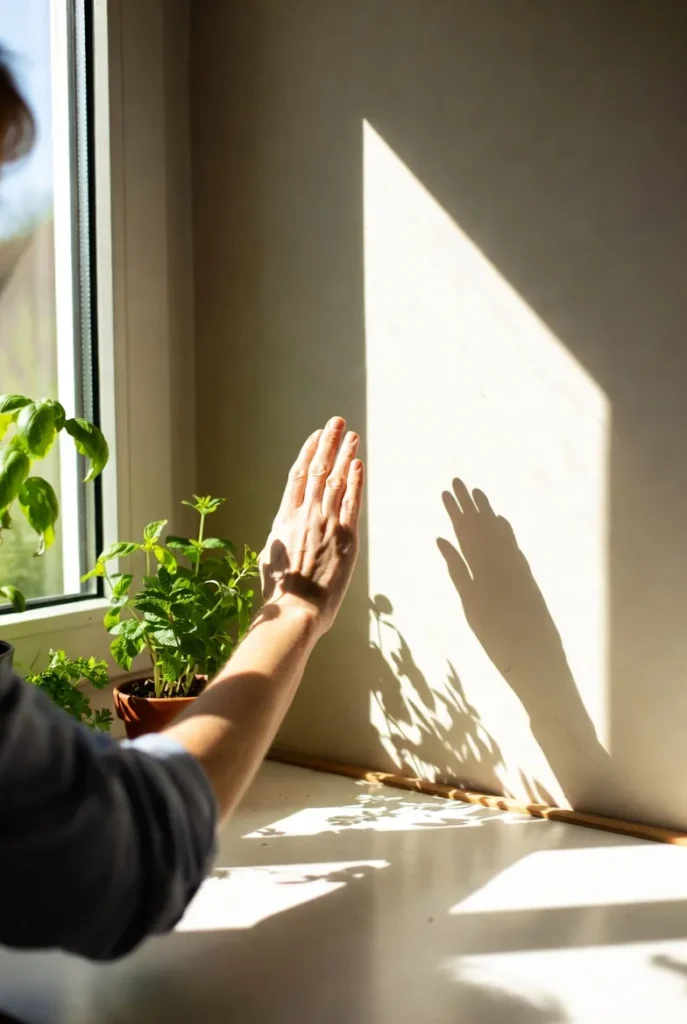
Stand near the spot where you want to place your herbs at midday.
Observe the shadow created by your hand.
Shadow Type | Light Strength |
|---|---|
Sharp shadow | Bright light |
Soft shadow | Medium light |
Very faint shadow | Low light |
Indoor herbs grow best in areas that produce sharp or moderately defined shadows.
If shadows are barely visible, the area likely needs grow lights.
How Close Should Indoor Herbs Be to a Window?
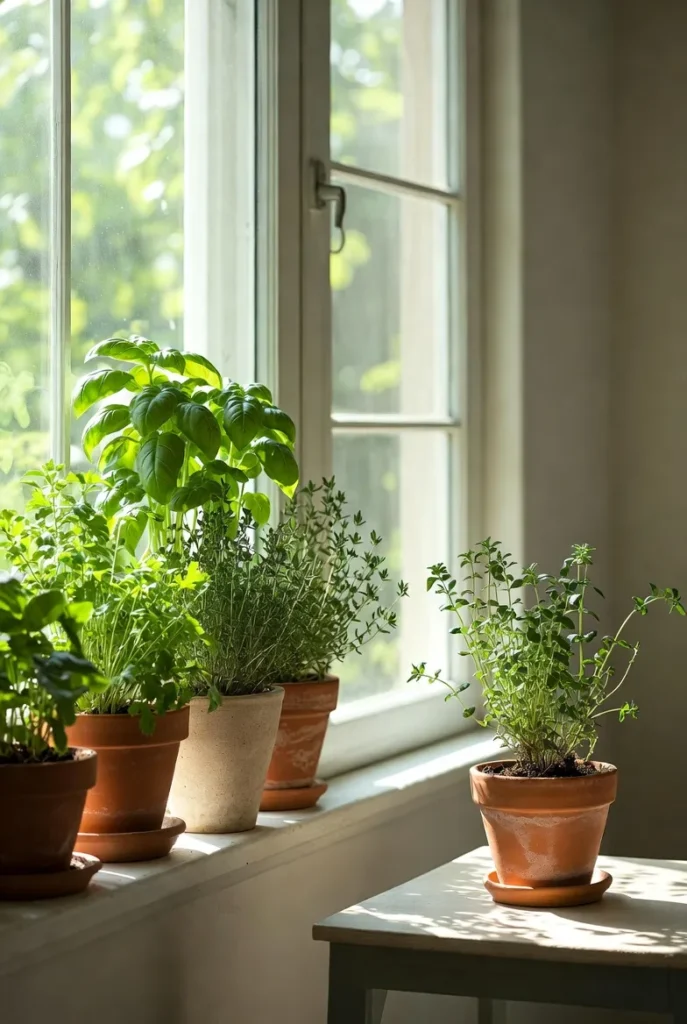
Distance from the window affects how much sunlight plants receive.
Light intensity decreases rapidly as you move farther away from the window.
A good rule is to keep herbs within:
30–60 cm (1–2 feet) of the window
If plants are placed farther away, they may not receive enough light for healthy growth.
Rotating containers once a week helps ensure all sides of the plant receive equal sunlight.
When herbs receive the right sunlight and placement, they grow faster and produce more leaves. If you find yourself harvesting often, these easy ways to store fresh herbs can prevent waste.
Ideal Temperature for Indoor Herbs
Most culinary herbs prefer moderate temperatures.
Ideal indoor temperature range:
18–24°C (65–75°F)
Extreme heat or cold can stress plants.
Avoid placing herbs near:
- heaters or radiators
- air conditioners
- drafty doors or windows
- ovens or cooking vents
Stable temperatures help maintain steady plant growth.
Why Airflow Is Important for Indoor Herbs
Air circulation is often overlooked in indoor gardening.
Without airflow, humidity builds up around leaves and soil. This creates conditions that encourage plant diseases.
Poor airflow can lead to:
- powdery mildew
- mold on soil
- fungus gnats
Good placement allows gentle air movement around the plant.
Opening windows occasionally or placing herbs in a ventilated room can help maintain healthy airflow.
Poor airflow can also attract pests, which is why it’s important to learn how to identify and remove common indoor herb pests naturally.
Can Herbs Grow Indoors Without Sunlight?
Yes, herbs can grow indoors without natural sunlight if artificial lighting is used.
Using Grow Lights for Indoor Herbs
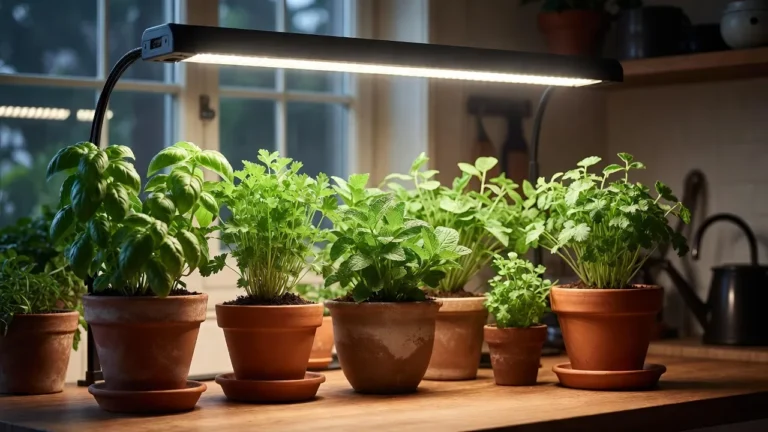
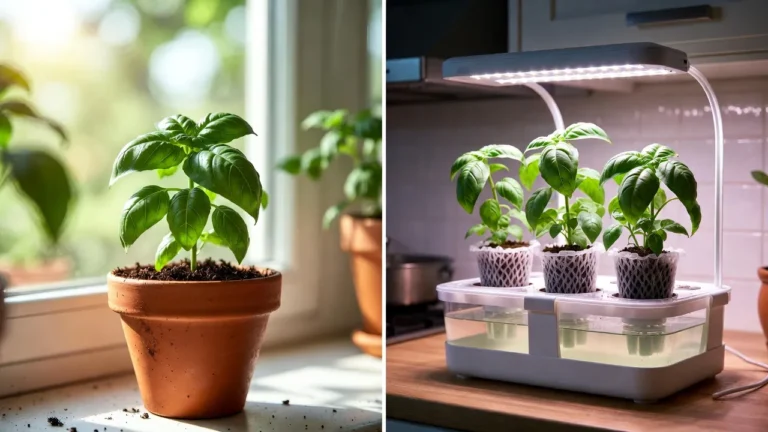
LED grow lights are commonly used to replace sunlight.
These lights provide a full spectrum similar to natural sunlight and support photosynthesis.
Typical setup:
- position light 15–30 cm above plants
- run lights for 12–14 hours daily
- maintain consistent light schedule
Grow lights are especially helpful in situations such as:
- apartments with north-facing windows
- cloudy climates
- winter months with shorter daylight hours
The University of Minnesota Extension provides detailed guidance on using grow lights for indoor plants and maintaining proper light schedules.
Best Herbs to Grow Indoors
Some herbs adapt better to indoor conditions than others.
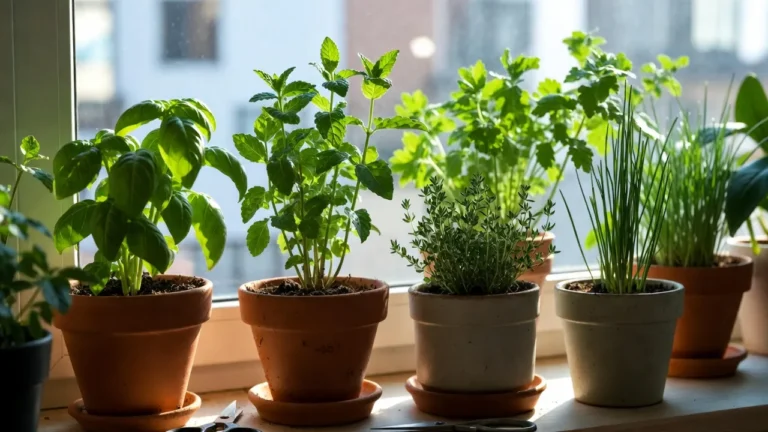
Beginner-friendly herbs include:
- basil
- mint
- parsley
- chives
- oregano
- thyme
These plants tolerate container gardening and moderate indoor environments.
Herbs like rosemary and sage can grow indoors but often require stronger sunlight.
Step-by-Step Guide to Choosing the Best Location for Indoor Herbs
Selecting the right location becomes easier when you follow a simple process.
Step 1: Find the Brightest Window
Walk through your home and identify the window that receives the most sunlight during the day.
South-facing windows are usually the brightest.
Step 2: Check Sunlight Duration
Observe how many hours of sunlight reach the area.
Aim for at least 6 hours of bright light daily.
Step 3: Evaluate Temperature
Ensure the location stays within the comfortable indoor temperature range.
Avoid areas near heat sources.
Step 4: Consider Air Circulation
Choose a spot where fresh air moves naturally through the room.
Avoid cramped corners with stagnant air.
Step 5: Place Herbs Close to the Light Source
Keep containers within 1–2 feet of the window for maximum light exposure.
Step 6: Rotate Plants Weekly
Turning plants regularly helps them grow evenly instead of leaning toward the light.
Indoor Herb Garden Setup Ideas for Small Spaces
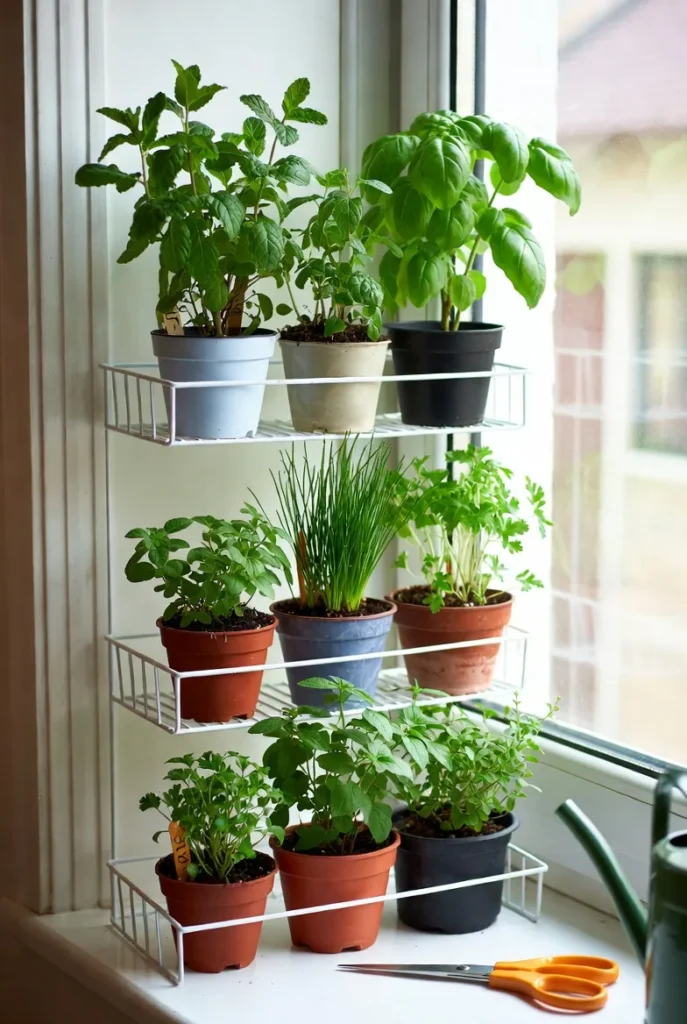
Even if you live in a small apartment or have limited window space, there are still creative ways to grow herbs successfully indoors.
Vertical Herb Shelves
Multi-level shelves allow several plants to grow near a single window.
This maximizes sunlight exposure.
Window Herb Racks
These racks attach directly to windows and hold small herb containers.
They keep plants positioned exactly where light is strongest.
Hanging Herb Planters
Hanging planters allow herbs to grow near windows without occupying counter space.
They work well in kitchens and balconies.
Common Indoor Herb Placement Mistakes
Even experienced gardeners sometimes place herbs in less-than-ideal spots. Avoiding a few common mistakes can greatly improve plant health.
Placing Herbs Too Far from Windows
Light decreases dramatically even a few feet away from the window.
Plants placed across the room rarely receive enough sunlight.
Growing Herbs in Dark Kitchens
Some kitchens appear bright but receive very little direct sunlight.
Always check window direction before placing herbs there.
Keeping Herbs Near Heat Sources
Radiators, heaters, and ovens can dry soil quickly and stress plants.
Stable temperatures are essential for healthy growth.
Ignoring Airflow
Plants kept in enclosed corners often develop mold or fungus.
Good air circulation helps prevent plant diseases.
Incorrect placement can also slow growth and affect harvesting, especially if herbs don’t receive enough light during the growing season.
Indoor Herb Placement Checklist
Before placing herbs in your home, confirm the following conditions:
✔ The location receives at least 6 hours of sunlight
✔ Plants are within 1–2 feet of the window
✔ Temperature stays between 18–24°C
✔ The room has some airflow
✔ Plants are easy to access for watering and harvesting
Meeting these conditions greatly increases the chances of healthy indoor herbs.
FAQs
1. Where is the best place to grow herbs indoors?
The best place is near a south-facing window that receives at least 6–8 hours of sunlight. The area should also have stable temperatures and gentle airflow.
2. Can herbs grow indoors without sunlight?
Yes. Herbs can grow under LED grow lights that provide full-spectrum light for about 12–14 hours daily.
3. Should herbs be placed in the kitchen or living room?
Both locations can work. Kitchens are convenient for cooking, while living rooms often provide stronger natural light.
4. How close should herbs be to a window?
Indoor herbs should be placed within 30–60 cm (1–2 feet) of a window to receive enough sunlight.
5. What window direction is best for herbs?
A south-facing window usually provides the strongest sunlight and is ideal for most indoor herbs.
6. Why are my indoor herbs growing tall and weak?
Leggy growth usually means the plant is not receiving enough light. Moving the herb closer to a brighter window or using grow lights can fix the problem.
7. Which herbs grow best indoors?
Basil, mint, parsley, oregano, chives, and thyme are among the easiest herbs to grow indoors.
Conclusion
Growing herbs indoors can be simple and rewarding when plants are placed in the right environment.
The most important factor is location. Herbs thrive when they receive strong sunlight, stable temperatures, fresh airflow, and regular care.
Start by identifying the brightest window in your home. Place herbs close to that light source, monitor their growth, and adjust placement if needed.
With the right location, even a small windowsill or apartment corner can become a productive indoor herb garden filled with fresh, flavorful plants all year long.
Even with the perfect location, overcrowded roots can limit growth, so knowing when to repot indoor herbs helps maximize their potential.

Hi, I’m Rimsha, founder of Urban Bloomer 🌱
I grow herbs and plants in a small apartment and share what actually works in limited indoor spaces. Over the past few years, I’ve tested different setups, from lighting and soil to watering routines, to find simple methods that make indoor gardening easier.
Here, you’ll find practical, beginner-friendly advice based on real experience, not complicated gardening systems.