Best Containers for Indoor Herbs: How to Choose the Right Pot
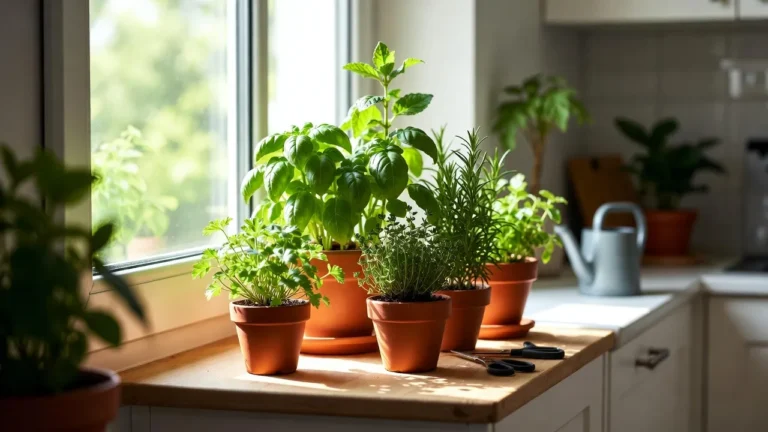
Imagine cooking dinner and simply reaching over to your kitchen windowsill to snip fresh basil, mint, or parsley. Indoor herb gardening makes this possible, even in small apartments or homes without outdoor space.
But there’s one detail many beginners overlook: the container.
Choosing the wrong pot can lead to common problems like yellow leaves, root rot, slow growth, or herbs dying within weeks. In many cases, the issue isn’t the plant, it’s the container holding it.
The best herb containers provide good drainage, proper root space, and materials that balance moisture and airflow. When these factors work together, herbs grow stronger, healthier, and produce more leaves.
In this guide, you’ll learn how to choose the right herb containers, which materials work best, what pot size herbs need, and how to avoid mistakes that damage root health.
If you’re just starting your herb garden, our guide on Indoor Herb Gardening for Beginners explains how to choose herbs, containers, and light conditions for a successful indoor setup.
Why Container Choice Matters for Indoor Herbs
Unlike outdoor plants, herbs grown indoors rely completely on their containers.
A pot acts as the plant’s entire environment. It controls:
- soil moisture
- root space
- airflow to the roots
- nutrient access
- drainage
If the container holds too much water, the herb root system may suffocate. If the pot is too small, roots become crowded and growth slows.
Why Containers Control More Than You Expect
When herbs grow in the ground, excess water can drain away and roots can expand freely.
In a container, everything is controlled by the pot. The amount of soil, how quickly it dries, and how air reaches the roots all depend on the container itself.
That’s why two identical plants can behave completely differently just because they’re in different pots.
Signs your container may be wrong
When a container doesn’t support healthy roots, plants often show visible warning signs.
- Soil stays wet for several days
- Yellow or drooping leaves
- Slow plant growth
- Mold forming on soil surface
In many indoor herb gardens, simply switching to a better container solves these problems.
Key Features of a Good Indoor Herb Container
Before choosing a pot, look for a few essential features that support herb growth.
1. Drainage Holes
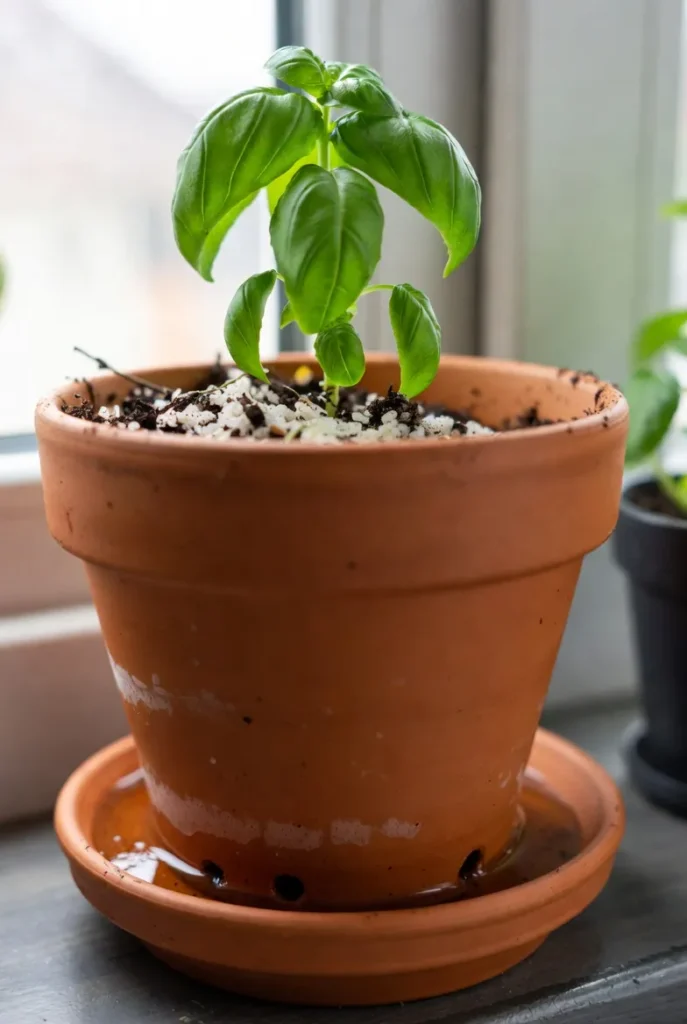
Drainage holes are the most important feature of any container used for herbs.
They allow excess water to escape so the soil does not remain saturated.
Without drainage holes, water accumulates at the bottom of the pot and can cause root rot, a fungal condition that damages roots and eventually kills the plant.
Always choose containers with at least one or more drainage holes.
Using the right soil also improves drainage and root health. Our article on Right Soil for Indoor Herbs explains what type of potting mix works best for container herbs.
Why One Drainage Hole Is Sometimes Not Enough
Some containers come with a single small hole at the bottom. While this is better than none, it may not always allow water to escape quickly enough.
If water drains slowly or pools at the bottom, adding extra holes (if possible) or using a better-draining setup can improve root conditions.
Good drainage is about speed, not just presence.
2. Proper Pot Size
Herbs need enough space for their roots to expand.
Containers that are too small cause root crowding, while very large containers can hold excess moisture.
For most indoor herbs, the ideal container size is:
- 6–8 inches wide for small herbs
- 8–10 inches for larger herbs
This provides enough soil volume for healthy growth without trapping too much water.
3. Breathable Materials
Some pot materials allow air and moisture to pass through the container walls.
This improves soil aeration and helps maintain proper moisture levels.
Breathable containers reduce the risk of overwatering and support stronger root development.
Examples include:
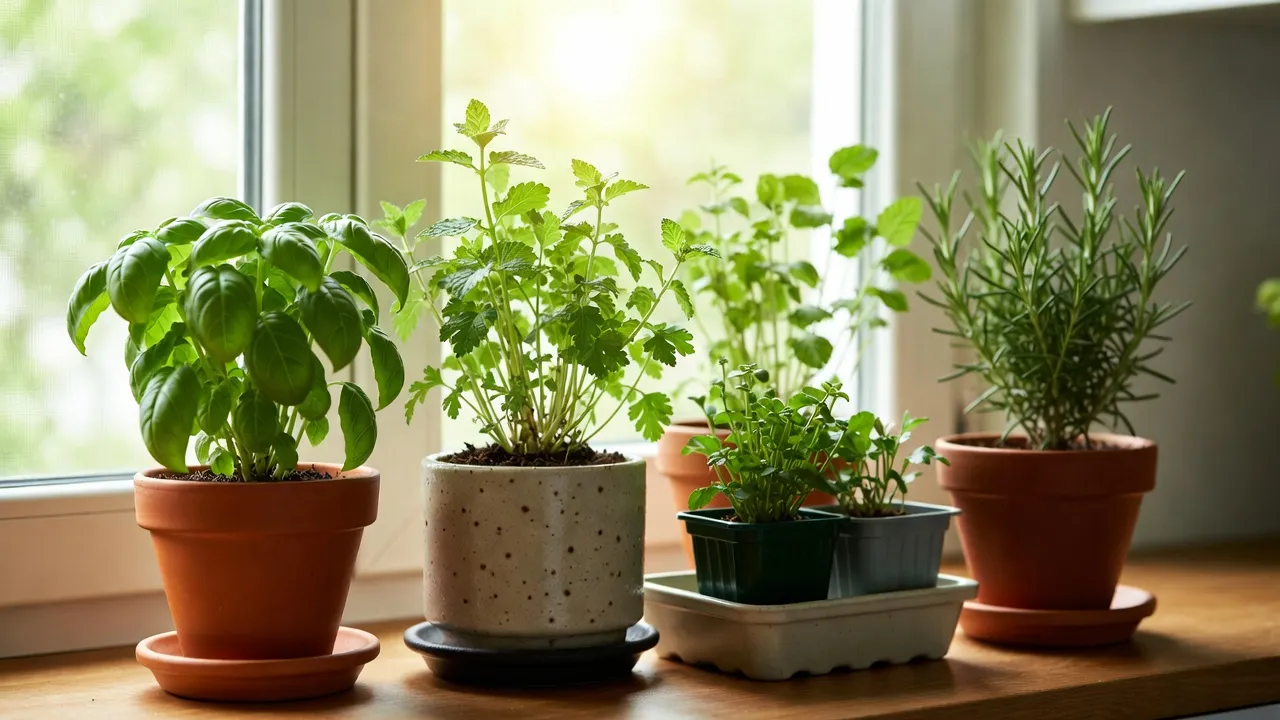
- terracotta pots
- unglazed clay pots
- fabric grow bags
How Container Walls Affect Soil Moisture
Some containers allow moisture to escape not just from the bottom, but through the sides.
In breathable materials like clay or fabric, water slowly evaporates through the container walls. In non-porous materials like plastic, moisture stays inside longer.
This difference changes how often you need to water and how the soil behaves over time.
4. Stability
Herbs like basil, rosemary, and parsley grow tall compared to their root size.
Lightweight containers may tip over easily when plants become top-heavy.
Heavier materials like ceramic or clay help keep containers stable, especially on windowsills or shelves.
5. Saucer or Tray
Indoor herb containers should include a saucer or tray.
This catches excess water draining from the pot and protects indoor surfaces like kitchen counters or wooden shelves.
Types of Containers for Indoor Herbs
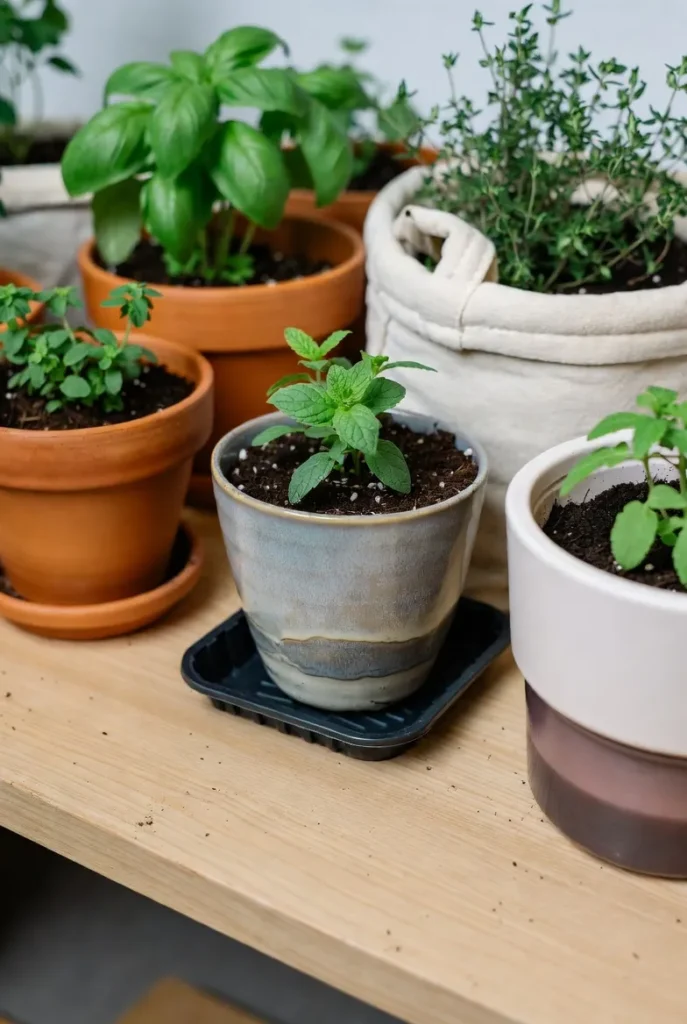
Containers are made from different materials, and each one affects soil moisture, airflow, and plant health in different ways.
Understanding their strengths and weaknesses helps you choose the best option.
Terracotta Pots
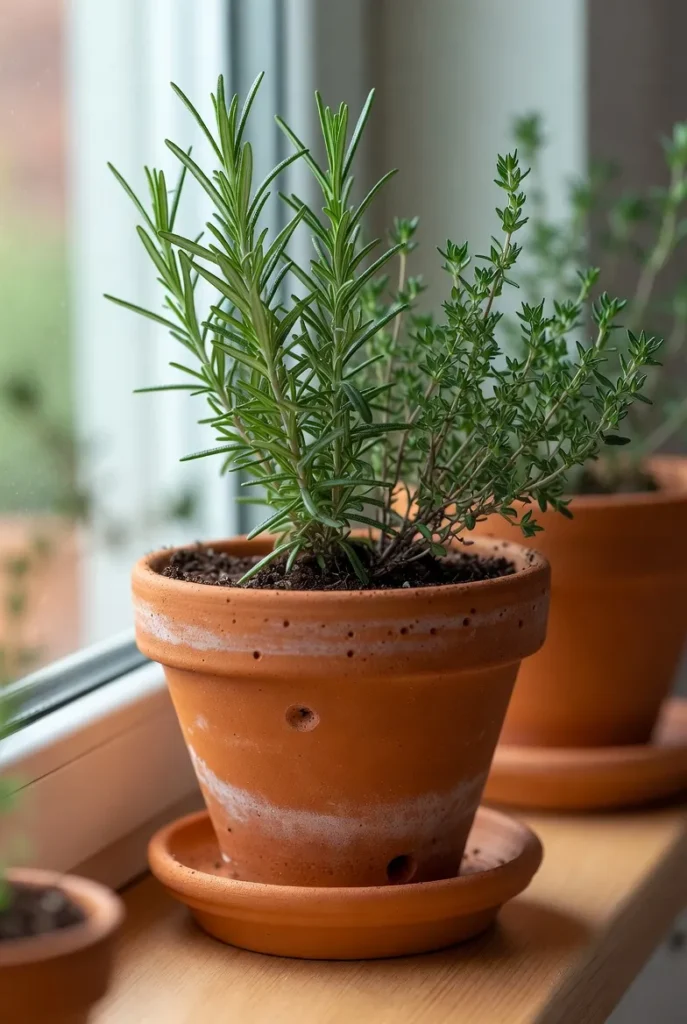
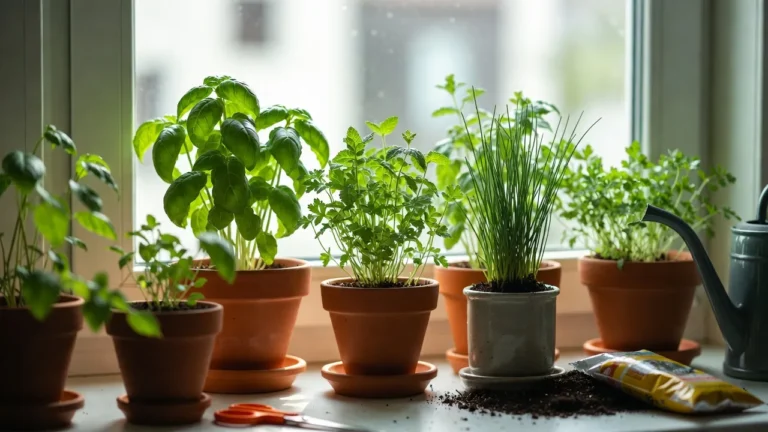
Terracotta pots are one of the most popular choices for indoor herb gardening.
These natural clay containers are porous, allowing water to evaporate slowly through the sides of the pot.
Pros
- Excellent drainage
- Good airflow to roots
- Prevents overwatering
Cons
- Soil dries out faster
- Can crack in very dry conditions
Best herbs for terracotta
- rosemary
- thyme
- oregano
These herbs prefer slightly drier soil conditions.
Ceramic Planters
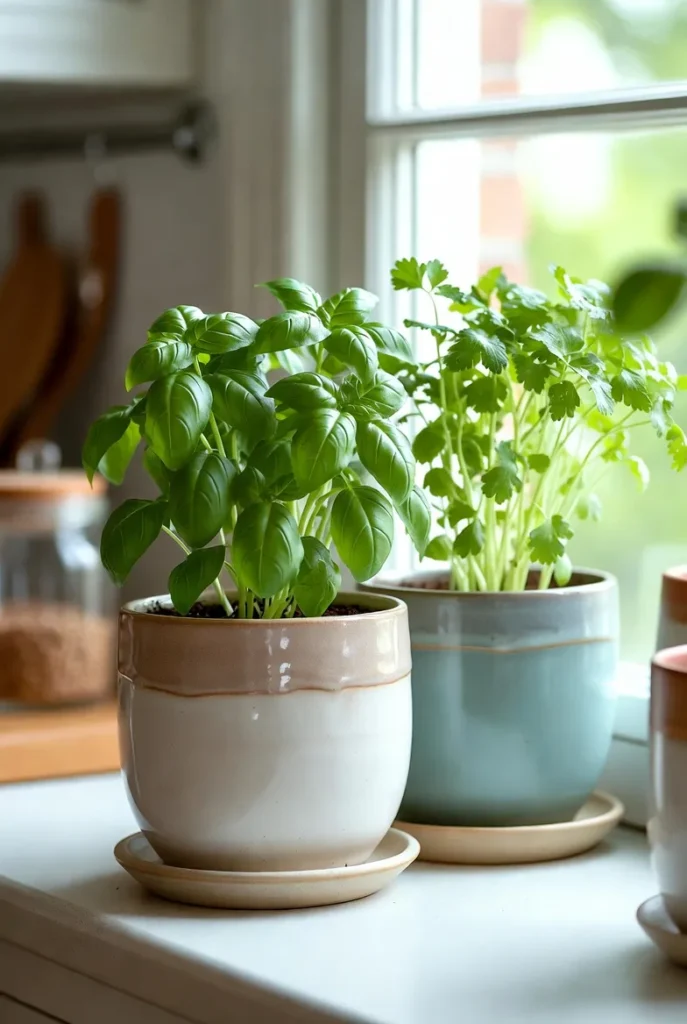
Ceramic containers are widely used for decorative indoor herb gardens.
Glazed ceramic pots usually retain moisture slightly better than clay.
Pros
- Attractive appearance
- Durable
- Good for windowsill displays
Cons
- Some lack drainage holes
- Heavier than other containers
Ceramic planters work well for herbs that prefer moderate moisture.
Good choices for
- basil
- parsley
- cilantro
Plastic Containers
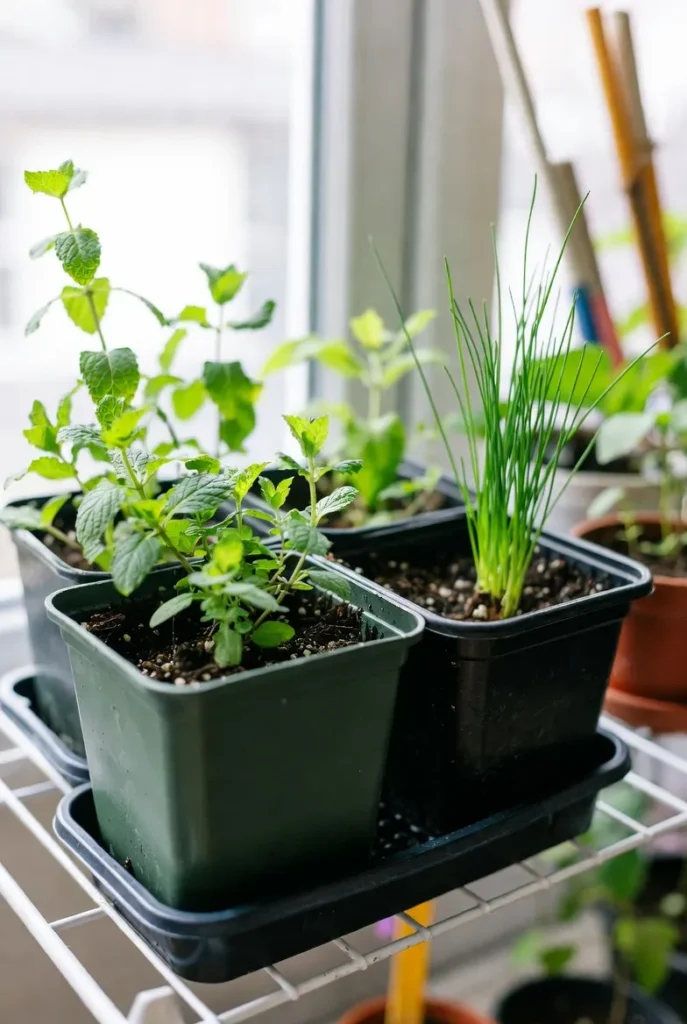
Plastic containers are inexpensive and lightweight.
They are commonly used as nursery pots or starter containers.
Pros
- Affordable
- Lightweight
- Retain moisture longer
Cons
- Less airflow to roots
- Higher risk of overwatering
Plastic pots work best when watering is carefully controlled.
They are useful for herbs like:
- mint
- chives
- lemon balm
These herbs tolerate more moisture.
Fabric Grow Bags
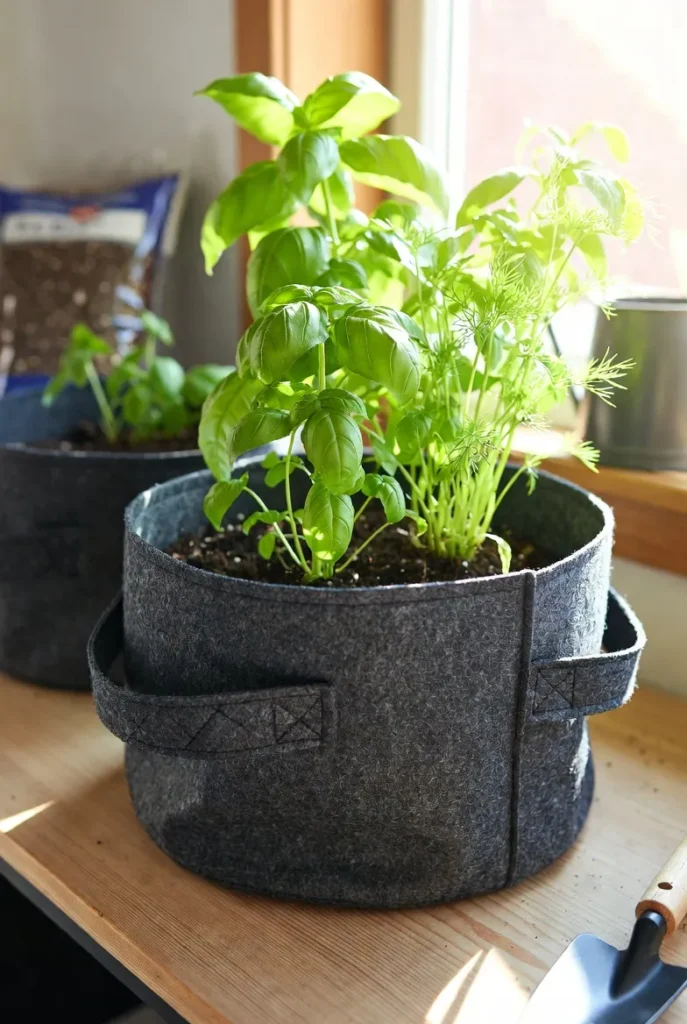
Another modern option for container gardening is fabric grow bags..
The breathable fabric allows air to reach the roots and prevents roots from circling inside the container.
Pros
- Excellent airflow
- Promotes healthy root growth
- Lightweight and flexible
Cons
- Soil dries faster
- Requires frequent watering
These containers work well for herbs that grow quickly, such as basil and dill.
Self-Watering Containers
Self-watering planters use a built-in reservoir to supply water slowly to the soil through capillary action.
This system maintains consistent soil moisture.
Pros
- Reduces watering frequency
- Helpful for busy gardeners
- Maintains steady moisture
Cons
- Higher cost
- Not ideal for herbs that prefer dry soil
Self-watering containers are useful for herbs that need consistent moisture, such as parsley and basil.
However, Mediterranean herbs like thyme and rosemary prefer drier soil.
Best Pot Size for Common Indoor Herbs
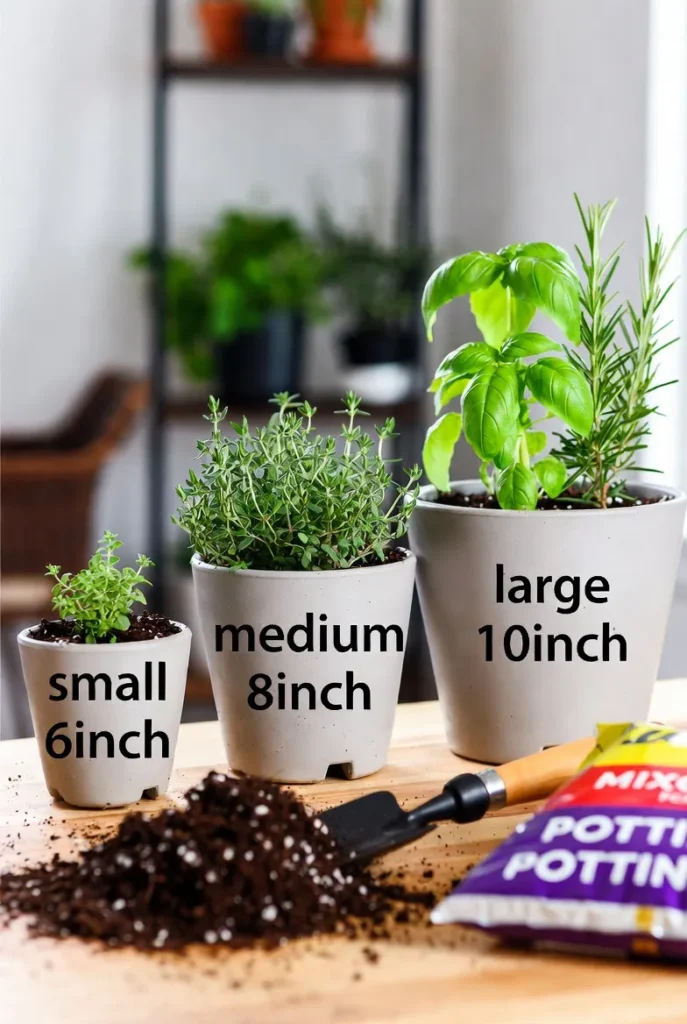
Different herbs develop different root systems, so container size can vary slightly depending on the plant.
The following chart provides a helpful guideline.
Herb | Recommended Pot Size |
|---|---|
Basil | 8–10 inches |
Mint | 8–10 inches |
Parsley | 8 inches |
Cilantro | 8 inches |
Thyme | 6–8 inches |
Oregano | 6–8 inches |
Rosemary | 10 inches |
Larger containers provide room for roots to grow while keeping soil moisture stable.
How to Choose the Right Herb Container (Step-by-Step)
If you’re unsure which container to choose, follow this simple process.
Step 1: Choose the Right Size
Most herbs grow well in 6–10 inch containers.
Avoid extremely small pots that restrict root development.
Step 2: Check for Drainage Holes
Drainage holes prevent water from collecting at the bottom of the container.
This simple step prevents many common herb problems.
Step 3: Select the Material
Choose a material that suits your watering habits.
- Forget to water often → plastic or ceramic
- Tend to overwater → terracotta or fabric
Step 4: Match the Container to the Herb
Some herbs prefer dry soil while others need more moisture.
For example:
- rosemary prefers dry soil
- basil prefers slightly moist soil
Choosing the right container helps maintain these conditions.
Step 5: Add a Saucer
A tray or saucer collects drainage water and protects indoor surfaces.
This is especially important for windowsill herb gardens.
Decorative vs Functional Containers
Many people choose herb containers based only on appearance. Decorative planters look attractive but are not designed for plant health.
However, decorative pots often lack drainage holes.
A simple solution is using a double-pot method.
- Grow the herb in a plastic nursery pot with drainage holes.
- Place that pot inside a decorative planter.
This approach allows proper drainage while maintaining a stylish display.
Container Placement for Indoor Herb Gardens
Where you place your container affects plant health just as much as the pot itself.
Most herbs require 6–8 hours of light daily.
Common placement options include:
- kitchen windowsills
- plant shelves near windows
- balcony ledges
- indoor plant stands
Containers should be easy to move so plants can receive enough sunlight throughout the day.
Cost of Indoor Herb Containers
The cost of herb containers varies depending on size, material, and design.
Typical price ranges include:
Container Type | Average Price |
|---|---|
Plastic pots | $2 – $6 |
Terracotta pots | $4 – $12 |
Ceramic planters | $10 – $25 |
Self-watering containers | $15 – $40 |
These containers are commonly available at:
- garden centers
- plant nurseries
- home improvement stores
- online marketplaces
Before choosing a container, it’s helpful to understand the basic tools used in indoor herb gardening. Our guide on the Indoor Herb Garden Supplies Checklist covers the essential items beginners typically need to get started.
Common Container Mistakes Beginners Make
Many indoor herb problems come from simple container mistakes.
Avoid these common issues.
Using Pots Without Drainage
This is the most common mistake beginners make.
Waterlogged soil suffocates roots and leads to fungal problems.
Choosing Pots That Are Too Small
Small containers restrict root growth and dry out quickly.
Herbs often become stressed and stop producing new leaves.
Using Pots That Are Too Large
Large containers hold excess soil and moisture.
This can lead to overwatering and poor root health.
Using Heavy Garden Soil
Outdoor garden soil often compacts inside containers.
Instead, use a light potting mix designed for container gardening.
Growing Too Many Herbs in One Pot
Different herbs have different watering needs.
For example, mint prefers moist soil while rosemary prefers dry soil.
Growing them together can create watering problems.
Many container problems are actually beginner gardening mistakes. Our guide on Common Indoor Herb Gardening Mistakes and How to Fix Them explains the most frequent issues and how to solve them.
Quick Checklist for Choosing Herb Containers
Before buying a pot, use this simple checklist.
✔ Container has drainage holes
✔ Pot size is 6–10 inches wide
✔ Material allows airflow or balanced moisture
✔ Includes a saucer or tray
✔ Fits your windowsill or indoor space
If all these conditions are met, the container should support healthy herb growth.
FAQs
1. Which container is best for growing herbs indoors?
The best containers for indoor herbs are pots with drainage holes, breathable materials such as terracotta or ceramic, and a size between 6 and 10 inches to support healthy root growth.
2. Do indoor herbs need pots with drainage holes?
Yes. Drainage holes allow excess water to escape and prevent waterlogged soil, which can cause root rot and other plant health problems.
3. What size pot is best for basil?
Basil grows best in containers that are about 8–10 inches wide and deep, giving its roots enough space to expand.
4. Do herbs grow better in clay or plastic pots?
Clay pots provide better airflow and reduce overwatering risk, while plastic pots retain moisture longer. The best choice depends on the herb and your watering habits.
5. Can multiple herbs grow in the same container?
Yes, but only if the container is large and the herbs have similar watering needs. Herbs like thyme and oregano can grow together, while mint prefers separate containers.
6. Are self-watering containers good for herbs?
Self-watering planters can work well for herbs that prefer consistent moisture, such as parsley and basil. However, herbs like rosemary and thyme prefer drier soil conditions.
7. How deep should herb containers be?
Most indoor herbs need containers that are 6–10 inches deep so their roots can develop properly.
8. Can herbs grow in small pots?
Some herbs can survive in small containers, but growth may be limited. Larger pots allow healthier root systems and better plant development.
Conclusion
Choosing the right container is one of the most important steps in successful indoor herb gardening.
A good herb pot provides:
- proper drainage
- enough root space
- balanced moisture retention
- airflow for healthy soil
For most beginners, a terracotta or ceramic pot with drainage holes and a size between 6 and 10 inches works perfectly for growing herbs indoors.
Once your herbs have the right container, they are far more likely to thrive—providing fresh, flavorful leaves whenever you need them in the kitchen.
Once your herbs are growing well in the right container, the next step is harvesting them correctly. Our guide on How to Harvest Indoor Herbs shows the safest way to collect leaves while keeping plants healthy.

Hi, I’m Rimsha, founder of Urban Bloomer 🌱
I grow herbs and plants in a small apartment and share what actually works in limited indoor spaces. Over the past few years, I’ve tested different setups, from lighting and soil to watering routines, to find simple methods that make indoor gardening easier.
Here, you’ll find practical, beginner-friendly advice based on real experience, not complicated gardening systems.