How to Grow Basil Indoors: Complete Beginner Guide for Healthy, Fast Growth
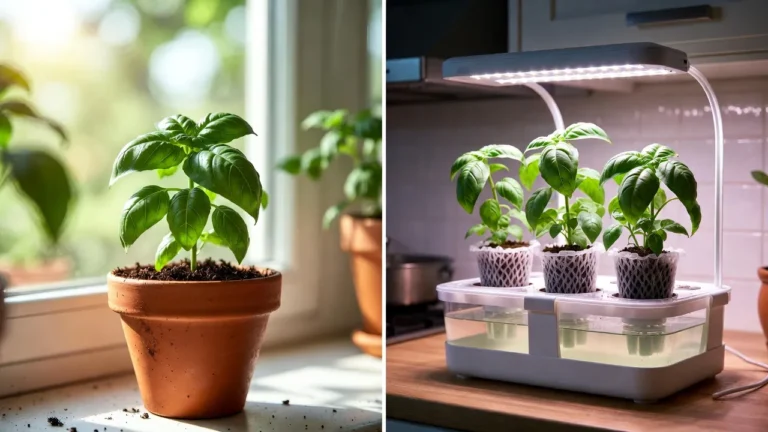
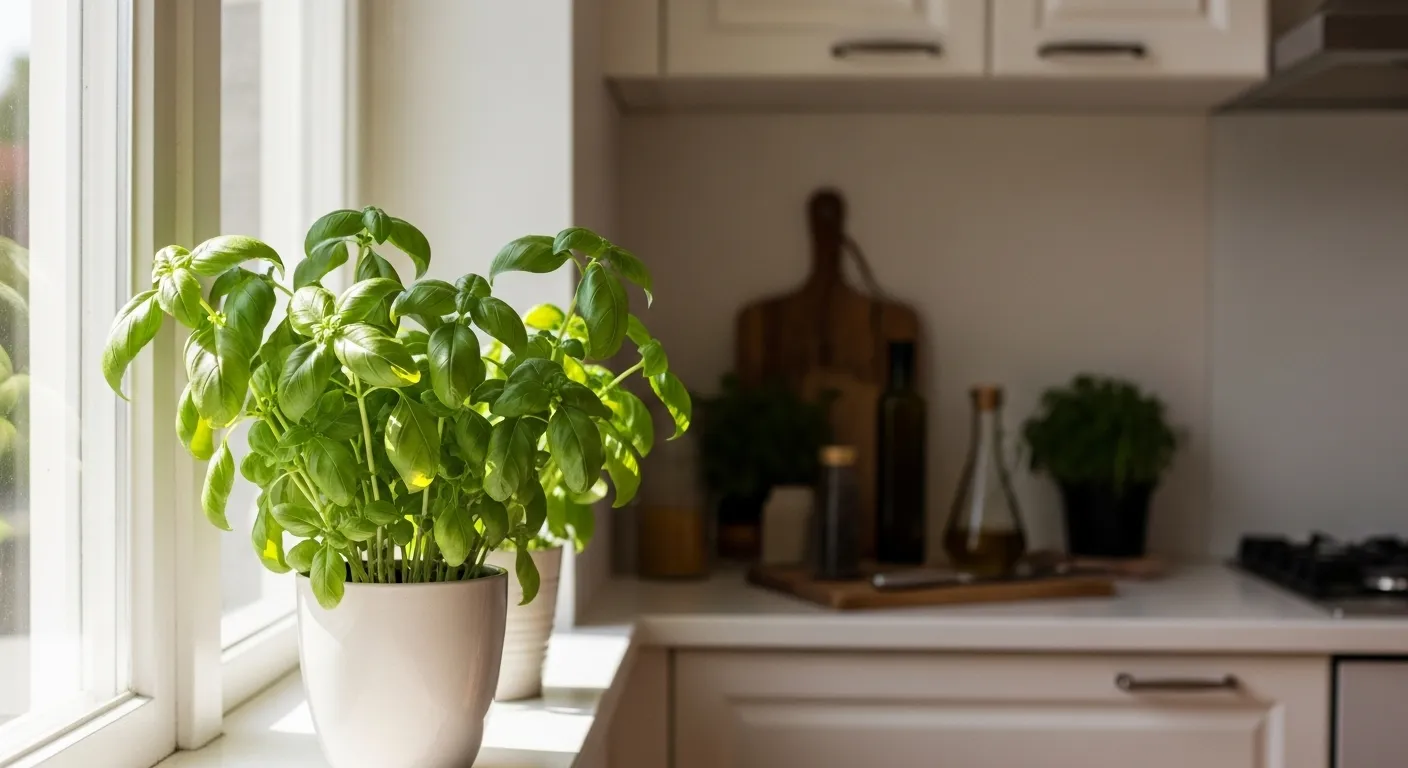
Fresh basil in your kitchen, grown by your own hands, can completely change how you cook and enjoy food. The best part? You don’t need a garden, just a small indoor space.
The aroma, the flavor, and the satisfaction of growing it yourself make it simple, affordable, and incredibly rewarding.
I’ve grown basil indoors across different climates and small spaces, and one thing is consistent: success depends more on simple habits than advanced tools.
I’ve also seen most beginners fail not because growing basil is difficult, but because of small mistakes in light and watering.
In this guide, I’ll help you avoid those mistakes and grow basil successfully from day one.
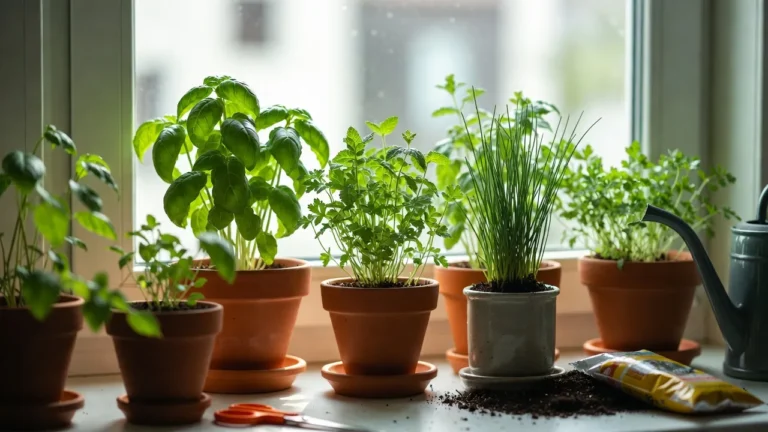
If you’re planning to grow more herbs, you can also explore a complete indoor herb garden setup guide for beginners.
What Is Basil and Why Grow It Indoors?
Basil (Ocimum basilicum) is a fast-growing herb widely used in cooking around the world.
Growing it indoors means:
- You can grow it year-round
- You avoid pests and harsh weather
- You control the environment
- It’s perfect for small homes and apartments
Choosing the Right Basil Type
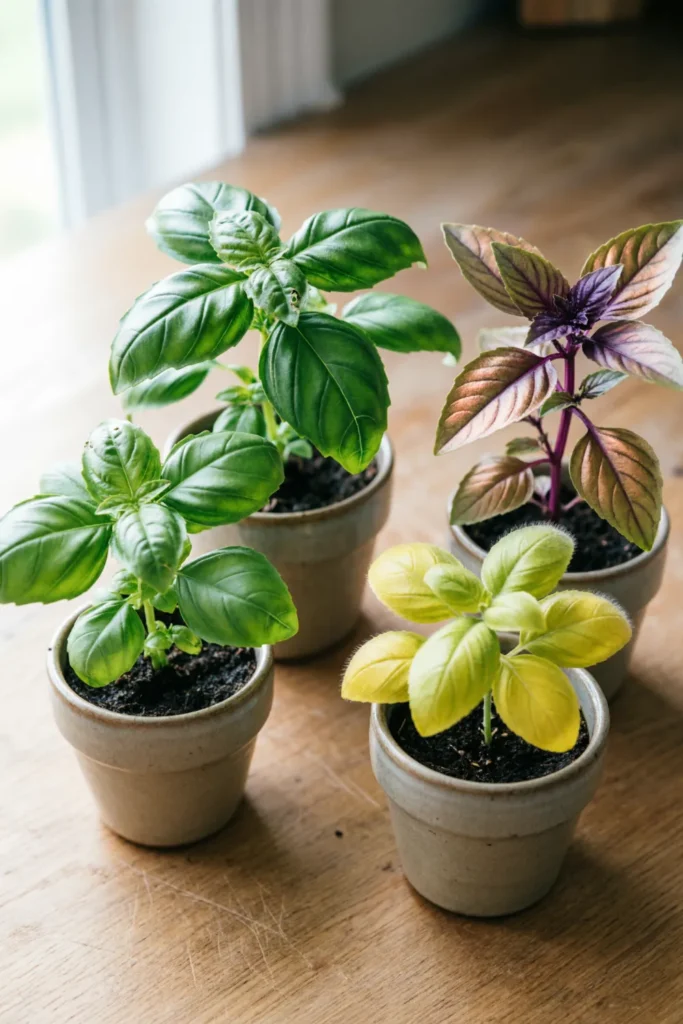
For beginners, choosing the right type makes a big difference.
- Sweet Basil – easiest and most reliable
- Genovese Basil – rich flavor, ideal for pesto
- Thai Basil – slightly spicy, strong stems
- Lemon Basil – light citrus aroma
Start with sweet basil for the best results.
Now that you’ve chosen the right type of basil, the next step is deciding how you want to start growing it indoors.
Best Way to Start Growing Basil Indoors (Beginner Decision Guide)
Not sure where to begin? Use this quick guide:
Option | Best For | Pros | Cons |
|---|---|---|---|
Seeds | Budget-friendly | Cheap, full control | Slower growth |
Cuttings | Faster results | Grows quickly | Needs source plant |
Nursery Plant | Beginners | Easiest success | Slightly higher cost |
Best choice for beginners: Buy a small nursery plant and learn care first.
How to Grow Basil Indoors Step by Step
Once you’ve made your choice, follow these simple steps to set up your indoor basil plant correctly.
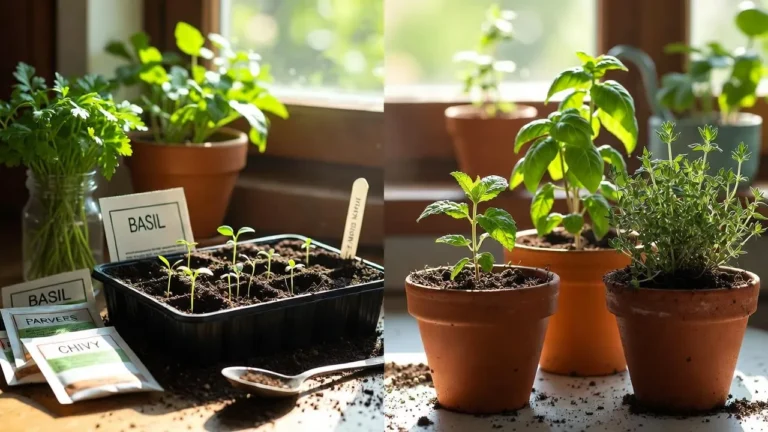
1. Choose Your Starting Method
You have three options:
- Seeds – cheapest, takes 2–4 weeks
- Cuttings – faster growth
- Nursery plant – best for beginners
2. Pick the Right Container
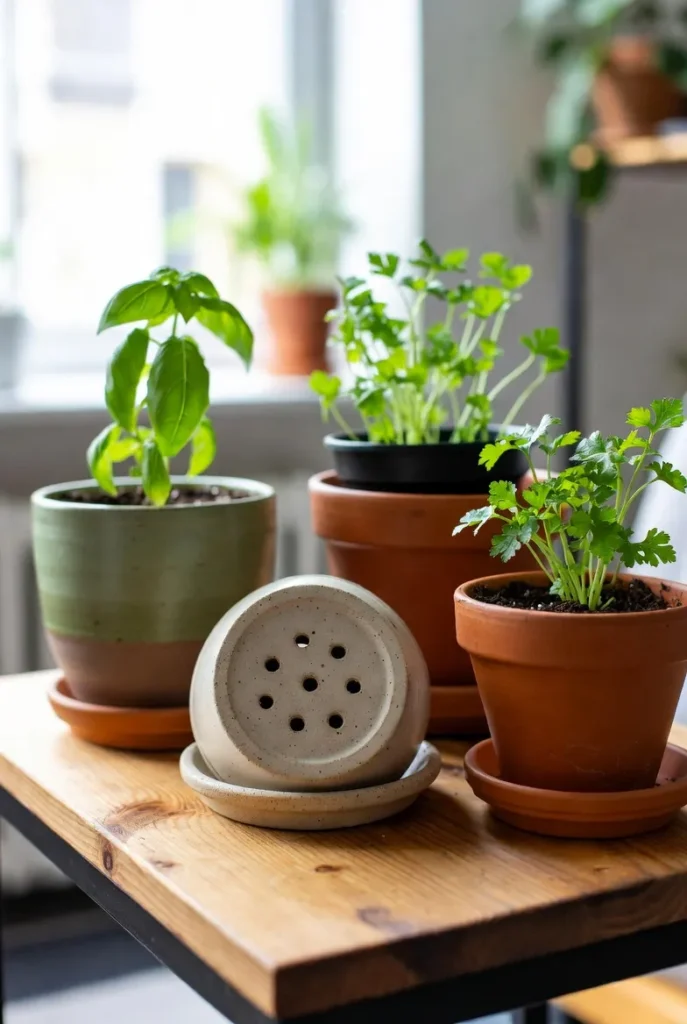
- 6–8 inches deep
- Must have drainage holes
3. Use Proper Soil
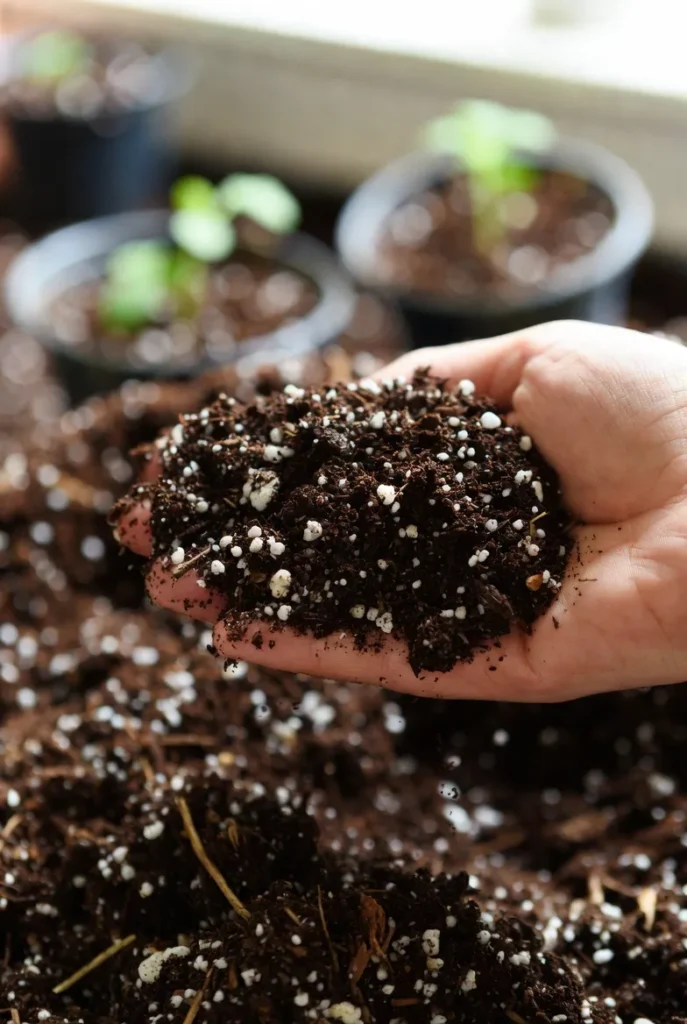
- Loose, well-draining potting mix
- Avoid heavy garden soil
4. Plant and Water
- Keep the soil moist, not soggy
- Water gently after planting
5. Place in Light
- Near a bright window
- Or use LED grow lights
6. Start Pruning Early
- Trim top leaves once plant grows
- Encourages bushy growth
Basil Light Requirements
After planting your basil, the next critical factor that determines its success is light.
Light drives photosynthesis, which fuels plant growth.
Ideal Setup
- 6–8 hours of sunlight daily
- South-facing window is best
If You Don’t Have Enough Light
- Use LED grow lights for 10–12 hours
- Keep light 6–12 inches above plant
Signs of Poor Light
- Thin stems
- Small leaves
- Slow growth
Without enough light, basil cannot produce enough energy through photosynthesis, which leads to weak and slow growth.
If your home doesn’t get enough sunlight, choosing the right grow lights for indoor plants can make a huge difference.
How to Water Basil Indoors
Along with light, proper watering plays a major role in keeping your basil healthy.
The Golden Rule
Water only when the top inch of soil is dry.
Best Practice
- Water deeply, then let soil dry slightly
- Never leave water sitting in the tray
Why Overwatering Kills Basil
Roots need oxygen. Too much water blocks airflow, leading to root rot.
Always check soil moisture with your finger instead of following a fixed watering schedule.
Soil, Drainage & Fertilizer for Indoor Basil
Soil Requirements
- Light and airy
- Rich in organic matter (compost)
- Good drainage
Fertilizer Tips
- Use liquid fertilizer every 2–3 weeks
- Organic compost works well
Too much fertilizer reduces flavor quality.
Temperature & Humidity (Often Ignored but Crucial)
Factor | Ideal Condition |
|---|---|
Temperature | 18°C – 30°C |
Humidity | 40–60% |
Adjust Based on Your Climate
- Hot areas → avoid harsh sunlight
- Cold areas → keep indoors warm
- Humid areas → reduce watering
Basil stops growing in cold conditions and may die if exposed for too long.
Pruning for Maximum Growth
When to Start
After 4–6 leaves appear
How to Prune
- Cut above leaf nodes
- Avoid removing more than 30%
Why It Works
Pruning signals the plant to grow more branches, making it fuller.
Regular pruning also prevents the plant from flowering too early, which can reduce leaf production.
Basil Growth Stages (What to Expect)
To better understand how your plant develops over time, it helps to know the different growth stages of basil.
Stage | Timeline | What Happens |
|---|---|---|
Germination | 5–10 days | Seeds sprout |
Early Growth | 2–3 weeks | Small leaves form |
Mature Plant | 4–6 weeks | Ready to harvest |
If your plant looks slow early on, it’s normal.
However, even when everything seems right, problems can still appear, especially for beginners.
Common Problems and How to Fix Them
Even with proper care, small mistakes can happen. Here’s how to identify and fix them quickly.
Problem | Cause | Solution |
|---|---|---|
Yellow leaves | Overwatering | Reduce watering |
Leggy plant | Low light | Increase light |
Slow growth | Poor nutrients | Add fertilizer |
Wilting | Under/over watering | Adjust routine |
Moldy soil | High humidity | Improve airflow |
Why Basil Dies Indoors (Real Explanation)
Most beginners think basil is “hard,” but it’s usually environment issues.
- Low light → less photosynthesis → weak plant
- Too much water → root suffocation → rot
- Cold → growth stops
Understanding this helps you fix problems quickly.
How to Grow Basil Based on Your Home
Small Apartment
- Use a windowsill
- Small pot works fine
No Sunlight
- Use LED grow lights
Hot Climate
- Use indirect light
- Avoid afternoon heat
Cold Climate
- Keep plant indoors near warmth
Every home environment is different, so adjusting your setup based on your space can make a big difference.
Quick Care Summary Table
Here’s a quick summary you can refer to anytime while caring for your plant.
Factor | Ideal Condition |
|---|---|
Light | 6–8 hours |
Water | When soil is dry |
Temp | 18–30°C |
Humidity | 40–60% |
Soil | Well-draining |
Pro Tips Most Beginners Miss
- Rotate your plant weekly
- Remove flowers immediately
- Don’t overcrowd pots
- Keep leaves clean
- Maintain airflow
Indoor vs Outdoor Basil
You might also be wondering how indoor growing compares to growing basil outside.
Factor | Indoor | Outdoor |
|---|---|---|
Control | High | Low |
Pests | Low | High |
Growth | Moderate | Faster |
Season | Year-round | Seasonal |
In simple terms, indoor growing is easier to manage, while outdoor growing can grow faster but with more risks.
FAQs
1. Can basil grow indoors year-round?
Yes, with proper light and temperature, basil grows all year.
2. How often should I water basil indoors?
Water every 2–4 days depending on soil dryness.
3. Does basil need direct sunlight?
It prefers direct sunlight but can grow under LED lights.
4. Why is my basil plant dying indoors?
Usually due to overwatering, low light, or poor drainage.
5. Can basil grow in water?
Yes, basil cuttings can grow in water, but soil growth is stronger long-term.
6. How do I make basil bushy?
Prune regularly above leaf nodes.
7. Can I grow basil without soil?
Yes, using hydroponics, but it requires more control.
8. How long does basil take to grow indoors?
About 4–6 weeks to harvest.
9. Why is my basil not growing?
Likely due to low light, poor nutrients, or incorrect watering.
Conclusion
Growing basil indoors becomes easy once you understand the basics.
Focus on:
- Strong light
- Proper watering
- Warm temperature
- Regular pruning
Start simple, stay consistent, and within weeks you’ll have fresh, healthy basil growing right inside your home, ready whenever you need it.