Best Temperature and Humidity for Indoor Herbs
Many people start growing herbs indoors with excitement, fresh basil on the kitchen counter, mint for tea, or parsley for cooking. But after a few weeks, the plants begin to struggle. Leaves turn yellow, edges dry out, or growth suddenly slows.
In many cases, the problem isn’t watering or sunlight. It’s the indoor climate.
Temperature and humidity strongly influence how herbs grow, absorb nutrients, and maintain healthy leaves.
When conditions are right, herbs grow faster, produce more flavor, and stay productive for months. When the environment is off, even healthy plants can decline.
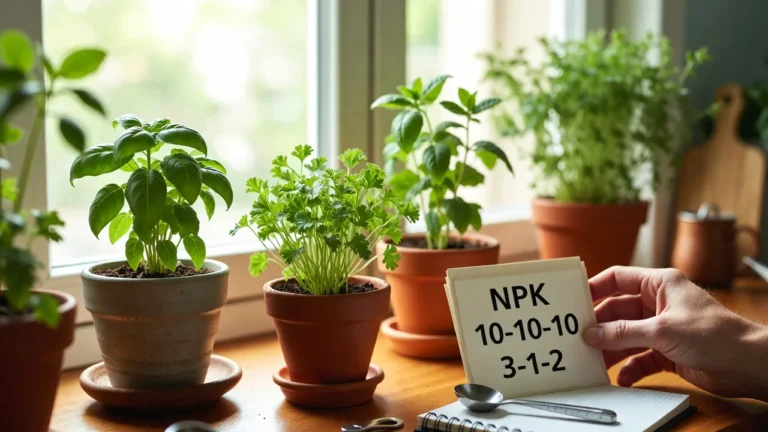
Understanding the best temperature and humidity for indoor herbs helps you create a stable environment where plants like basil, mint, parsley, thyme, and oregano thrive year-round.
Indoor herbs also need proper placement to receive enough natural light. Choosing the best location for indoor herbs can make a significant difference in how well they grow indoors.
What Temperature and Humidity Do Indoor Herbs Need?
Most indoor herbs grow best in conditions similar to a comfortable indoor room.
Ideal conditions for indoor herbs
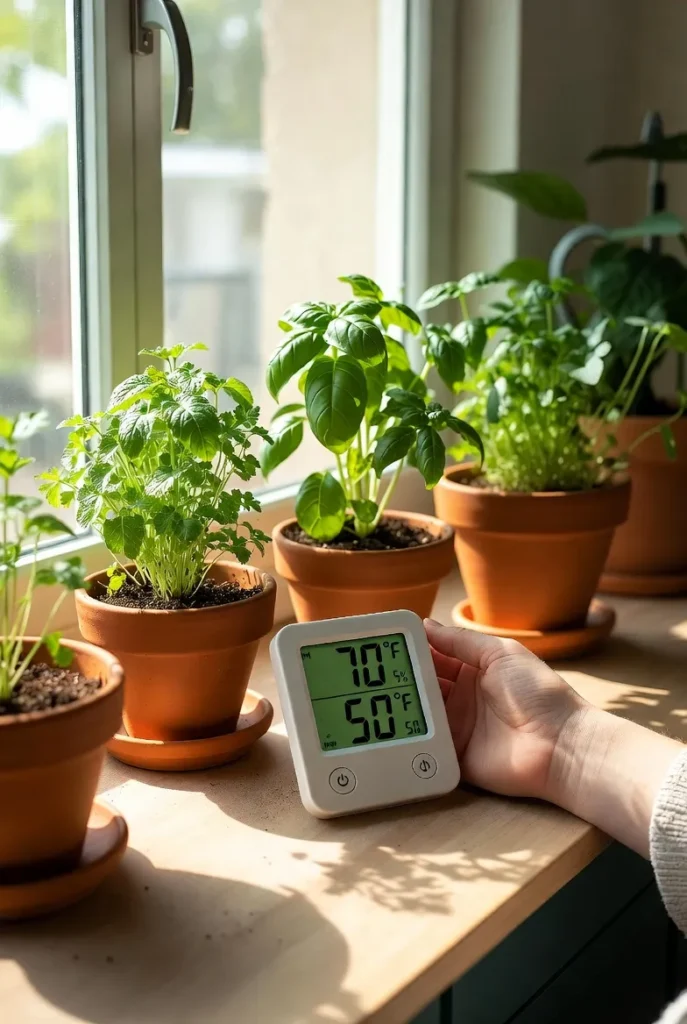
- Temperature: 65–75°F (18–24°C)
- Humidity: 40–60% relative humidity
These conditions support healthy plant metabolism, efficient photosynthesis, and balanced transpiration.
When indoor environments become too dry or too hot, herbs can lose water quickly. If humidity becomes too high, fungal diseases such as powdery mildew may develop.
For this reason, maintaining a stable indoor environment is one of the most important factors in successful indoor gardening.
If your indoor conditions are not properly balanced, your seeds may struggle to sprout. This article on herb seed germination problems indoors explains what to adjust.
Why Temperature Matters for Indoor Herb Growth
Temperature directly affects how plants function internally. Processes like photosynthesis, respiration, and nutrient absorption depend on the surrounding temperature.
When herbs grow within their ideal temperature range, several things happen:
- Leaves produce more aromatic oils
- Roots absorb nutrients efficiently
- Plant metabolism runs smoothly
- Growth remains steady and strong
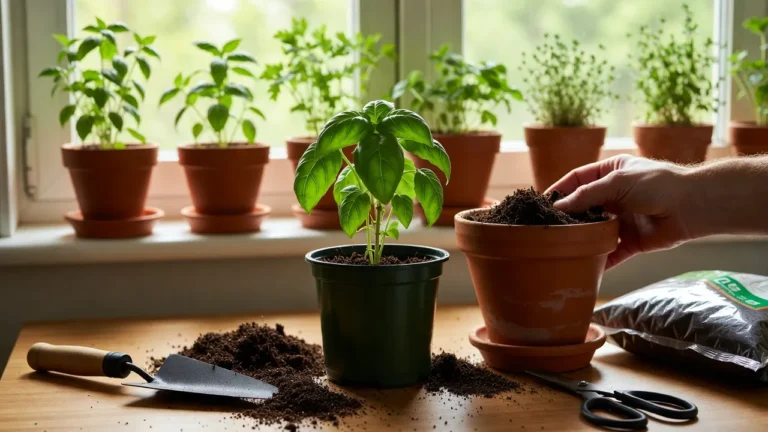
Best temperature and humidity also support root growth, which becomes especially important when you need to repot indoor herbs without causing stress to the plant.
What Happens When Temperatures Are Too Low
Cold conditions slow plant metabolism.
Common signs include:
- Slow growth
- Pale or yellow leaves
- Weak stems
- Reduced flavor production
Some herbs, especially basil, are sensitive to cold and may stop growing if temperatures fall below about 50°F (10°C).
What Happens When Temperatures Are Too High
Excess heat causes plants to lose water rapidly through transpiration.
Signs of heat stress include:
- Wilting leaves
- Dry soil
- Bitter flavor in herbs
- Leaf curling
Indoor heat sources such as ovens, heaters, and radiators can easily raise indoor temperatures above what most herbs prefer.
Why Humidity Is Important for Indoor Herbs
Humidity refers to the amount of moisture in the air. Plants rely on this moisture balance to regulate water loss through a natural process called transpiration.
Indoor herbs generally grow best at 40–60% relative humidity.
This humidity range allows plants to:
- Maintain healthy leaf moisture
- Prevent dehydration
- Support steady nutrient movement
- Reduce plant stress
Problems Caused by Low Humidity
Dry indoor air is one of the most common problems in indoor gardening, especially during winter.
Symptoms of low humidity include:
- Brown leaf edges
- Crispy leaves
- Drooping plants
- Increased watering needs
Heating systems often reduce humidity levels below 30%, which can quickly stress herbs.
Problems Caused by High Humidity
Too much moisture in the air can also create problems.
High humidity may lead to:
- Mold growth on soil
- Powdery mildew on leaves
- Poor air circulation
- Soft stems
Maintaining the right balance between humidity and airflow is the key to healthy herb growth.
Excess moisture combined with poor drainage can also cause serious plant problems such as root rot in indoor herbs, which can quickly damage roots and weaken the entire plant.
Ideal Temperature and Humidity for Popular Indoor Herbs
Different herbs have slightly different environmental preferences, although most culinary herbs grow well within similar ranges.
Herb | Ideal Temperature | Ideal Humidity |
|---|---|---|
Basil | 70–80°F (21–27°C) | 50–60% |
Mint | 65–75°F (18–24°C) | 40–60% |
Parsley | 65–72°F (18–22°C) | 40–50% |
Thyme | 65–75°F (18–24°C) | 40–50% |
Oregano | 65–75°F (18–24°C) | 40–50% |
Cilantro | 60–70°F (16–21°C) | 40–50% |
Mediterranean Herbs vs Moisture-Loving Herbs
Indoor herbs generally fall into two climate preference groups.
Mediterranean herbs, such as thyme and oregano prefer:
- slightly drier air
- good air circulation
- moderate warmth
Moisture-loving herbs, such as basil, mint, parsley, and cilantro, naturally grow in environments with higher humidity and more consistent soil moisture. These herbs generally perform best when they receive:
• slightly higher humidity levels
• steady watering
• warm indoor temperatures
Because of their softer leaves and faster growth, these herbs may show signs of stress more quickly if the air becomes too dry.
Understanding these differences helps indoor gardeners adjust temperature, humidity, and airflow to create the best environment for each type of herb.
Signs Your Indoor Herbs Are Too Cold or Too Hot
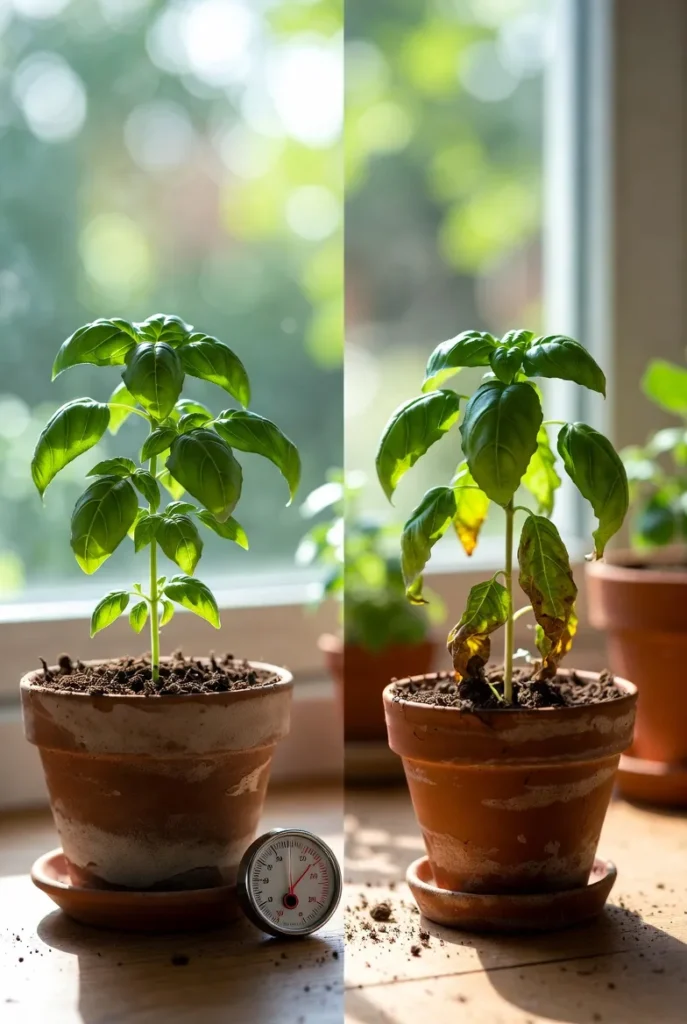
Plants usually show clear warning signs when environmental conditions move outside their comfort zone.
Cold Stress Symptoms
- Stunted growth
- Yellow leaves
- Weak stems
- Reduced aroma in herbs
Cold drafts from windows or air conditioning vents can cause these problems.
Heat Stress Symptoms
- Wilting during the day
- Soil drying out quickly
- Leaves curling inward
- Faded or dry leaves
Moving plants away from heat sources often resolves these issues quickly.
Signs Your Herbs Need More or Less Humidity
Humidity stress often appears on leaves before other symptoms become visible.
Signs of Low Humidity
- Leaf edges turning brown
- Leaves becoming brittle
- Slow growth
- Drooping foliage
Signs of Excess Humidity
- White powdery spots on leaves
- Mold on soil surface
- Leaves feeling soft or wet
- Poor airflow around plants
If humidity stays too high, fungal diseases can spread quickly.
How to Maintain the Best Temperature for Indoor Herbs
Maintaining stable indoor temperature is usually simple with a few small adjustments.
Practical Tips
- Place herbs near bright windows where temperatures stay consistent.
- Avoid heaters and radiators that produce dry heat.
- Keep plants away from cold drafts near doors or air vents.
- Maintain stable room temperatures, especially at night.
Indoor herbs usually perform best in kitchens or living spaces where temperatures remain steady throughout the day.
How to Maintain Ideal Humidity for Indoor Herbs
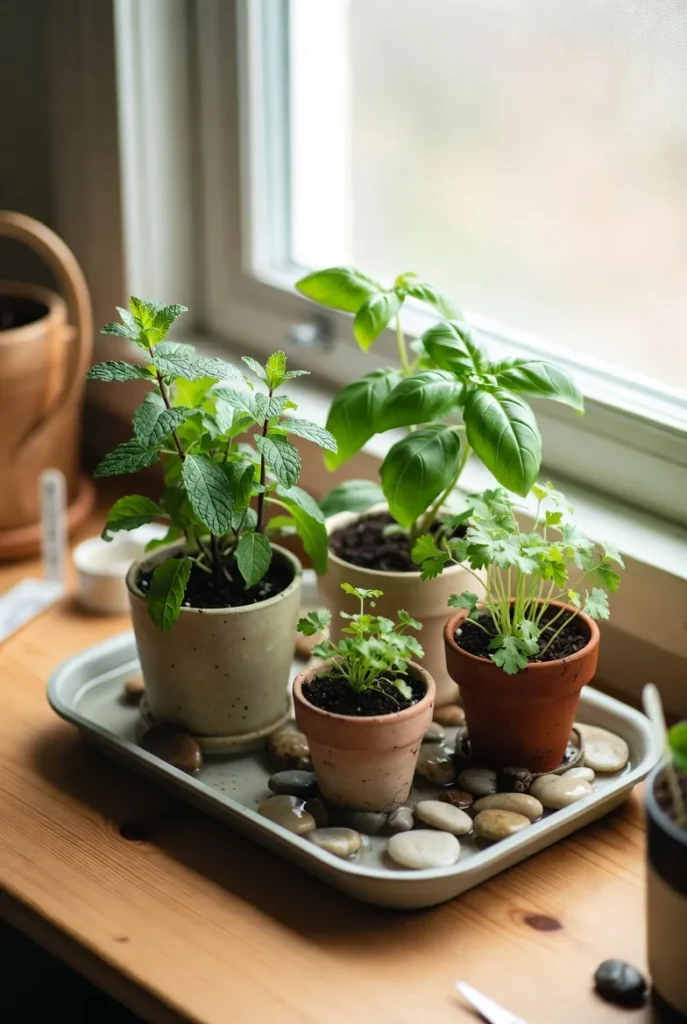
If indoor air becomes too dry, several simple techniques can increase humidity around plants.
Use a humidity tray
Place small stones in a tray with water and set the plant pot on top. As the water evaporates, humidity increases around the plant.
Group plants together
Clusters of plants create a small microclimate where moisture remains higher.
Use a humidifier
A room humidifier can help maintain stable humidity levels during winter.
Mist plants lightly
Occasional misting adds temporary moisture, though it should not replace proper humidity control.
Tools to Monitor Indoor Herb Growing Conditions
Monitoring the indoor environment helps prevent plant stress before it becomes visible.
Useful Monitoring Tools
Tool | Purpose |
|---|---|
Hygrometer | Measures humidity levels |
Thermometer | Tracks indoor temperature |
Digital plant monitor | Measures climate conditions |
Humidifier | Raises indoor humidity |
Provide supplemental light in winter |
A thermometer and hygrometer combination device is one of the easiest ways to track indoor conditions.
Some gardeners also experiment with different growing systems. Understanding soil vs hydroponics for indoor herbs can help you choose the method that works best for your space and climate.
Seasonal Changes That Affect Indoor Herbs
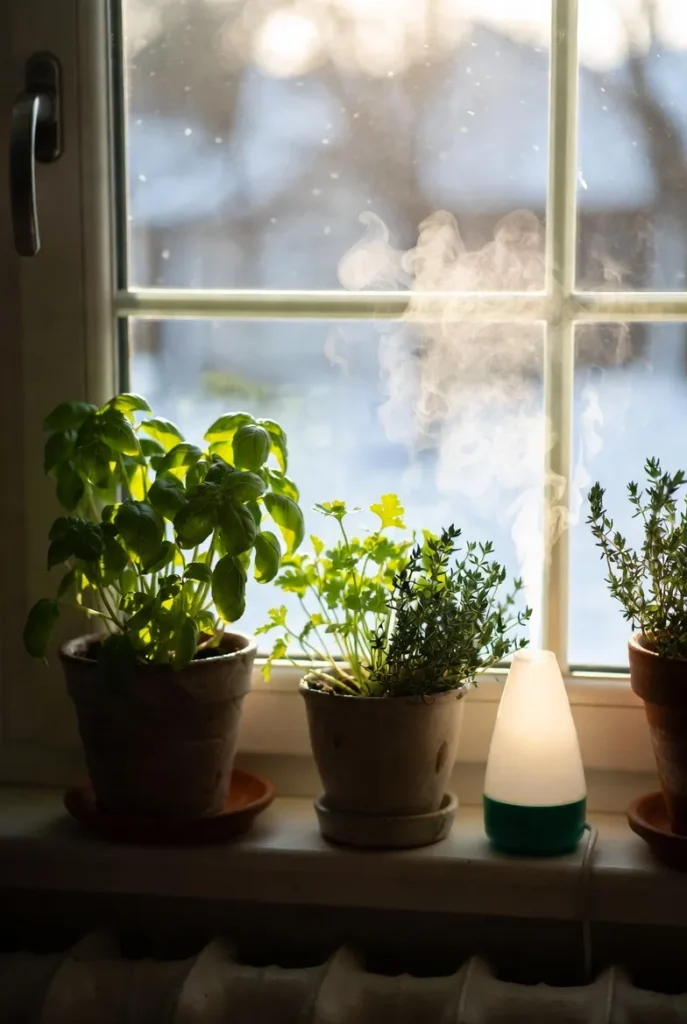
Indoor environments change throughout the year, and herbs often react to these seasonal shifts.
Winter Conditions
During winter:
- indoor heating lowers humidity
- sunlight decreases
- plants may grow more slowly
Increasing humidity during this time can help herbs remain healthy.
Summer Conditions
In summer:
- temperatures rise
- evaporation increases
- watering needs may increase
Keeping herbs away from hot windows during peak afternoon heat can prevent stress.
Common Indoor Herb Growing Mistakes
Even experienced indoor gardeners sometimes overlook environmental factors.
Placing Herbs Too Close to Heat Sources
Radiators and kitchen appliances create dry air that can damage leaves.
Ignoring Humidity Levels
Many homes experience very low humidity during colder months.
Poor Air Circulation
Crowded plants with little airflow can develop fungal diseases.
Not Monitoring Indoor Conditions
Without simple tools like a hygrometer, it can be difficult to know whether conditions are ideal.
Avoiding these common mistakes dramatically improves herb success indoors.
Creating the Perfect Indoor Herb Environment
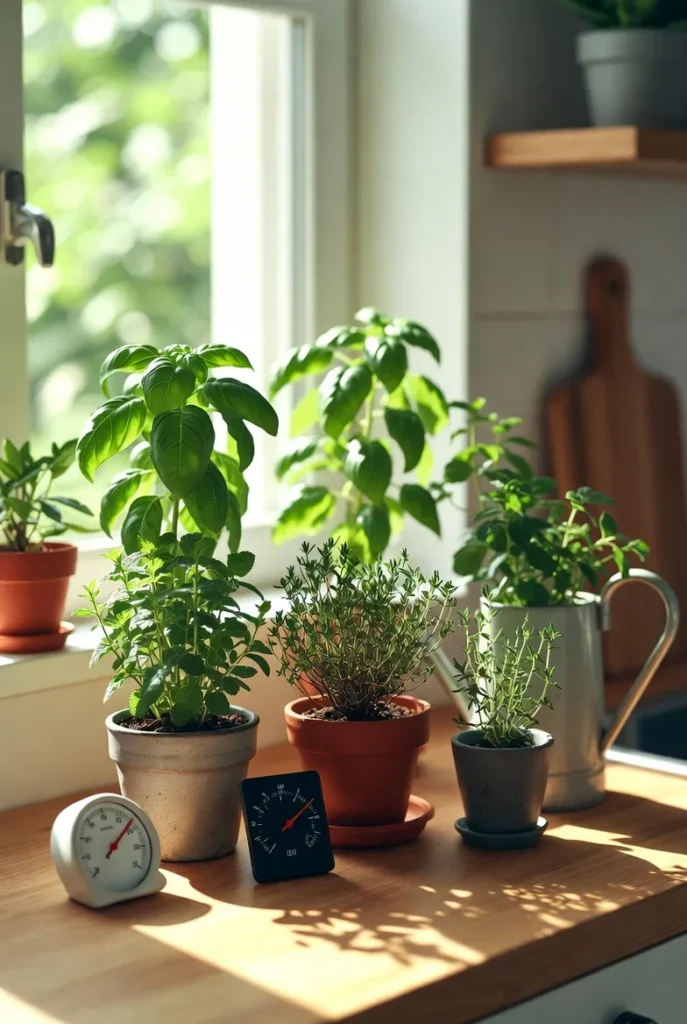
Healthy indoor herbs depend on a balance of several factors working together.
Key elements include:
- proper temperature
- balanced humidity
- sufficient sunlight
- well-draining soil
- good air circulation
When these conditions align, herbs grow stronger and produce more flavorful leaves.
Even small adjustments such as moving a plant closer to a window or adding humidity can transform struggling plants into thriving ones.
FAQs
1. What temperature is best for indoor herbs?
Most indoor herbs grow best between 65–75°F (18–24°C). This temperature range supports healthy photosynthesis and steady growth for herbs such as basil, mint, parsley, thyme, and oregano.
2. What humidity level do indoor herbs need?
Indoor herbs prefer 40–60% relative humidity. This range prevents leaf dehydration while avoiding conditions that encourage fungal diseases.
3. Can herbs grow in dry indoor air?
Herbs can survive in dry air, but humidity below 30% often causes brown leaf edges, slow growth, and brittle leaves.
4. Why are my indoor herbs turning brown?
Brown leaf edges often indicate low humidity, heat stress, underwatering, or excessive direct heat from heaters or sunlight.
5. Should indoor herbs be misted?
Light misting can temporarily increase moisture around leaves, but maintaining proper room humidity is more effective for long-term plant health.
6. Can herbs grow near air conditioning?
Yes, but herbs should not sit directly in cold airflow from vents, as sudden temperature changes can stress plants.
7. Which herbs tolerate low humidity best?
Mediterranean herbs such as thyme, oregano, and rosemary generally tolerate slightly drier air better than moisture-loving herbs like basil.
8. How can I increase humidity for indoor herbs?
Humidity trays, plant grouping, and humidifiers are effective ways to raise humidity levels around indoor plants.
Conclusion
Indoor herbs grow best when their environment closely matches the conditions they naturally prefer. Maintaining temperatures around 65–75°F (18–24°C) and humidity levels between 40–60% allows herbs to grow steadily and produce flavorful leaves.
When herbs receive the right balance of temperature, humidity, sunlight, and airflow, they grow stronger and remain productive.
Even small changes such as adjusting plant placement or increasing humidity during dry months can dramatically improve indoor herb health.
With the right growing conditions, a simple windowsill herb garden can provide fresh basil, mint, parsley, thyme, and oregano throughout the year.
Once herbs are growing well, harvesting them correctly is just as important. Avoiding common indoor herb harvesting mistakes helps plants stay productive for longer.

Hi, I’m Rimsha, founder of Urban Bloomer 🌱
I grow herbs and plants in a small apartment and share what actually works in limited indoor spaces. Over the past few years, I’ve tested different setups, from lighting and soil to watering routines, to find simple methods that make indoor gardening easier.
Here, you’ll find practical, beginner-friendly advice based on real experience, not complicated gardening systems.