10 Common Indoor Herb Gardening Mistakes (And How to Fix Each One)
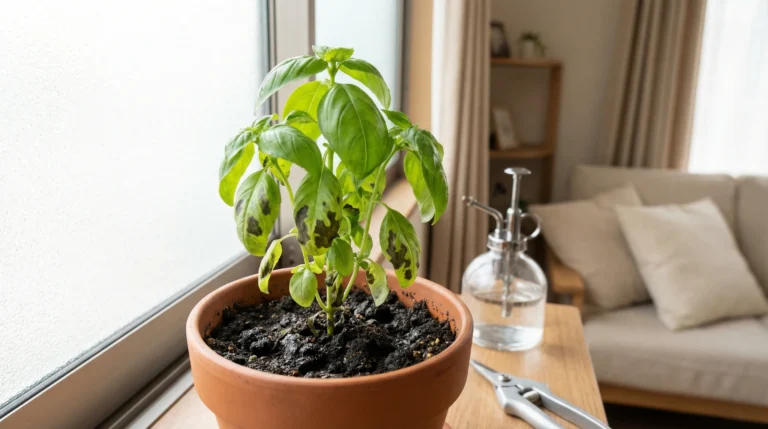
Have you ever bought a fresh basil plant, placed it on your kitchen windowsill, and watered it carefully for a few days… only to notice the leaves turning yellow or drooping?
You’re not alone. I’ve been there too. My first indoor basil wilted completely within a week because I didn’t realize how much light and drainage really mattered.
At first, it can feel frustrating, especially when you believe you’re doing everything correctly.
The surprising part? Most indoor herb problems have predictable causes. Once you understand them, fixing and preventing issues becomes much easier.
In this guide, you’ll discover the 10 most common indoor herb gardening mistakes, why they happen, and practical, beginner-friendly solutions to keep your herbs thriving.
If you’re just starting your indoor garden, it may help to read our Indoor Herb Gardening for Beginners guide, which explains how to set up herbs successfully in small indoor spaces.
Why Indoor Herb Problems Happen More Often Than You Think
Indoor herbs are entirely dependent on the environment you create for them. Outdoors, plants benefit from natural systems:
- Rain flushes excess salts from soil
- Soil organisms recycle nutrients
- Wind improves airflow
- Roots can grow freely
Indoors, herbs live in containers with limited airflow, confined root space, and controlled watering. Even a small imbalance in any of these areas can lead to:
- Poor nutrient uptake
- Oxygen-starved roots
- Reduced photosynthesis
- Increased susceptibility to pests or fungal diseases
Understanding these common pitfalls is the first step toward growing healthy, productive herbs in apartments or small spaces.
According to horticulture specialists, container plants fail more frequently than garden plants because their root environment is artificially limited. Indoor herbs rely entirely on the grower to balance moisture, oxygen, and nutrients.
The Missouri Botanical Garden’s indoor herb care guide also explains that poor drainage and excess moisture are among the most common causes of indoor herb decline.
10 Common Indoor Herb Gardening Mistakes
Now let’s look at the most common mistakes indoor herb gardeners make and how you can fix each one.
Mistake 1: Overwatering
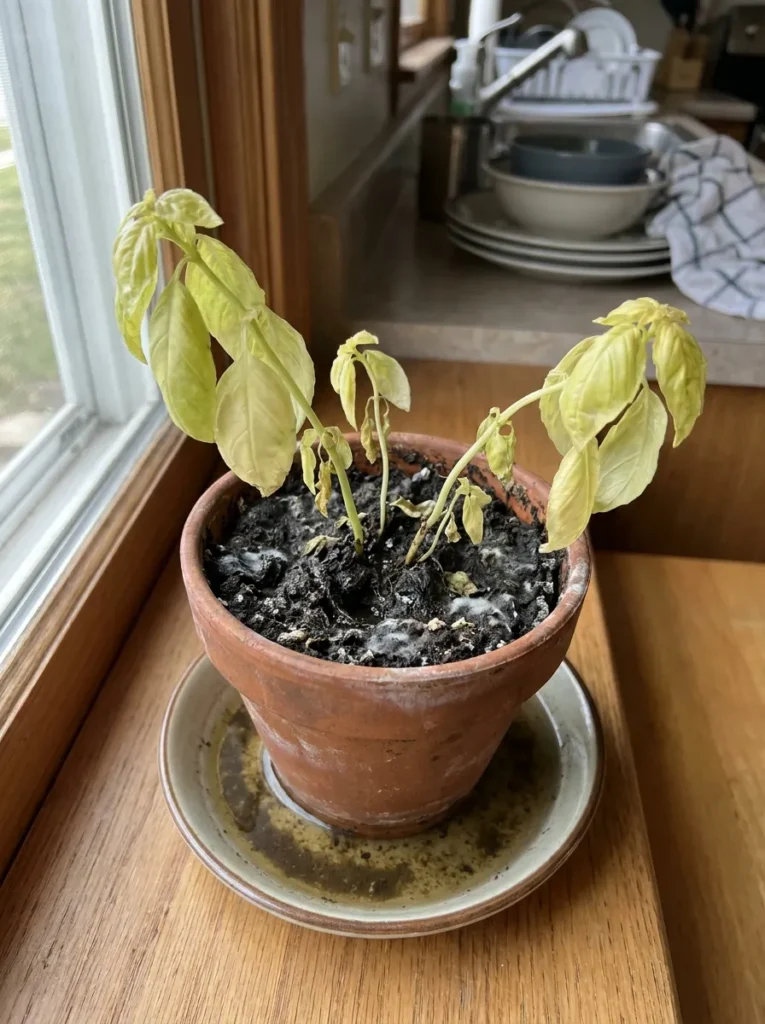
It feels counterintuitive, but loving your herbs too much is often what harms them.
Overwatering is the number one reason indoor herbs fail.
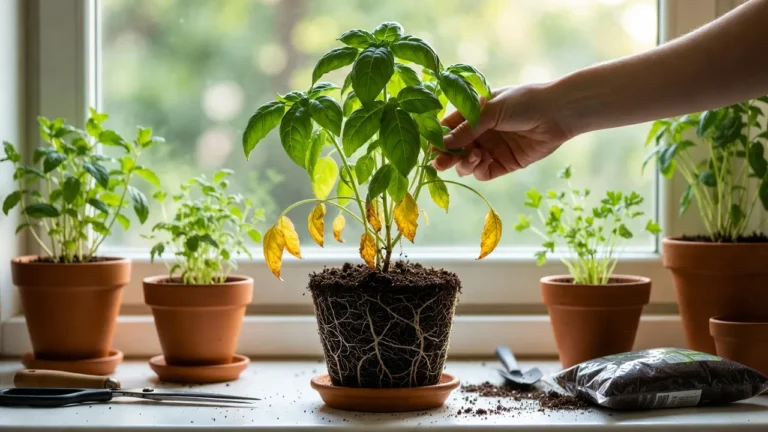
Roots need both water and oxygen. If the soil stays constantly wet, oxygen disappears from the root zone and roots begin to suffocate.
Personal Experience: When I first started growing parsley indoors, I watered on a strict daily schedule. Within days, the leaves turned yellow, and the roots smelled unpleasant. Switching to a moisture-based routine and checking the soil first saved my plant.
Signs of Overwatering
- Yellowing leaves
- Soft, mushy stems
- Mold or fungus on the soil surface
- Soil that stays wet for several days
How to Fix it
- Stop watering until the top inch of soil dries.
- Ensure containers have drainage holes.
- Improve soil aeration using perlite or a light potting mix.
Prevention
- Always check soil moisture before watering.
- Consider using a moisture meter for precision.
- Avoid decorative pots without drainage unless paired with proper saucers.
If you want a clearer watering routine, our guide on How to Water Indoor Herbs Properly explains when to water, how to test soil moisture, and how to avoid root rot.
Mistake 2: Insufficient Light
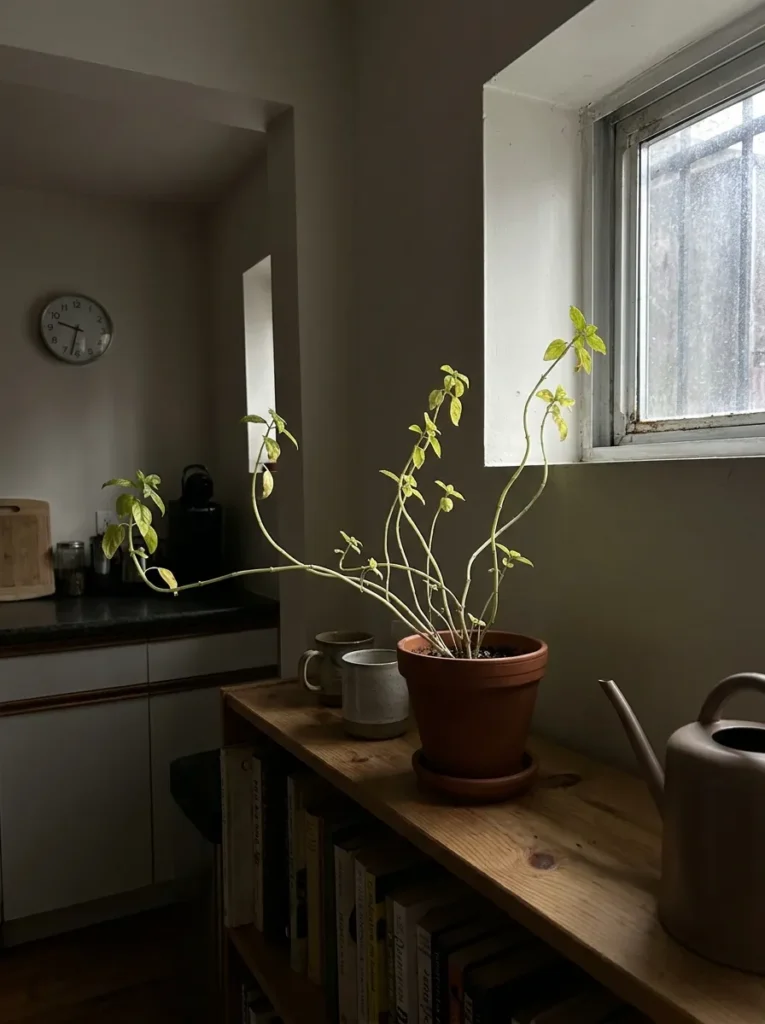
If overwatering is mistake number one, poor lighting is a very close second.
Most culinary herbs originate from sunny regions. Without enough light, photosynthesis slows, leaving plants weak, leggy, and pale.
Symptoms of Low Light
- Tall, thin stems (legginess)
- Pale leaves
- Slow growth
- Plants leaning toward the nearest window
How to Fix It
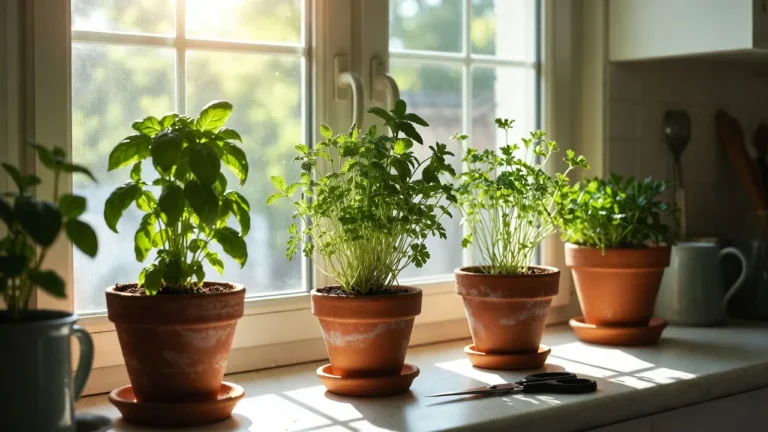
- Move herbs to the brightest window available. South-facing windows usually provide the strongest light.
- If natural light is limited (high-rise apartments or shaded rooms), use full-spectrum LED grow lights.
- Keep lights 6–12 inches above plants and run 12–14 hours daily. A timer helps maintain consistency.
Gardener’s Observation: My mint plant in a north-facing kitchen barely grew until I added an LED panel. Within two weeks, the leaves became fuller and greener.
Mistake 3: Using the Wrong Container Size
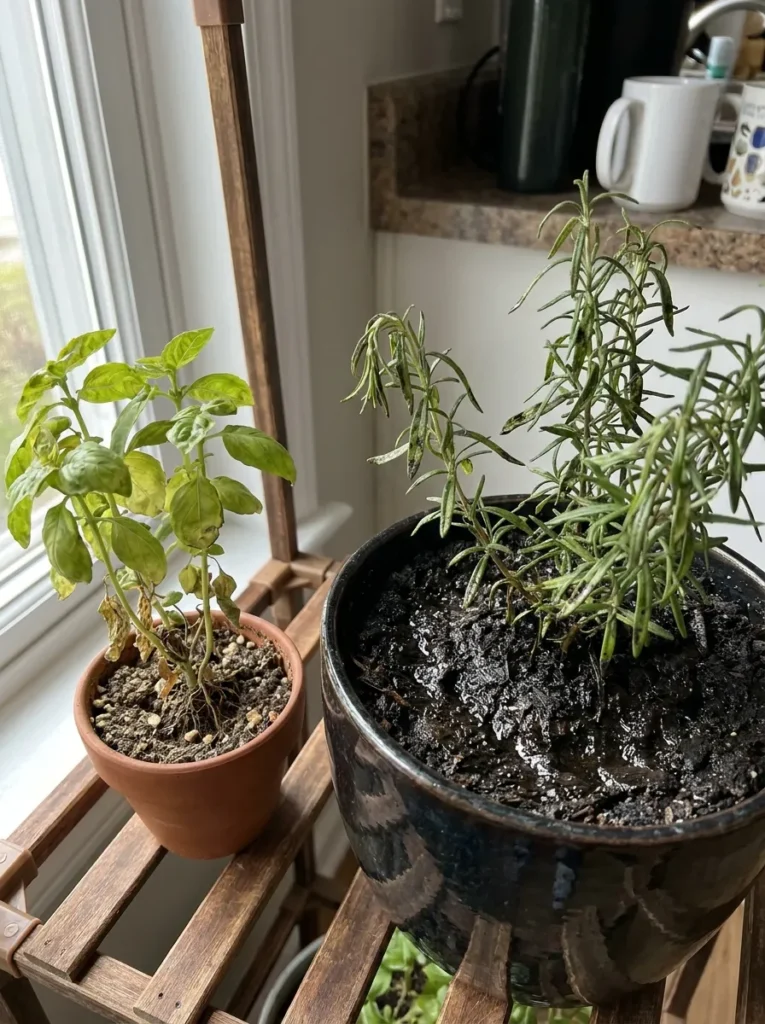
Even with perfect watering and light, the wrong container can quietly sabotage your efforts.
Container size directly affects root health.
- Too small: Roots become crowded, drying occurs quickly, and nutrient uptake slows.
- Too large: Soil retains excess moisture, increasing root rot risk.
Best Practice
- Match pot size to the plant’s root system.
- Always use containers with drainage holes.
- Use saucers to catch excess water.
When setting up your herb containers, using a simple Indoor Herb Garden Supplies Checklist can help ensure you have the right pots, trays, and basic growing equipment.
Mistake 4: Ignoring Soil Quality
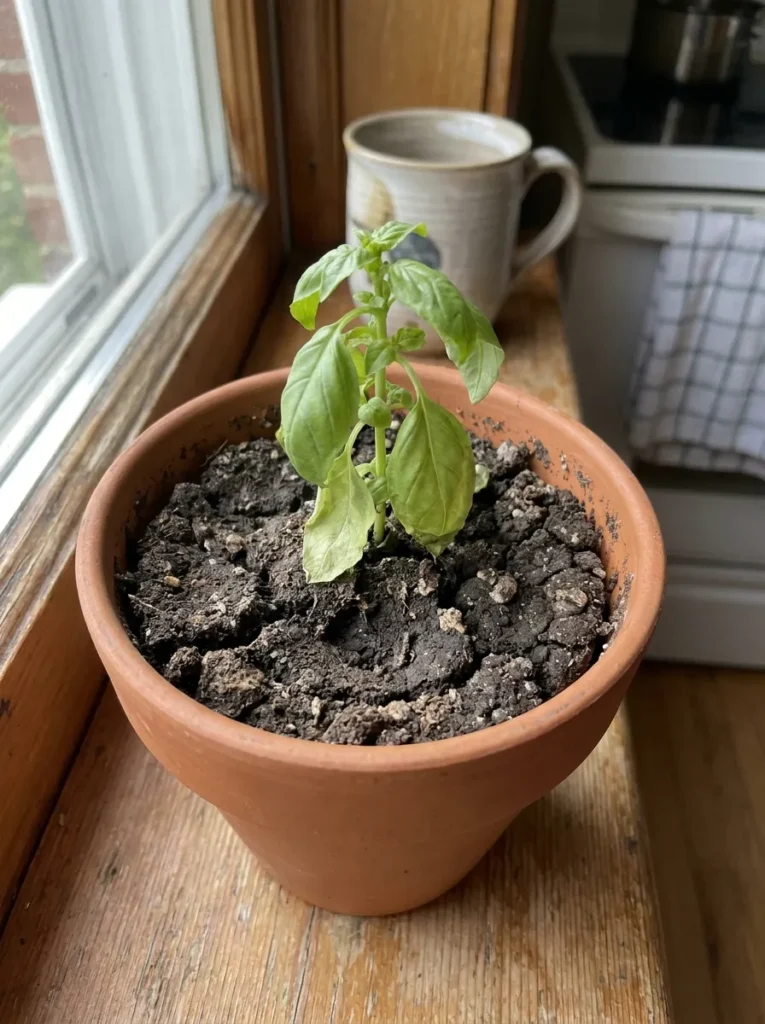
Soil is the foundation of healthy herbs. Heavy, dense soil compacts quickly, suffocating roots and slowing growth.
Ideal Indoor Herb Soil
- Coco coir or peat moss (moisture retention)
- Perlite (aeration and drainage)
- Compost (steady nutrients)
Why it matters: Loose soil allows roots to breathe, prevents waterlogging, and promotes nutrient absorption.
Herb Tip: Basil prefers slightly more moisture, while rosemary likes drier soil. Adjust your potting mix slightly based on the herbs you grow.
Experienced indoor gardeners often customize potting mixes for herbs. Adding extra perlite improves drainage, while small amounts of compost provide steady nutrients without overfertilizing plants.
Mistake 5: Not Fertilizing
Potting soil provides limited nutrients. Over time, herbs deplete nitrogen, phosphorus, and potassium.
Signs of Nutrient Deficiency
- Slow growth
- Smaller leaves
- Yellowing older leaves
How to Fix
- Apply mild organic fertilizer every few weeks during active growth.
- Avoid overfeeding because indoor herbs need less than outdoor crops.
Expert Tip: Rotate light feeding with compost tea for sustained nutrient availability.
Not sure what nutrients your herbs need or how often to fertilize them? Our guide on Best Fertilizer for Indoor Herbs covers safe and simple fertilizing methods for indoor plants.
Mistake 6: Poor Air Circulation
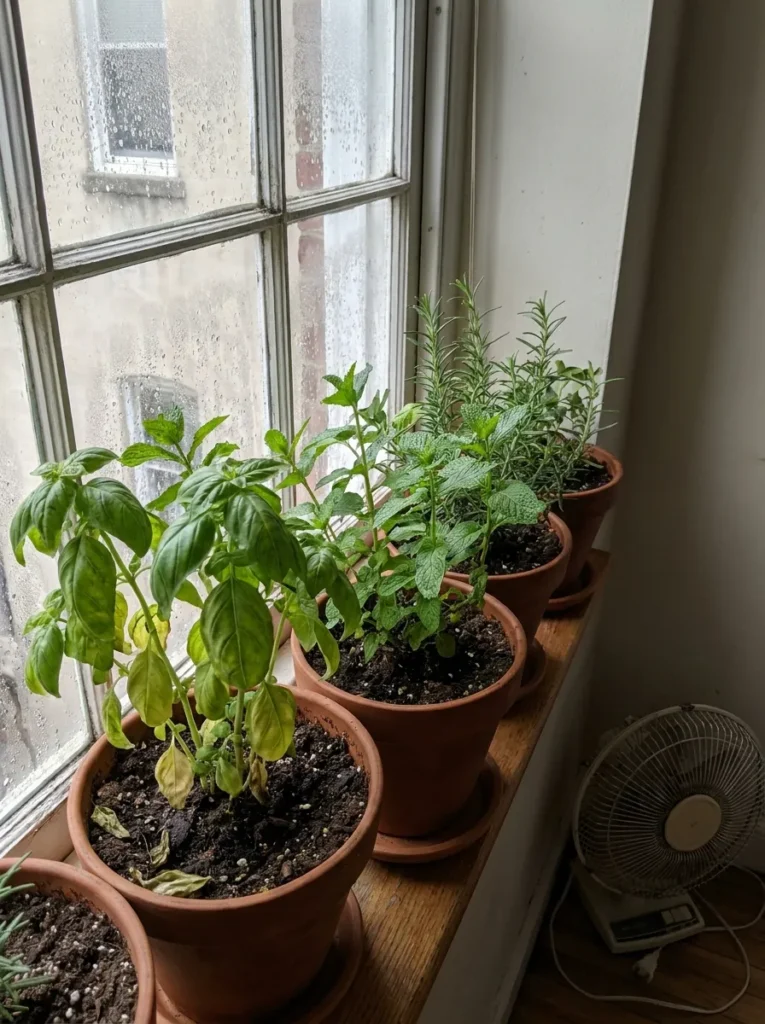
While soil and water are critical, the surrounding environment also plays an important role.
Limited airflow creates humid pockets around plants, increasing fungal risks.
Symptoms
- Mold on soil
- Weak or floppy stems
- Leaves remaining wet after watering
How to Fix
- Space pots apart for airflow.
- Rotate plants regularly.
- Open windows occasionally to refresh indoor air.
Mistake 7: Using Garden Soil Indoors
Outdoor garden soil is often too dense for containers and may contain:
- Insects
- Weed seeds
- Pathogens
Problems
- Poor drainage
- Compacted roots
- Increased pest risk
Solution
Use potting mix designed for container gardening that is lightweight, well-aerated, and nutrient-rich.
Reminder: If your soil looks muddy or clumpy when dry, it’s time to replace it.
Choosing the right potting mix makes a major difference in root health, which is explained in detail in our guide on Best Soil for Indoor Herbs.
Mistake 8: Starting With Too Many Herbs
Excitement is the enemy of simplicity.
More plants mean more variables and more chances to get something wrong.
Many beginners grow six or seven herbs at once, leading to:
- Overwatering mistakes
- Confusion about light needs
- Crowded growth
Solution
Start small with 2–3 beginner-friendly herbs such as:
- Basil
- Mint
- Parsley
- Chives
Once these thrive, gradually expand your indoor garden.
To start with easier options, check out beginner-friendly herbs that also help purify indoor air.
Mistake 9: Ignoring Early Warning Signs
Plants usually give signals before serious damage occurs.
Signs to Watch For
- Drooping leaves
- Yellow edges
- Slow growth
- Soil remaining wet for too long
Responding quickly prevents permanent damage.
Mistake 10: Placing Herbs in Unstable Indoor Conditions
Temperature fluctuations, heating vents, and air conditioners affect growth.
Problem Areas
- Beside heating vents
- Near air conditioners
- Above stoves or ovens
- Dark corners with little light
Better Placement
- Stable light exposure
- Moderate, consistent temperature
- Balanced humidity
Microclimate Tip: In high-rise apartments, rotate pots weekly for even sunlight. Avoid stacking plants too closely because air circulation is critical.
If your herbs are struggling, the issue may be environmental. Review the Best Temperature and Humidity for Indoor Herbs to identify the problem.
Quick Indoor Herb Troubleshooting Guide
Many indoor herb problems have similar symptoms, so identifying the cause quickly helps prevent long-term plant stress.
If you’re short on time, use this quick-reference chart to identify problems fast:
Problem | Symptoms | Quick Fix |
|---|---|---|
Overwatering | Yellow leaves, mold | Allow the soil to dry |
Low light | Thin stems | Move to brighter window |
Poor soil | Compacted soil | Replace potting mix |
Nutrient deficiency | Pale leaves | Add mild fertilizer |
Poor airflow | Mold/fungus | Increase ventilation |
Small adjustments often solve bigger problems. Since multiple problems can show similar symptoms, quick diagnosis is helpful.
These issues often happen when herbs don’t match your environment. Use our herb growing tool to find better-suited plants.
How to Diagnose Indoor Herb Problems
If you’re unsure what is causing a problem, a simple diagnosis process can help identify the issue quickly.
When something looks wrong, avoid guessing. Follow this simple sequence instead:
- Check soil moisture first
- Evaluate light conditions
- Inspect container drainage
- Look for nutrient deficiencies
- Observe airflow and temperature
Prevention Checklist for Healthy Indoor Herbs
After identifying and fixing common mistakes, the next step is preventing them from happening again. Keeping a few simple practices in mind can dramatically improve the health of your indoor herbs.
- Containers with drainage holes
- Loose, well-draining soil
- Adequate sunlight or grow lights
- Proper spacing for airflow
- Watering based on soil moisture, not schedule
- Occasional fertilization
Balanced light, moisture, and soil structure are the pillars of thriving indoor herbs.
FAQs
1. Why are my indoor herbs dying?
In most cases, it’s overwatering or insufficient light. Indoor herbs rarely fail randomly there’s usually an environmental imbalance.
2. Why are my herb leaves turning yellow?
Excess water or compacted soil limiting oxygen to roots is the most common cause.
3. Can indoor herbs recover from overwatering?
Yes. Allow soil to dry, ensure proper drainage, and adjust watering frequency.
4. How much sunlight do indoor herbs need?
6–8 hours of bright light daily is ideal. Use LED grow lights if natural light is limited.
5. What herbs grow best indoors?
Basil, mint, parsley, thyme, and chives adapt well to container environments.
6. Do indoor herbs need fertilizer?
Yes, occasional mild feeding helps replenish nutrients.
7. Why are my herbs growing slowly?
Slow growth usually occurs due to insufficient light, nutrients, or root space.
Conclusion
Indoor herb gardening becomes much easier once you understand the basic environmental needs of herbs.
Most problems come down to a few key factors: water, light, soil structure, and airflow.
By recognizing early warning signs, correcting mistakes, and using proper containers and potting mix, your basil, mint, parsley, and other herbs can thrive year-round, even in small apartments.
Observation is your best tool. Once you understand how your plants respond, maintaining healthy indoor herbs becomes a rewarding part of everyday life.
Germination issues are one of the most common problems beginners face, and this detailed guide explains exactly why herb seeds fail indoors and how to fix it.

Hi, I’m Rimsha, founder of Urban Bloomer 🌱
I grow herbs and plants in a small apartment and share what actually works in limited indoor spaces. Over the past few years, I’ve tested different setups, from lighting and soil to watering routines, to find simple methods that make indoor gardening easier.
Here, you’ll find practical, beginner-friendly advice based on real experience, not complicated gardening systems.