How to Water Indoor Herbs Properly: A Complete Guide to Healthy, Thriving Plants
You bring home fresh basil, mint, or parsley, place the pot near a sunny window, water it every day… and within two weeks the plant starts turning yellow.
Sound familiar?
When I first started growing herbs indoors, I assumed daily watering would help them thrive. Instead, my basil developed yellow leaves within two weeks. Reducing watering frequency made a visible difference almost immediately.
Once you understand how indoor soil holds moisture, how roots absorb water, and when plants actually need hydration, watering becomes easy and predictable.
This guide explains exactly how to water indoor herbs properly so they stay healthy, productive, and flavorful year-round.
If you are just starting out, our guide on Indoor Herb Gardening for Beginners helps you understand the basics before watering.
What Is the Correct Way to Water Indoor Herbs?
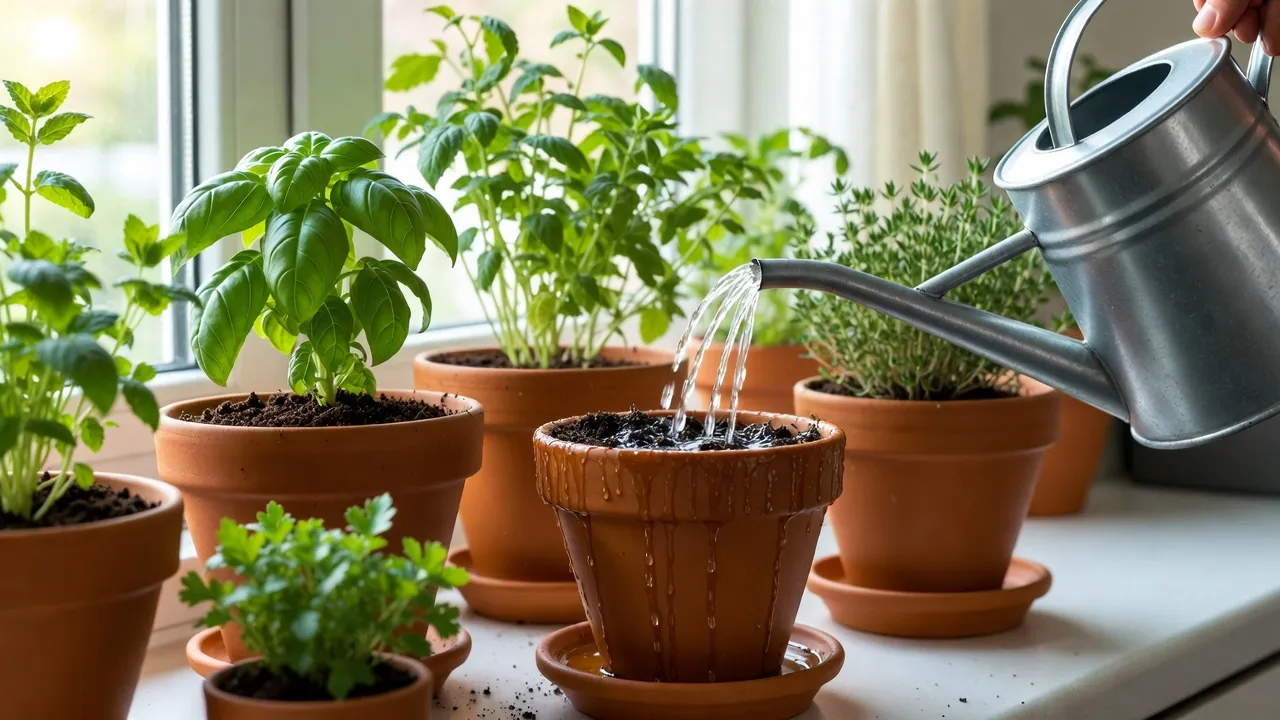
The correct way to water indoor herbs is to wait until the top inch of soil becomes dry, then water slowly until excess water drains from the bottom of the pot.
Always use containers with drainage holes and empty the tray afterward to prevent root rot.
Why Proper Watering Matters for Indoor Herbs
Water does much more than keep plants hydrated. It drives several biological processes that keep herbs alive.
Water helps plants:
- Move nutrients from soil to roots
- Maintain leaf structure and growth
- Support photosynthesis, the process that converts sunlight into plant energy
- Regulate plant temperature
But plants need balance.
Herb roots need water, but they also need oxygen. When soil stays constantly wet, that oxygen disappears. Without it, roots slowly suffocate.
In container gardening, watering correctly is the difference between thriving herbs and struggling plants.
What Actually Happens After You Water a Pot
When you pour water into a pot, it doesn’t spread evenly right away.
Most of it moves straight downward first. The bottom of the pot ends up holding moisture the longest, while the top layer starts drying much sooner.
That’s why the surface can feel dry even when the roots are still sitting in wet soil.
Once you see this pattern, it becomes easier to understand why checking deeper than the surface matters.
How Often Should You Water Indoor Herbs?
Most indoor herbs need water every 3–7 days, but the exact schedule depends on environment, soil type, and container size.
In my own kitchen setup, I’ve noticed that watering schedules change dramatically between seasons. During winter, I sometimes go nearly a full week without watering, while in summer the same plants need moisture every three to four days.
Typical Watering Frequency for Common Herbs
Herb | Watering Frequency |
|---|---|
Basil | Every 3–4 days |
Mint | Every 3–5 days |
Parsley | Every 4–6 days |
Oregano | Every 5–7 days |
Thyme | Every 6–7 days |
Rosemary | Every 6–8 days |
Mediterranean herbs like rosemary and thyme prefer drier soil, while leafy herbs like basil and parsley need slightly more moisture.
In herbs like basil, inconsistent watering can even trigger early flowering. Learn why basil bolts and how to prevent it.
Why “Every Few Days” Doesn’t Always Work
A lot of advice online suggests watering every few days. That sounds simple, but it rarely works the same way in real homes.
A plant near a bright window in summer will use water much faster than one sitting in a cooler corner during winter.
Even moving the pot a few feet can change how quickly the soil dries.
Instead of sticking to a schedule, it’s more reliable to treat each plant based on how the soil actually feels.
Step-by-Step: How to Water Indoor Herbs Properly
Now you understand the basics, let’s go step by step to water your herbs correctly.
Knowing how often to water is important, but the method you use matters just as much.
Step 1: Check Soil Moisture
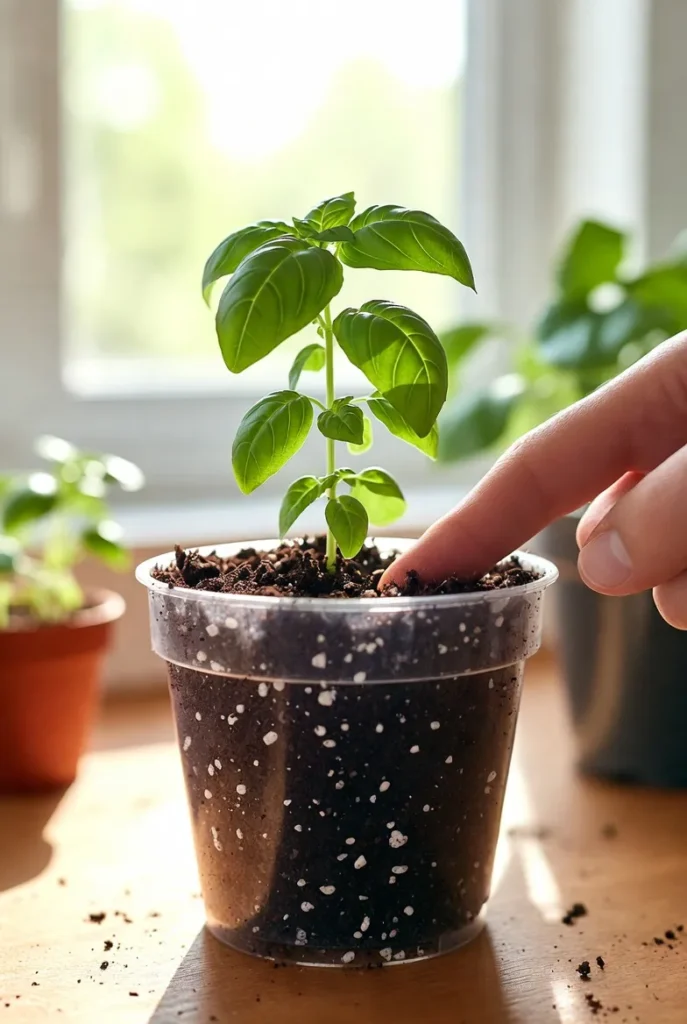
Insert your finger about one inch into the soil.
If the soil feels dry, the plant is ready for water.
If it still feels moist, wait another day.
This is called the finger test.
It may feel old-fashioned, but this simple method is often more accurate than expensive tools.
Step 2: Water Slowly at the Soil Surface
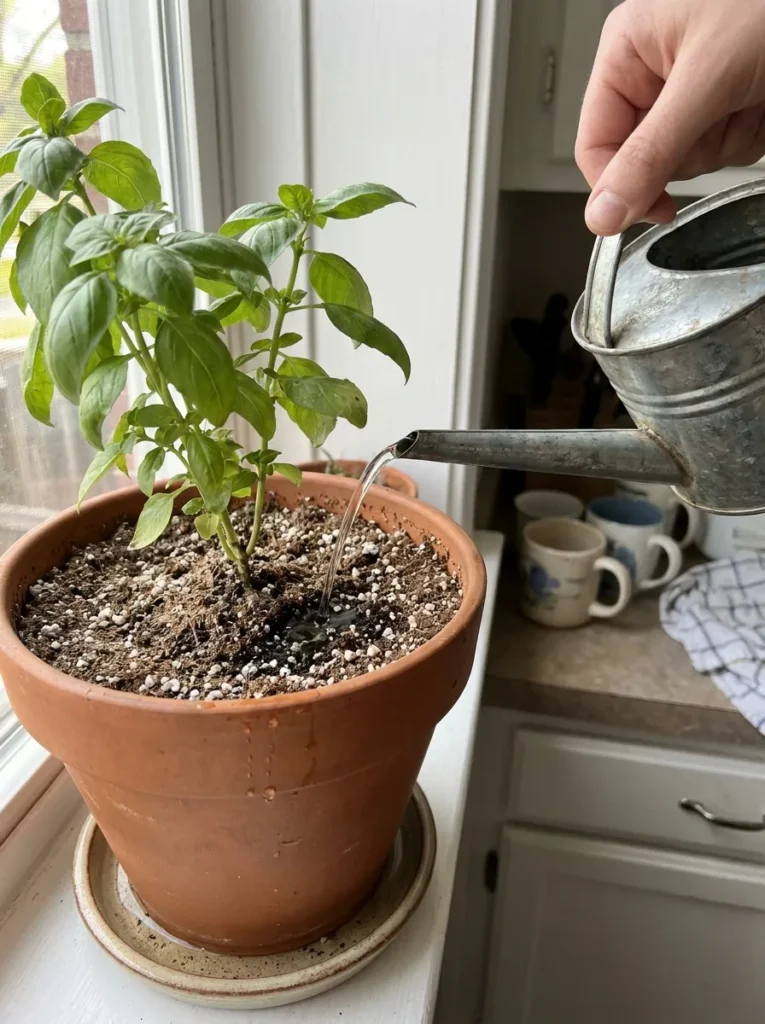
Pour water directly onto the soil rather than on the leaves.
Water slowly so the soil absorbs moisture evenly.
Fast pouring often causes water to run down the pot edges without reaching the roots.
Overwatering is one of the most common reasons indoor herbs fail. If the soil stays wet for too long, plants can develop root rot in indoor herbs, a condition that damages roots and eventually kills the plant.
Step 3: Water Until Drainage Occurs
Continue watering until water begins to drain from the bottom of the container.
This ensures the entire root system receives moisture.
Drainage also prevents salt buildup inside the potting mix.
Step 4: Empty the Saucer
After watering, empty the tray beneath the pot.
Standing water keeps soil overly wet and increases the risk of fungal growth.
Step 5: Let Soil Dry Slightly Before Watering Again
Allow the top layer of soil to dry before watering again.
This drying period allows oxygen to return to the root zone and keeps roots healthy.
Signs of Overwatering vs Underwatering
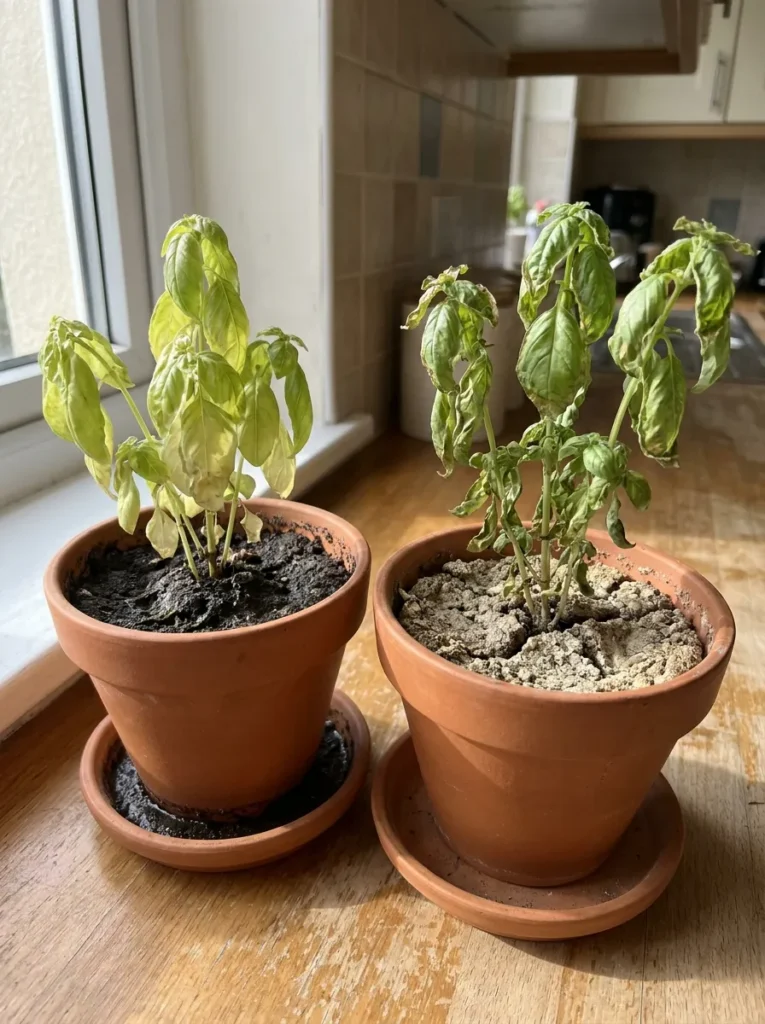
Indoor herb problems often look similar, but the symptoms reveal the cause.
Comparison Table
Issue | Symptoms |
|---|---|
Overwatering | Yellow leaves, mold on soil, mushy stems |
Underwatering | Dry soil, drooping leaves, crispy edges |
Overwatering is far more common indoors because evaporation is slower.
Improving drainage and reducing watering frequency usually fixes the issue.
Watering mistakes are one of the biggest challenges for beginners. Our article on 10 Common Indoor Herb Gardening Mistakes explains several common problems indoor gardeners face and how to correct them before plants decline.
Why Soil Type Changes Watering Needs
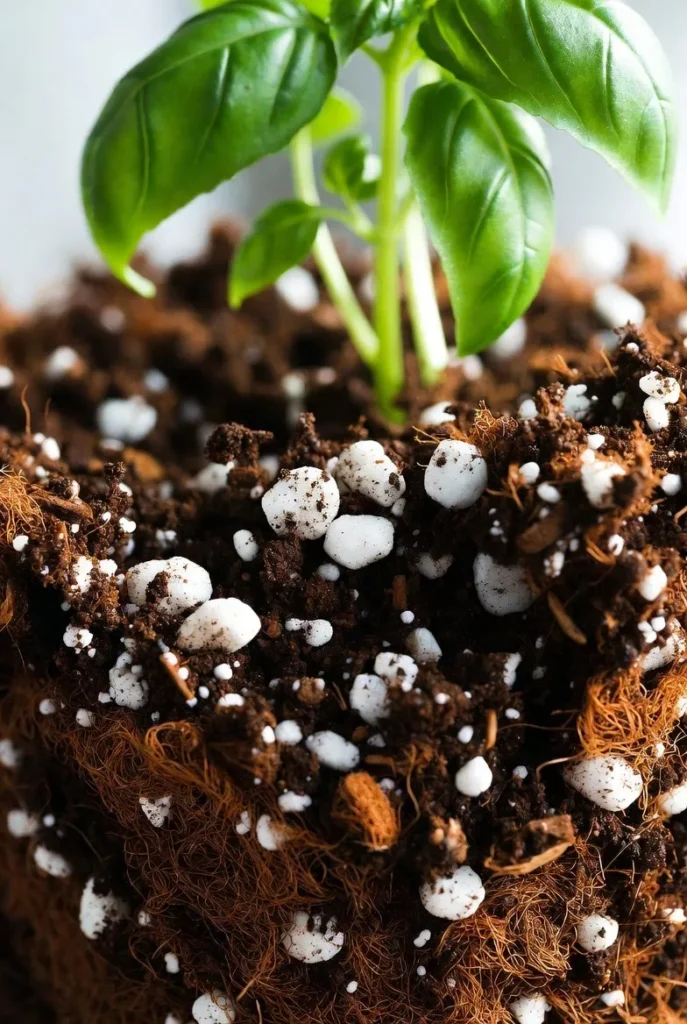
Soil structure directly affects how water moves through the pot.
A good indoor potting mix contains:
- Coco coir or peat moss for moisture retention
- Perlite for aeration
- Compost for nutrients
Perlite creates air pockets in the soil, improving oxygen flow to roots and preventing compaction.
If your soil feels dense or muddy, water will stay trapped longer.
Choosing the right soil mix is critical for balanced watering.
Choosing the right soil is essential for healthy herbs. You can read our complete guide on Best Soil for Indoor Herbs to pick the perfect mix.
When Soil Starts Holding Too Much Water
Over time, potting mix doesn’t stay the same.
It slowly breaks down and becomes finer. When that happens, water starts moving through it more slowly.
You might notice:
- Water taking longer to drain
- Soil staying damp for days
- A heavier, denser feel
At that point, watering habits alone won’t fix the issue. The soil itself needs attention.
Container Type Also Affects Moisture
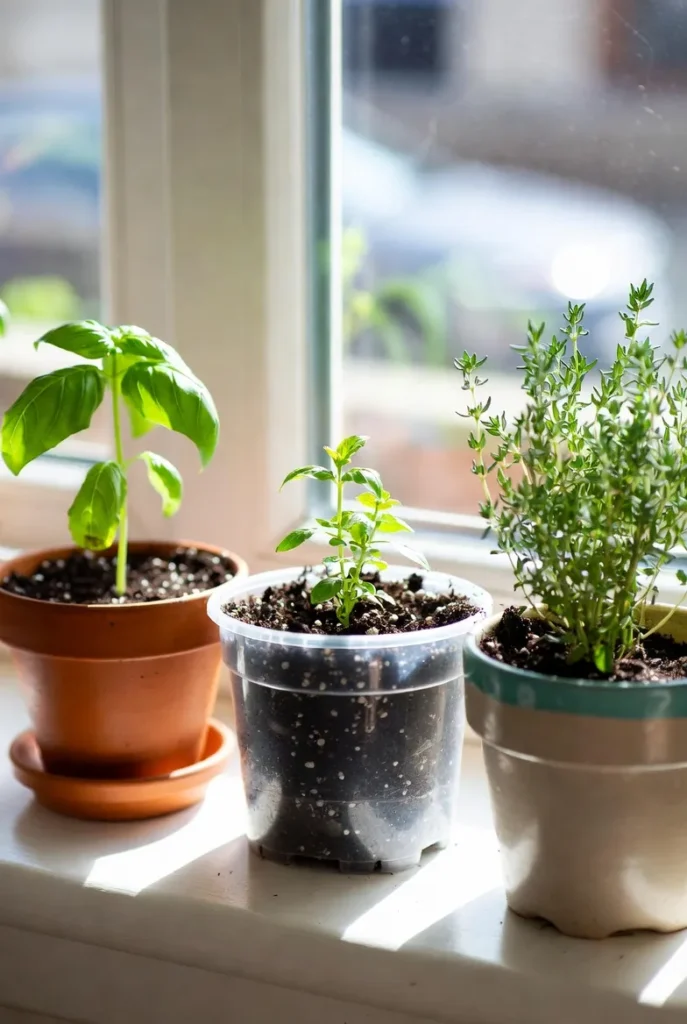
Different pot materials change how quickly soil dries.
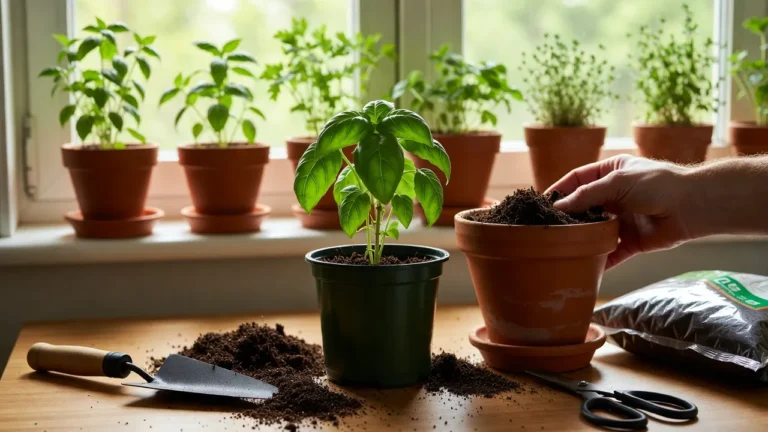
Clay or Terracotta Pots
- Allow faster evaporation
- Reduce risk of overwatering
Plastic Pots
- Hold moisture longer
- Require less frequent watering
Ceramic Pots
- Moderate moisture retention
- Good balance for indoor herbs
Always choose containers with drainage holes.
Without drainage, excess water has nowhere to go.
Environmental Factors That Change Watering Needs
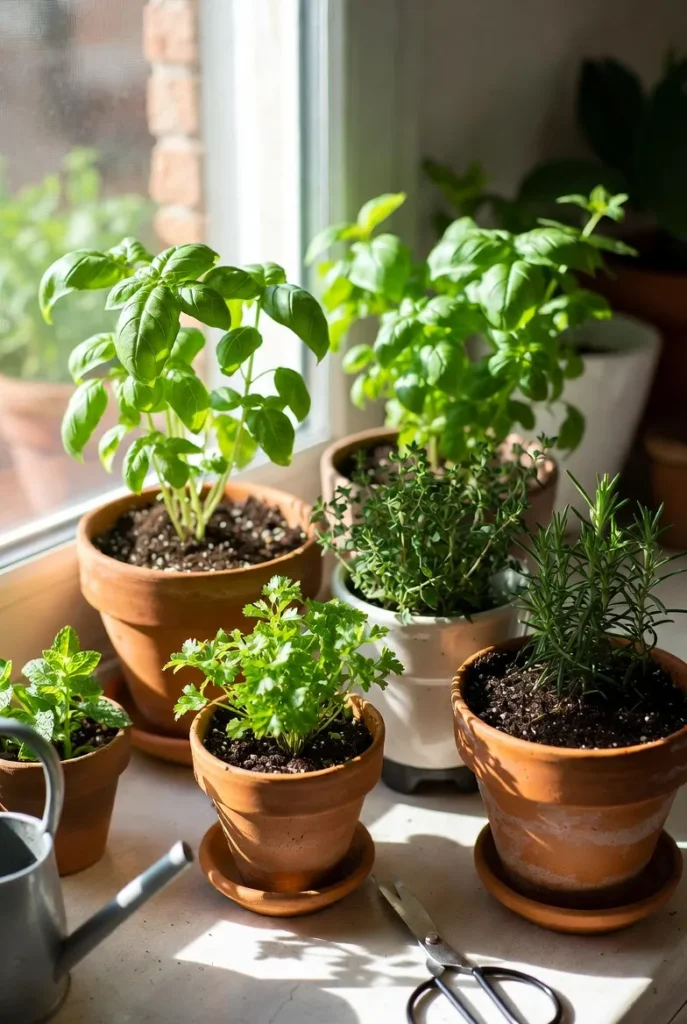
Beyond soil and containers, your indoor environment plays a major role in how quickly moisture evaporates.
Sunlight Exposure
Herbs near bright windows dry faster.
Plants placed in shaded apartments need less frequent watering.
Room Temperature
Warm homes increase evaporation and plant transpiration.
Cooler rooms slow moisture loss.
Humidity Levels
High humidity keeps soil wet longer.
Low humidity dries soil faster.
Why Some Rooms Keep Soil Wet Longer
In some rooms, soil just doesn’t seem to dry out the way you expect.
This usually comes down to airflow.
Spaces with little air movement tend to hold moisture longer. The soil stays damp, and evaporation slows down.
Even something simple like opening a window occasionally can change how quickly your pots dry.
Seasonal Adjustments for Watering
Indoor watering needs also change throughout the year.
Winter
During winter:
- Indoor heating reduces humidity
- Plant growth slows
Herbs usually require less frequent watering.
Summer
During summer:
- Higher temperatures increase evaporation
- Plants grow faster
Watering may need to occur more often.
Even with these environmental factors in mind, beginners often need guidance for judging soil moisture accurately.
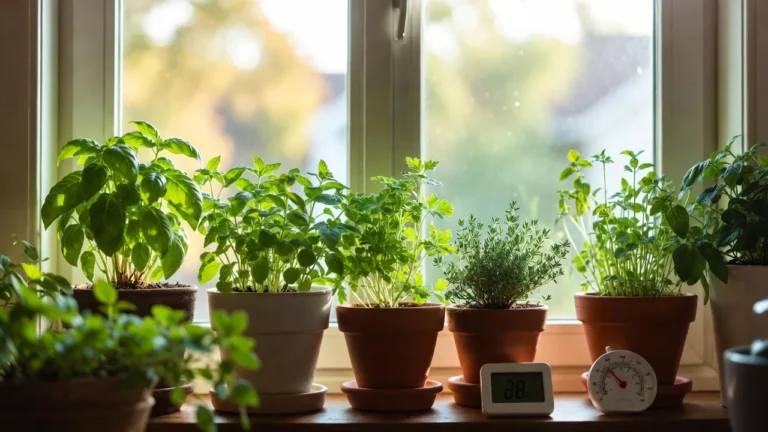
Watering needs also depend on your indoor climate, so understanding the Best Temperature and Humidity for Indoor Herbs can prevent common mistakes.
Helpful Tools for Accurate Watering
While the finger test works well, several tools can help beginners.
Moisture Meter
A moisture meter measures soil moisture levels and reduces overwatering.
Typical price range: $10–$25.
Watering Can with Narrow Spout
Provides better control and prevents water from splashing leaves.
Instead of relying only on tools, understanding different watering techniques can help you choose the method that best fits your home environment.
Alternative Watering Systems
While traditional top watering works well for most gardeners, there are alternative methods that offer more control in certain situations.
Top Watering
Top watering is the most common technique.
Water is poured directly onto the soil surface until it drains through the bottom.
Pros:
- Easy to control
- Flushes salts from soil
Cons:
- Water may splash onto leaves
Bottom Watering
Bottom watering allows the plant to absorb water through drainage holes.
Steps:
- Fill a tray with water
- Place the pot in the tray
- Allow soil to absorb moisture from below
Pros:
- Prevents leaf diseases
- Encourages deeper root growth
Cons:
- Takes longer
Self-Watering Planters
Self-watering pots contain a water reservoir beneath the soil.
The plant absorbs water gradually through capillary action.
Pros:
- Consistent moisture levels
- Less frequent watering
Cons:
- Higher cost
- Risk of excessive moisture if misused
Common Watering Mistakes Beginners Make
One of the most common mistakes I see, and one I personally made when I started growing herbs indoors, is watering on autopilot instead of checking the soil first.
I used to water every evening simply because it felt like part of the routine. The soil was still damp, but I assumed more water meant healthier growth. Within weeks, the roots began to weaken from excess moisture.
Even with proper technique, beginners often make some typical mistakes. Here’s how to avoid them.
- Watering every day
- Using decorative pots without drainage holes
- Leaving water in the tray beneath pots
- Using heavy garden soil instead of potting mix
- Ignoring soil moisture before watering
Fixing these habits dramatically improves plant health.
Quick Indoor Herb Watering Checklist
Before watering your herbs, check these five conditions.
- Top inch of soil is dry
- Pot has drainage holes
- Water drains freely through soil
- Tray is emptied after watering
- Soil texture remains loose and airy
Following this checklist prevents most indoor herb problems.
FAQS
1. How often should indoor herbs be watered?
Most indoor herbs need water every 3–7 days, depending on sunlight, humidity, and pot size. Always check soil moisture first rather than watering on a fixed schedule.
2. Should herbs be watered daily?
No. Daily watering usually causes overwatering and root rot. Herbs prefer soil that dries slightly between watering cycles.
3. What is the best time of day to water herbs?
Morning is ideal because plants absorb moisture during daylight hours and excess moisture evaporates naturally.
4. Why are my indoor herbs turning yellow?
Yellow leaves often indicate overwatering, poor drainage, or compact soil that prevents oxygen from reaching the roots.
5. Can herbs recover from overwatering?
Yes, if caught early. Allow the soil to dry, improve drainage, and reduce watering frequency.
6. Is misting herbs helpful?
Most culinary herbs do not require misting. Excess moisture on leaves may increase fungal risk.
7. Do herbs need less water in winter?
Yes. During winter, plant growth slows and indoor herbs require less frequent watering.
8. Can I use tap water for indoor herbs?
In most regions tap water is safe. If water contains heavy chlorine, letting it sit overnight before watering can help.
Conclusion
Healthy indoor herbs don’t depend on complicated routines; they depend on balanced watering habits.
Remember the core principles:
Check soil moisture before watering.
Water deeply but less often.
Ensure proper drainage.
Allow soil to dry slightly between watering cycles.
Over time, you’ll begin to recognize the signals your plants give you such as dry soil, leaf firmness, subtle changes in growth. And once you notice those signals, watering stops feeling confusing and starts feeling intuitive.
Master this single skill, and your indoor herb garden will stay green, fragrant, and productive for months to come.
Overwatering can attract fungus gnats, one of the most common pests in container herbs. This guide explains how to identify indoor herb pests and eliminate them naturally.

Hi, I’m Rimsha, founder of Urban Bloomer 🌱
I grow herbs and plants in a small apartment and share what actually works in limited indoor spaces. Over the past few years, I’ve tested different setups, from lighting and soil to watering routines, to find simple methods that make indoor gardening easier.
Here, you’ll find practical, beginner-friendly advice based on real experience, not complicated gardening systems.