Choosing the Right Soil for Indoor Herbs: A Complete Guide to Healthy Roots
Have you ever planted indoor herbs that looked healthy for a week… and then suddenly start drooping, yellowing, or smelling strange?
Most of the time, the problem isn’t light — it’s the soil.
Indoor herbs live in containers, not in open ground. Their water, air, nutrients, and root space all depends on the soil you choose.
This guide shows you how to choose the right soil to keep roots healthy and herbs thriving.
If you’re just starting out, our complete guide to indoor herb gardening guide explains everything you need to set up a healthy herb garden at home.
What Is the Ideal Soil for Indoor Herbs?
The best soil for indoor herbs is a lightweight, well-draining potting mix that contains coco coir or peat moss for moisture retention, perlite for aeration, and compost for nutrients.
It should feel loose, not heavy. It should drain quickly, but not dry out instantly.
Why Indoor Soil Is Different From Outdoor Soil
Outdoors, nature helps your plants.
- Rain flushes excess salts.
- Wind improves airflow.
- Worms loosen soil.
- Microbes balance nutrients.
Inside your apartment, none of that happens.
Water sits in a saucer. Airflow is limited. Soil compacts faster. That’s why indoor container gardening requires a specific type of potting mix designed for pots.
Using garden soil indoors is one of the fastest ways to cause root rot.
In container setups I’ve observed, garden soil almost always compacts within a few weeks, especially in apartments with limited airflow. Once compaction starts, drainage slows dramatically and root stress follows quickly.
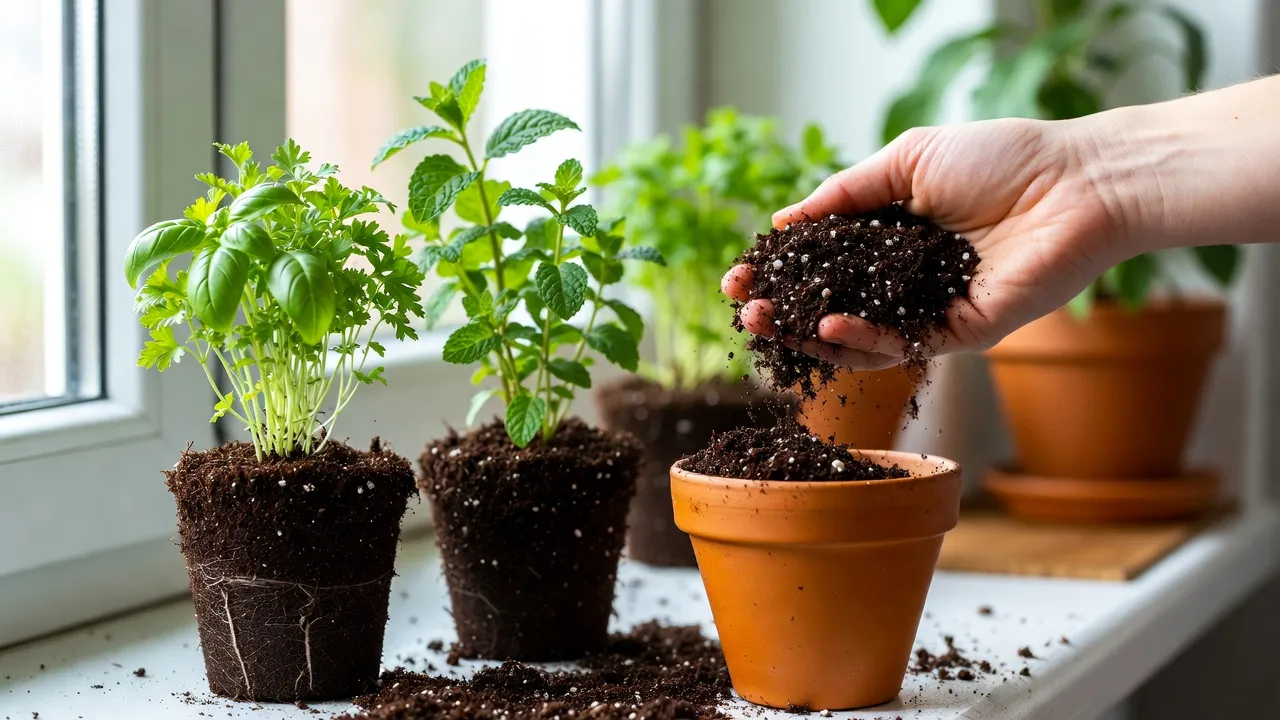
Even the best potting mix won’t perform well if the container lacks proper drainage. Before filling a pot with soil, review this guide on how to choose the right containers for indoor herbs.
The Ideal Soil Structure for Healthy Roots
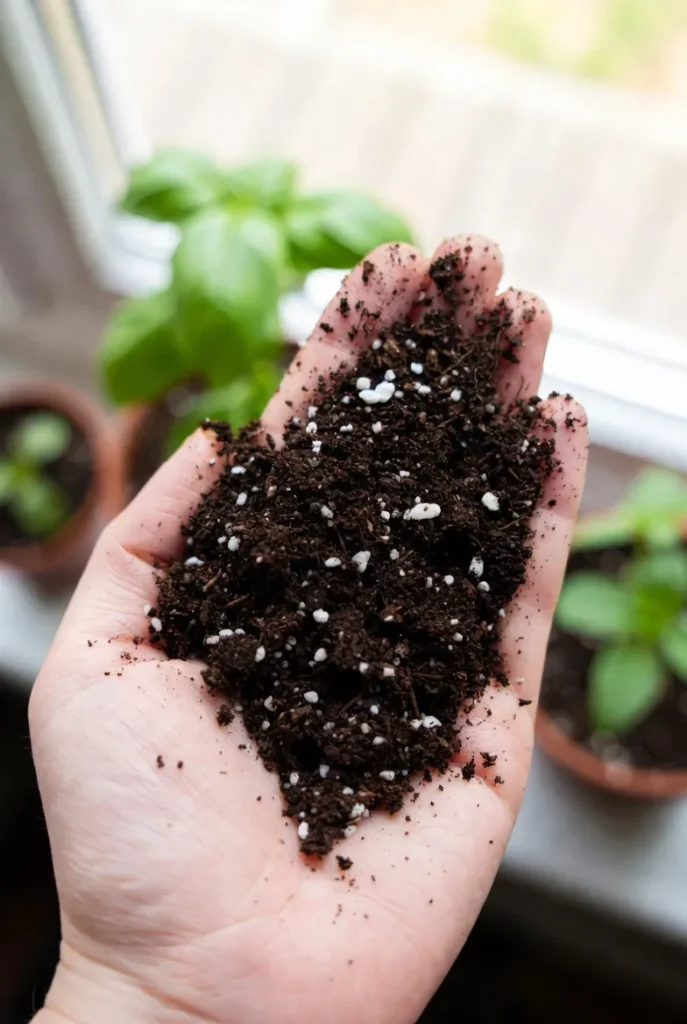
Think of soil like a sponge that breathes: it should hold moisture and air at the same time. This balance is what keeps roots strong and herbs productive.
It should:
- Crumble easily in your hand
- Contain visible white perlite pieces
- Drain excess water within seconds
- Stay slightly moist, not soggy
Roots need oxygen to absorb nutrients. When soil stays compacted or waterlogged, roots cannot breathe, which slows nutrient uptake and causes yellow leaves.
Using the wrong soil mix is one of the most frequent beginner errors. If you want to avoid other common growing problems, our guide on 10 Common Indoor Herb Gardening Mistakes (And How to Fix Each One) explains several issues that affect herb health indoors.
How Soil Affects Root Behavior in Containers
In containers, roots behave very differently compared to outdoor soil.
Instead of spreading freely, roots grow in confined spaces and depend entirely on the soil structure you provide.
If the soil is too dense:
- Roots stay shallow
- Water accumulates at the bottom
- Oxygen levels drop quickly
If the soil is well-balanced:
- Roots spread evenly
- Moisture distributes properly
- Nutrient absorption improves
Healthy root behavior is the foundation of consistent herb growth indoors.
Essential Soil Ingredients for Healthy Indoor Herb Soil
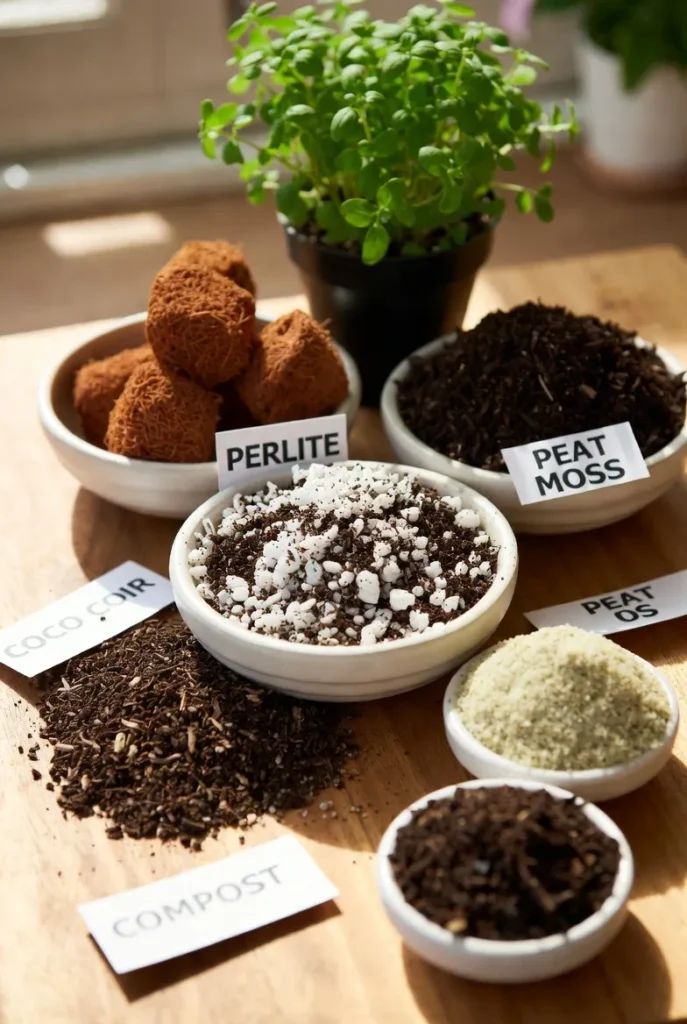
Not all potting mixes are created equal. Choosing the right combination of ingredients ensures roots get enough oxygen, moisture, and nutrients.
Coco Coir: Holds moisture while staying airy, resists compaction.
Peat Moss: Retains water but needs perlite to prevent compaction.
Perlite: Improves drainage and aeration, keeps soil light.
Compost: Provides steady nutrients for leafy growth.
If your mix includes these components, you’re on the right track.
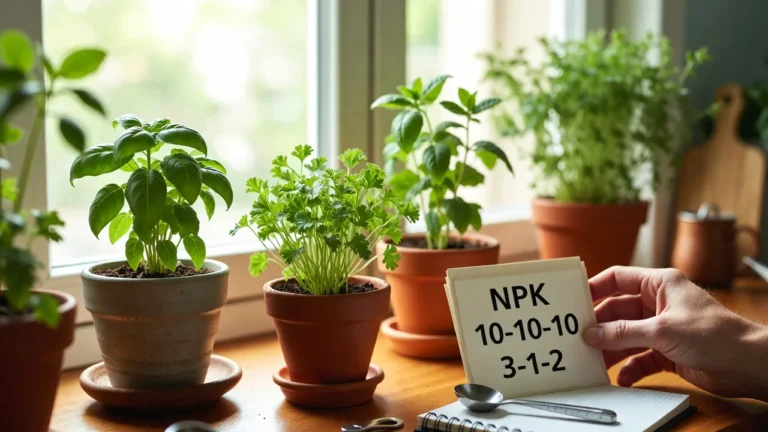
Even the best soil needs proper nutrients, so it’s helpful to understand what fertilizer numbers mean and how NPK affects plant growth.
Understanding Drainage Speed
Drainage is not just about water leaving the pot, it’s about how quickly excess water moves through the soil.
Slow drainage:
- Water stays trapped
- Roots remain wet too long
- Higher risk of rot
Fast drainage:
- Prevents water buildup
- Keeps oxygen available
- Reduces fungal problems
A good indoor mix should drain within a few seconds after watering, while still holding enough moisture for roots to absorb.
Why Indoor Potting Mix Beats Garden Soil for Healthy Roots
Even if you have garden soil at home, it’s often too dense for pots and can trap water. Indoor potting mix is formulated to support root health and prevent common container gardening problems.
Feature | Garden Soil | Indoor Potting Mix |
|---|---|---|
Drainage | Slow | Fast |
Compaction | High | Low |
Pest Risk | Higher | Lower |
Garden soil is built for open ground. It’s too dense for pots and often contains insects or fungal spores.
Indoor potting mix is formulated for container gardening, where drainage and aeration matter more.
Choosing well-draining soil and containers with drainage holes is essential if you want to prevent root rot in indoor herbs.
How to Pick the Right Soil in Stores
Standing in front of shelves full of soil can be overwhelming. Here’s a simple way to pick a mix that keeps roots healthy:
1. Check the Label
Look for:
- Coco coir or peat moss
- Perlite
- Compost
Avoid mixes labeled topsoil or garden soil as they’re too dense for containers and can cause root rot.
2. Feel the Texture
If possible, lightly squeeze a sample.
- It should crumble easily.
- It shouldn’t feel sticky, muddy or clay-heavy.
3. Consider Your Climate
Even indoors, climate matters.
Cold regions
Indoor heating dries air. Soil may dry more quickly than expected.
Hot regions
Air conditioning increases evaporation. Check moisture more often.
Humid regions
High humidity increases mold risk. Prioritize extra aeration.
You can also adjust based on your apartment conditions:
- Low light → Choose a lighter mix with extra perlite for better aeration
- Hot & dry → Opt for a mix with slightly higher moisture retention
- Humid → Increase aeration and drainage
How to Test Soil Quality at Home (Simple Method)
Before planting, you can quickly test your soil quality.
Step-by-step test:
- Fill a pot with your soil
- Pour water slowly
- Observe how it drains
What to look for:
- Water should pass through within a few seconds
- Soil should feel moist, not soggy
- No pooling on the surface
If water sits on top or drains very slowly, your mix needs more aeration (like adding perlite).
How Much Soil Do You Actually Need?
For most small apartment setups:
- One 6-inch pot = about 2–3 quarts
- Three to five herb pots = one 16-quart bag
Typical price ranges (USD equivalent globally):
- 8-quart bag: $8–$15
- 16-quart bag: $12–$25
- Premium organic blends: $20–$40
There’s no need to buy oversized bags unless expanding your setup.
Make Your Own Indoor Herb Soil Mix
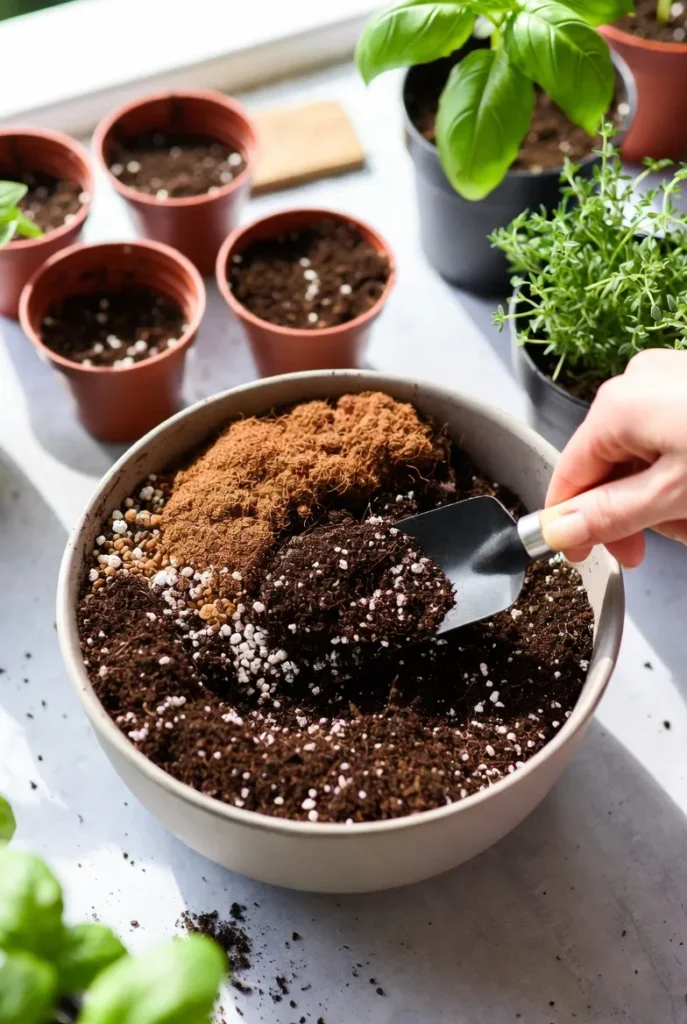
If store-bought mixes aren’t available or you want full control, making your own soil is easy and effective.
Balanced recipe:
- 50% coco coir or peat moss
- 30% perlite
- 20% compost
Mix thoroughly until texture is uniform.
DIY mixes are especially useful in areas where indoor gardening supplies are limited or expensive.
How to Adjust Your Soil Mix Based on Conditions
Not all indoor environments are the same, so your soil mix can be adjusted slightly.
For dry indoor environments:
- Add a bit more coco coir
- Helps retain moisture longer
For humid environments:
- Increase perlite content
- Improves airflow and drainage
For low-light areas:
- Use lighter soil with more aeration
- Prevents excess moisture buildup
Small adjustments can significantly improve plant health.
Prevent Root Rot with Proper Soil and Drainage
Even the best soil fails if water doesn’t drain. Here’s how to keep your herb roots healthy:
- Always use pots with drainage holes
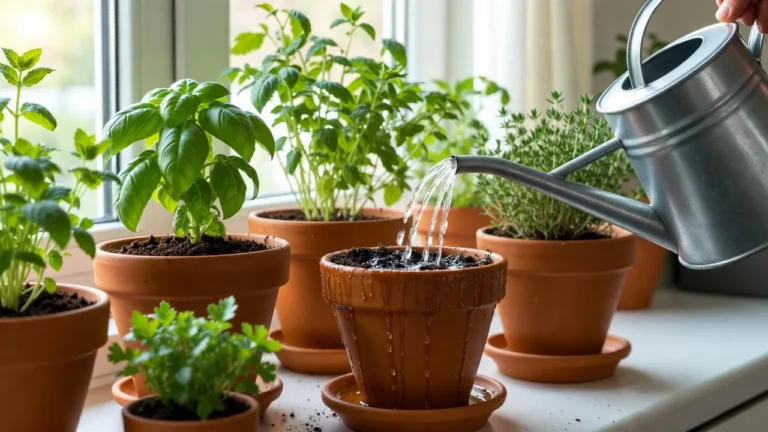
- Empty saucers after watering
- Avoid packing soil tightly
- Water based on soil moisture, not a schedule.
Proper watering technique also matters, which we cover step-by-step in our How to Water Indoor Herbs Properly article.
Adjust Soil Care for High-Rise and Small Apartments
In high-rise buildings:
- Sunlight may be filtered by nearby buildings
- Airflow is often limited
- Soil dries slower
Rotate pots weekly for even light. Avoid overcrowding plants, as limited airflow increases fungal risk.
In studio apartments, compact vertical gardening setups work well but make sure soil still drains freely.
Even with good soil and containers, herbs still need adequate light to thrive. This guide to the best grow lights for indoor herbs explains how artificial lighting supports healthy indoor plant growth.
When Should You Replace Indoor Herb Soil?
Potting mix breaks down over time.
- Refresh or replace soil every 6–12 months
- Replace immediately if mold or pests appear
You can reuse old soil by mixing in fresh compost and perlite. Avoid reusing soil that previously had fungal disease.
Soil vs Hydroponic Growing Medium
Hydroponics grows herbs in nutrient-rich water rather than soil.
Soil Gardening | Hydroponics |
|---|---|
Lower cost | Higher startup cost |
Simple setup | More technical |
Natural texture | Controlled nutrients |
Hydroponics works well in small apartments with limited sunlight, especially when paired with LED grow lights.
For beginners, soil gardening remains simpler and more forgiving.
Common Mistakes That Hurt Indoor Herb Roots
Even with the right ingredients, small mistakes can cause slow growth. Avoid these errors to keep herbs thriving:
- Using decorative pots without drainage
- Choosing heavy moisture control mixes in humid climates
- Ignoring perlite content
- Watering too frequently
- Packing soil tightly when planting
Quick Soil Checklist
Before planting, make sure all these conditions are met for strong, thriving roots:
- Pot has drainage holes
- Soil feels loose
- Visible perlite
- No heavy clay texture
- Saucer tray ready
When Soil Becomes Unusable
Sometimes soil cannot be saved and should be replaced completely.
Replace soil if you notice:
- Persistent mold growth
- Strong foul smell
- Repeated pest infestations
- Severe compaction
Trying to fix heavily degraded soil often leads to repeated problems.
Starting fresh is usually the better option.
FAQs
1. Which soil is ideal for indoor herbs?
A lightweight, well-draining potting mix with coco coir or peat moss, perlite, and compost works well.
2. Can I use regular garden soil indoors?
No. It compacts in containers and increases risk of root rot and pests.
3. Does potting soil expire?
Yes. Over time, structure breaks down and nutrients deplete. Replace or refresh soil after 6–12 months for best results.
4. Why are my indoor herbs turning yellow?
Common causes include overwatering, compacted soil, or insufficient light.
5. Is coco coir better than peat moss?
Both work well. Coco coir is often considered more sustainable and resists compaction.
6. Can I reuse old potting soil?
Yes, if refreshed with compost and perlite. Avoid reusing soil that had disease.
Conclusion
Indoor herbs don’t need complicated systems to thrive.
They need the right foundation.
When soil structure supports healthy roots, everything else becomes easier—watering, pruning, harvesting, and long-term growth.
Using the wrong soil can stop seeds from germinating completely. This guide on why indoor herb seeds fail to sprout covers this in detail.

Hi, I’m Rimsha, founder of Urban Bloomer 🌱
I grow herbs and plants in a small apartment and share what actually works in limited indoor spaces. Over the past few years, I’ve tested different setups, from lighting and soil to watering routines, to find simple methods that make indoor gardening easier.
Here, you’ll find practical, beginner-friendly advice based on real experience, not complicated gardening systems.