Common Indoor Herb Harvesting Mistakes & How to Fix Them
Many people start growing herbs indoors expecting a steady supply of fresh basil, mint, or parsley. At first, everything looks great. The plants grow well, the leaves look healthy, and harvesting feels simple.
Then something unexpected happens.
After a few harvests, the plant’s growth slows down. Leaves start turning yellow. Stems stretch out and look thin. Sometimes the herb stops producing new leaves entirely.
Most of the time, the plant is not dying. The real issue is harvesting technique, pruning habits, or indoor growing conditions.
Understanding the most common indoor herb harvesting mistakes can help you keep your plants healthy and productive.
If you’re just starting out, check our Indoor Herb Gardening for Beginners guide to learn the basics of selecting, planting, and caring for your first herbs
Common Indoor Herb Harvesting Mistakes and Issues Beginners Face
Understanding these common symptoms makes it easier to identify what your plant is trying to tell you. The next step is learning the harvesting mistakes that usually cause them.
Typical situations include:
- herbs stop growing after cutting
- leaves turning yellow
- stems becoming long and weak
- flavor becoming bitter
- plants drooping after harvesting
- herbs flowering too early
These changes are signals that the plant needs small adjustments in care.
Mistake: Removing Too Many Leaves at Once
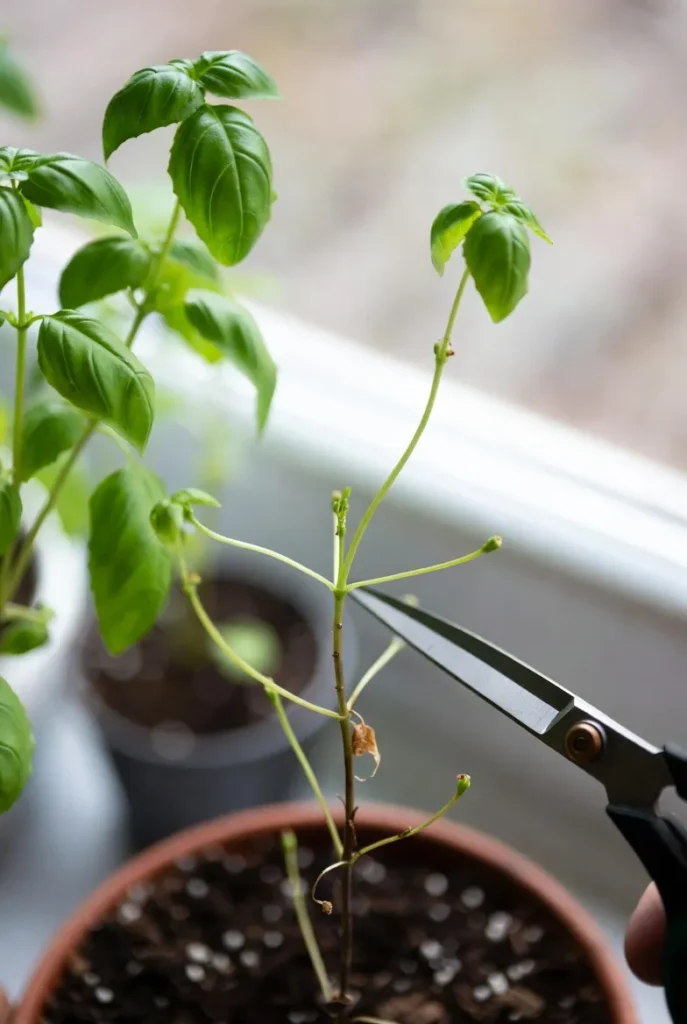
One of the most common harvesting mistakes beginners make is removing too many leaves at once.
Why This Affects Plant Growth
Leaves are responsible for photosynthesis, the process that converts sunlight into energy for the plant.
If a large portion of leaves is removed, the plant temporarily loses its ability to produce enough energy for new growth.
How to Fix It
Follow the one-third rule:
- never remove more than 25–30% of the plant
- allow several days for recovery
- harvest smaller portions more often
This approach keeps the plant productive while protecting its energy balance.
Many professional herb growers recommend harvesting small portions regularly instead of removing large sections at once because steady trimming keeps the plant in an active growth cycle.
Using the right soil also supports leaf regrowth, so see our article on Best Soil for Indoor Herbs to ensure your herbs have the nutrients they need.
Mistake: Cutting the Stem Below a Leaf Node
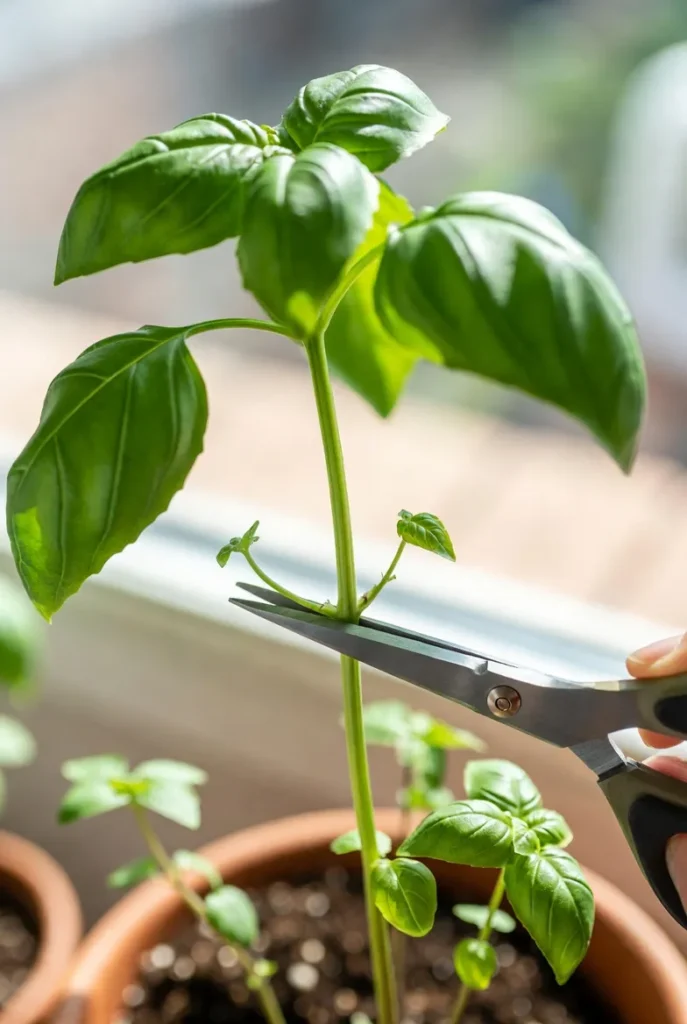
Another common issue occurs when stems are cut in the wrong location.
A leaf node is the point where leaves and new shoots grow from the stem.
Cutting below this point removes one of the plant’s main growth sites.
Why This Slows Growth
New stems develop from nodes. When the node is removed, the plant loses a major location where branching occurs.
Correct Harvesting Technique
- locate a pair of leaves on the stem
- cut slightly above the node
- allow the plant to branch into two new stems
This method encourages fuller plants and faster leaf production.
In addition to cutting in the wrong place, beginners sometimes start harvesting herbs too early in the plant’s growth cycle.
Planting incompatible herbs together can lead to weak growth. Check whether you have combined herbs that should never be planted in the same pot.
Mistake: Harvesting Herbs Too Early
In addition to cutting in the wrong spot, timing can also make a big difference in plant health and recovery.
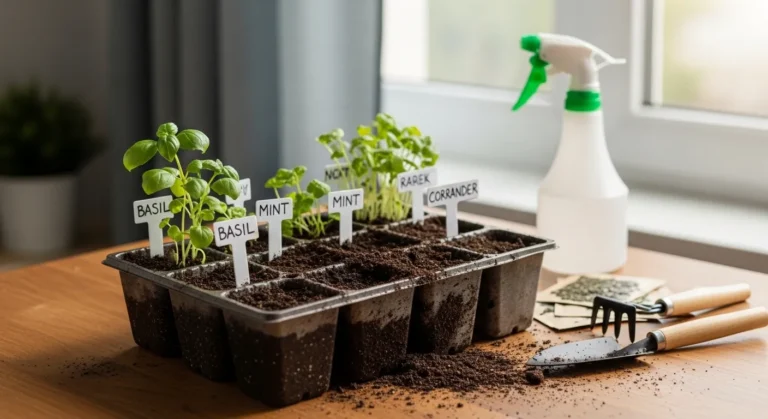
Some beginners start trimming herbs as soon as the plant produces leaves.
While this seems harmless, it can slow early development.
Why Early Harvesting Causes Issues
Young plants are still building their root system. Removing leaves too soon redirects energy away from root growth.
Best Time for First Harvest
Most herbs should reach 6–8 inches in height before the first trimming.
At this stage the plant has:
- stronger roots
- multiple leaf nodes
- enough foliage for recovery
Even when trimming technique is correct, the timing of harvesting can also influence plant health and flavor.
Mistake: Harvesting Herbs at the Wrong Time of Day
The timing of harvesting affects both plant recovery and herb flavor.
Why Timing Matters
Herbs contain essential oils that give them their characteristic aroma and flavor. These oils are strongest during certain times of the day.
When herbs are harvested late in the afternoon, oil concentration may be lower.
Best Time to Harvest Herbs
The best time to harvest indoor herbs is early morning.
During this time:
- leaves contain the highest concentration of oils
- plants are well hydrated
- flavor is strongest
This small change improves both plant health and taste.
Mistake: Not Harvesting Herbs Often Enough
Many beginners hesitate to trim their herbs because they worry about damaging the plant.
Ironically, avoiding harvesting can actually reduce plant health.
Why Regular Harvesting Matters
When herbs are left untrimmed for too long:
- stems grow tall and weak
- plants become leggy
- leaf production slows
Solution
Harvest small portions regularly.
Frequent light trimming encourages the plant to grow bushier and fuller, especially herbs like:
- basil
- mint
- oregano
Mistake: Using Dull or Dirty Cutting Tools
The condition of your tools affects plant health more than many beginners realize.
Why Tool Quality Matters
Pulling leaves by hand or using dull scissors can tear stems instead of cutting them.
Damaged stems heal slowly and may attract fungal infections.
Better Harvesting Tools
Tool | Purpose |
|---|---|
Herb scissors | clean cuts for soft stems |
Garden snips | precise trimming |
Pruning shears | thicker stems |
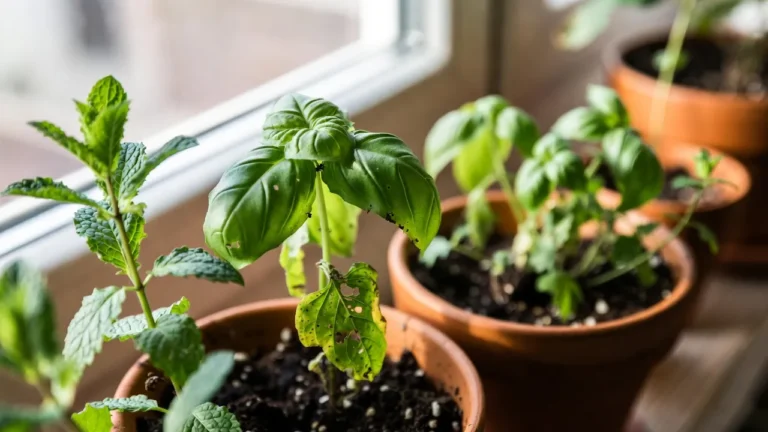
Open wounds on stems can also attract common indoor herb pests like aphids or fungus gnats, which often target stressed plants.
Cleaning tools with alcohol before harvesting helps prevent the spread of plant diseases.
Even when harvesting techniques are mostly correct, plants may still show signs of stress. These visual changes often reveal underlying care issues that can be easily corrected.
Issue: Leaves Turning Yellow After Harvesting
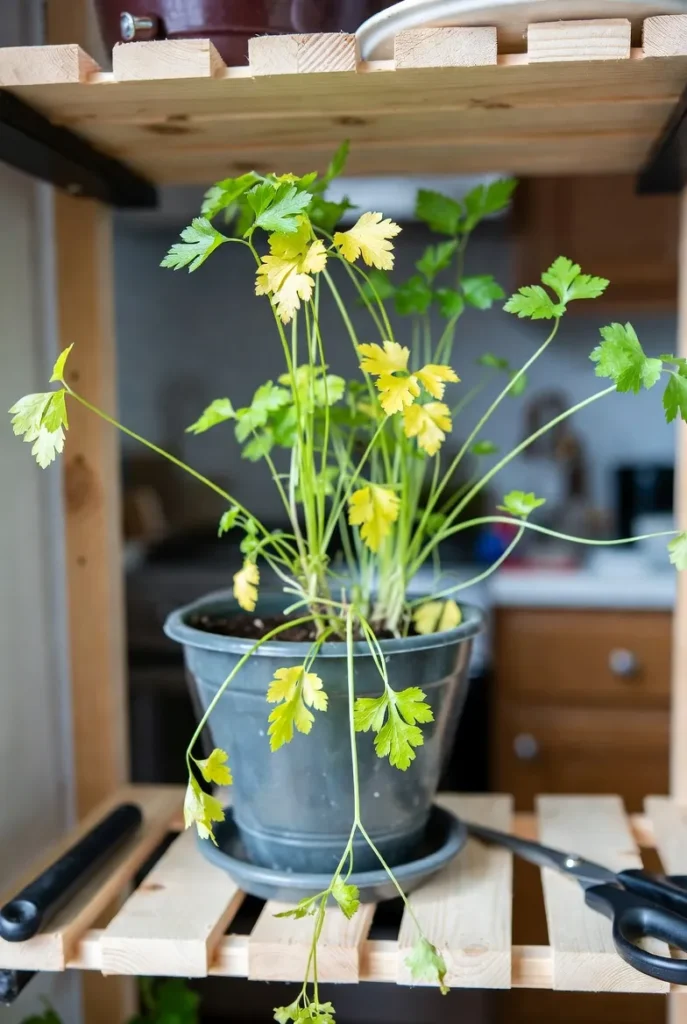
Sometimes the effects of improper harvesting appear through visible changes in the plant.
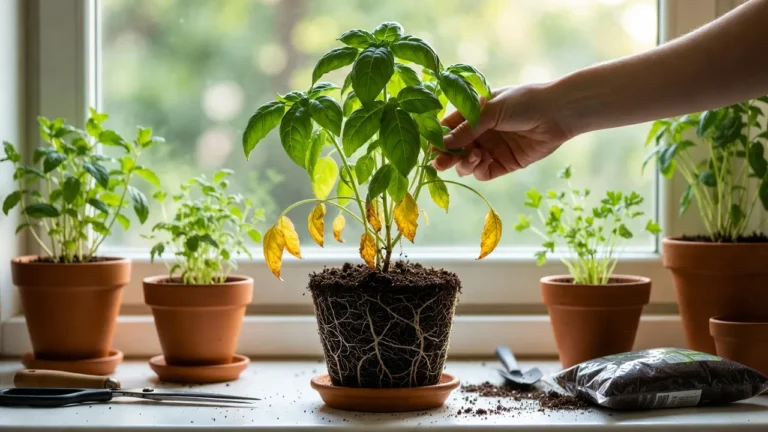
Yellow leaves sometimes appear shortly after trimming herbs.
Common Causes
This change usually indicates:
- nutrient depletion in potting soil
- excessive watering
- plant stress from heavy pruning
Indoor plants rely on limited nutrients in container soil.
How to Restore Healthy Leaves
- apply diluted fertilizer every 2–4 weeks
- ensure pots have proper drainage
- allow the soil surface to dry slightly between watering
New leaves typically return to a healthy green color once nutrient balance improves.
Applying the right fertilizer is key to preventing yellowing leaves; see our guide on Best Fertilizers for Indoor Herbs for recommendations and application tips.
Issue: Herbs Growing Tall but Not Producing Many Leaves
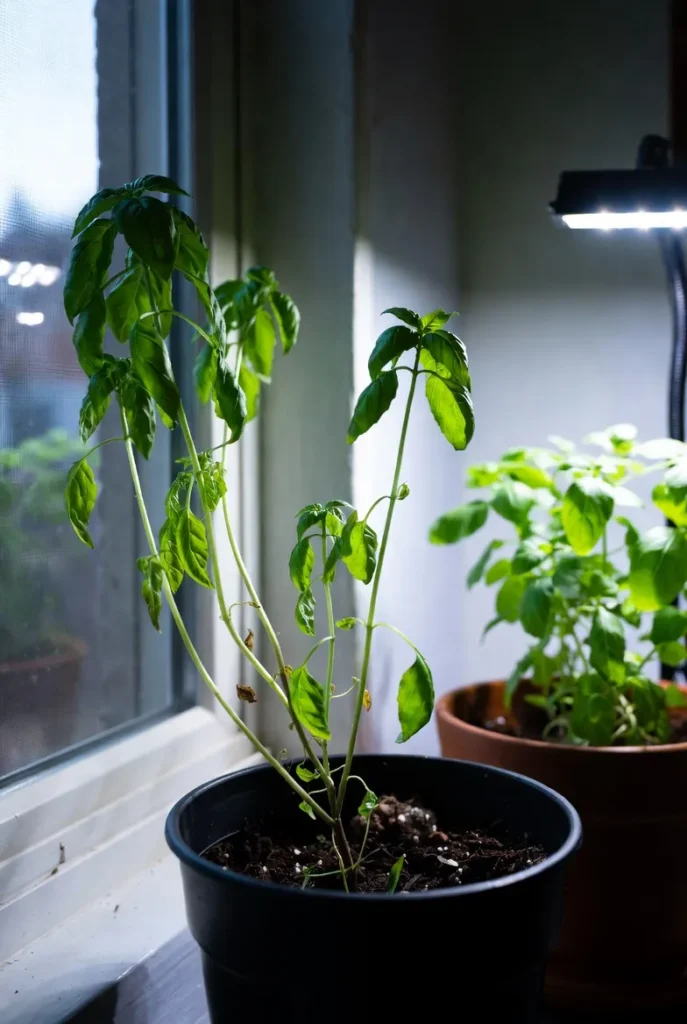
Some plants grow tall while producing fewer leaves. This appearance is often called leggy growth.
Why This Happens
Leggy herbs usually result from:
- insufficient light
- lack of regular pruning
When the plant stretches toward light, stems become long and weak.
How to Encourage Fuller Growth
- trim stems above leaf nodes
- rotate pots every few days
- increase sunlight exposure
- prune top growth regularly
If natural sunlight is limited, using proper grow lights can prevent leggy herbs and support steady leaf growth. Learn how to choose the best grow lights for indoor herbs for consistent indoor lighting.
Issue: Herbs Taste Bitter After Harvesting
Flavor changes can occur when herbs reach a later stage of growth.
Why Flavor Becomes Stronger
Many herbs produce flowers when mature. This stage is known as bolting.
During bolting, energy shifts toward reproduction instead of leaf production.
How to Maintain Better Flavor
- harvest herbs frequently
- remove flower buds immediately
- trim younger stems
These steps keep herbs producing tender leaves rich in essential oils.
Issue: Leaves Drooping After Trimming
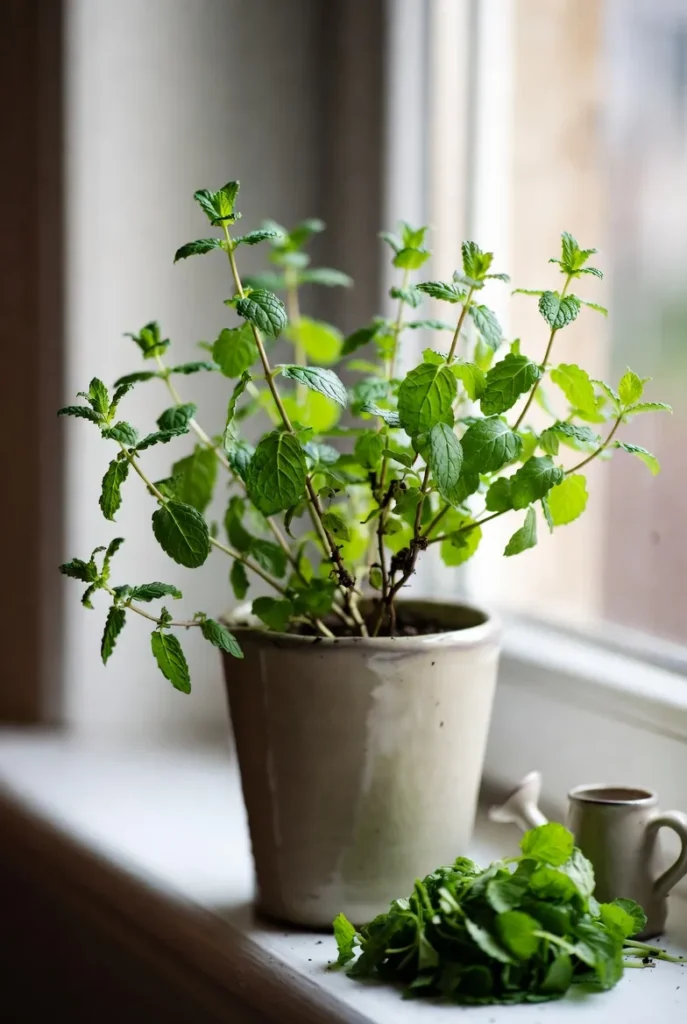
Sometimes herbs droop or appear slightly wilted after harvesting.
Why This Happens
Leaves help regulate water movement through the plant. When several leaves are removed at once, the plant temporarily struggles to balance moisture flow.
Helping the Plant Recover
- water lightly after trimming
- avoid additional harvesting for a few days
- maintain steady light exposure
Most herbs regain firmness within a short time.
Issue: Herbs Flowering Too Early
Flowering is natural, but early flowering reduces leaf production.
What Triggers Early Flowering
Common triggers include:
- inconsistent harvesting
- heat stress
- irregular watering
- long daylight exposure
Herbs such as basil and cilantro are particularly sensitive.
How to Manage Flowering
Remove flower buds as soon as they appear. Regular harvesting keeps the plant focused on leaf production rather than seed formation.
Issue: Uneven Growth on One Side of the Plant
Indoor herbs sometimes grow more on one side of the pot.
Why This Happens
Plants naturally lean toward the nearest light source.
Simple Solution
Rotate the pot every two or three days so each side receives equal sunlight.
Balanced light exposure promotes even growth.
Issue: Herbs Losing Freshness After Harvest
After harvesting, herbs can wilt quickly if they are not stored properly.
Short-Term Storage
For herbs used within a few days:
- wrap stems in a damp paper towel
- store them in a container inside the refrigerator
Long-Term Storage Options
Herbs can also be preserved using methods such as:
- freezing chopped herbs in olive oil
- drying herbs like thyme and oregano
- making herb oil cubes
Proper storage helps maintain flavor and freshness.
Quick Guide to Identifying Harvesting Issues
Because several issues can appear similar at first, a quick diagnostic guide can help you identify problems faster.
This table can help beginners quickly diagnose common harvesting problems.
Plant Change | Likely Cause | Helpful Adjustment |
|---|---|---|
Growth slows | too many leaves removed | harvest smaller portions |
Yellow leaves | nutrient imbalance | fertilize lightly |
Long stems | insufficient light | increase light and prune |
Bitter taste | flowering stage | remove buds |
Drooping leaves | plant stress | reduce trimming temporarily |
This quick reference helps beginners understand how plants respond to harvesting.
For a step-by-step walkthrough of harvesting your herbs safely, see How to Harvest Indoor Herbs Step by Step .
How Herbs Naturally Regrow After Harvesting
Most culinary herbs regenerate through structures called leaf nodes.
These nodes contain dormant buds that produce new branches when stems are trimmed correctly.
With proper trimming, one herb plant can produce multiple harvests over several months.
Tools That Help Prevent Harvesting Mistakes
Using proper tools improves plant health and trimming accuracy.
Recommended tools include:
- herb scissors for delicate stems
- garden snips for precision trimming
- pruning shears for thicker stems
- alcohol wipes for sterilizing blades
Sharp tools reduce plant stress and speed up healing.
Care Habits That Support Healthy Harvesting
Harvesting alone isn’t enough; supporting your herbs with proper light, water, and nutrients ensures they thrive.
Harvesting works best when combined with good plant care.
Light
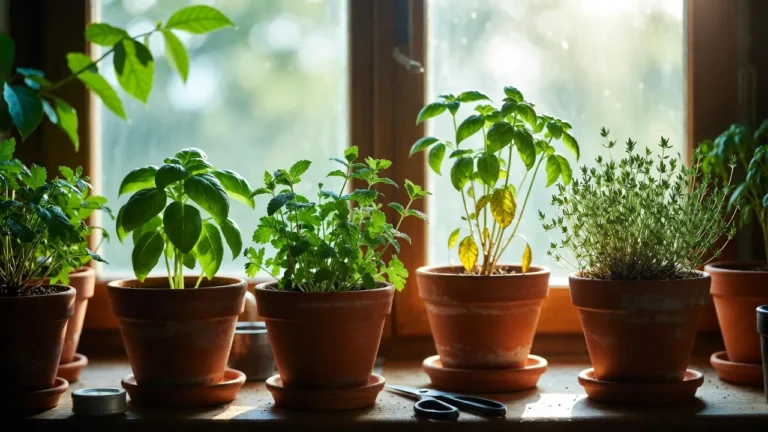
Most herbs need 6–8 hours of sunlight daily. Bright windows or grow lights support steady leaf production.
Water
Herbs prefer slightly moist soil but should not sit in water.
Water when the top layer of soil feels dry.
Proper watering is just as important as light and nutrients; learn How to Water Indoor Herbs Properly to avoid over- or under-watering.
Nutrients
Container plants gradually use up soil nutrients. Adding fertilizer every few weeks supports healthy growth.
For detailed, step-by-step guidance on feeding your herbs, check out How to Fertilize Indoor Herbs the Right Way.
Indoor Herb Gardening in Small Spaces
When space is limited:
- avoid overcrowding pots
- allow airflow between plants
- rotate containers regularly
These adjustments improve plant health and reduce stress.
Simple Harvesting Checklist
Before harvesting herbs, check these points:
✔ plant height around 6 inches or more
✔ identify leaf nodes before cutting
✔ use clean scissors
✔ trim top growth instead of lower stems
✔ remove only about one-third of the plant
Following these steps helps maintain healthy and productive herbs.
FAQs
1. Why do herbs stop growing after harvesting?
Growth usually slows when too many leaves are removed or stems are cut below leaf nodes. Plants need leaves for photosynthesis and energy production.
2. Can herbs recover if too many leaves were removed?
Yes. Most herbs recover if harvesting pauses for several days and the plant receives proper light, water, and nutrients.
3. Why do herb leaves turn yellow indoors?
Yellow leaves often signal nutrient depletion, excessive watering, or temporary plant stress after trimming.
4. Do herbs grow back after cutting stems?
Yes. When stems are cut above leaf nodes, dormant buds activate and produce new branches.
5. Why do herbs taste bitter sometimes?
Bitterness usually occurs when herbs begin flowering. Removing flower buds helps maintain better flavor.
6. What is the safest way to harvest herbs?
Use sharp scissors and trim stems slightly above leaf nodes while removing only a portion of the plant.
7. How often should indoor herbs be harvested?
Fast-growing herbs like basil and mint can be harvested every one to two weeks under good lighting conditions.
Conclusion
Harvesting indoor herbs becomes much easier once you understand how plants respond to trimming.
Signs such as slow growth, yellow leaves, tall stems, or changing flavor usually indicate small adjustments are needed in harvesting technique or plant care.
By trimming above leaf nodes, harvesting smaller portions, maintaining good light exposure, and supporting plants with proper watering and nutrients, herbs continue producing fresh leaves for months.
With consistent care, even a small windowsill herb garden can provide a steady supply of basil, mint, parsley, cilantro, thyme, and oregano throughout the year.