7 Herbs You Should Never Plant in the Same Pot
You plant several herbs in one pot, water them carefully, place them near a sunny window, and expect a thriving mini garden. But within weeks, one herb takes over, another turns yellow, and a third stops growing completely.
This happens to many beginners.
The problem is not your watering or sunlight. The real issue is herb compatibility.
Many beginner gardeners assume herbs behave similarly because they are small plants, but their growing requirements can be surprisingly different.
Some herbs simply do not grow well together in the same container.
They may compete for space, need different watering schedules, or even release natural chemicals that affect nearby plants. Understanding which herbs should be planted separately can make the difference between a struggling herb pot and a healthy kitchen garden.
This guide explains 7 herbs you should never plant in the same pot, why they clash, and how to grow herbs successfully in containers.
Why Some Herbs Should Not Share the Same Pot
Herbs may look similar above the soil, but their roots and growth habits can be very different.
Some grow aggressively, some prefer dry soil, and others need constant moisture. When these herbs share a container, problems appear quickly.
Common reasons herbs struggle together include:
- Root competition for nutrients and space
- Different watering needs
- Allelopathy, where one plant releases chemicals affecting others
- Growth speed differences
- Poor airflow leading to disease
Most herbs fall into two major groups:
Herb Type | Water Needs | Examples |
|---|---|---|
Mediterranean herbs | Dry, well-drained soil | Rosemary, thyme, sage |
Moisture-loving herbs | Consistently moist soil | Basil, parsley, cilantro |
Mixing these groups in the same container often leads to unhealthy plants.
1. Mint – The Herb That Takes Over Everything
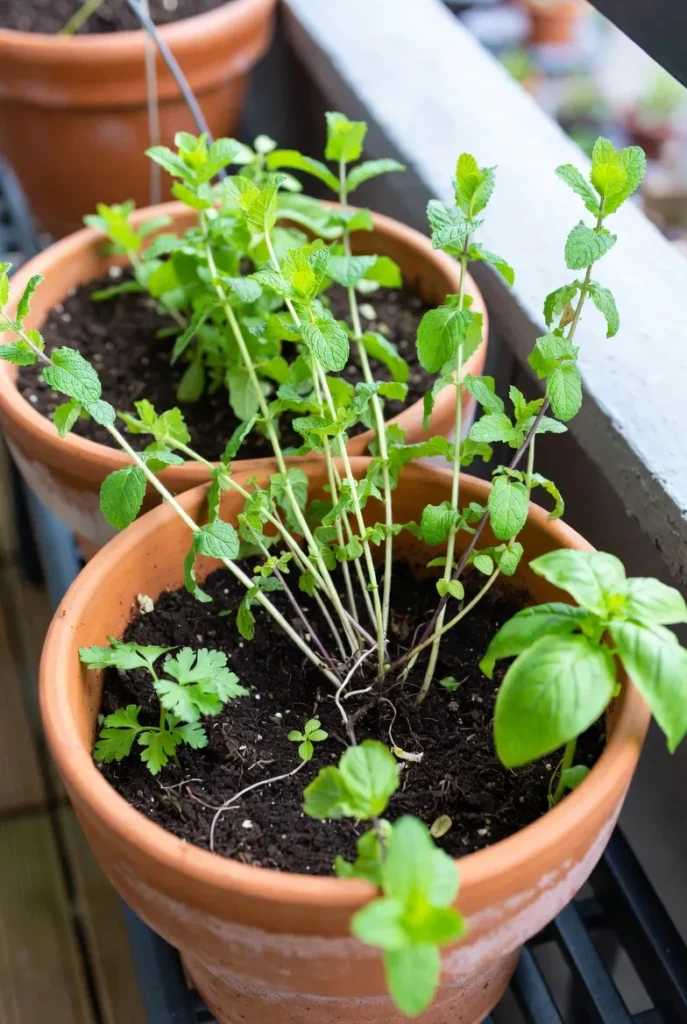
Mint is famous for spreading quickly. Its underground stems, called rhizomes, grow horizontally through soil and rapidly fill any available space.
In garden beds this can already be aggressive. In a small container, mint quickly dominates.
Why Mint Should Not Share a Pot
- Roots spread rapidly and crowd other herbs
- Competes heavily for nutrients
- Shades nearby plants with dense foliage
- Outgrows slower herbs
In many container gardens I have observed, mint quickly spreads through the pot and gradually crowds out neighboring herbs within a single growing season.
Best Way to Grow Mint
Mint grows best in its own container with enough space for its spreading roots. Many gardeners purposely isolate mint to keep it under control.
2. Fennel – A Poor Companion for Most Herbs
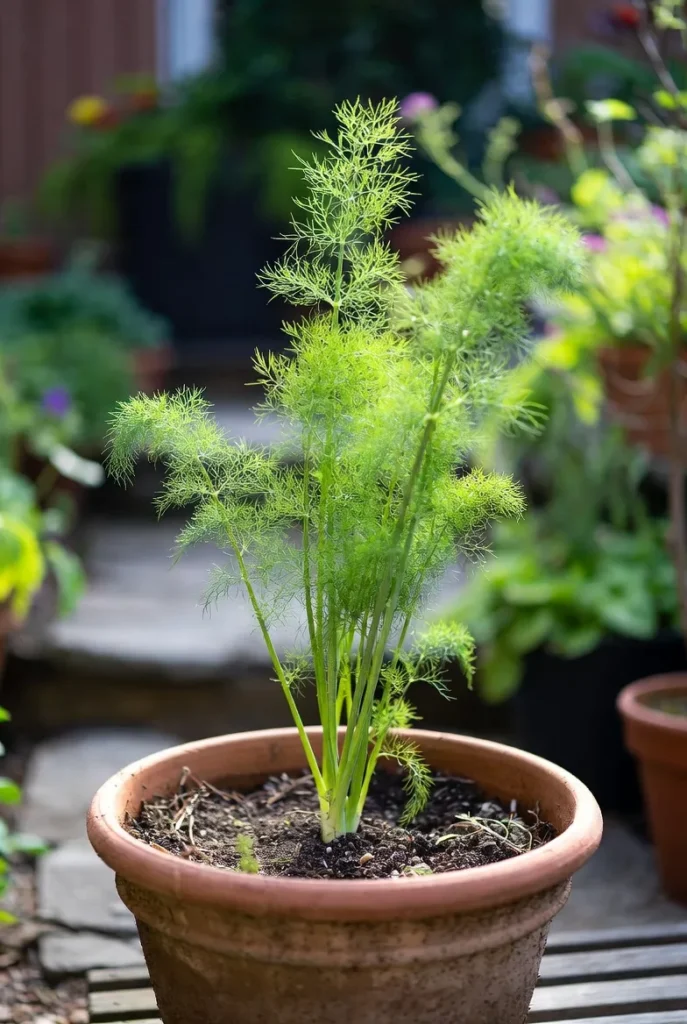
Fennel is unusual among herbs because it releases natural compounds into the soil. This process is called allelopathy.
Allelopathic plants produce chemicals that can slow or stop the growth of nearby plants.
Why Fennel Should Be Planted Alone
Fennel may inhibit the growth of herbs such as:
- basil
- parsley
- cilantro
- dill
In small containers, these effects become stronger because the soil environment is limited.
Best Growing Strategy
Fennel should usually be planted in its own pot or separate garden area where it cannot affect neighboring herbs.
3. Dill – A Tall Herb with Deep Roots
Dill grows quickly and develops a long taproot. This root system goes deeper than many common culinary herbs.
Because of this, dill often struggles in mixed containers.
Problems When Dill Shares a Pot
- Deep roots compete with smaller herbs
- Rapid vertical growth shades other plants
- Requires deeper containers
When grown with smaller herbs such as thyme or chives, dill often competes for light and root space.
When Dill Works Best
Dill performs better in deeper pots where its taproot can grow freely.
4. Basil – Loves Moist Soil
Basil is one of the most popular herbs in home kitchens. It grows fast, produces fragrant leaves, and thrives in warm environments.
However, basil has very specific watering needs.
Basil’s Preferred Conditions
- consistently moist potting soil
- warm temperatures
- rich, well-drained soil
- regular watering
Why Basil Struggles with Mediterranean Herbs
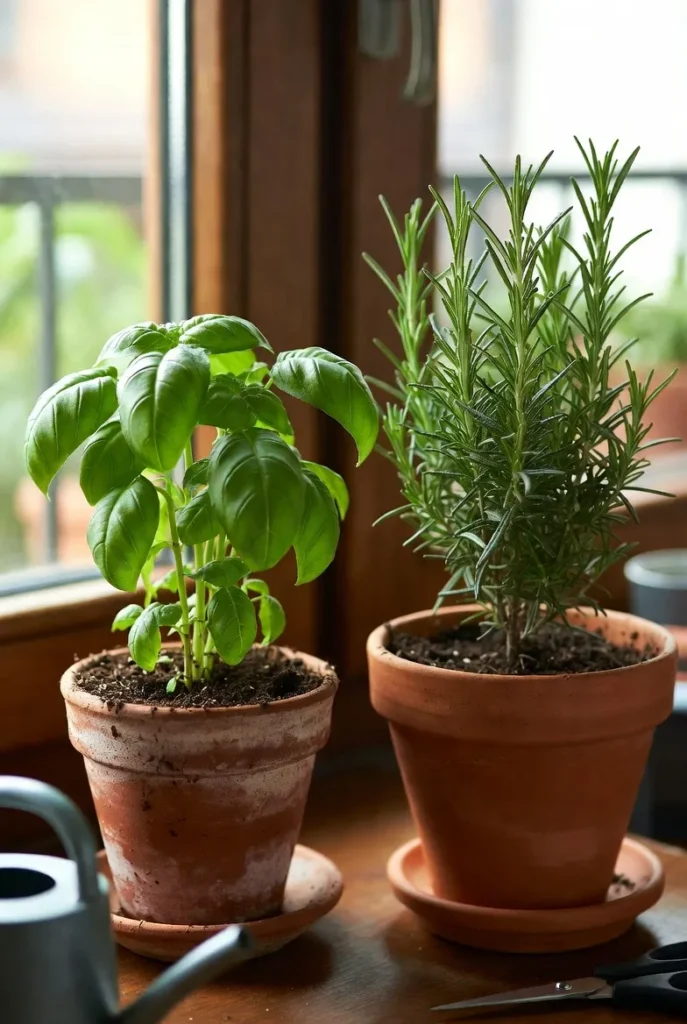
Herbs like rosemary and thyme prefer dry soil. If they share a pot with basil, gardeners face a dilemma:
- Water enough for basil and rosemary may develop root rot
- Water less for rosemary and basil may wilt
Because of this conflict, basil should be grouped only with moisture-loving herbs.
I have personally seen basil struggle when planted with rosemary in shared containers, often wilting from under-watering or developing root problems when watered for basil’s needs.
5. Rosemary – A Mediterranean Herb
Rosemary originates from Mediterranean regions where soil is dry and rocky. It thrives in sunny conditions and does not tolerate overly wet soil.
Rosemary’s Growing Preferences
- excellent drainage
- infrequent watering
- lots of sunlight
- airy soil structure
Why Rosemary Should Not Share a Pot with Basil
When rosemary grows with basil or parsley, the container soil often stays too wet.
This can lead to:
- root rot
- fungal disease
- weak root systems
Rosemary performs best with herbs that enjoy similar dry conditions.
6. Thyme – Sensitive to Overwatering
Thyme is another Mediterranean herb with similar needs to rosemary.
It prefers light soil, strong sunlight, and minimal watering.
Why Thyme Struggles in Mixed Pots
When planted with herbs needing frequent watering, thyme roots remain constantly moist.
This leads to problems such as:
- yellow leaves
- fungal disease
- slow growth
For healthy thyme plants, containers with excellent drainage are essential.
7. Sage – Needs Space and Airflow
Sage develops woody stems as it matures. Its roots and branches require more space than many small herbs.
Problems When Sage Shares a Pot
- roots become crowded
- airflow decreases
- leaves may yellow from excess moisture
Sage also prefers dry soil similar to rosemary and thyme.
Because of these needs, sage works best in containers where it has adequate space and good drainage.
A Quick Compatibility Overview
The following chart shows why these herbs often struggle together.
Herb | Main Issue in Shared Pots |
|---|---|
Mint | Aggressive spreading rhizomes |
Fennel | Allelopathy affecting nearby plants |
Dill | Deep taproot and tall growth |
Basil | Needs consistently moist soil |
Rosemary | Requires dry soil |
Thyme | Sensitive to excess moisture |
Sage | Needs space and airflow |
Signs Your Herbs Are Incompatible in One Pot
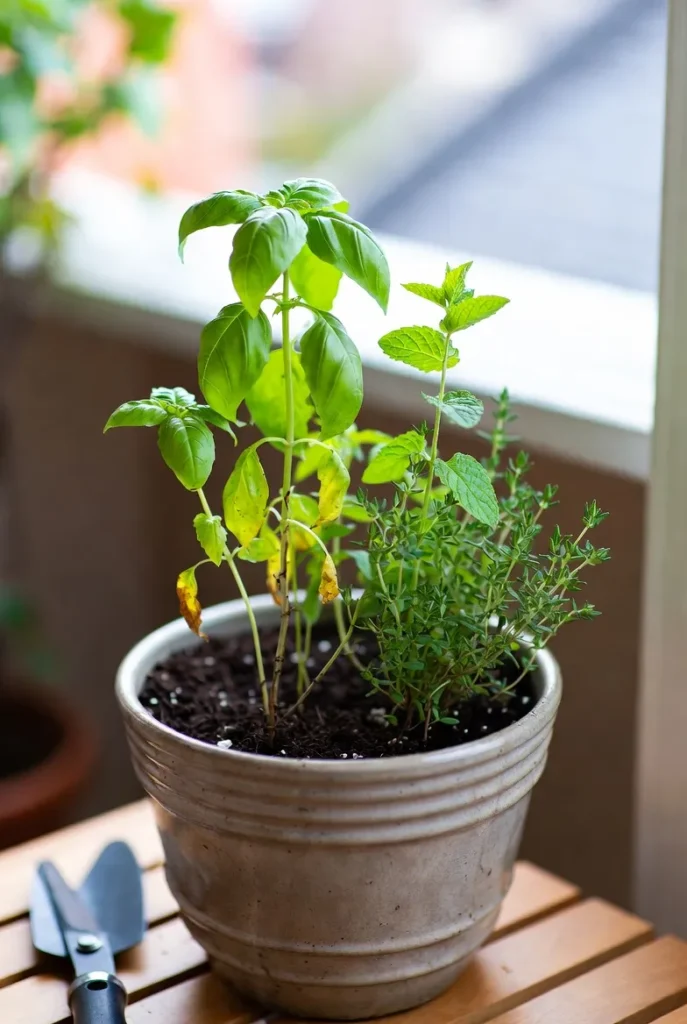
Even when herbs are planted with good intentions, incompatible plants often begin showing stress within a few weeks. Because containers limit root space and soil resources, problems appear faster than they would in garden beds.
In container herb gardens I have worked with, these warning signs usually appear when herbs with different growth habits or watering needs share the same pot.
Watch for these common indicators:
• One herb grows much faster than the others
• Leaves begin turning yellow despite proper watering
• Roots become visible or crowded at the soil surface
• Plants compete for sunlight
• One herb repeatedly wilts while others appear healthy
If you notice these symptoms, separating the herbs into individual containers or grouping plants with similar growing requirements can quickly restore healthy growth.
Herbs That Grow Well Together in Containers
Instead of mixing incompatible herbs, grouping herbs with similar needs creates healthier plants.
Mediterranean Herb Combination
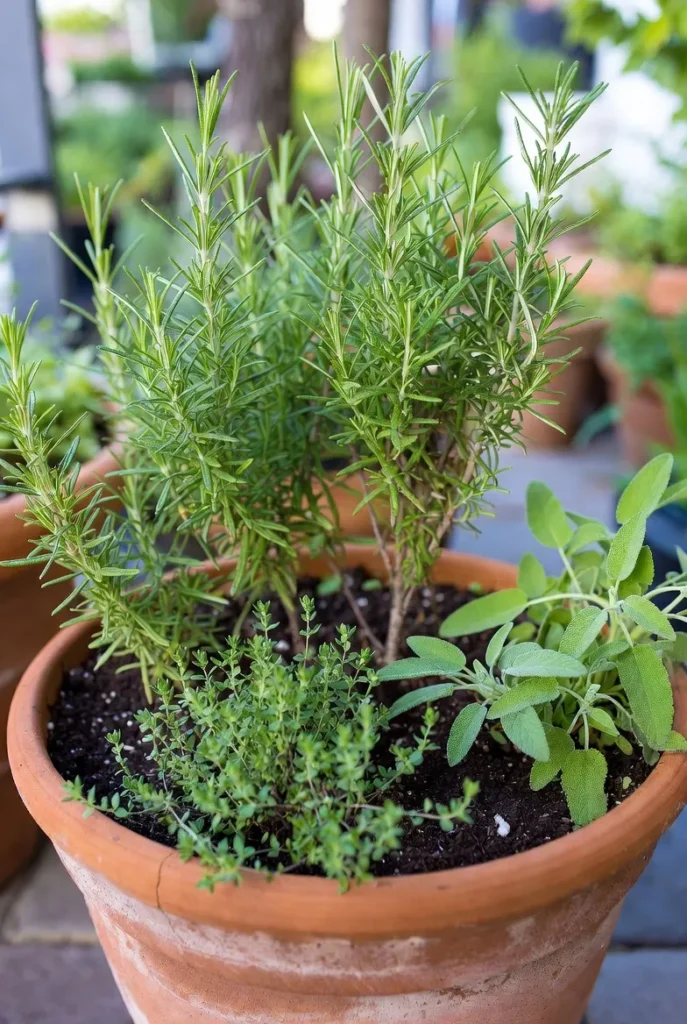
These herbs prefer dry soil and strong sunlight:
- rosemary
- thyme
- sage
- oregano
They grow well together because they share similar conditions.
Moisture-Loving Herb Combination
These herbs prefer richer soil and regular watering:
- basil
- parsley
- cilantro
- chives
These plants often thrive in the same container because their water needs match.
How to Choose Herbs for One Container
When planting multiple herbs in one pot, follow these simple steps.
Step 1: Compare Water Needs
Plants should require the same watering frequency.
Step 2: Check Root Size
Large-rooted herbs need deeper containers.
Step 3: Consider Growth Speed
Fast-growing herbs can overwhelm slower plants.
Step 4: Provide Adequate Space
Avoid overcrowding containers.
Step 5: Ensure Proper Drainage
Containers should always have drainage holes and well-draining potting soil.
Indoor Herb Garden Considerations
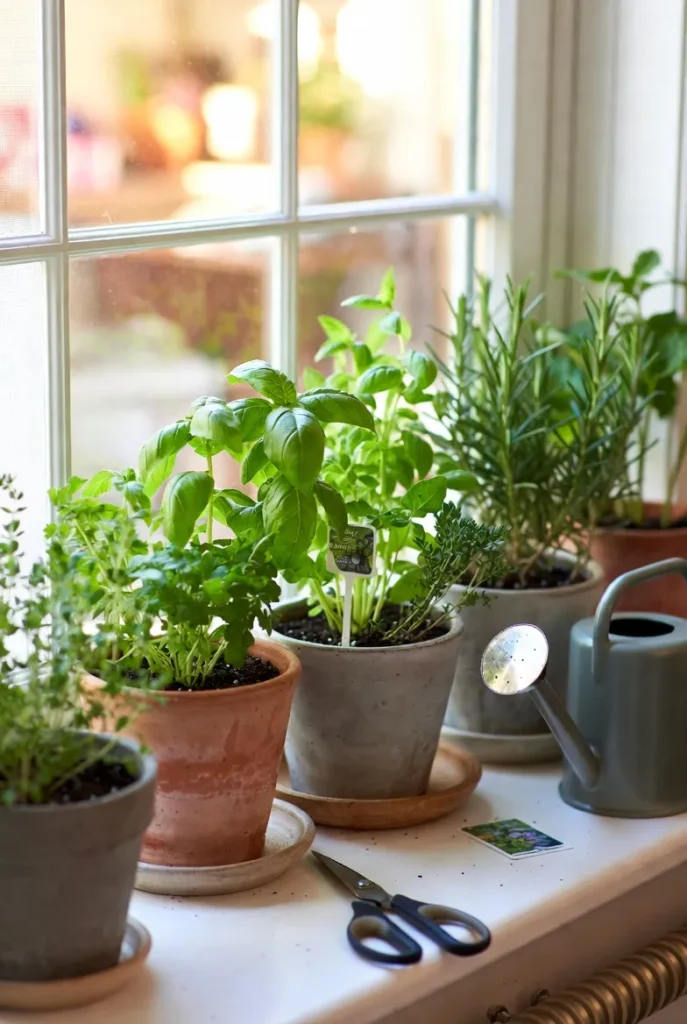
Many herbs today are grown indoors on windowsills or balconies. Indoor environments create different conditions than outdoor gardens.
Common indoor challenges include:
- lower airflow
- slower soil drying
- reduced sunlight
Because of these factors, overwatering becomes one of the most common causes of herb failure.
In indoor herb setups I have worked with, herbs like rosemary and thyme often decline not from lack of sunlight but from soil that stays damp for too long.
Choosing the right location is also important. If you are unsure where to place your plants, this guide explains where to place indoor herbs for healthy growth.
How Many Herbs Fit in One Pot?
Container size plays a major role in herb success.
General guidelines include:
Pot Size | Number of Herbs |
|---|---|
6–8 inch pot | 1 herb |
10–12 inch pot | 2 herbs |
14–16 inch pot | 3–4 herbs |
Adequate spacing allows roots to expand while also improving airflow around the foliage.
Some gardeners also experiment with hydroponic growing systems instead of traditional potting soil. You can learn more about the differences in this guide to soil vs hydroponics for indoor herbs.
Common Mistakes When Growing Herbs Together
Many herb gardens fail because of a few simple mistakes.
Mixing Dry and Moist Herbs
Combining rosemary with basil creates watering conflicts.
Planting Mint with Other Herbs
Mint spreads aggressively and takes over containers.
Using Small Pots
Crowded roots limit growth and reduce nutrient availability.
Ignoring Sunlight Requirements
Most herbs need 6–8 hours of sunlight daily.
Poor Drainage
Containers without drainage holes can trap excess moisture.
Avoiding these mistakes dramatically improves herb garden success.
Tips for a Healthy Container Herb Garden
Growing herbs successfully in pots becomes easier when a few basic principles are followed.
Helpful tips include:
- Use high-quality potting soil designed for containers
- Choose containers with proper drainage holes
- Rotate pots occasionally for even sunlight exposure
- Harvest herbs regularly to encourage new growth
- Avoid overcrowding plants
Many gardeners also prefer terracotta pots for Mediterranean herbs because they help soil dry faster.
Fertilizing herbs correctly is essential for healthy growth. This guide explains how and when to fertilize indoor herbs for the best results.
FAQs
1. Can herbs grow together in the same pot?
Yes, but only herbs with similar water, sunlight, and soil needs should share a container. Herbs with different growing conditions often compete and grow poorly.
2. What herbs should never be planted together?
Mint, fennel, dill, basil, rosemary, thyme, and sage often struggle together in one pot due to different watering needs, root behavior, or growth patterns.
3. Why should mint be planted separately?
Mint spreads through underground rhizomes that quickly take over containers, crowding out other herbs and competing for nutrients.
4. Can rosemary and basil grow in the same pot?
It is not ideal. Basil requires consistently moist soil, while rosemary prefers dry conditions. This difference makes watering difficult for both plants.
5. How many herbs should I plant in one container?
It depends on pot size. Small pots usually support one herb, while larger containers can support two to four herbs with enough spacing.
6. What herbs grow well together?
Mediterranean herbs like rosemary, thyme, sage, and oregano grow well together. Moisture-loving herbs such as basil, parsley, and cilantro can also share containers.
7. Why do herbs die when planted together?
Herbs often die in shared pots due to root competition, incompatible watering needs, or poor drainage.
8. Can herbs grow indoors successfully?
Yes. Many herbs grow well indoors on sunny windowsills, balconies, or under grow lights if they receive enough sunlight and proper drainage.
Conclusion
Growing herbs in containers is one of the easiest ways to enjoy fresh flavors at home. But planting the wrong herbs together can quickly lead to weak growth, overcrowded roots, and unhealthy plants.
Some herbs simply need different environments to thrive.
Mint spreads aggressively. Fennel releases compounds that affect nearby plants. Mediterranean herbs like rosemary and thyme prefer dry soil, while basil and parsley need consistent moisture.
Understanding these differences helps prevent common herb gardening mistakes.
By grouping herbs with similar needs and giving each plant enough space, even a small windowsill or balcony can become a thriving herb garden that produces fresh leaves throughout the year.
Different herbs also prefer slightly different climates, which is why knowing the Best Temperature and Humidity for Indoor Herbs can make a big difference.

Hi, I’m Rimsha, founder of Urban Bloomer 🌱
I grow herbs and plants in a small apartment and share what actually works in limited indoor spaces. Over the past few years, I’ve tested different setups, from lighting and soil to watering routines, to find simple methods that make indoor gardening easier.
Here, you’ll find practical, beginner-friendly advice based on real experience, not complicated gardening systems.