Root Rot in Indoor Herbs: How to Identify, Fix, and Prevent It
You water your herbs regularly. The soil stays moist. Everything looks fine.
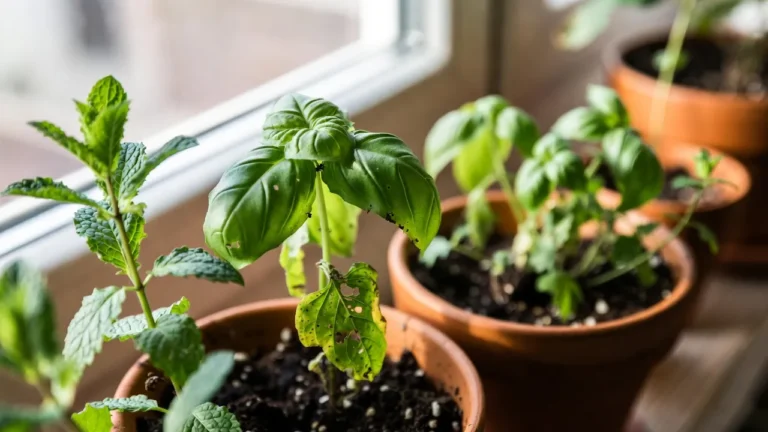
But suddenly your herb begins to droop. Leaves turn yellow. Growth slows down. The soil is wet, yet the plant still appears thirsty.
This confusing situation is one of the most common problems in indoor gardening: root rot caused by overwatering.
Many beginners think their herbs need more water when they see wilting leaves. Unfortunately, that often makes the problem worse.
The good news is that root rot can often be reversed if you catch it early. With the right steps, many indoor herbs can recover and continue growing.
This guide explains how to recognize root rot, save overwatered herbs, and prevent the problem in the future.
Sometimes poor harvesting habits can also weaken plants and make them more vulnerable to diseases like root rot. If you’re unsure whether harvesting is affecting your herbs, read Common Indoor Herb Harvesting Mistakes & How to Fix Them.
What Is Root Rot?
Root rot is a plant disease that occurs when roots sit in waterlogged soil for too long, causing them to suffocate and decay.
When soil remains saturated, oxygen levels drop. This weakens plant roots and allows harmful organisms such as Pythium, Phytophthora, Fusarium, and Rhizoctonia to attack the root system.
Healthy roots absorb water and nutrients. Rotting roots cannot. As the roots die, the entire plant begins to decline.
Understanding how root rot develops helps gardeners prevent it before serious damage occurs.
Why Root Rot Happens in Indoor Herbs
Indoor herbs are usually grown in containers, which behave very differently from plants grown in garden soil.
In nature, water drains through layers of soil. In pots, water can easily become trapped if the setup is not ideal.
The Most Common Causes are:
1. Overwatering
Watering too frequently is the biggest cause of root rot. Many herbs prefer slightly dry soil between waterings.
2. Poor Drainage
Containers without drainage holes trap water at the bottom of the pot.
3. Heavy Soil
Dense garden soil holds too much moisture and prevents proper air circulation in the soil.
4. Low Light
Plants in low light use less water, so the soil stays wet longer.
5. Oversized Pots
Large containers hold more soil and retain moisture longer than small herb roots can handle.
One common sign of root rot is an unpleasant smell coming from the plant, which often indicates deeper issues affecting the herbs.
Early Signs of Root Rot in Indoor Herbs
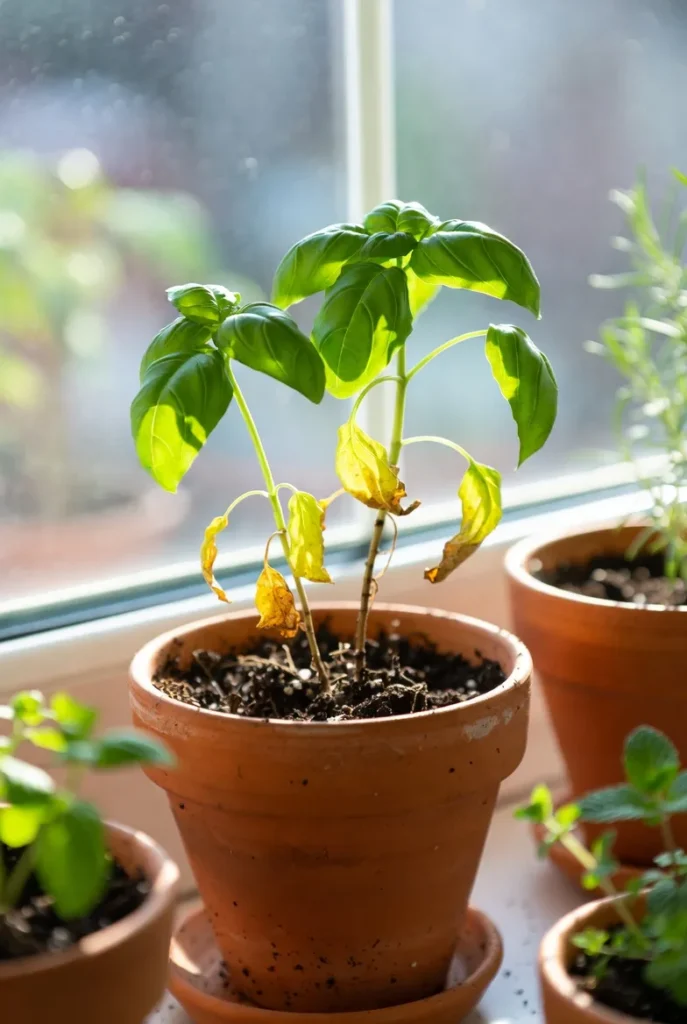
Recognizing the early symptoms can save your plant.
Above-Ground Warning Signs
Look for these symptoms first:
- Yellowing leaves
- Drooping stems
- Slow or stunted growth
- Leaf drop
- Mold on the soil surface
- Persistent wet soil
Many people mistake these symptoms for underwatering.
Root Symptoms
The real problem becomes clear when you examine the roots.
Healthy Roots | Roots With Rot |
|---|---|
White or cream color | Dark brown or black |
Firm texture | Mushy or soft |
Fresh earthy smell | Sour or rotten odor |
Strong root network | Roots falling apart |
Some of these symptoms can look similar to pest damage, which is why proper diagnosis is important. If you notice unusual spots, holes, or insects, check this guide on Common Pests in Indoor Herbs and How to Remove Them Naturally.
Herbs Most Vulnerable to Root Rot
Not all herbs react the same way to excess moisture.
High-Risk Herbs
These herbs prefer well-drained soil and drier conditions.
Herb | Reason |
|---|---|
Basil | Sensitive root system |
Rosemary | Mediterranean plant that prefers dry soil |
Thyme | Requires excellent drainage |
Oregano | Prone to rot in wet containers |
Herbs That Tolerate Moisture Better
Some herbs handle moisture slightly better.
Herb | Reason |
|---|---|
Mint | Naturally vigorous roots |
Chives | Adaptable to varied soil conditions |
Lemongrass | Thrives in moist environments |
How to Save an Overwatered Herb Plant
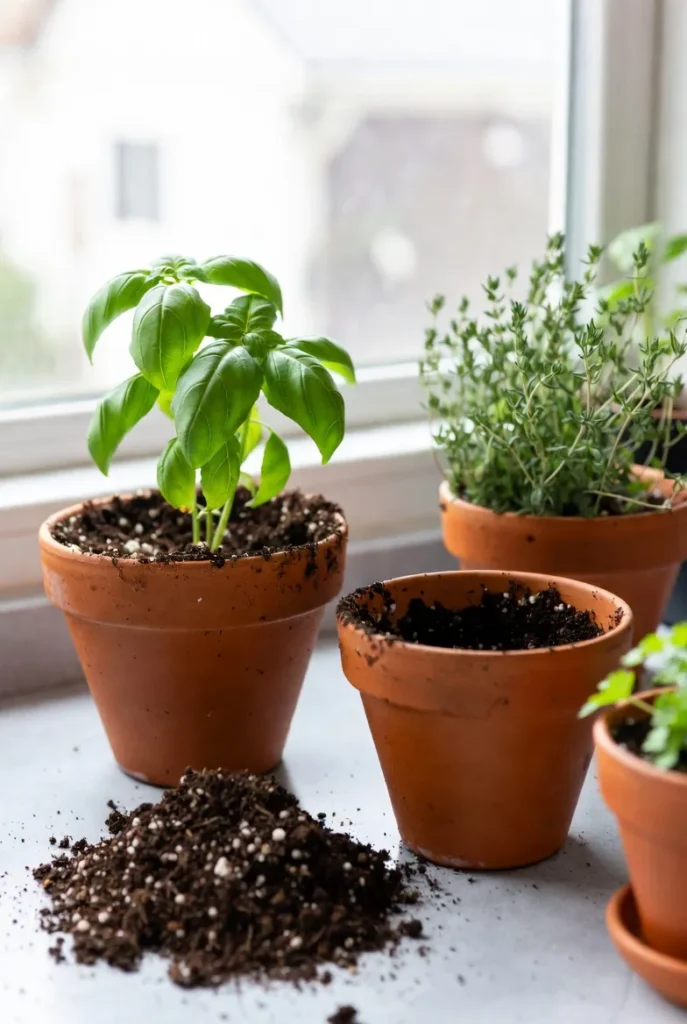
If you suspect root rot, act quickly. Early treatment can save the plant.
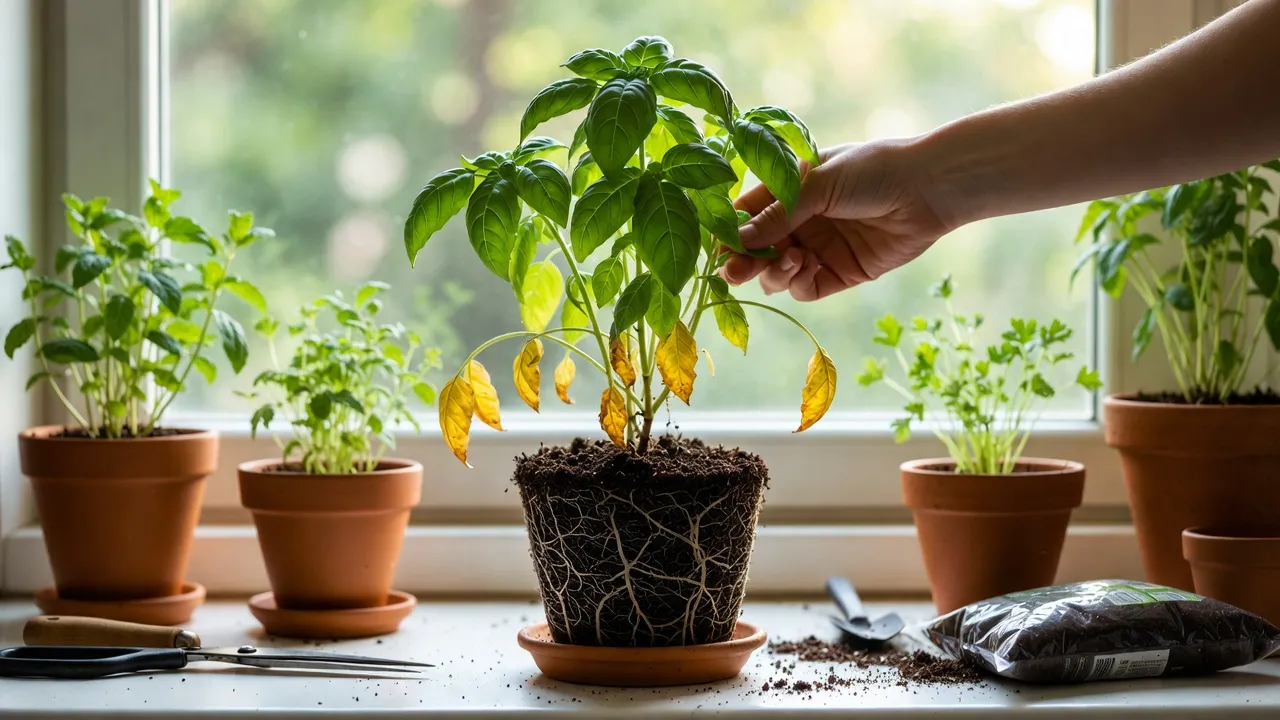
Step 1: Remove the Plant From the Pot
Carefully slide the herb out of the container.
Shake off excess soil so you can inspect the root system.
Step 2: Examine the Roots
Check for signs of decay:
- dark or black roots
- mushy texture
- foul smell
Healthy roots should appear white, firm, and slightly crisp.
Step 3: Trim Away Rotten Roots
Using clean pruning shears, cut off all damaged roots.
Removing infected sections helps stop the disease from spreading further.
Always sterilize tools before and after trimming.
Step 4: Discard the Old Soil
Never reuse soil from a plant with root rot.
The soil may contain fungal pathogens such as Pythium or Phytophthora that could reinfect the plant.
Step 5: Repot Using Fresh Soil
Choose a well-draining potting mix that contains materials like:
- perlite
- compost
- sand
These materials improve airflow around roots and prevent water buildup.
Step 6: Improve Pot Drainage
Use containers with drainage holes.
Many indoor gardeners prefer terracotta pots because they allow moisture to evaporate through the porous clay walls.
Step 7: Adjust Your Watering Habits
After repotting, allow the soil to partially dry before watering again.
Avoid watering on a fixed schedule.
Instead, check soil moisture first.
Placing plants in the right environment with proper light and airflow can reduce the risk of root rot. Learn where to place indoor herbs for healthy growth to prevent many common problems.
Simple Watering Decision Framework
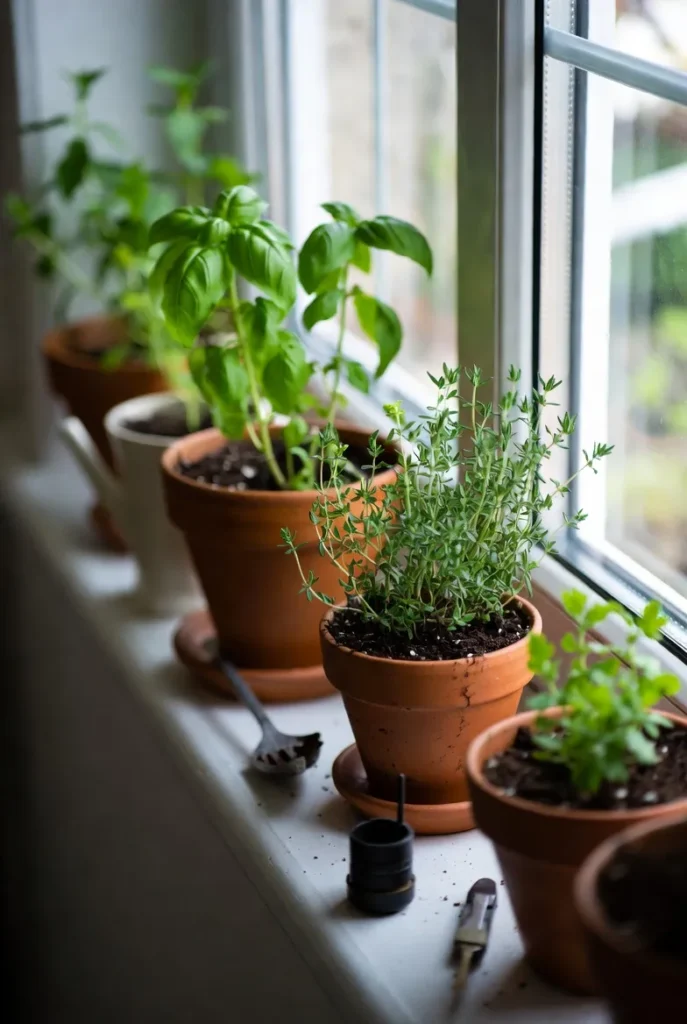
Many indoor herb problems begin with watering too often.
Use this quick method before watering.
- Insert your finger about 2–3 cm into the soil.
- Check the moisture level.
Soil Condition | What to Do |
|---|---|
Wet soil | Do not water |
Slightly damp | Wait another day |
Dry top layer | Water the plant |
This method prevents accidental overwatering.
Best Soil Mix to Prevent Root Rot
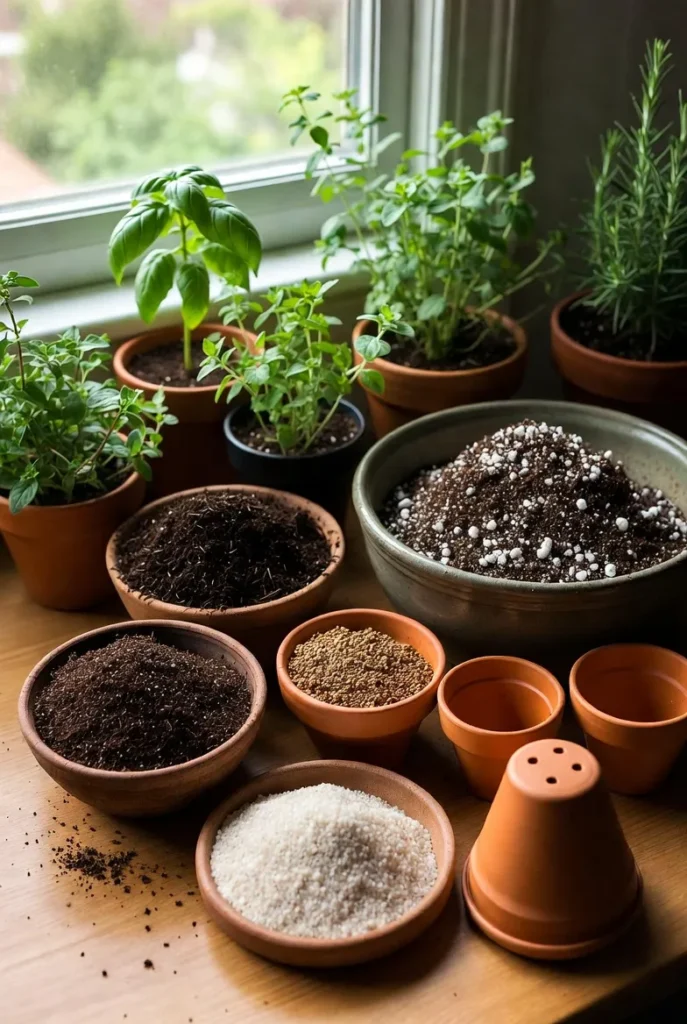
A good potting mix allows water to drain while still holding nutrients.
Example of Indoor Herb Soil Mix
- 40% high-quality potting soil
- 30% compost
- 20% perlite
- 10% coarse sand
This combination improves soil aeration, allowing oxygen to reach plant roots.
Some gardeners also explore growing herbs without soil to avoid problems like root rot. If you’re curious about alternative growing methods, compare soil vs hydroponics for indoor herbs.
Why Oxygen in Soil Matters
Plant roots need oxygen to function properly.
When soil remains saturated:
- oxygen disappears
- roots suffocate
- pathogens begin attacking weakened roots
This is why soil drainage is critical in container gardening.
According to plant pathologists, waterlogged soil reduces oxygen levels around plant roots, weakening them and making them vulnerable to fungal diseases.
Natural Remedies Sometimes Used by Gardeners
Some indoor gardeners use mild treatments to help stressed roots recover.
Hydrogen Peroxide Solution
A diluted solution can temporarily increase oxygen in the root zone.
Typical mixture:
- 1 part hydrogen peroxide
- 3 parts water
Apply lightly when repotting.
Beneficial Microorganisms
Some gardeners introduce helpful microbes like Bacillus species to compete with harmful fungi.
These microorganisms can help maintain healthier soil ecosystems.
When a Plant Cannot Be Saved
Sometimes root rot becomes too severe.
Signs the plant may not recover include:
- almost all roots are black and mushy
- stems are soft and collapsing
- the plant smells strongly rotten
- no healthy roots remain
If this happens, it is usually better to discard the plant and start fresh with new soil and a clean container.
Common Mistakes That Cause Root Rot
Avoiding these mistakes greatly reduces the risk.
- watering plants on a strict schedule
- using garden soil in pots
- planting herbs in containers without drainage holes
- leaving water in saucers under pots
- growing herbs in very low light
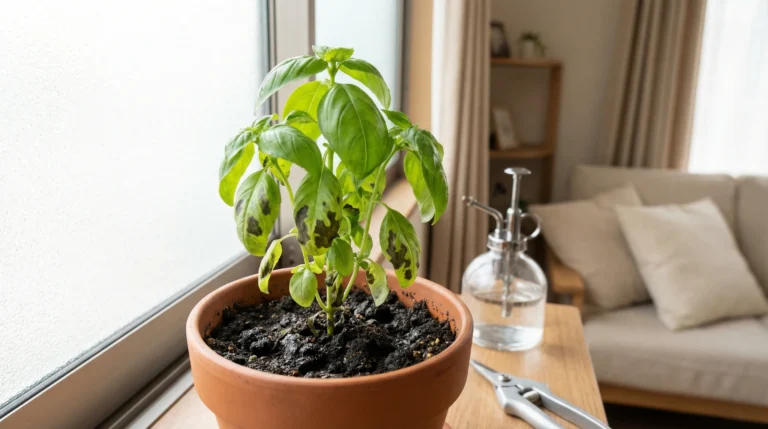
Sometimes, root damage shows up on leaves as black spots. Learn what these spots mean and how to treat them early.
Prevention Checklist for Indoor Herb Gardeners
While treating root rot is possible, prevention is far easier and more reliable.
✔ choose pots with drainage holes
✔ use light, well-draining potting mix
✔ provide sufficient sunlight
✔ avoid watering too frequently
✔ ensure air circulation around plants
✔ empty excess water from trays
In severe cases, fixing root rot may require trimming damaged roots and repotting the herb in fresh, well-draining soil.
Why Indoor Herbs Are Especially Sensitive
Indoor environments behave differently from outdoor gardens.
Inside homes and apartments:
- air circulation is lower
- sunlight is weaker
- evaporation is slower
Because of this, container soil stays wet longer, increasing the risk of root rot.
Adjusting watering habits is essential for indoor success.
Healthy harvesting habits also help plants stay resilient and reduce stress on the root system. If you’re unsure how to harvest safely, follow this step-by-step guide to harvesting indoor herbs..
FAQs
1. Can herbs recover from root rot?
Yes, herbs can recover if the problem is caught early. Removing rotten roots, repotting in fresh soil, and improving drainage can allow healthy roots to regrow.
2. What does root rot look like?
Root rot usually appears as dark brown or black roots that feel soft and mushy. Healthy roots should be white, firm, and slightly crisp.
3. How do I know if my herb plant is overwatered?
Common signs include yellow leaves, drooping stems, slow growth, and constantly wet soil. The plant may appear wilted even though the soil is moist.
4. Should I cut off rotten roots?
Yes. Trimming damaged roots prevents the disease from spreading and allows the plant to focus energy on new healthy root growth.
5. How fast does root rot kill a plant?
In severe cases, root rot can kill small herbs within several days to a few weeks if conditions remain wet.
6. How often should indoor herbs be watered?
Most indoor herbs should be watered only when the top layer of soil feels dry. The exact timing depends on light, pot size, and indoor climate.
7. Which herbs are most sensitive to root rot?
Herbs such as rosemary, thyme, oregano, and basil are especially sensitive because they prefer well-drained soil and moderate watering.
8. Can root rot spread to other plants?
Yes. Contaminated soil and water can spread pathogens between containers. Always remove infected soil and sanitize tools when handling diseased plants.
Conclusion
Root rot is one of the most common reasons indoor herbs fail, especially for beginners. The problem usually begins with something simple: too much water and poor drainage.
Fortunately, preventing root rot is straightforward.
Use well-draining soil, choose containers with drainage holes, and water only when the soil begins to dry. Paying attention to these basics keeps roots healthy and oxygenated.
With the right care, herbs like basil, mint, parsley, thyme, and oregano can thrive indoors for months, providing fresh flavor and greenery to kitchens and apartments around the world.
Basil is sensitive to over-watering, learn how to grow basil indoors without causing root rot.

Hi, I’m Rimsha, founder of Urban Bloomer 🌱
I grow herbs and plants in a small apartment and share what actually works in limited indoor spaces. Over the past few years, I’ve tested different setups, from lighting and soil to watering routines, to find simple methods that make indoor gardening easier.
Here, you’ll find practical, beginner-friendly advice based on real experience, not complicated gardening systems.