How to Clean Coffee Maker with Vinegar
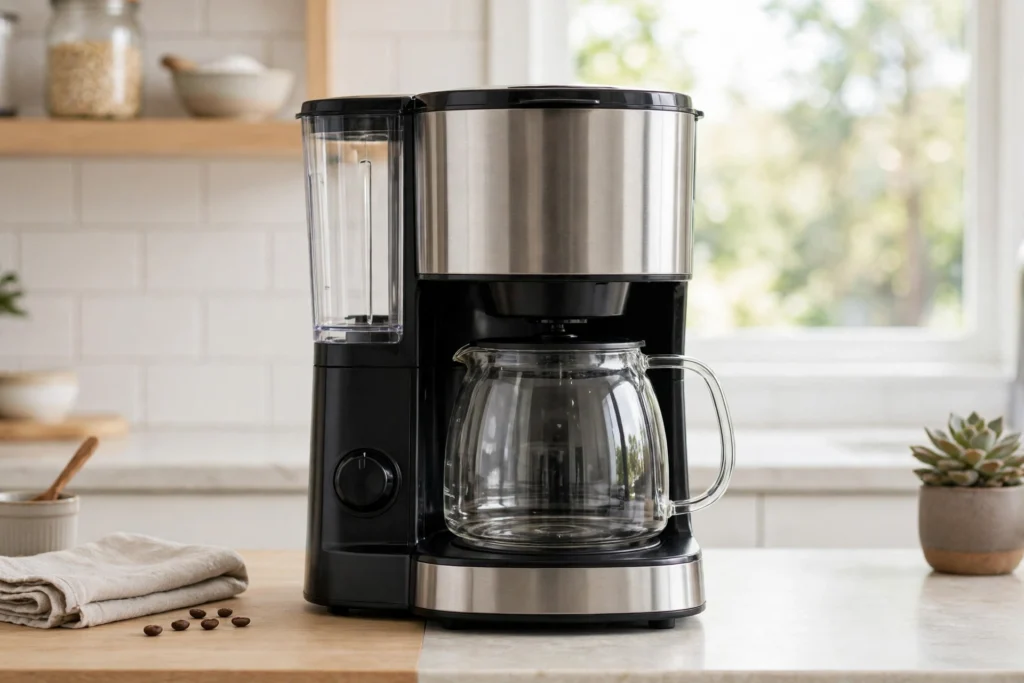
To clean a coffee maker with vinegar, fill the reservoir with equal parts distilled white vinegar and water, brew halfway, pause for 30 to 60 minutes, finish brewing, then run 2 to 3 fresh water rinse cycles.
You know the moment. You pour the first cup, take a hopeful sip, and instead of rich coffee you get something flat and faintly stale. The machine looks fine outside, but mineral scale and old coffee oils are dulling the flavor inside. This guide fixes that in about an hour, with one bottle of plain white vinegar and water you already have.
What you need to clean a coffee maker with vinegar
- Distilled white vinegar, not apple cider vinegar
- Fresh water for mixing and rinsing
- A soft sponge or cloth, mild dish soap, and a clean towel
Use distilled white vinegar specifically. It is clear and leaves far less residue than flavored vinegars. Check your manual first. If it forbids vinegar, use the citric acid method below or your maker’s descaler.
How to clean a coffee maker with white vinegar
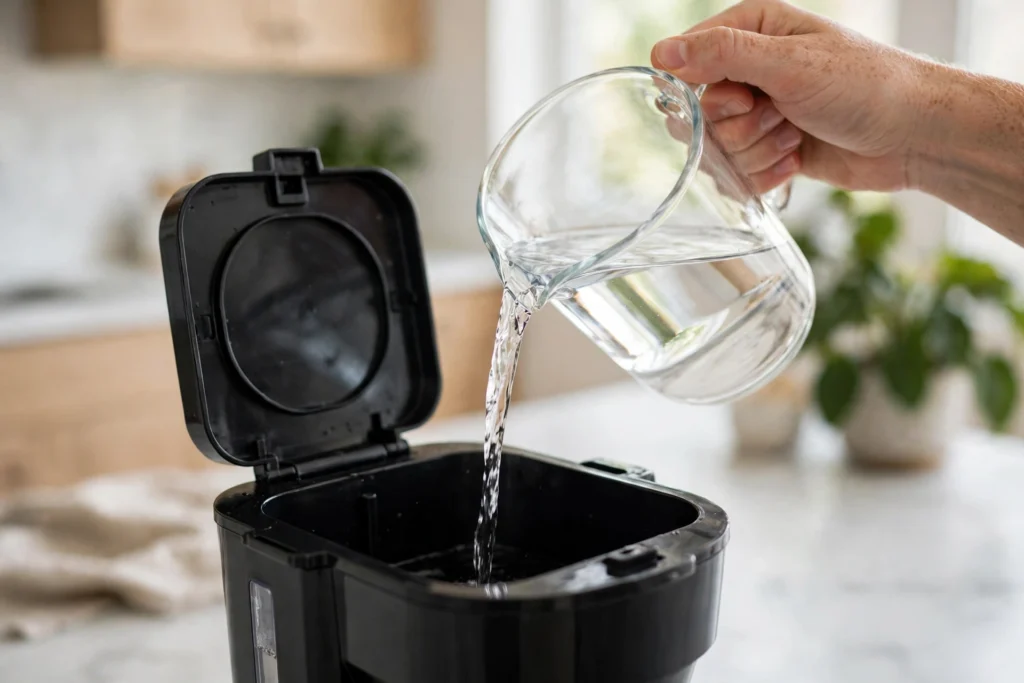
This is the best first method for most standard drip machines. Work with a cool machine, and remove any paper filter and used grounds first.
- Empty and rinse. Empty the carafe and rinse it. Put the empty filter basket back in place.
- Mix. Fill the reservoir with equal parts distilled white vinegar and water.
- Brew halfway, then pause. Stop the cycle at about half, turn the machine off, and let the solution sit for 30 to 60 minutes.
- Finish and rinse. Brew the rest through, empty the carafe, then run 2 to 3 full cycles of fresh water only.
- Wash the parts. Wash the carafe and filter basket in warm, soapy water, rinse, and dry. If vinegar smell remains, run one more rinse cycle.
How much vinegar and water should you use?
Use a 1 to 1 ratio: half distilled white vinegar and half water, filled to the normal brew level, not above the max line. For a 12 cup machine, that is about 6 cups of each. For a 5 cup machine, use about 2.5 cups of each. For light buildup, 1 part vinegar to 2 parts water can work, but do not add extra vinegar for heavy scale. The soak time and the rinses matter more than a stronger mix.
How to clean the coffee maker water tank and filter basket
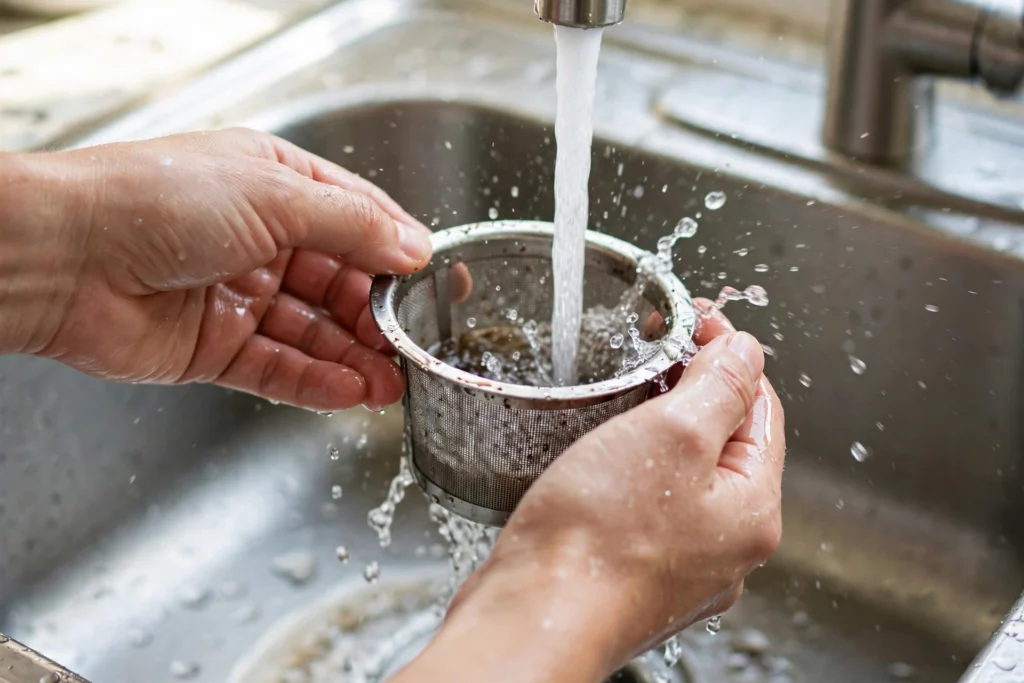
The brew cycle cleans the pipes, but not the parts you can reach. Wash those by hand while the vinegar soaks.
- Water tank or reservoir: Empty it, wipe inside with warm, soapy water, then rinse until no soap remains. If it lifts out, wash it in the sink. If it does not, wipe carefully and never pour water over the base or electrics.
- Filter basket: Wash in warm, soapy water, brush the edges and small holes where oils collect, rinse, and air dry.
- Carafe and reusable filter: Wash the same way, paying attention to the spout and lid. Replace a torn filter.
Remove any charcoal water filter before a vinegar cycle, if your machine has one, and put a fresh one in afterward.
How to clean the coffee maker hot plate safely
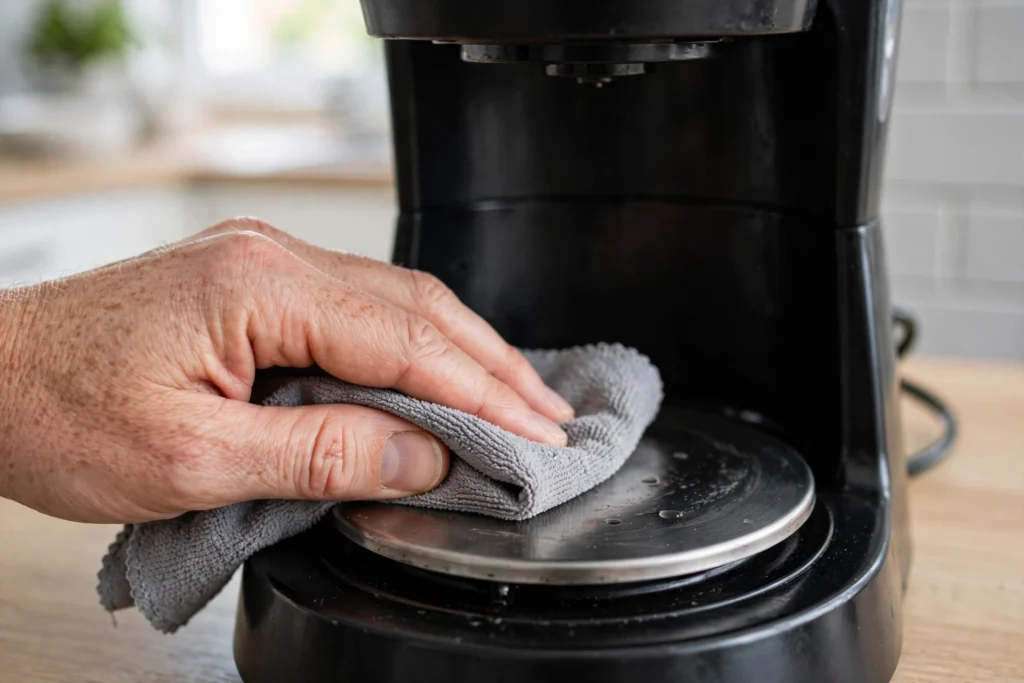
The hot plate, also called the warming plate or burner, collects drips and sticky rings. Never clean it while it is hot. Unplug the machine and wait until it is completely cool, then wipe with a soft cloth in warm, soapy water, and wipe again with a clean, damp cloth. For a stubborn ring, lay a damp cloth on it for a few minutes first. Do not use steel wool or abrasive pads, and never pour water onto the plate. If the exterior is stainless steel, our guide to how to clean stainless steel appliances covers streak-free wiping.
How to clean a single-serve coffee maker with vinegar
Use this gentler version only if your manual allows vinegar. Remove the pod, empty the drip tray, and wash the removable parts. Fill the reservoir with equal parts distilled white vinegar and water, run pod-free brew cycles into a large mug until it is empty, pausing halfway for 30 minutes if your model allows it, then run 2 to 3 full reservoirs of fresh water through it. For a Keurig or Nespresso, use its own descaling solution instead, as Keurig’s guide below shows.
How to clean a coffee maker without vinegar using citric acid
Citric acid is the best real alternative when you do not want a vinegar smell, or when your manual warns against vinegar but allows a citric acid descaler. Dissolve 2 tablespoons of food grade citric acid in 1 quart (4 cups) of warm water, stir until dissolved, pour it in, brew halfway, pause for 30 minutes, finish brewing, then run 2 to 3 fresh water rinse cycles. Wash the carafe and filter basket as above. Use it only as a descaling rinse, and still check your manual first, because some machines specify their own product.
What to do for heavy scale buildup
Heavy scale means very slow brewing, sputtering, or white flakes in the carafe. Repeat the equal parts vinegar clean once, with a full 60 minute soak, and rinse thoroughly. If that still leaves slow brewing or flakes, switch to a commercial descaler made for your machine type and follow its label. A machine that still struggles after that may need repair, not another clean.
When vinegar is not the right choice
Here is the conflict, stated plainly. Many guides, including maker guides for standard drip machines, use vinegar. Some manufacturers, notably Keurig and Nespresso, recommend their own descaling solutions and caution against vinegar, over damage, lingering taste, and warranty position. The safe rule is simple: your manual beats any blog post, including this one. If it forbids vinegar, do not run it through that machine. Never use apple cider vinegar, because it can leave residue and flavor, and never use bleach in a coffee maker.
How often should you clean a coffee maker with vinegar?
Descale every 1 to 3 months, depending on use and water hardness. Daily drinkers with hard tap water should aim for monthly, while lighter users with soft or filtered water can stretch to every three months. Wash the carafe and filter basket daily, and wipe the exterior and hot plate weekly. If coffee turns bitter, flat, or slow, do not wait for the calendar.
How to clean a coffee maker before first use
Flush a brand-new machine before your first real brew. Wash the carafe, filter basket, and removable parts in warm, soapy water, rinse, and dry them. Then run 1 to 2 full cycles of fresh water only, with no coffee and no vinegar, and discard that water. This clears factory dust and stale packaging taste. Only descale with vinegar later, when the machine actually needs it.
For the maker guides behind this method, see Mr. Coffee’s guide to cleaning a coffee maker and Keurig’s guide to descaling a Keurig coffee maker.
Frequently asked questions
How much vinegar do you put in a 12 cup coffee maker to clean it?
Use about 6 cups of distilled white vinegar and 6 cups of water, for a 1 to 1 mix filled to the normal brew level.
Will vinegar clean a coffee maker by just sitting overnight?
No. Sitting alone does not circulate the solution through the pipes. Brew halfway, pause for 30 to 60 minutes, finish brewing, then rinse with fresh water.
Can you clean a coffee maker without vinegar?
Yes. Dissolve 2 tablespoons of food grade citric acid in 1 quart (4 cups) of warm water, brew halfway, pause for 30 minutes, finish brewing, then run 2 to 3 fresh water rinse cycles.
How often should you clean a coffee maker with vinegar?
Descale every 1 to 3 months, depending on use and water hardness. Daily users with hard water should aim for monthly.
Can you use apple cider vinegar to clean a coffee maker?
No. Use distilled white vinegar only. Apple cider vinegar can leave residue and flavor behind.
Does this method work for other standard drip machines?
Yes, for most standard drip machines that allow vinegar, but always check your own manual first. If it forbids vinegar, as some Keurig and Nespresso guides do, use the maker’s own descaling solution instead.
Conclusion
A clean coffee maker is mostly a habit, not a project. Mix equal parts distilled white vinegar and water, brew halfway, give it time to soak, finish, and rinse well. Wash the parts you can reach, keep the hot plate cool before you wipe it, and descale every 1 to 3 months. Do that, and your morning cup will taste like it should again, with no sour edge and no stale aftertaste.