How to Clean Stainless Steel Appliances

To clean stainless steel appliances without streaks, wipe with the grain using a damp microfiber cloth and mild soapy water, rinse with a clean damp cloth, and dry immediately. That is the whole method, and it works on fridges, ovens, dishwashers, and range hoods.
You know the moment. Morning light hits the fridge, and every fingerprint from yesterday shows up like a crime scene. The door looked clean last night. Now it is covered in smudges, water spots, and one mysterious streak you cannot explain.
Here is the good news. You do not need a special spray or a complicated routine. Warm water, a few drops of mild dish soap, two microfiber cloths, and one habit will handle almost every stainless steel appliance in your kitchen. That habit is wiping with the grain, and it is the difference between a streak-free shine and a surface that looks worse than when you started.
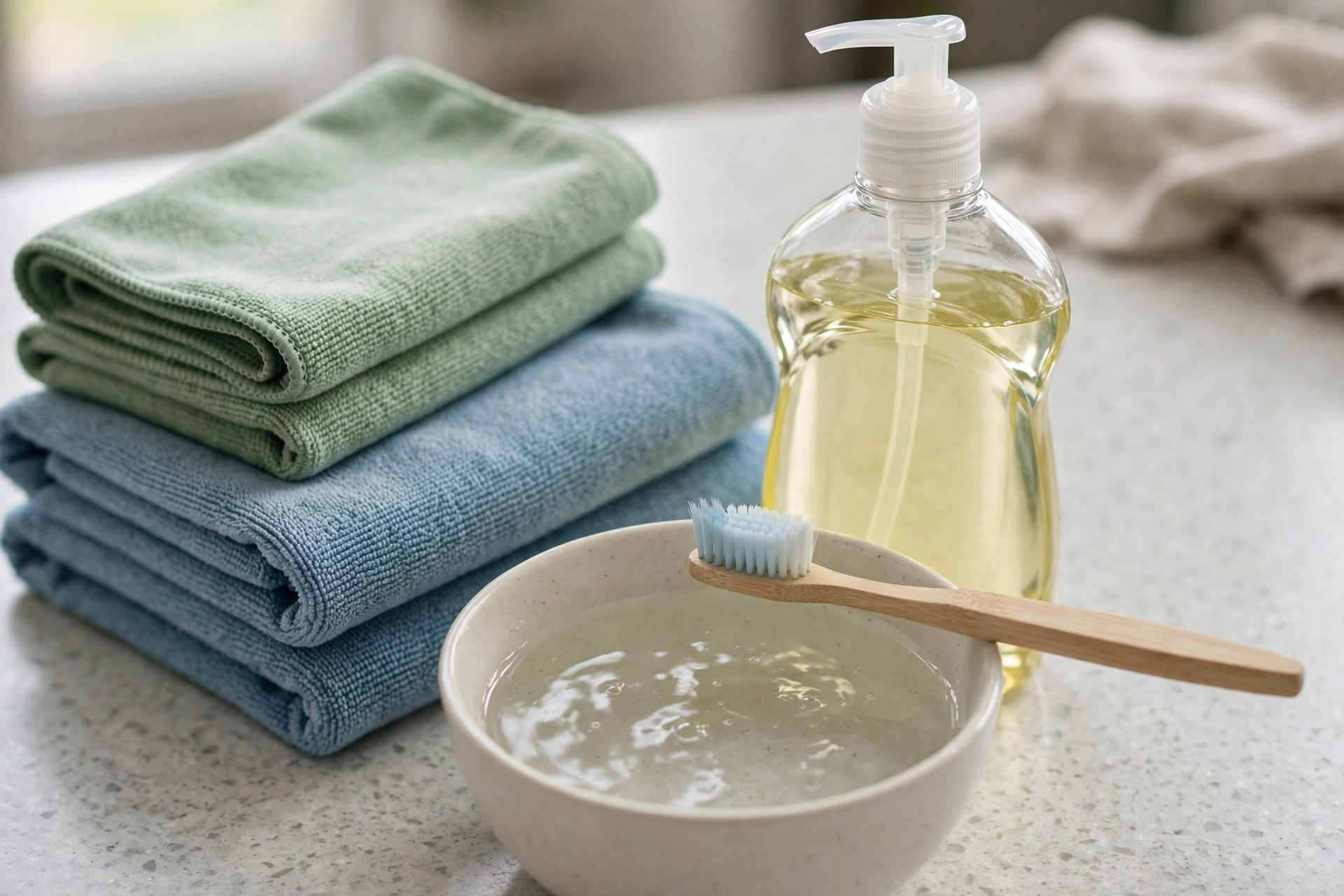
What you need to clean stainless steel appliances
- Two or three clean microfiber cloths (one for washing, one for rinsing, one dry for buffing)
- Mild dish soap, just a few drops
- Warm water
- A soft toothbrush for handles, edges, and around buttons
- Baking soda for stuck-on grime
- Mineral oil, optional, for polishing traditional stainless steel
Paper towels are not on this list on purpose. They leave lint behind, and rougher paper can dull a coated finish over time. Microfiber traps dirt and oil instead of pushing it around, which is exactly what a surface that shows everything needs.
How to find the grain on stainless steel
Stainless steel has a grain, like wood, and if you look closely at the surface you will see faint lines running in one direction, with some appliances running horizontal and others vertical.
This matters more than the cleaner you choose, because wiping against the grain pushes dirt into those tiny grooves and leaves streaks, while wiping with the grain lifts dirt out and leaves shine.
If the grain runs horizontal, wipe left to right, and if it runs vertical, wipe downward only. When you cannot tell, wipe two small side-by-side patches in opposite directions and compare, since the smoother, cleaner patch shows you the grain direction, and doing this check once per appliance means you will never have to guess again.
How to clean stainless steel appliances step by step
Work in small sections, especially on wide surfaces like a French-door fridge or a dishwasher front, because small sections dry faster and fast drying is what prevents spots.
- Dust first. Wipe with a dry microfiber cloth. This removes loose dust and grit that could scratch.
- Wash. Dampen a cloth in warm water with a few drops of mild dish soap. Wring it well. Wipe with the grain in long, steady strokes. Smooth passes, not fast circles.
- Rinse. Wipe again with a second cloth dampened in plain water. This removes the soap film that later turns cloudy. Hard tap water? Rinse with distilled water instead.
- Dry immediately. Buff dry right away with a clean, dry cloth, again with the grain. Never let the surface air-dry. Most streaks are born while water sits on the metal.
- Polish (optional). For traditional stainless steel only, put one or two drops of mineral oil on a cloth, wipe with the grain, and buff dry. It adds shine and resists fingerprints. Skip this step entirely on fingerprint-resistant finishes.
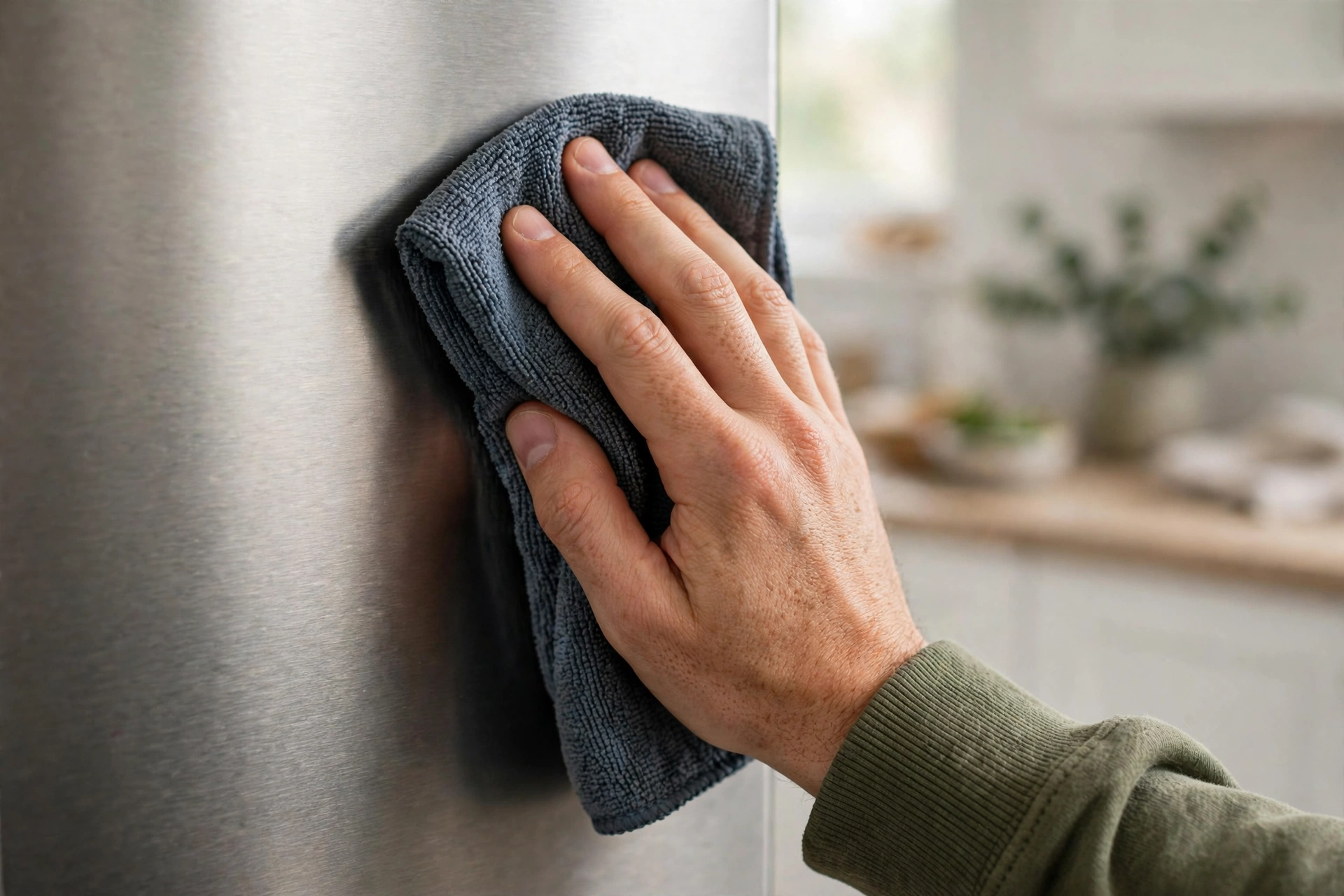
Lock control panels or turn off displays before you start, so you do not trigger buttons while wiping. Around handles, dispensers, and edges, use the soft toothbrush with soapy water, then rinse and dry the same way.
How to remove fingerprints from stainless steel
Fingerprints are skin oil, which is why plain water often fails on them, so you need a mild degreaser, and dish soap already is one.
For everyday prints, the soapy wash above removes them. For stubborn prints on heavily used handles, dab a little rubbing alcohol on a cotton pad, wipe with the grain, then rinse with plain water and dry. The rinse matters, since alcohol left sitting can strip the protective layer.
After cleaning, a tiny amount of mineral oil buffed over traditional stainless steel leaves a barrier that repels future prints without feeling greasy, and one or two drops is plenty, since more than that just feels oily and attracts dust.
If your appliance has a fingerprint-resistant coating, ignore the alcohol and oil advice completely. Those finishes need only mild soap, warm water, and microfiber, and polish or cleaners can damage the coating. Check your manual once and you will know which finish you own.
How to remove grease and stuck-on food from stainless steel
Grease near a range hood or splatter on an oven front needs a little patience, not a stronger chemical.
For greasy patches, wipe with the soapy cloth first, let the soap sit for two to three minutes, then wipe again with the grain, rinse and dry, and repeat once if needed rather than scrubbing harder.
For stuck-on food, make a paste of three parts baking soda to one part water, spread it on the spot with a soft cloth, let it sit for five minutes, then wipe gently with the grain, rinse well and dry, keeping the pressure light and staying with the grain because baking soda is mildly abrasive in paste form.
How to clean stainless steel without streaks
Streaks almost always come from two causes, soap film left behind or water allowed to air-dry, and both are fixable without buying anything new.
Rinse thoroughly after washing, because even a thin soap film dries cloudy, and dry immediately every time with a dry cloth, working top to bottom so drips do not run over sections you already dried, and on a wide fridge door cleaning one door at a time instead of the whole front at once.
If spots are already there, wash the area again with soapy water, rinse with distilled water, and dry right away, since the second pass usually clears them.
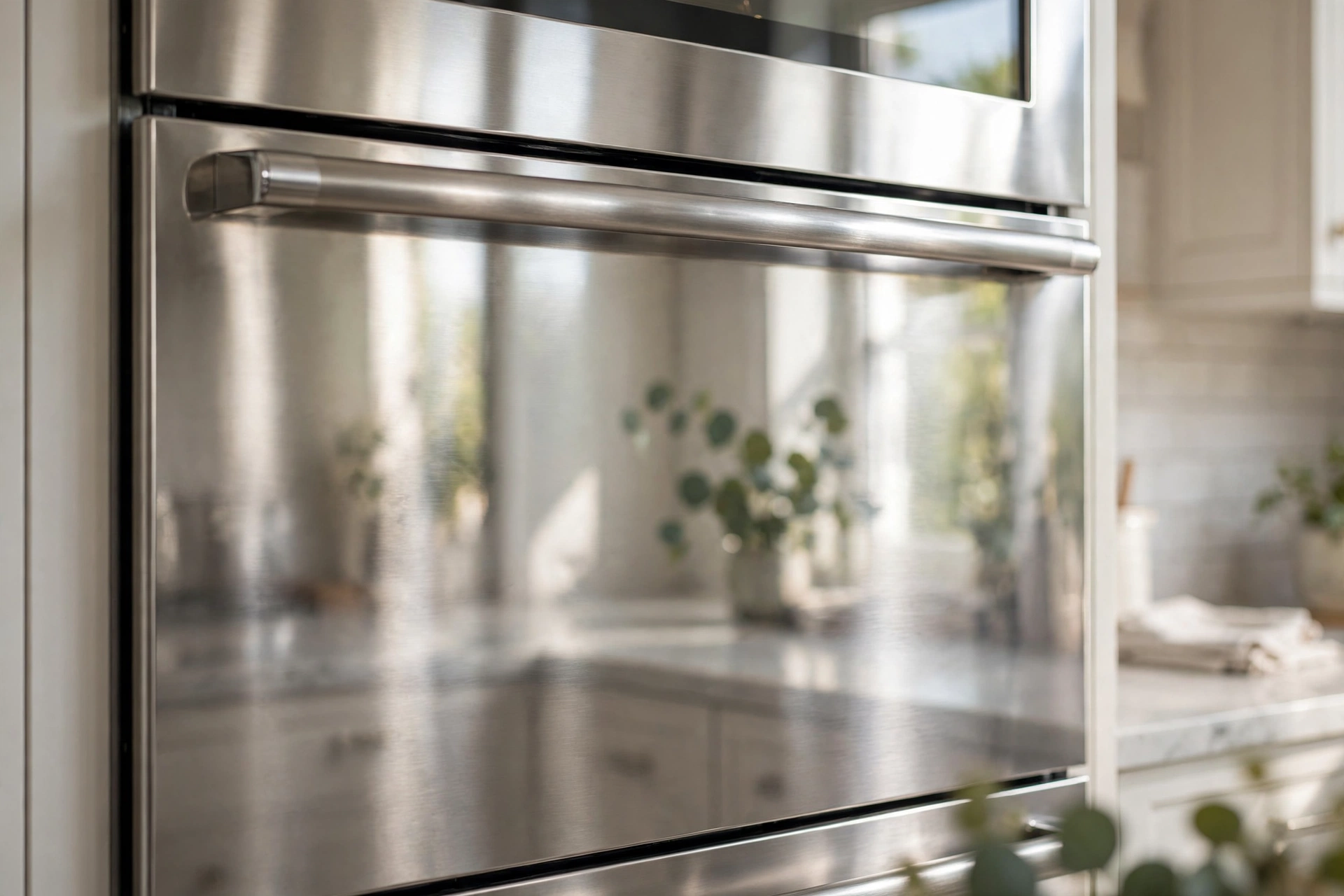
How to clean stainless steel refrigerators, ovens, and dishwashers
The method stays the same, but each appliance collects a different kind of mess.
- Refrigerator doors: fingerprints and water spots. Daily wipe with a damp microfiber cloth, then dry along the grain.
- Oven front and handles: grease film, splashes, and prints. Soapy wash, rinse, buff dry. Let the oven cool completely before you start.
- Dishwasher door: water drips and detergent haze. A drop of soap on a damp cloth, then dry well.
- Range hood: grease mist and dust. Soapy wash, repeat gently on heavy buildup, rinse and dry.
- Cooktop trim: oil and food splatter. Nonabrasive cloth with soapy water, gentle repeat passes.
- Control panels: oily prints and light soil. Lightly damp cloth only, never soaking, and gentle pressure.
- Side panels: dust and occasional scuffs. Dry microfiber dusting, spot clean with soapy water when needed.
What not to use on stainless steel
Some products damage stainless steel even though they work fine elsewhere. Keep these away from every appliance, coated or not.
- Chlorine bleach or anything containing chloride. It corrodes the protective layer.
- Ammonia, including many glass cleaners. Ammonia-based sprays also leave streaks.
- Oven cleaners. They are far too harsh for appliance exteriors.
- Steel wool, steel brushes, and abrasive scrubbing pads. They scratch the finish and leave tiny particles that can rust.
- Abrasive cleansers and scouring powders on brushed stainless steel.
- Jewelry polish, which contains chemicals that can corrode the steel.
- Paper towels and newspaper on coated finishes, which can dull or scratch the coating.
- A hot surface. Never clean an appliance while it is warm. Wait until it is cool to the touch.
One more warning deserves its own space: never mix bleach with vinegar or ammonia, and never use bleach on stainless steel at all, because the damage is chemical, not cosmetic, and it cannot be buffed out.
Can you use vinegar on stainless steel?
You will find guides that recommend vinegar for stainless steel, and others that warn against it. Both exist because vinegar does cut grease and spots on traditional stainless steel, but manufacturers including Whirlpool, GE, and KitchenAid warn that vinegar and other acids can damage the finish, especially on fingerprint-resistant coatings.
The safe call is simple. Use mild soap and warm water as your main method, on every finish. It works, and no manufacturer warns against it. Save vinegar for jobs your manual explicitly allows, and skip it entirely on coated or fingerprint-resistant appliances. When in doubt, the manual wins over any blog post, including this one.
How often should you clean stainless steel appliances
A quick daily wipe keeps prints from building up, so wipe the fridge door with a damp microfiber cloth when you do the dishes, rinse the cloth, wipe again, and finish with a dry cloth, which takes under a minute.
Do a full wash once a week with soapy water, rinse, and dry, and deep clean every three to four months, covering handles, door seals, bottom edges, and the greasy top of the fridge where warm air collects airborne oil, since that schedule keeps the finish looking new without turning appliance cleaning into a project.
Frequently asked questions
What is the best cleaner for stainless steel appliances?
Mild dish soap and warm water with a microfiber cloth. It cleans every finish safely, and no manufacturer warns against it. Avoid bleach, ammonia, and abrasive pads.
Can you use Windex or glass cleaner on stainless steel?
It is best to avoid it. Many glass cleaners contain ammonia, which manufacturers say to avoid on stainless steel, and they can leave streaks. A damp microfiber cloth and a dry buff remove prints without the risk.
How do you clean stainless steel appliances without streaks?
Use very little soap, wipe with the grain, rinse with a second damp cloth to remove soap film, then buff dry right away with a completely dry microfiber cloth. Streaks come from residue or from letting the surface air-dry.
How do you remove fingerprints from stainless steel?
Wash with warm soapy water on a microfiber cloth, with the grain, then rinse and dry. For stubborn prints on traditional stainless steel, dab rubbing alcohol on a cotton pad, wipe with the grain, rinse, and dry. On fingerprint-resistant finishes, use soap and water only.
Does this method work on fingerprint-resistant finishes?
Yes, with one change: use only mild soap, warm water, and microfiber, and skip polish, stainless cleaners, and alcohol. Those finishes need less, not more.
How do you clean black stainless steel appliances?
Follow your manual. Black stainless steel has a different coating, and the polish step in this guide does not apply to it. The soap, water, and microfiber wash is still the safe starting point, but check the manual before using any cleaner or polish on it.
Conclusion
Stainless steel looks hard to keep clean only until you know the two rules that matter: always wipe with the grain, and always dry immediately. Warm water and a few drops of dish soap handle fingerprints, grease, and everyday smudges, while baking soda paste takes care of the stubborn spots. The fastest way to ruin the finish is not a lack of effort, it is the wrong product, so keep bleach, ammonia, and abrasive pads far away, and give coated finishes nothing but soap, water, and microfiber. Clean a little and often, and the fridge door that greets you every morning will look as good as the day it arrived. When in doubt, your manual has the final word. For the inside of the oven, see our guide to how to clean oven racks. For another kitchen appliance, see our guide to how to clean a coffee maker with vinegar.