How to Get Stains Out of Mattress
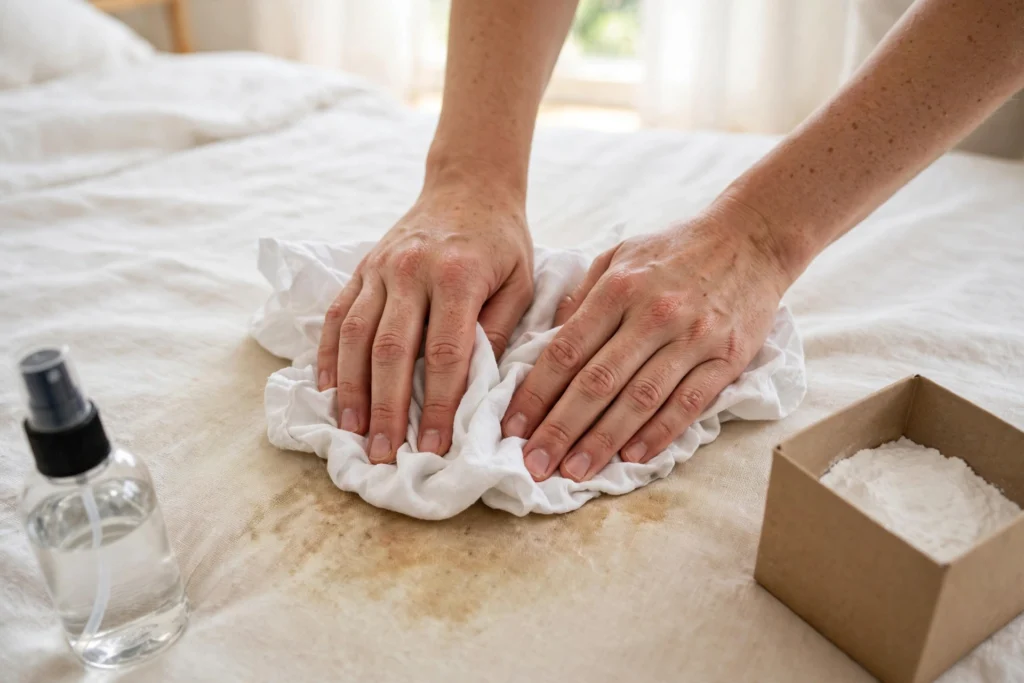
You pull the sheets back and there it is. A yellow patch where sweat built up, an old spill you forgot about, or an accident that soaked in before anyone noticed. A mattress cannot go in the washing machine, so the stain feels permanent.
It is not. The rule for a mattress is simple: use as little liquid as possible, treat the stain for what it actually is, and dry the mattress completely. Get those three things right and most stains come out.
What you need
- Vacuum with an upholstery attachment
- Clean white cloths or paper towels
- Spray bottle
- Cold water
- Mild dish soap
- Baking soda
- Distilled white vinegar
- 3% hydrogen peroxide (for light covers and stubborn stains)
- Enzyme cleaner (for urine)
White cloths matter. A colored towel can transfer dye into a damp mattress and leave you with a second stain.
The method for every stain: blot, treat, dry
Whatever caused the stain, the order of work is the same. Skip a step and the stain either spreads or sinks deeper.
Step 1: Strip the bed. Remove sheets, pillowcases, the mattress protector, and any topper. Wash the bedding on the hottest setting the labels allow.
Step 2: Vacuum the whole mattress. Use the upholstery attachment and go slowly over the top, the sides, and the seams. Seams hide dust and debris, and vacuuming first means you are treating the stain, not the dirt sitting on top of it.
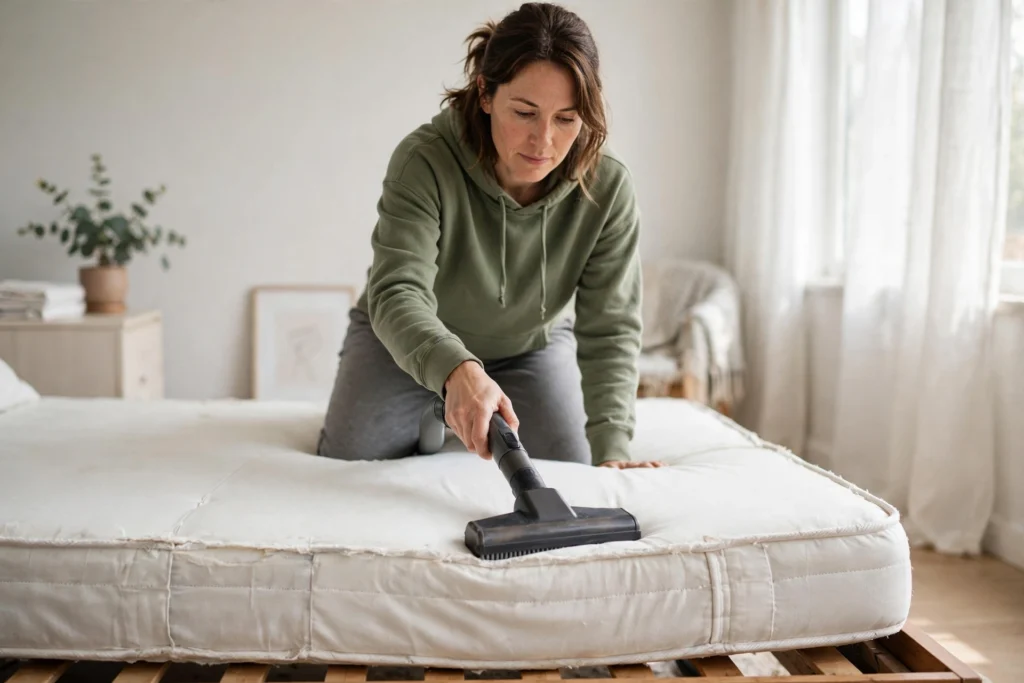
Step 3: Blot, never rub. If the stain is fresh, press a dry white cloth onto it and lift. Repeat with clean sections of cloth until no more moisture transfers. Rubbing spreads the stain and pushes it deeper into the layers.
Step 4: Spot treat with minimal liquid. Dampen a cloth with your cleaning solution, never pour solution onto the mattress. Blot from the outside of the stain inward so the edges do not spread. Repeat until the stain lightens.
Step 5: Deodorize with baking soda. Sprinkle baking soda over the treated area, or the whole surface for a general freshening. Leave it for several hours, or overnight for odor. Vacuum it all up with the upholstery attachment.
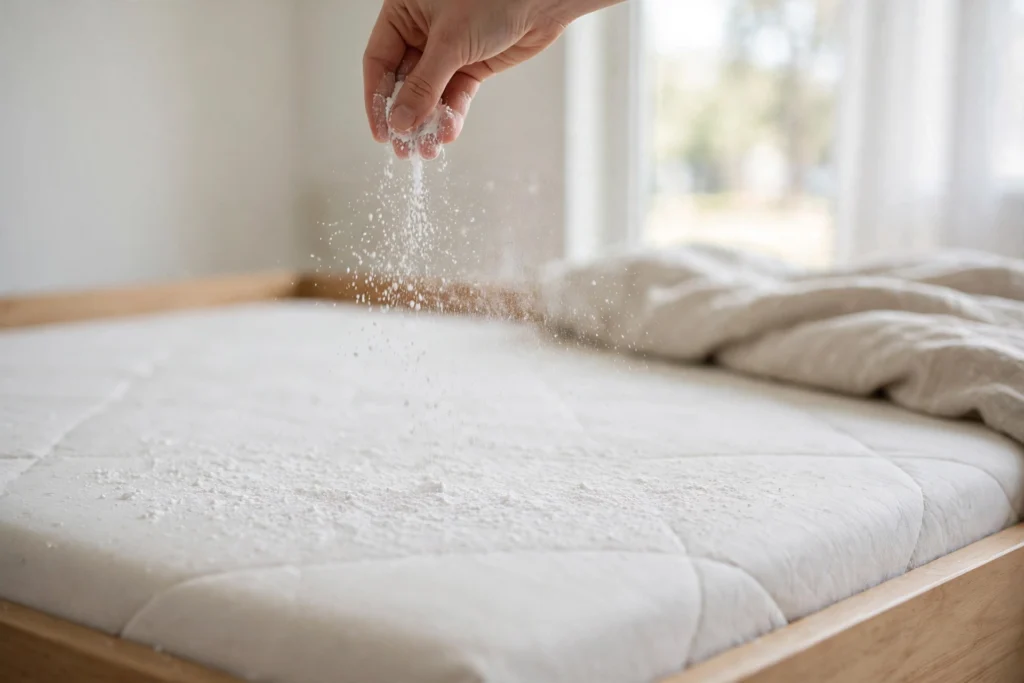
Step 6: Dry completely before remaking the bed. Open a window, aim a fan at the mattress, or let sunlight reach it. A mattress that feels dry on top can still be damp inside, so give it time. Remaking the bed over a damp mattress is how mildew starts.
Sweat and yellow stains
Yellow patches are the most common mattress stain. They come from sweat, body oils, and salts building up night after night, then oxidizing into the yellow marks you see.
Mix 1 cup of 3% hydrogen peroxide with 3 tablespoons of baking soda and 1 drop of dish soap. Swirl gently to combine, and mix it fresh each time, since this solution does not keep. Mist the stained area lightly, never soak it. Wait 10 to 15 minutes, then blot with a clean white cloth. Repeat for stubborn marks, then sprinkle baking soda over the area, let it dry fully, and vacuum.
One caution: hydrogen peroxide can lighten colored fabric. Patch test a hidden corner first, and use this mix on white or light covers only.
Urine stains: fresh versus dried
Fresh urine is mostly water and easier to remove. Dried urine is harder, because uric acid crystals form as it dries and bond to the fibers. The two cases need different treatments.
For fresh urine, blot immediately, then spray the area with equal parts white vinegar and cold water. Cover the spot with a thick layer of baking soda and leave it for 8 to 10 hours. Vacuum the powder up. If any smell remains, follow with an enzyme cleaner made for urine, following the directions on the bottle.
For dried urine, start with the enzyme cleaner. Spray the stain thoroughly, let it sit for 15 to 30 minutes, and blot. Enzymes break down the uric acid crystals that cause both the stain and the smell, which is why they outperform plain cleaners on old urine. If the mark remains, use the peroxide mix from the sweat section: 1 cup of 3% hydrogen peroxide, 3 tablespoons of baking soda, 1 drop of dish soap, misted lightly and left until dry, then vacuumed.
Do not combine vinegar with an enzyme cleaner on the same pass. The acid slows the enzymes down, so use one, then the other on a later pass if needed.
Blood stains: cold water only
Blood follows one strict rule: cold water only, always. Hot water sets blood into fabric, and once it sets, it is far harder to remove.
Blot the fresh stain with a cold damp cloth, working from the outside in. For a dried blood stain, mist lightly with cold water to rehydrate it, blot, and repeat. On white or light covers, a 3% hydrogen peroxide spot treatment helps: apply a small amount, let it fizz for a few minutes, blot, and repeat. Patch test first, since peroxide lightens colored fabric.
Spills: coffee, drinks, and food
For coffee, juice, or food spills, the general method does the job. Blot up what you can, then spot clean with a few drops of dish soap in a cup of cold water, applied with a damp cloth. Blot from the outside in, repeat until the color lifts, then baking soda, vacuum, and a full dry.
The mistake with spills is reaching for too much water. A mattress is a giant sponge. Every extra cup of liquid you pour in has to come back out, and the part that does not come out stays damp inside.
Memory foam needs extra care
Memory foam and latex mattresses follow stricter rules than innerspring ones. Use minimal liquid and mist lightly only. Never soak memory foam, and never steam clean it. Heat and deep moisture can damage the foam and leave a damp core that smells or grows mold. Vacuum, baking soda, and barely damp spot work are the whole routine for foam.
What never to use on a mattress
Never use bleach. Bleach damages mattress fabric and foam, weakens fibers, causes discoloration worse than the original stain, and leaves harsh fumes in the place you sleep. It can also void a mattress warranty. Enzyme cleaners and the peroxide mix handle stubborn stains without that damage. Mattress makers back this rule: Amerisleep warns that bleach damages mattress materials and weakens fibers, while Silentnight advises against harsh chemicals that can damage fabric and stitching.
Never soak the mattress. Pouring water or cleaner directly onto a mattress drives moisture into layers you cannot dry. Trapped water is what grows mold.
Never use heat on a protein stain. Steam cleaners and hair dryers set blood, urine, and sweat stains permanently. Cold water and patience do what heat cannot.
Never use scented sprays to cover odor. They fade, and the smell underneath stays. Remove the stain, then deodorize with baking soda or an enzyme cleaner.
When to call a professional
Most mattress stains are fixable at home. Three cases belong to a professional: mold spread across a large area rather than a tiny patch, deep pet urine saturation that home treatments cannot neutralize after two tries, and any mattress whose warranty forbids liquid cleaning. Professionals use extraction equipment that pulls moisture out far more aggressively than a household vacuum, which matters when moisture has gone deep.
For a tiny mold patch, gloves and a mask, a light mist of equal parts vinegar and water, a dab with a cloth, and complete drying in sunlight are the documented home approach. Anything larger goes to a pro.
How to keep a mattress from staining again
A washable waterproof mattress protector is the real answer. It blocks sweat, spills, and accidents before they reach the mattress, and washing a protector every month or two is far easier than cleaning the mattress itself.
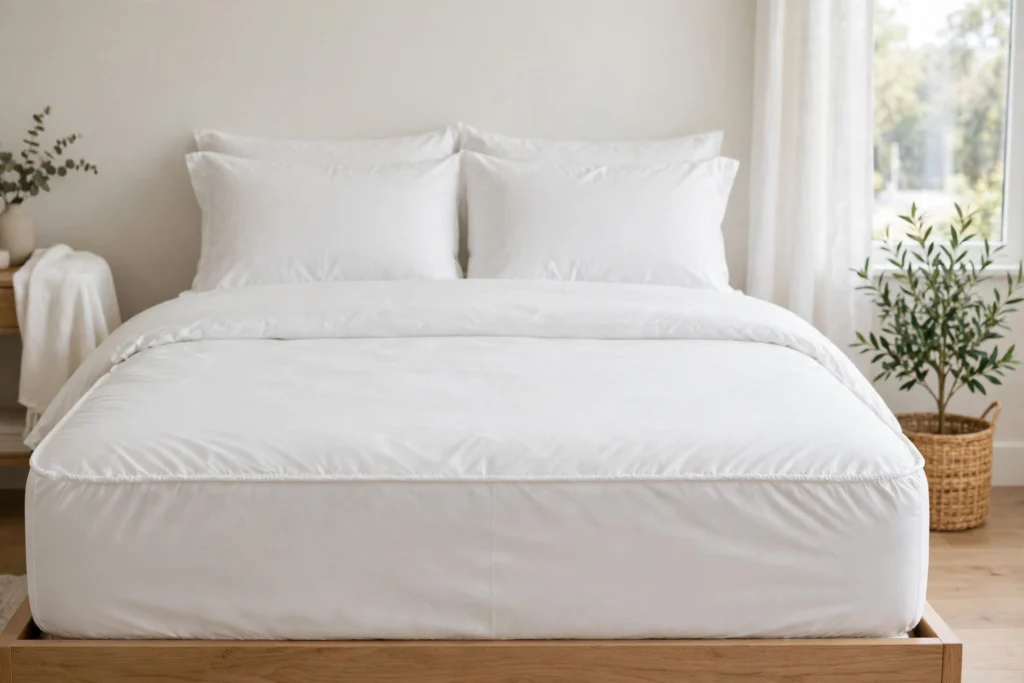
Between deep cleans, vacuum the mattress every 1 to 3 months and deep clean about every 6 months. Rotate it head to foot as the manufacturer recommends, so wear evens out instead of concentrating where you sleep.
Frequently asked questions
Can you use bleach on a mattress stain?
No. Bleach damages mattress fabric and foam, weakens fibers, causes discoloration worse than the stain, and can void the warranty. Use enzyme cleaners or the peroxide mix for stubborn stains instead.
How do you get dried urine out of a mattress?
Start with an enzyme cleaner, sprayed on and left for 15 to 30 minutes, then blotted. For a remaining mark, mist lightly with 1 cup of 3% hydrogen peroxide mixed with 3 tablespoons of baking soda and 1 drop of dish soap, let it dry, and vacuum. Repeat if needed.
How do you get blood out of a mattress?
Cold water only, always, since heat sets blood. Blot with a cold damp cloth from the outside in. On white or light covers, a 3% hydrogen peroxide spot treatment helps after the cold water blotting.
How long does a mattress take to dry after cleaning?
Several hours at minimum, often overnight. Open a window, aim a fan at it, or let sunlight reach it, and remake the bed only once it feels completely dry. A damp mattress can grow mildew inside.
Can you steam clean a mattress?
Not memory foam or latex, since heat and deep moisture damage the foam. For innerspring mattresses, check the manufacturer first. In most cases, vacuuming, spot cleaning, and baking soda do the job without the moisture risk.
How often should you clean a mattress?
Vacuum every 1 to 3 months and deep clean about every 6 months. Treat spills and stains immediately when they happen, and wash a waterproof mattress protector every month or two.
Conclusion
A mattress stain is not a lost cause. Blot it, treat it for what it is, use as little liquid as possible, and dry it completely. Sweat and yellow marks answer to the peroxide mix. Urine answers to vinegar and baking soda when fresh, and to enzyme cleaner when dried. Blood answers to cold water alone.
And the two rules that protect every mattress: never bleach, and never soak. Keep those, add a waterproof protector, and the next stain becomes a quick blot instead of an overnight project.
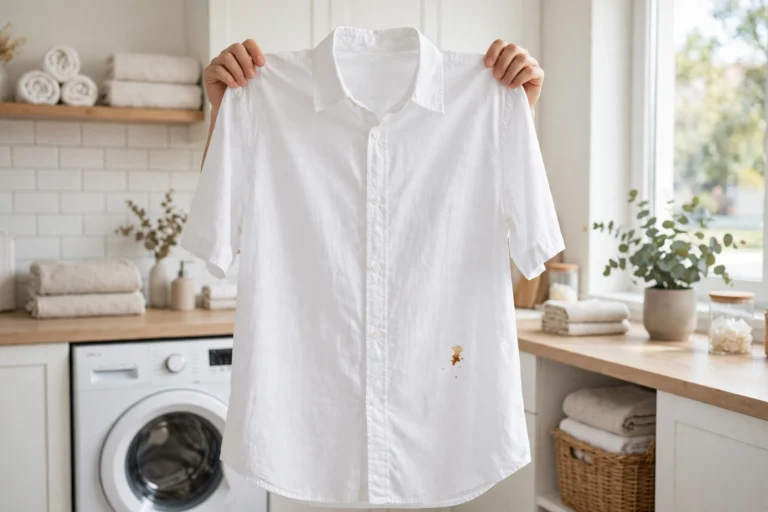
If the stain has also reached the bedding, the same sweat and yellow staining is covered in our guide to how to get stains out of white clothes.