How to Clean Oven Racks
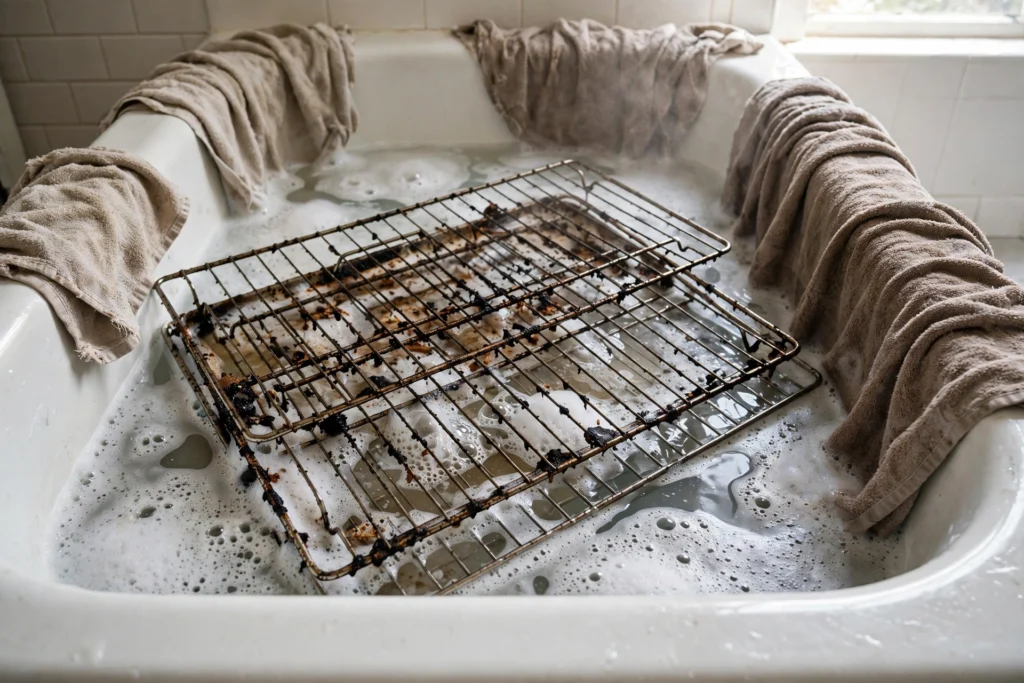
You pull the racks out and stop. They are coated in baked-on grease, burnt cheese, and drips from months of dinners, and they look worse than the oven itself. Scrubbing them dry feels hopeless, and you wonder whether anything short of a new set will fix them.
It will, and it does not take hours of scrubbing. The best way to clean oven racks is to soak them overnight in a bathtub of hot water and dish soap, then wipe them clean in the morning. Time does the hard work. Your job is mostly waiting.
What you need
- Old towels (to line the tub)
- Dish soap, 1/3 to 1/2 cup
- Baking soda, 1 cup (optional, for extra grease cutting)
- A non-scratch scouring pad or sponge
- Rubber gloves
- An old toothbrush for the corners
That is the whole kit. No oven cleaner, no special tools, and no need to take anything apart.
Method 1: The overnight bathtub soak (best for most racks)
This is the method to start with, especially for racks with heavy baked-on grease. The soak loosens what scrubbing alone cannot.
Step 1: Cool the oven and remove the racks. Never handle racks from a hot oven. Pull them out once the oven is fully cool, and carry them flat so they do not bend.
Step 2: Line the tub with towels. Lay old towels along the bottom and up the sides of the bathtub. This protects the tub from scratches and keeps the racks from sliding against the surface.
Step 3: Fill with the hottest tap water. Lay the racks in the tub and fill until they are fully submerged. Hot water softens grease far better than warm water, so use the hottest your tap gives.
Step 4: Add the soap. Pour in 1/3 to 1/2 cup of dish soap and swirl gently to distribute it. For very greasy racks, add 1 cup of baking soda as well. Do not add vinegar to this soak if you are using baking soda for grease cutting, since the acid cancels the alkaline cleaning action.
Step 5: Soak at least 4 hours, ideally overnight. Walk away. During this time the grease loosens and lifts without any scrubbing from you. Overnight is best for racks that have not been cleaned in months.
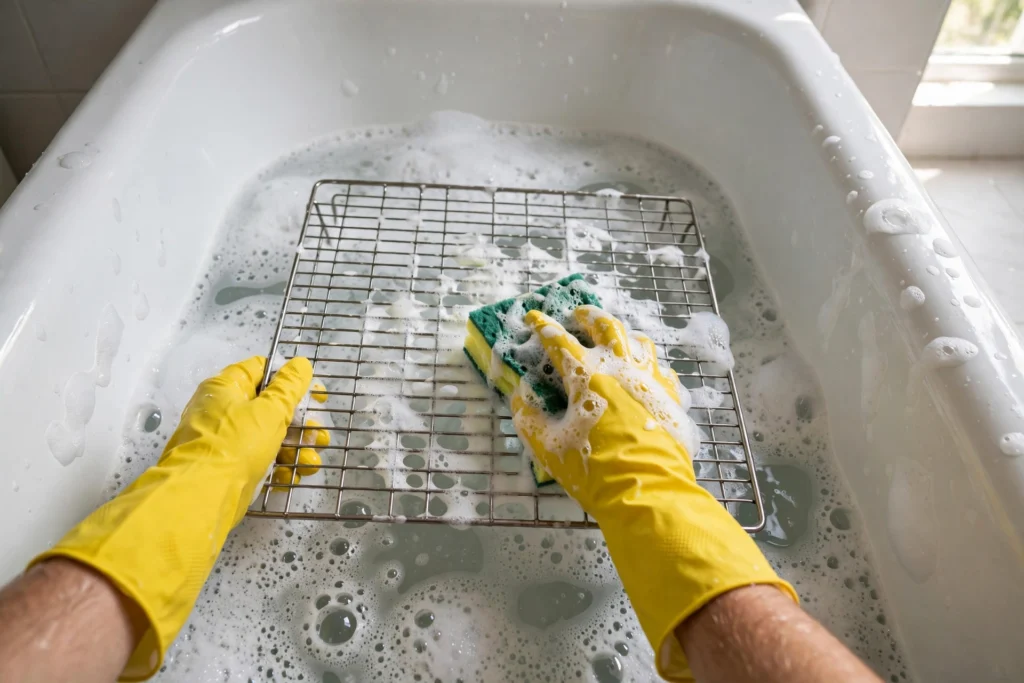
Step 6: Wipe, rinse, and dry. In the morning, wipe each wire with a non-scratch pad or sponge. The buildup should come off easily. Rinse each rack thoroughly under hot water, twice if you used a lot of soap, since leftover soap can smoke the next time the oven heats. Towel dry, then let the racks air dry fully before sliding them back in.
One cleanup note: the tub will hold greasy residue afterward. Rinse it out while it is still wet, and a drain strainer catches the loosened bits so they do not clog the drain.
Method 2: Baking soda paste (no bathtub, faster)
If you have no tub to spare, or you want the job done the same day, use a paste instead of a soak.
Mix 1/2 cup of baking soda with just enough water to make a thick paste. Spread it over the racks, getting into the corners and the undersides where drips collect. Let it sit for 5 to 7 hours, then scrub with a non-scratch pad and rinse thoroughly.
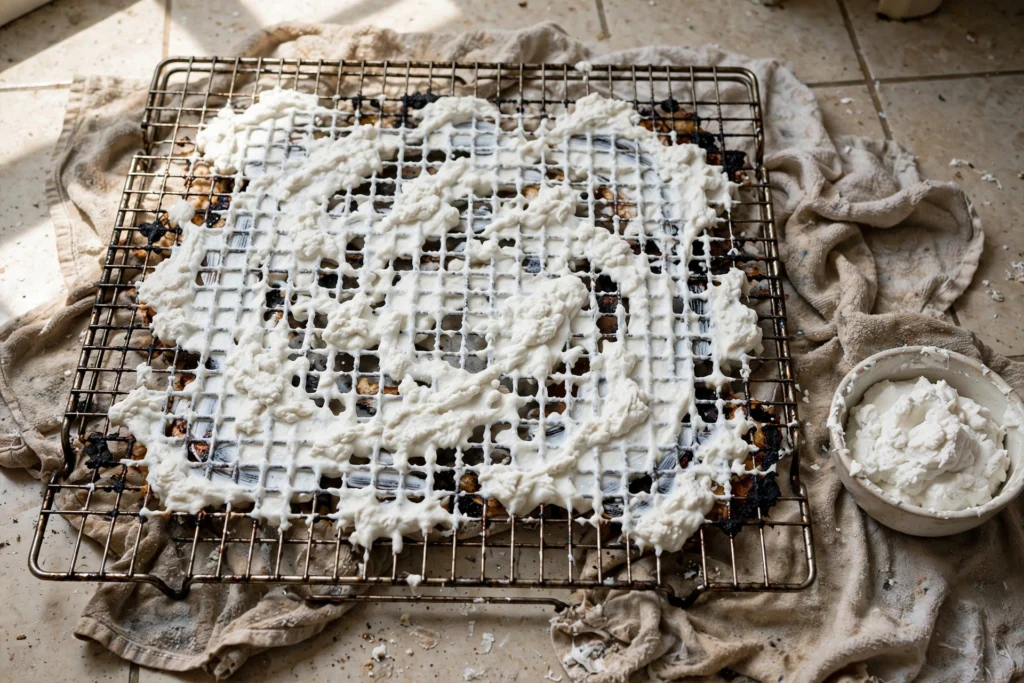
For an even quicker version, put the racks in a large bin or sink, add 1 cup of baking soda and 1/2 cup of distilled white vinegar to the water, let the fizz settle, and soak for 15 to 30 minutes before scrubbing with dish soap. The whole job takes about an hour and a half, and it handles most moderate buildup.
One caution: do not use baking soda on aluminum racks or parts, since it can discolor the finish. If your racks are aluminum, stick to the dish soap soak.
Method 3: Dryer sheet soak (light grease, gentle option)
This one sounds unlikely, and the honest truth is that results are mixed. Many home cleaners swear by it, while at least one appliance parts source calls it entirely useless. Here is the fair version: it helps loosen light grease, and it will not rescue a rack covered in carbonized buildup.
Line the tub with towels, lay the racks in, and add 6 to 8 dryer sheets plus 1/2 cup of dish soap to hot water. Soak for at least 4 hours, ideally overnight, then wipe the racks with the softened sheets and rinse extremely well. The rinse matters more here than with any other method, because fabric softener residue has no business sitting near food.
Use this method for racks that are greasy but not crusted, and use the overnight soak for anything worse.
For the worst racks: the ammonia bag (last resort only)
Some racks are beyond soap and baking soda, coated in black carbon that nothing lifts. For those, the ammonia bag method works, and it is the strongest option in this article.
Place each rack in a large garbage bag, add 1/2 cup of ammonia, seal the bag tightly, and leave it outside or in a well ventilated space overnight. The fumes loosen the grime. The next day, wearing gloves, take the racks out, rinse thoroughly, and scrub any remaining spots.
Treat this method with respect. Work outside or with strong ventilation, wear gloves, and never mix ammonia with bleach, since the two together give off toxic gases. This is a last resort for extreme racks, not an everyday routine.
What never to do
Never leave racks in during a self-clean cycle. This is the one rule every manufacturer agrees on. Samsung, Frigidaire, LG, and NEFF all warn that the extreme heat of a self-clean cycle permanently peels the rack coating, discolors the racks, dulls the finish, and damages their ability to slide. Always remove the racks before starting a self-clean, and clean them separately.
Do not count on the dishwasher. Samsung manuals say not to put racks in a dishwasher, while NEFF says most racks are dishwasher safe. Since the brands disagree, the safe default is the hand soak, and you should check your own manual before trying the dishwasher.
Do not use steel wool on coated racks. It scratches through the coating and leaves marks that catch grease faster next time. A non-scratch pad or nylon brush is enough after a proper soak.
Do not put damp racks straight back in. Towel dry and air dry fully first. Damp racks come back with water spots, and a wet rack in a hot oven does the metal no favors over time.
If your racks slide stiffly after cleaning
This is common and easy to fix. Rub the side rail guides with wax paper, or wipe them with a cloth holding a few drops of cooking oil. The racks will glide smoothly again. Do not spray oil directly onto the racks.
How often should you clean oven racks?
A deep soak every 3 to 6 months for average use, monthly if you roast or bake often. Racks that see weekly roasting build grease far faster than racks used for the occasional casserole.
Between deep cleans, wipe up drips and spills promptly. A drip wiped today is a spot that never becomes the carbonized crust you have to soak overnight later.
Frequently asked questions
Can you clean oven racks in the dishwasher?
It depends on the brand. Samsung manuals say not to put racks in a dishwasher, while NEFF says most racks are dishwasher safe. Since brands disagree, the safe default is a hand soak, and you should check your own manual first.
Can I leave oven racks in during the self-clean cycle?
No. Every major manufacturer warns against it. The extreme heat peels the rack coating, discolors the racks, dulls the finish, and damages their slide ability. Always remove the racks before a self-clean and clean them separately.
Do dryer sheets really clean oven racks?
For light grease, they help. Soak the racks overnight in hot water with 6 to 8 dryer sheets and dish soap, then rinse extremely well to remove all fabric softener residue. For heavy carbonized buildup, use the overnight soap soak or the ammonia bag method instead.
How long should you soak oven racks?
At least 4 hours for moderate grease, overnight for heavy buildup. The longer soak is what makes the morning wipe easy, so overnight is the best choice for racks that have not been cleaned in months.
Can I use commercial oven cleaner spray on racks?
Yes, following the label exactly. Spray the racks, seal them in a bag if the label says so, wait the stated time, and rinse thoroughly. Work in a ventilated space and wear gloves, since oven cleaner is caustic.
How do I keep oven racks from getting bad again?
Wipe drips promptly, deep soak every 3 to 6 months, and slide a sheet of foil on the rack below a dish that tends to bubble over. Small habits keep the next clean to a quick soak instead of an overnight rescue.
Conclusion
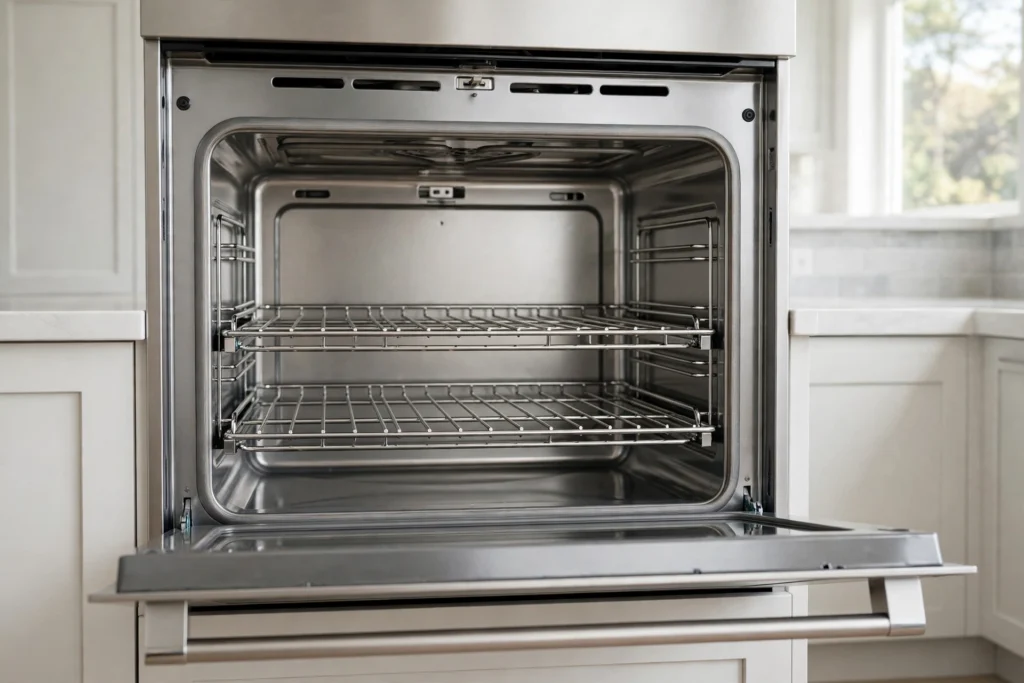
Oven racks do not need brute force. They need time in hot soapy water. Soak them overnight, wipe them in the morning, and rinse well. Use the paste for a faster job, the dryer sheets for light grease, and the ammonia bag only for the worst cases.
And whatever else you do, take the racks out before the self-clean cycle. That single habit protects the coating, the finish, and the smooth slide, so the racks you just cleaned stay worth cleaning.
Once the racks are back in, keep the rest of the kitchen looking just as good — see our guide to how to clean stainless steel appliances.