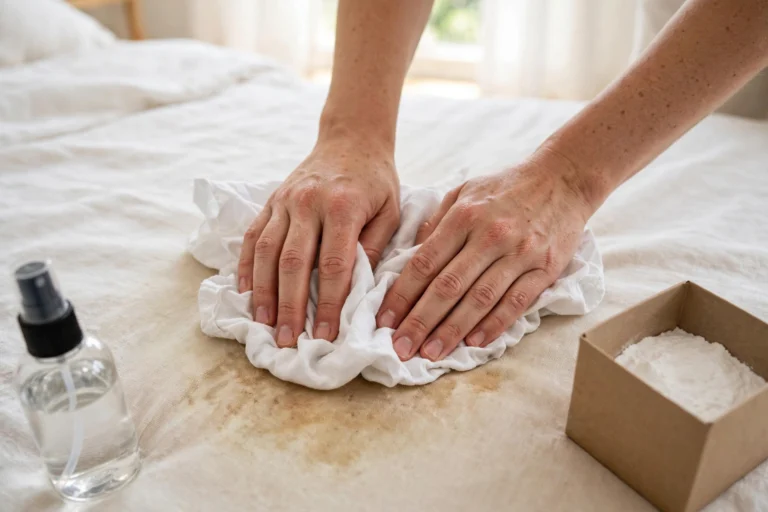
How to Get Stains Out of White Clothes
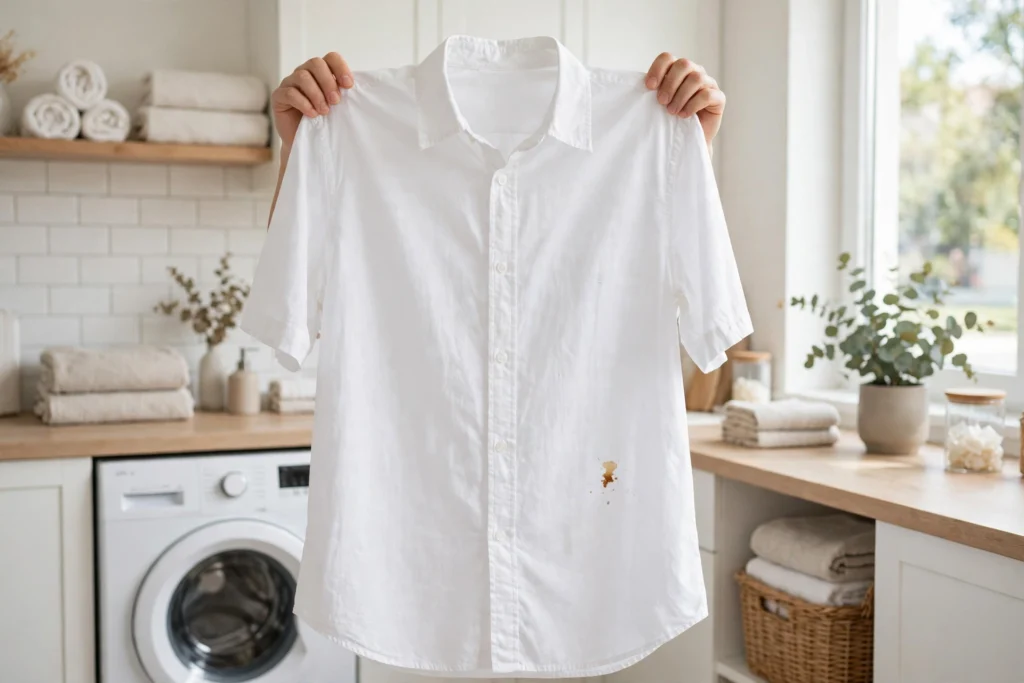
To get stains out of white clothes, act fast: blot the stain, rinse it with cool water, pre-treat it with liquid laundry detergent for 10 to 15 minutes, wash in warm water, and check the stain before anything goes in the dryer. That routine handles most fresh stains, and the stain-specific fixes below handle the stubborn ones like sweat yellowing, coffee, grease, and blood.
White clothes show everything. A coffee splash at breakfast, yellow underarms on a favorite shirt, a grease spot from lunch, and suddenly the shirt you loved looks tired. The good news is that white fabric is actually forgiving, because you can use stronger whitening treatments on it than on colors. You just have to match the treatment to the stain, and never let heat set the stain first.
What you need to get stains out of white clothes
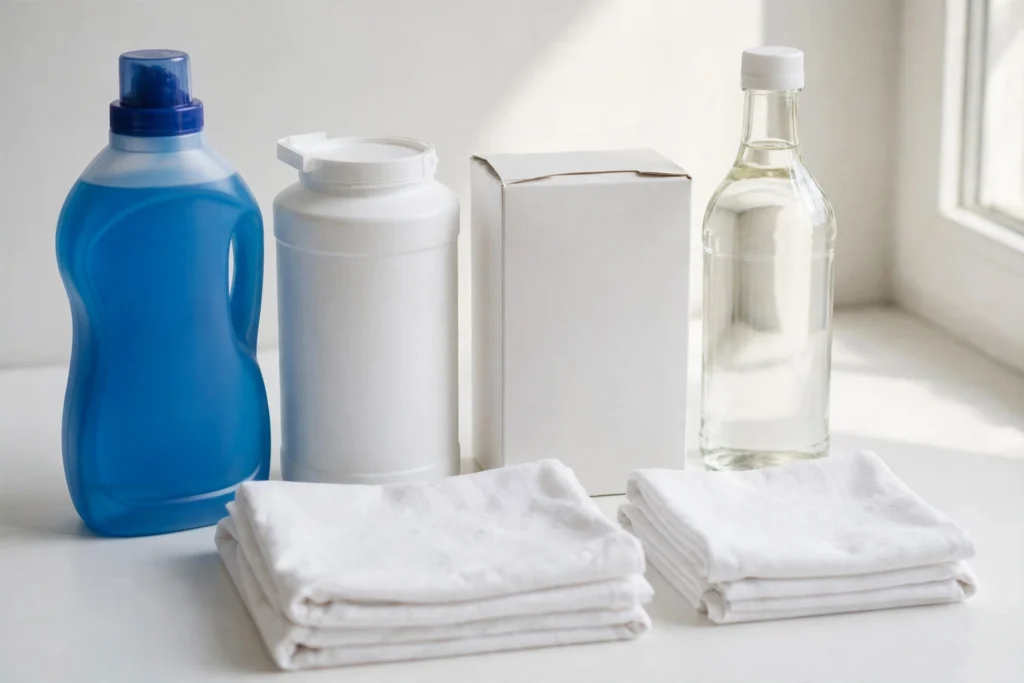
- Liquid laundry detergent or a prewash stain remover
- Oxygen bleach (non-chlorine, powder or liquid)
- Baking soda
- White vinegar
- 3% hydrogen peroxide
- Grease-cutting dish soap
- Clean white cloths
- A soft toothbrush or laundry brush
- A bucket or basin for soaking.
How to get stains out of white clothes step by step
Work through these steps in order. Most fresh stains come out by step 5, and the stain-specific sections below cover the ones that need more.
- Blot, do not rub. Lift off any excess with a clean cloth. Rubbing pushes the stain deeper into the fibers and can fuzz the fabric.
- Rinse from the back. Turn the garment inside out and run cool water through the back of the stain, so the stain moves out of the fabric instead of deeper in. For grease, skip the rinse and go straight to pre-treating.
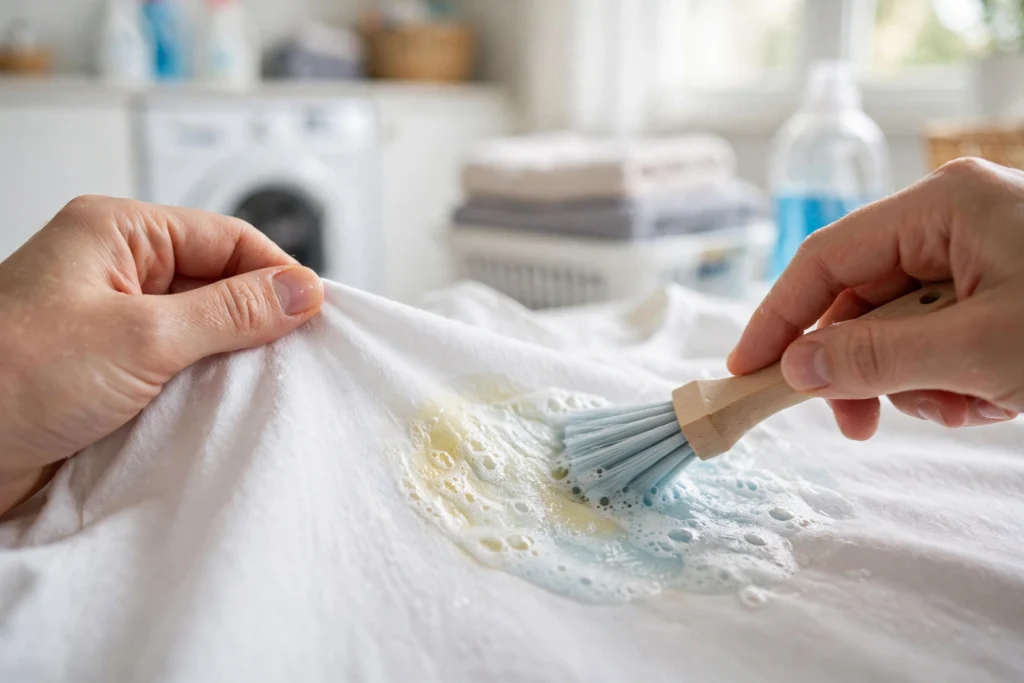
- Pre-treat. Work a few drops of liquid laundry detergent into the stain with your fingers or a soft brush. Let it sit for 10 to 15 minutes. For grease stains, use dish soap here instead of detergent.
- Soak if it is stubborn. Dissolve oxygen bleach in warm water following the package directions, and soak for 1 to 6 hours, or overnight for old stains. Dissolve the powder fully first. Never pour powder straight onto wet fabric.
- Wash, then check before drying. Wash with whites only, in the warmest water the care label allows. When the cycle ends, check the stain in good light. If it is still there, repeat the treatment. Never put a stained garment in the dryer, because heat sets the stain and can make it permanent.
How to remove yellow sweat stains from white shirts
Yellow underarms are the most common white shirt problem, and they have a specific cause. Sweat on its own is almost colorless. The yellow comes from aluminum compounds in antiperspirant reacting with sweat and body oils, building up a little more with every wear.
For mild to moderate yellowing, make a paste of 4 tablespoons of baking soda and a quarter cup of water. Work it into the underarms, let it sit for 30 to 60 minutes, then wash as usual. For stubborn yellowing on white cotton, mix equal parts 3% hydrogen peroxide and water with a drop of dish soap, apply it to the stain, let it sit for 30 minutes, then wash. Use peroxide only on whites. For old, set-in yellowing, use the oxygen bleach soak overnight.
Never use chlorine bleach on sweat stains. It reacts with the antiperspirant residue and can turn the yellow darker. Oxygen bleach is the right choice here. Two habits prevent the problem from coming back: let your deodorant dry fully before you put a shirt on, and wash white shirts after every wear instead of letting sweat sit for days.
How to get coffee stains out of white clothes
Blot up the excess coffee right away, then rinse from the back of the fabric with cold water. Pre-treat with liquid laundry detergent and let it sit for 10 to 15 minutes, then wash in warm water. Do not reach for hot water first, because heat can set the tannins in coffee. If a faint brown shadow remains after washing, soak the garment in oxygen bleach solution before washing again, and check before drying.
How to remove grease stains from white clothes
Scrape off any solid grease, then apply grease-cutting dish soap directly to the stain and work it in gently with your fingers or a soft brush. Let it sit for 10 to 15 minutes. Wash in the hottest water the care label allows, because heat helps lift grease once the soap has broken it down. If the spot is still visible after washing, repeat the dish soap treatment before the garment goes anywhere near the dryer.
How to get blood out of white clothes
Blood follows a different rule from every other stain here: cold water only, always. Rinse the stain under cold water right away, then pre-treat with liquid detergent or an enzyme detergent and let it sit. For a dried stain, soak in cold water with detergent or oxygen bleach. Wash in cold or warm water as the label allows. Never use hot water and never use the dryer until the stain is fully gone, because heat sets protein stains like blood, egg, and milk.
Can you use bleach on white clothes?
Yes, but the kind of bleach matters more than most people realize, and this is where many white clothes get ruined.
Oxygen bleach is the default for whites. It is gentle enough for most washable fabrics, brightens gradually instead of stripping, and works best in warm water. Dissolve it fully before adding clothes, and give it time: 1 to 6 hours for a soak, overnight for old stains. Whirlpool and the American Cleaning Institute both recommend oxygen bleach as the safer everyday whitener, with chlorine bleach reserved for sturdy, labeled whites.
Chlorine bleach is stronger, but it comes with real costs. It weakens cotton fibers over repeated use and can yellow whites over time. Use it only on sturdy white cotton or linen, and only when the care label allows it. Never use it on wool, silk, spandex, or anything with elastic, and never use it on sweat stains, where it makes yellowing worse. Dilute it exactly as the label directs, and never pour it directly onto fabric.
One safety rule covers both: never mix chlorine bleach with vinegar or ammonia. The fumes are dangerous. Use one treatment at a time, and rinse the garment fully before trying a different one.
What not to do with stained white clothes
- Dryer before the stain is gone. Heat is the fastest way to make a removable stain permanent.
- Hot water on blood or other protein stains. Cold first, always.
- Chlorine bleach on sweat stains. It turns the yellow darker.
- Mixing bleach with vinegar or ammonia. Dangerous fumes, never worth it.
- Scrubbing hard enough to pill the fabric. Let the treatment do the work.
- Too much detergent. Excess detergent leaves residue that grays whites over time.
How to keep white clothes white
Wash whites separately, always, because dye from darker clothes rubs off onto whites. Use warm water for sturdy cotton whites and cool water for delicates and anything with elastic. Add an extra rinse cycle if your machine has one, since detergent residue is a major cause of graying. After washing, hang whites in sunlight when you can, because UV light gently brightens white fabric. Wash white shirts after every wear, and let antiperspirant dry before dressing, and your whites will stay bright far longer.
Frequently asked questions
Can you use bleach on white clothes?
Yes. Oxygen bleach is the safe default for most washable whites. Chlorine bleach is only for sturdy white cotton or linen when the care label allows it, and never on wool, silk, spandex, or sweat stains.
How do you get yellow sweat stains out of white shirts?
Work a baking soda paste (4 tablespoons baking soda and a quarter cup of water) into the underarms for 30 to 60 minutes, then wash. For stubborn yellowing, use equal parts 3% hydrogen peroxide and water with a drop of dish soap. Never use chlorine bleach on sweat stains.
Does hot or cold water work better on stains?
It depends on the stain. Start with cool water for protein stains like blood, sweat, and milk, because heat sets them. For general white laundry and grease, warm water or the hottest water the label allows works better.
Can you use vinegar on white clothes?
Yes. White vinegar in the rinse helps brighten whites, and a mix of equal parts vinegar and water left for 30 minutes helps with sweat residue. Never use vinegar together with bleach, and rinse fully between treatments.
Why do white clothes turn yellow?
The usual causes are antiperspirant reacting with sweat, detergent residue left by too much soap or too little rinsing, chlorine bleach overuse, and age and storage. Matching the treatment to the cause is what fixes it.
What if the stain is still there after washing?
Repeat the treatment before the garment dries. Soak in oxygen bleach solution overnight, wash again, and check in good light. Some stains need two or three rounds. Never put the garment in the dryer until the stain is gone.
Conclusion
White clothes do not need to be high maintenance. Act fast, match the treatment to the stain, and always check before drying. Most stains come out with detergent and a little patience, and the stubborn ones usually yield to an oxygen bleach soak. Keep chlorine bleach as the last resort for sturdy whites only, and your white clothes will stay bright instead of turning into cleaning casualties. If the same sweat staining has reached your bedding, see our guide to how to get stains out of a mattress.