21 Christmas Bedroom Ideas for Kids With Christmas Charm
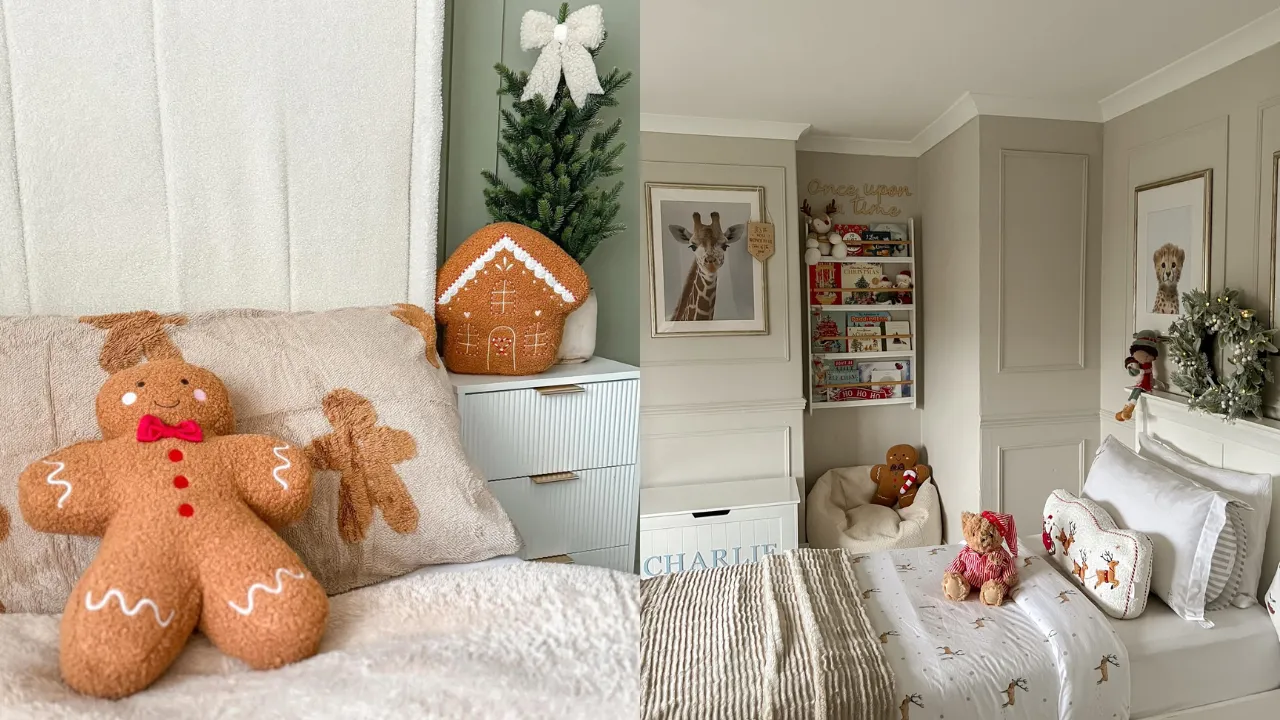
What if your child’s bedroom could feel like a tiny Christmas wonderland without turning into a cluttered holiday display? Christmas bedroom ideas for kids can bring that festive feeling right into their everyday space.
From playful bedding and woodland wreaths to twinkling corners, gingerbread details, colorful storage, and creative ceiling decor, small changes can make a child’s room feel completely different for the season. The goal is not to decorate every surface, but to choose details that make bedtime, reading, and play feel more special.
After working through different room setups, I’ve found that the most memorable kids’ holiday spaces often come from one strong feature rather than dozens of decorations. Whether the bedroom is large, small, shared, or filled with toys, these ideas offer simple ways to make it feel festive, personal, and fun.
1. Woodland Wreath Bed Retreat
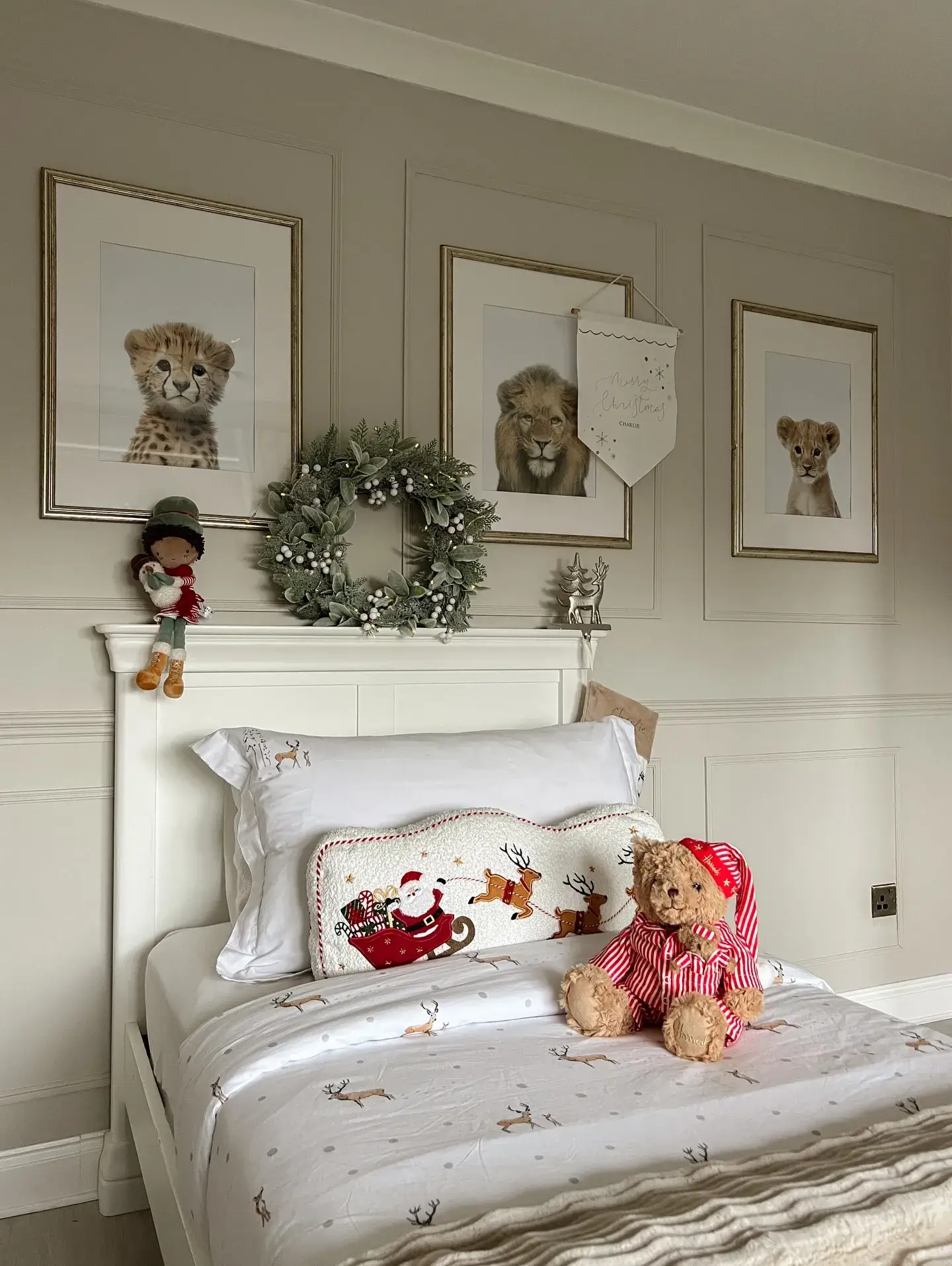
Source: lifeatno6_
• Center the wreath above the headboard so the bed remains the main focal point.
• Choose lightweight greenery that can be secured without damaging the wall.
• Let the bedding stay simple so the leafy shape remains easy to notice.
• Repeat one wreath color in a small pillow or blanket for balance.
Does a child’s bed ever feel like the whole room needs something extra? A large woodland wreath can solve that without filling every corner. Green foliage, tiny berries, and natural textures bring a cheerful seasonal touch while leaving plenty of room for books, toys, and bedtime routines.
Scale matters here. One generous wreath has more impact than several tiny decorations scattered across the wall. Let the bedding stay calm underneath it, then allow the wreath to carry the visual interest. In my experience, leaving some empty wall around a large piece makes it feel intentional rather than crowded.
Read More : 22 Christmas Bedroom Ideas for Festive Nights
2. Whimsical Hanging Swing Nook
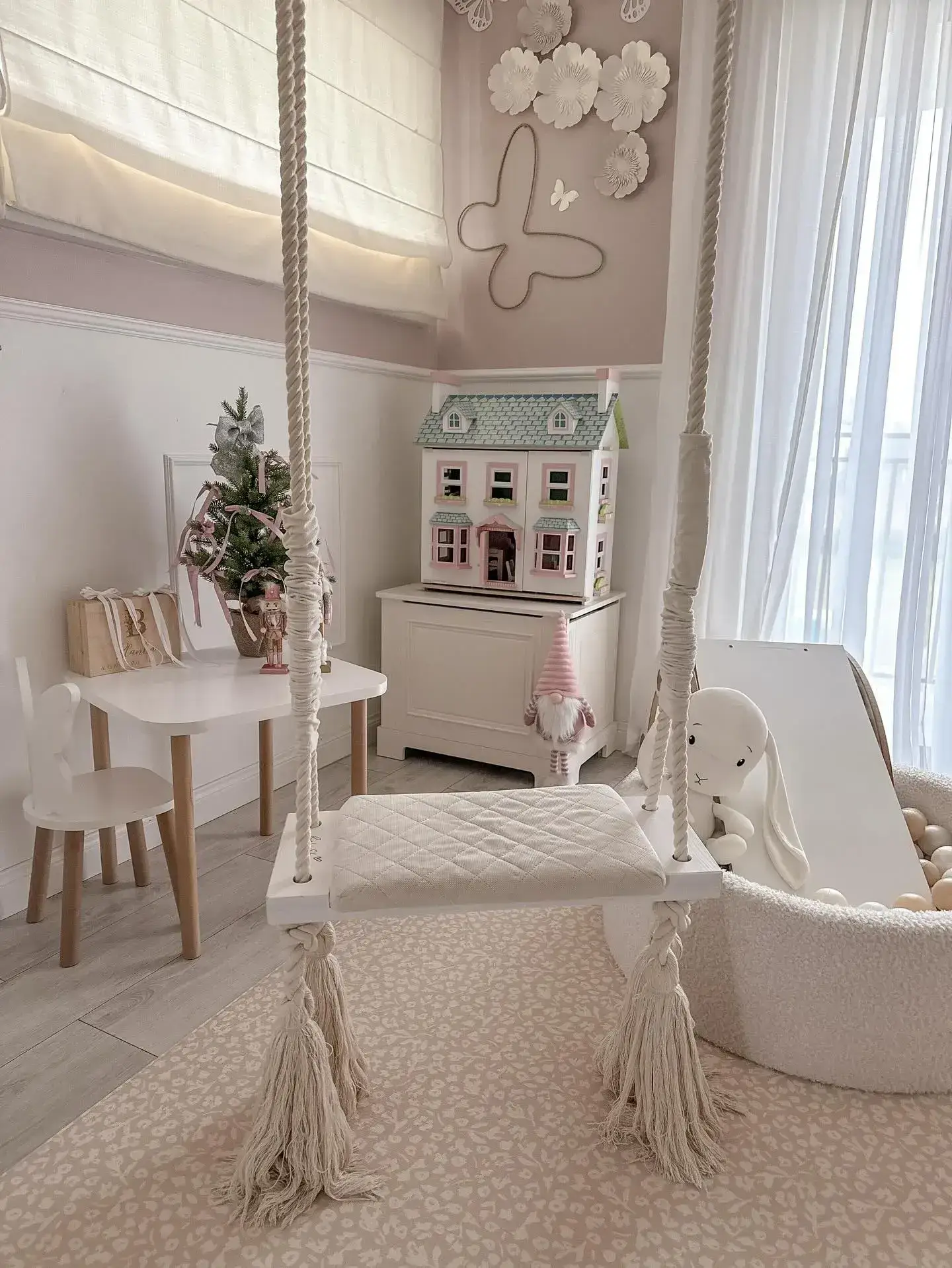
Source: life_of_rozalie
• Position the swing away from the main walking route around the bed.
• Use secure ceiling hardware designed to support a child’s swing.
• Add a removable cushion so the seat can double as a reading spot.
• Leave nearby floor space clear for safe movement.
That empty corner beside the bed could become the spot your child never wants to leave. A wooden swing turns unused floor space into a playful retreat, while a soft cushion makes it inviting for reading, quiet time, or gentle swinging after a busy day.
Placement matters more than decoration here. Give the swing enough open space to move without hitting furniture, walls, or shelves. Surrounding decor can stay simple so the unusual feature stands out. The rest of the room becomes a quiet backdrop for this little retreat.
3. Vintage Gnome Toy Corner
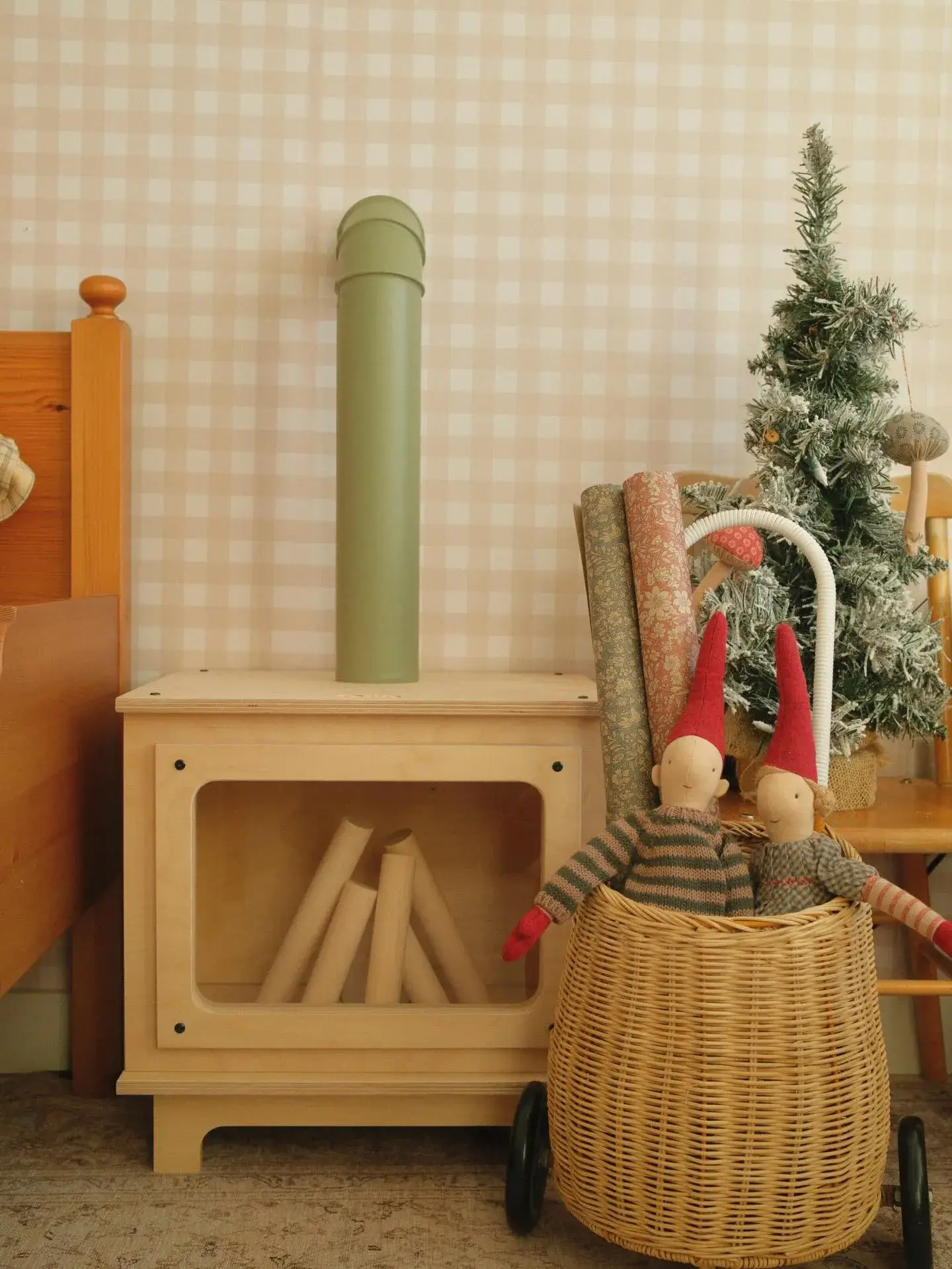
Source: my_oramood
• Arrange gnomes at different heights so every figure remains visible.
• Use low shelving that children can reach without climbing.
• Leave one shelf section open for rotating seasonal toys.
• Store everyday playthings in fabric bins underneath the display.
Some toys are too charming to hide in a storage bin. A shelf of little gnomes gives those familiar pieces a place to be seen, with textured hats, soft fabrics, and muted colors bringing personality to an otherwise ordinary bedroom corner.
Storage becomes part of the design when the shelf has room for both display pieces and everyday toys. Let the upper area breathe rather than filling every inch. A few figures surrounded by open space are easier to see, while the baskets below handle the messy toys that need to disappear quickly.
4. Rustic Bunkhouse Christmas Haven
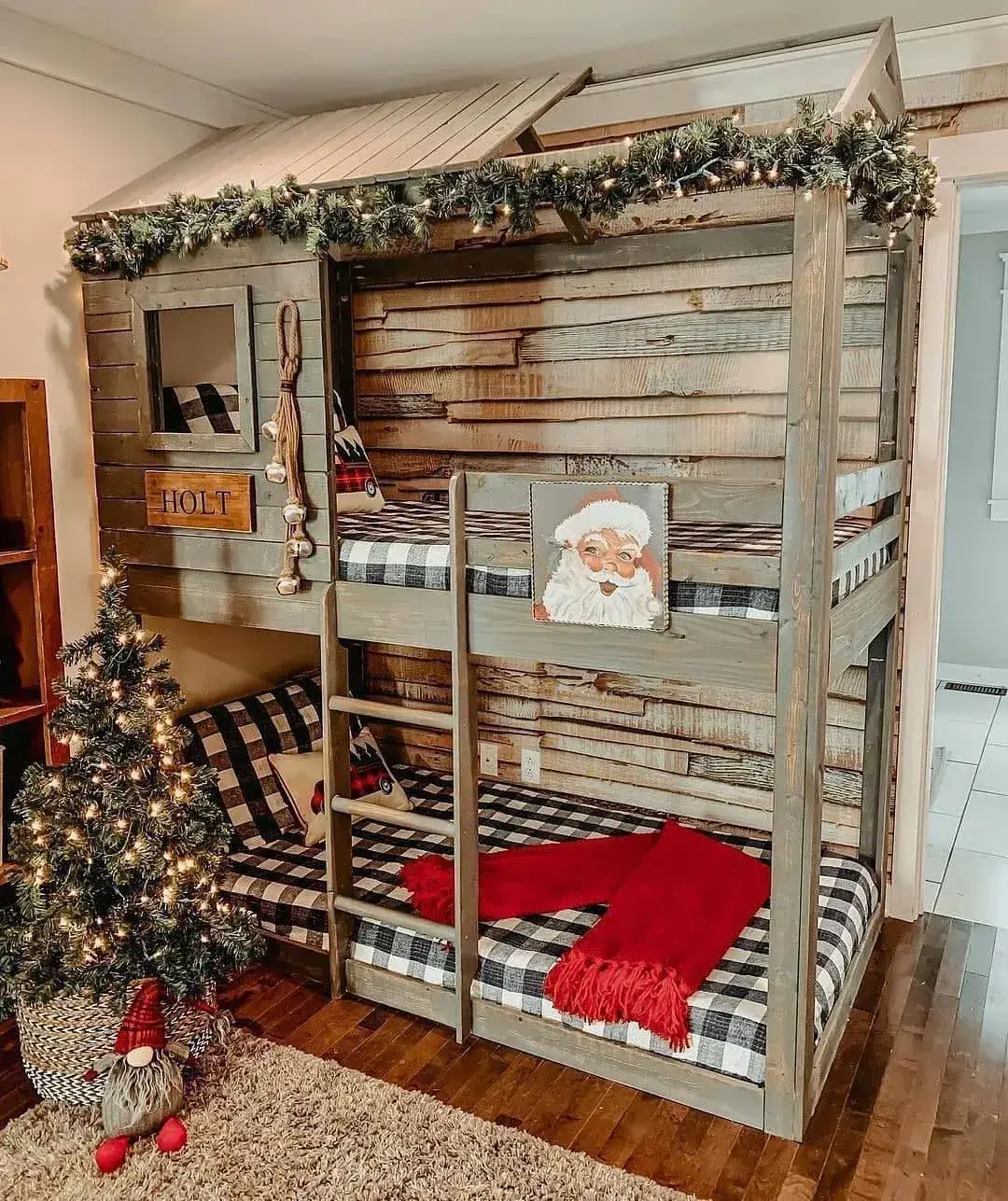
Source: thosehomeideas
• Hang greenery along the upper bunk rail to frame the sleeping area.
• Leave the ladder opening completely clear for safe climbing.
• Use warm wood tones to complement the bunk’s cabin character.
• Tuck small holiday accents into unused corners near the bed.
A bunk bed already feels like a secret hideout, so why not lean into that feeling? Warm timber, leafy garlands, and simple red accents turn the sleeping area into a tucked away holiday retreat while leaving the floor underneath open for play.
One detail is easy to overlook with bunk beds: the climbing route. Keep greenery firmly attached to the outer edges and leave the ladder and guard rails unobstructed. The sleeping surfaces should also stay free from loose pieces, so the setup remains playful while fitting naturally into everyday use.
Read More : 22 Apartment Christmas Door Decor Ideas for Renters
5. Gingerbread Cuddle Bed
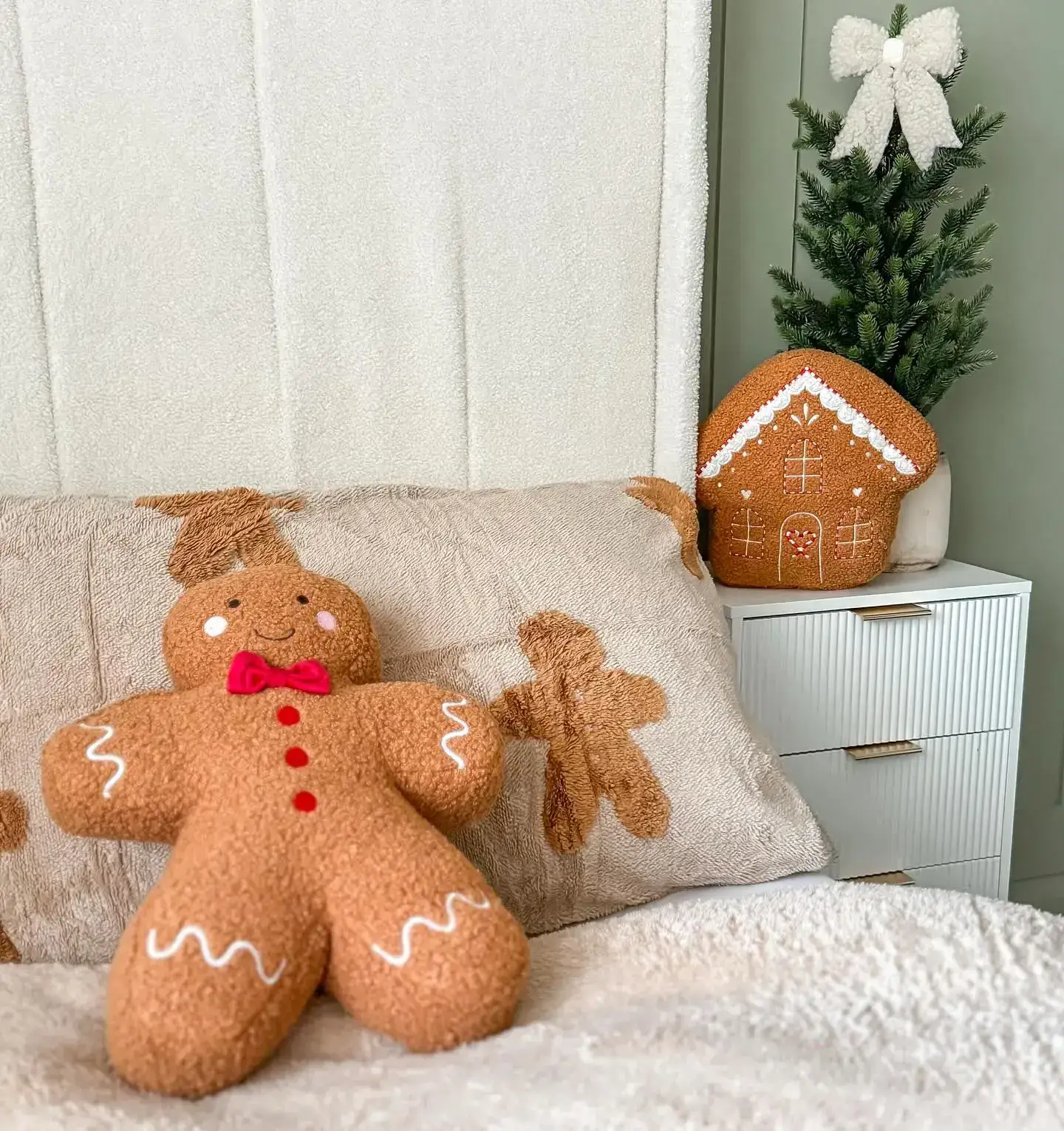
Source: raising._.boys
• Place the gingerbread figure near the pillow area as the main character detail.
• Choose washable bedding when plush toys are part of the sleeping setup.
• Move larger soft toys toward the side so children still have enough bed space.
• Repeat warm brown tones in one nearby accessory for a connected palette.
A giant gingerbread friend beside the pillows can turn an ordinary bedtime into something children look forward to. Its soft shape and warm brown color bring a playful bakery inspired touch, while neutral bedding keeps the bed from becoming visually busy.
Soft toys work best when they have a clear place rather than taking over the mattress. Position the largest character along one side and leave the center open for sleeping. A few smaller plush pieces can sit nearby, but too many quickly reduce usable space and make changing the bedding harder.
6. Festive Countdown Pocket Wall
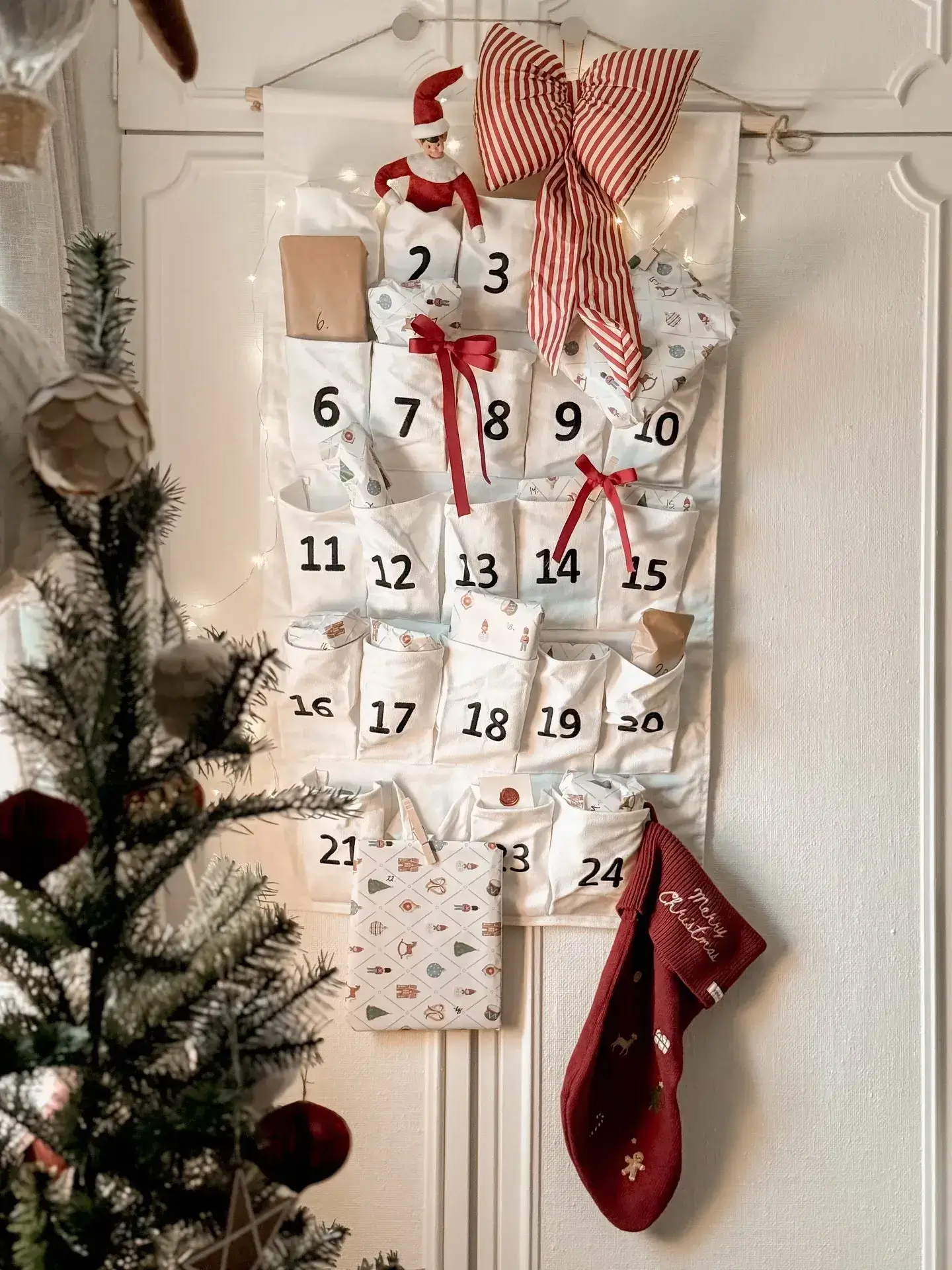
Source: sandrashem
• Hang the countdown pockets where children can reach them without climbing.
• Number each pocket clearly so the daily ritual stays easy to follow.
• Use small envelopes or fabric pouches for lightweight surprises.
• Place the display beside the bed rather than directly above the pillow area.
What makes a countdown calendar exciting is the little daily ritual, not just the decoration itself. A wall of numbered pockets gives children something to check each morning while bringing color and structure to an otherwise unused section of the bedroom.
Accessible placement makes the calendar more enjoyable for children. Leave enough wall around the pockets rather than surrounding them with extra decorations. The repeated shapes already provide plenty of visual interest, while open space helps the display feel organized rather than cluttered.
7. Starry Window Glow Corner
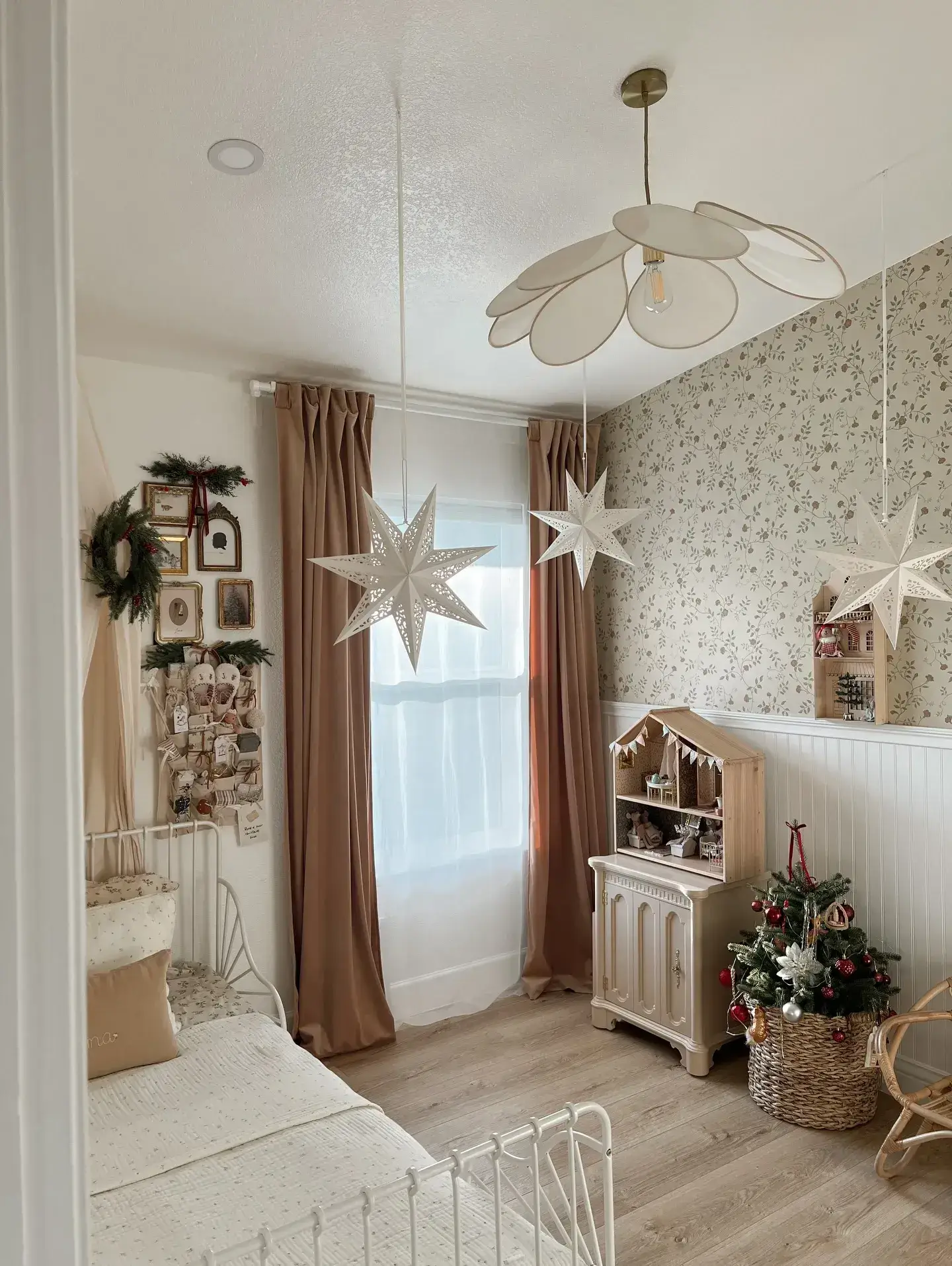
Source: khivukm
• Hang small stars around the window frame while leaving the glass mostly clear.
• Allow daylight to enter freely through the center of the window.
• Choose lightweight paper or fabric stars for easy seasonal removal.
• Place the reading seat slightly away from the curtains for easier access.
Ever notice how children gravitate toward windows when the light changes? A star filled window corner turns that everyday moment into a little holiday feature. Small hanging stars catch the daylight while a nearby seat gives the corner a clear purpose beyond decoration.
Framing the window gives the display its strongest effect. At night, soft room lighting can pick up the star shapes again, giving the same corner a different feeling. The open glass also keeps the bedroom connected to natural light instead of making the window feel covered.
8. Tiny Treasures Dresser Display
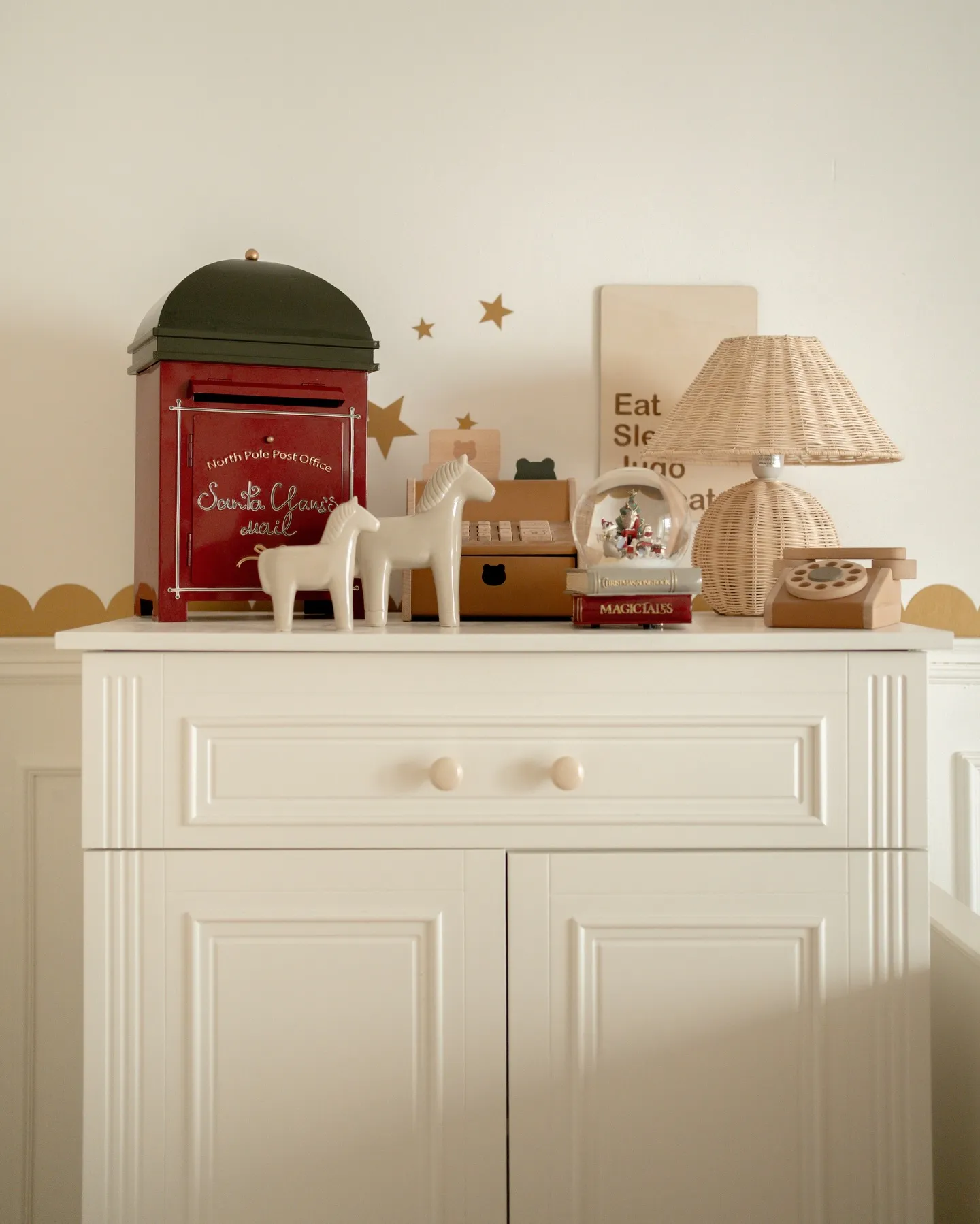
Source: j.homestories
• Reserve the dresser top for a small group of meaningful seasonal objects.
• Use a shallow tray to keep tiny pieces contained and easy to move.
• Place taller items toward the back so smaller treasures remain visible.
• Leave the dresser drawers accessible for everyday clothes and supplies.
Small objects can carry more personality than a room full of decorations. A little dresser display gives children a place for tiny treasures, figurines, and seasonal keepsakes while keeping the rest of the bedroom free for play.
Grouping gives the collection a clearer shape than scattering pieces across the surface. A tray provides a visual boundary, while different heights keep the arrangement interesting. Avoid filling the entire dresser because children still need somewhere to place everyday things. That open area makes the display feel useful rather than obstructive.
9. Bunk Bed Light Hideaway
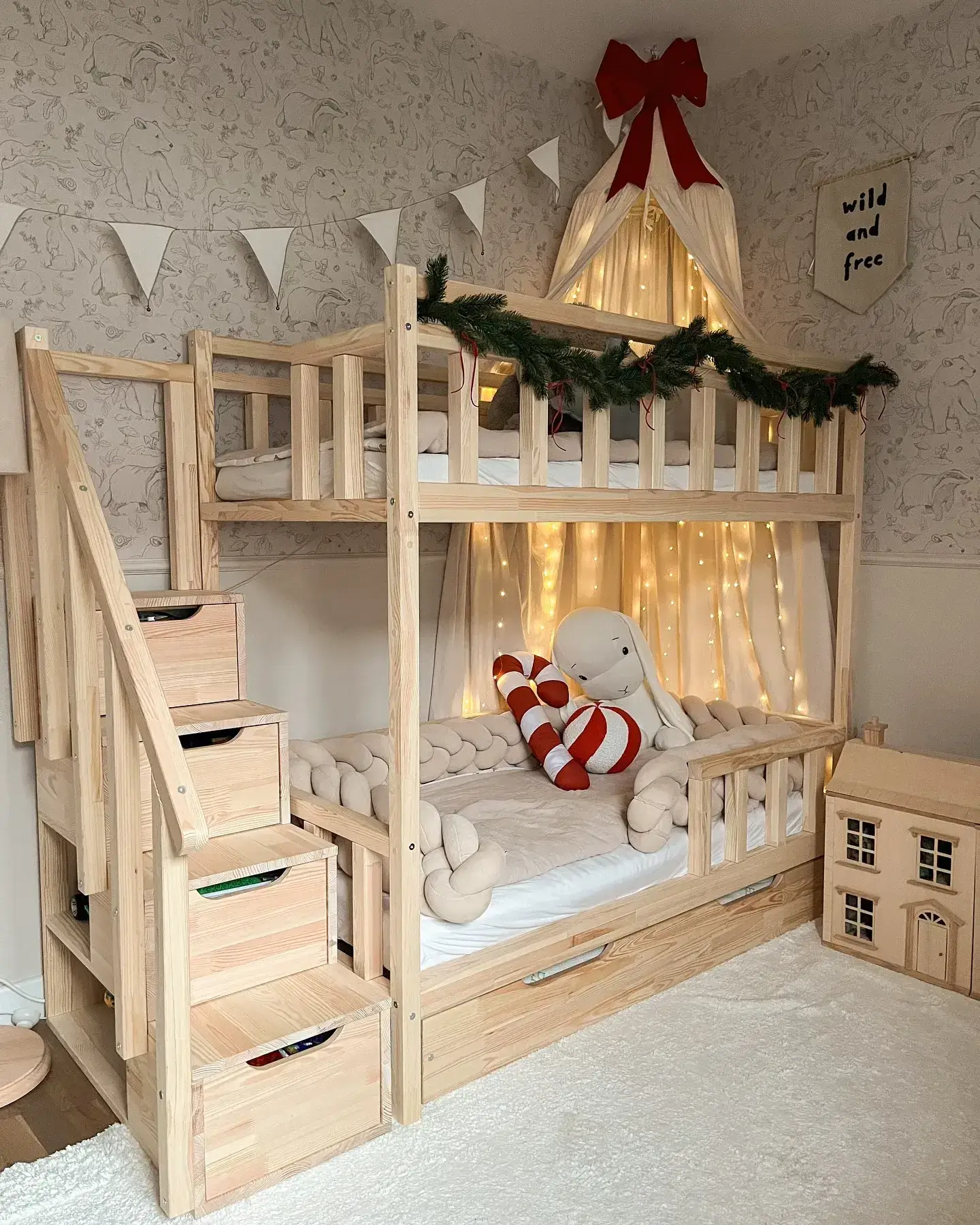
Source: nat_kowa
• Run soft lights along the outer bunk frame rather than across the ladder.
• Secure wires tightly against the structure and away from sleeping areas.
• Choose low heat decorative lighting designed for indoor use.
• Leave the lower bunk opening clear so children can enter and exit easily.
That little lower bunk can feel like a secret hideout once gentle lights outline its edges. Rather than decorating the whole bedroom, focusing on one sleeping nook gives children their own small retreat. The glow also makes the enclosed area feel separate from the rest of the room.
Lighting placement makes or breaks this setup. Keep every cable secured and away from places where hands or feet could catch them. I like outlining the outer frame while leaving the entrance open. That preserves the hideaway feeling without turning the ladder or doorway into a tangled decoration zone.
10. Candy Cane Sleepover Retreat
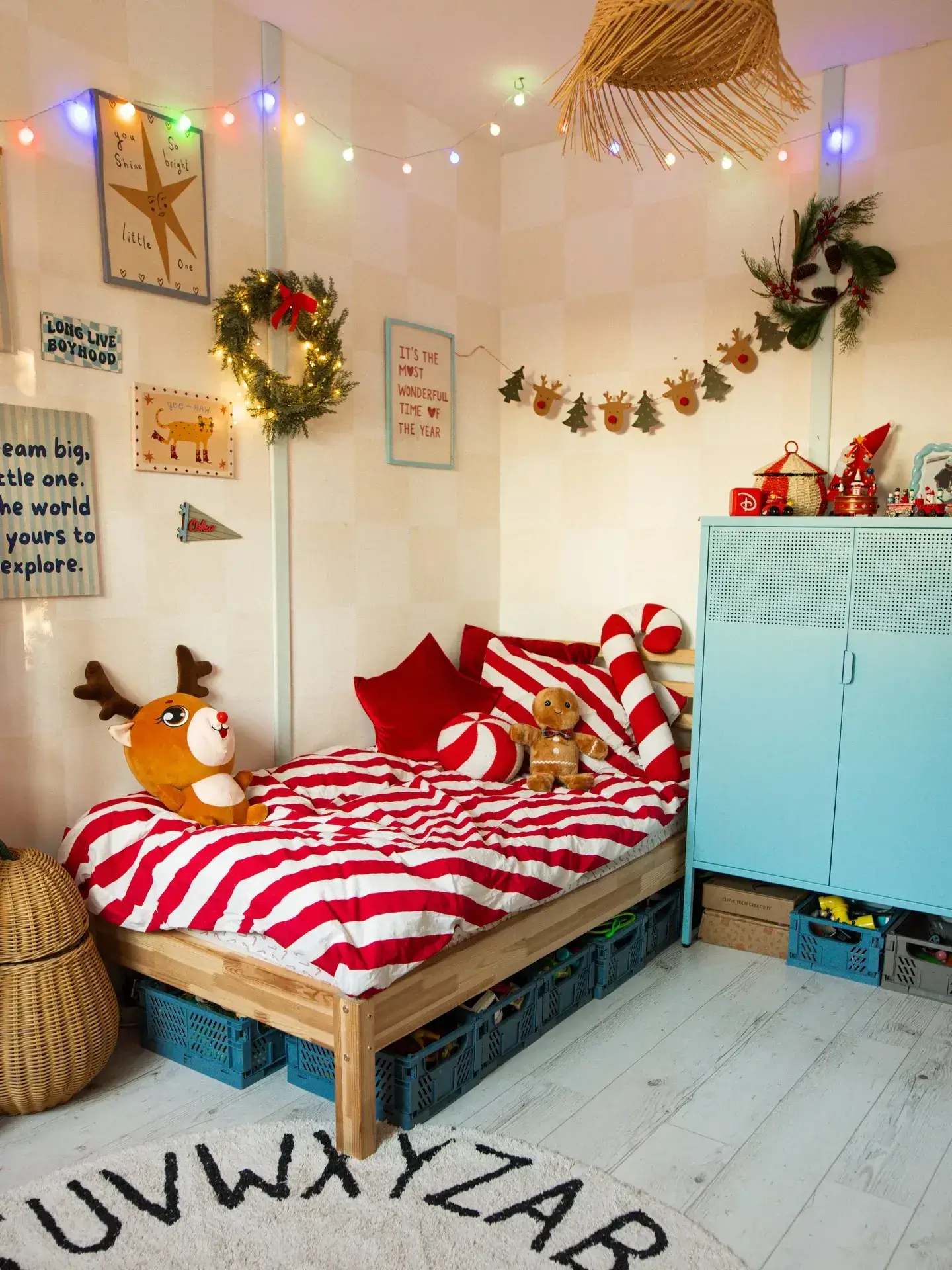
Source: iizasuper
• Layer red and white bedding to make the sleeping area feel playful without covering it in decor.
• Use striped cushions as the main pattern instead of mixing several prints.
• Leave floor space open around the bed for sleepovers and play.
• Add one small basket nearby for extra blankets or stuffed toys.
Sleepovers feel more special when the bed looks ready for one. Red and white stripes bring that candy cane feeling straight into the bedding, while soft cushions make the setup inviting for kids who want to sit, read, or share stories before bedtime.
Let the bed carry most of the pattern. Too many striped accessories can make a smaller bedroom feel busy, so quieter walls and flooring help the bedding stand out. A nearby blanket basket also keeps extra layers within reach without crowding the mattress.
One practical detail makes the setup easier to live with: washable covers. Kids use their bedrooms actively, so seasonal bedding should handle more than one quiet night. Choose fabrics that can go through regular washing, then store the decorative layers together when the season ends.
11. Storybook Holiday Shelf
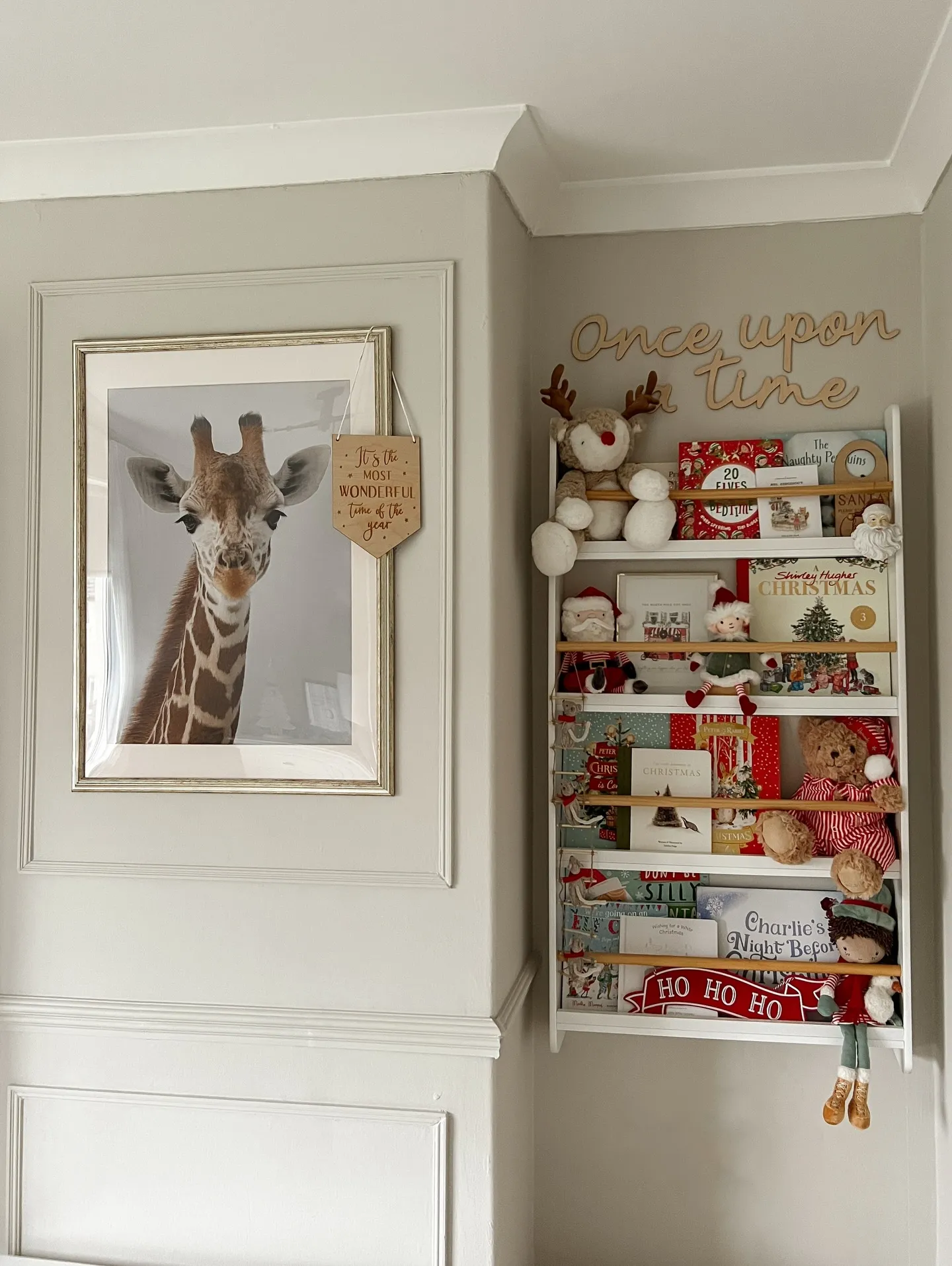
Source: lifeatno6_
• Display book covers facing outward so children can choose a story quickly.
• Use a narrow shelf that does not project far into the room.
• Mix different book heights to make the arrangement more playful.
• Place heavier books on the lower section for easier access.
A child who sees favorite stories waiting beside the bed is more likely to reach for one at bedtime. A small holiday book shelf turns colorful covers into decoration while keeping reading material close. The mix of illustrations, paper textures, and little characters brings life to an otherwise quiet wall.
Leave small gaps between the books rather than filling every inch. Those spaces help each cover stand out and stop the shelf from looking like ordinary storage. I always suggest rotating the titles through the season too. A few new covers can make the same shelf feel fresh without buying more decor.
The shelf can also become part of the nightly routine. Keep the most requested books at child height and place less-used titles higher up. That simple arrangement gives children some independence while keeping the bedroom organized. For smaller rooms, a shallow picture ledge can provide the same effect without taking precious floor space.
12. Canopy Twinkle Bed Nook
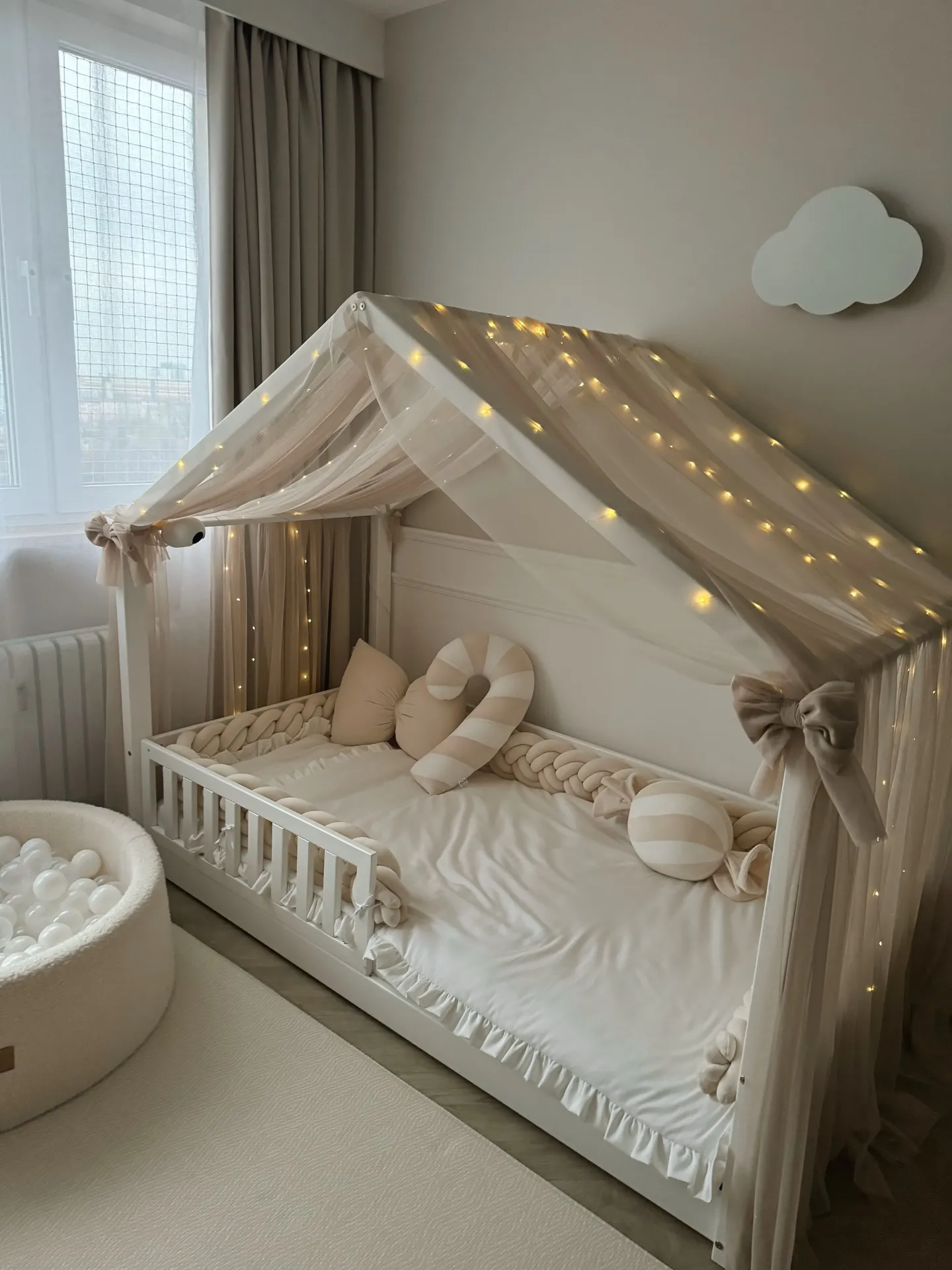
Source: nataliaxlaurka
• Drape fabric loosely around the upper canopy frame rather than the sleeping surface.
• Place lights along the outside edge where they are easy to inspect.
• Choose breathable cotton fabric for a lighter canopy effect.
• Keep hanging elements away from children’s faces and hands while sleeping.
A canopy already makes a bed feel tucked away, but tiny lights can take that feeling somewhere unexpected. Soft fabric around the frame gives the sleeping area a defined boundary, while small points of light draw the eye upward and make the bed feel like its own little nook.
Keeping the canopy light and open is the key. Heavy fabric can make a small bedroom feel closed in, while too many lights can compete with the child’s bedtime routine. Use just enough illumination to outline the frame, then let the surrounding walls and bedding stay quiet.
For everyday use, inspect the hanging pieces regularly and keep cords completely secured. The prettiest arrangement is still a practical sleeping space first. A little breathing room around the pillow area also keeps the nook comfortable instead of turning the canopy into a crowded overhead display.
13. Gingerbread Bedtime Hideaway
Source: lifeatno6_
• Place the gingerbread accents around the bed rather than across the whole room.
• Use warm brown, cream, and muted red for a bakery inspired palette.
• Position plush figures beside the bed so the sleeping area stays open.
• Choose washable covers for cushions that children use every night.
Some children want their bedroom to feel like a little holiday world, and gingerbread details can bring that feeling straight to bedtime. Warm brown shapes, cream fabrics, and tiny red touches give the bed a playful character without making the room feel overloaded.
Texture can carry the gingerbread theme without covering the room in matching objects. A knitted cushion or soft felt figure feels more tactile than several plastic decorations. In my experience, children respond especially well to pieces they can touch and move, not decorations that simply sit untouched.
Focus the strongest details around the headboard and bedside area. That gives the bed a clear identity while leaving enough open space for books, toys, and everyday routines. A small basket nearby can hold favorite bedtime companions once the room needs to switch from play mode to sleep mode.
14. Merry Bright Storage Station
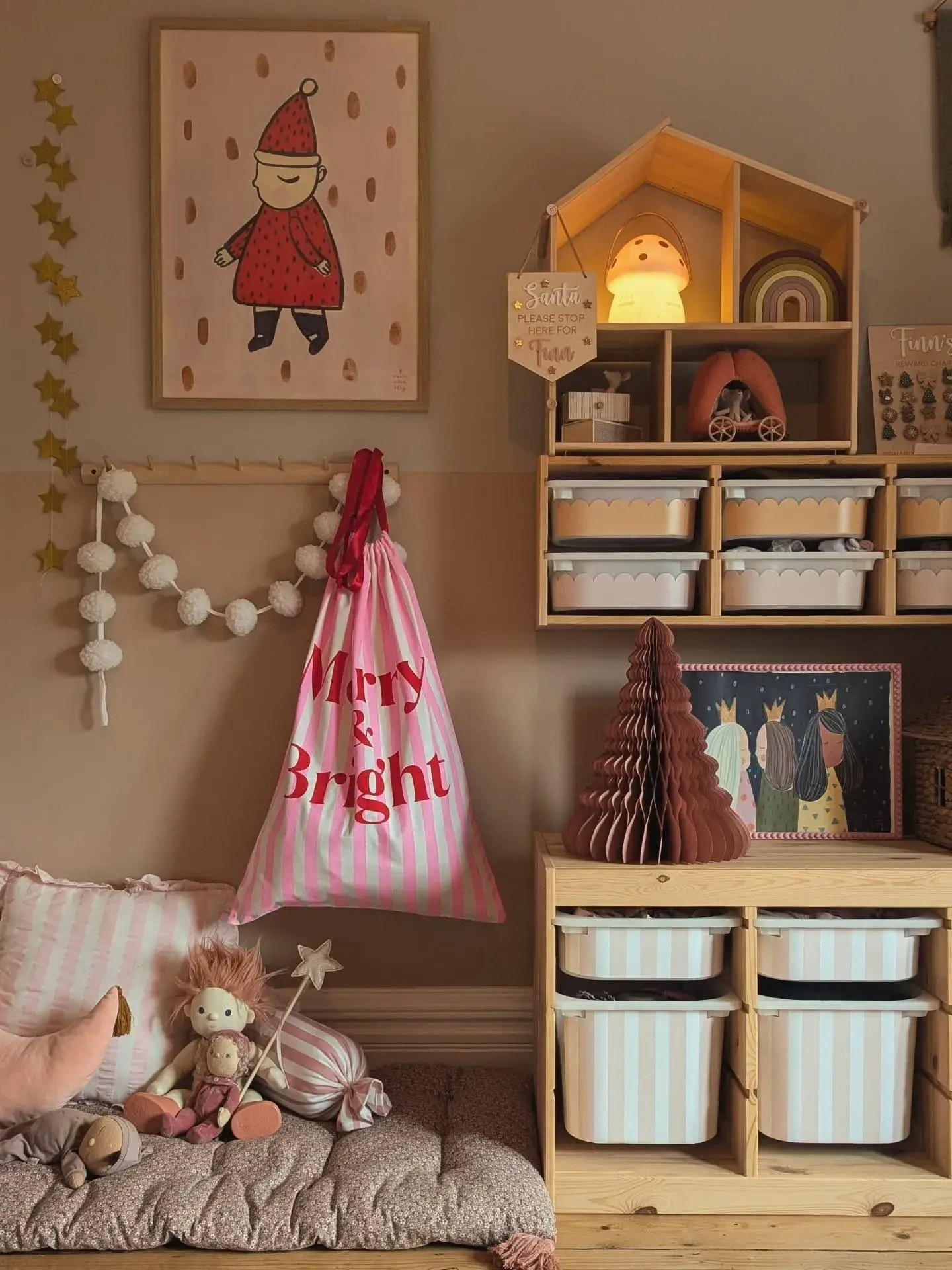
Source: reno_on_the_park
• Assign each basket a specific type of toy or clothing item.
• Use open bins for objects children need to grab throughout the day.
• Display the brightest seasonal pieces on the top shelf as visual accents.
• Label storage with simple words or pictures for younger children.
A colorful storage wall can do more than hide clutter. When every basket has a clear purpose, children know exactly where toys belong after playtime. Bright reds, greens, and cheerful patterns also bring seasonal energy without needing extra decorations scattered around the bedroom.
Place frequently used items on the lower shelves and reserve higher sections for things children need less often. I like this approach because the room can stay visually cheerful while the practical side remains simple enough for children to manage themselves.
Personal touches make a storage station feel like theirs. Add a favorite character label, a small framed drawing, or one handmade tag to a basket. Those little details give children ownership of the space, which can make tidying feel more like part of their routine than a task imposed by adults.
15. Starry Toybook Sleep Corner
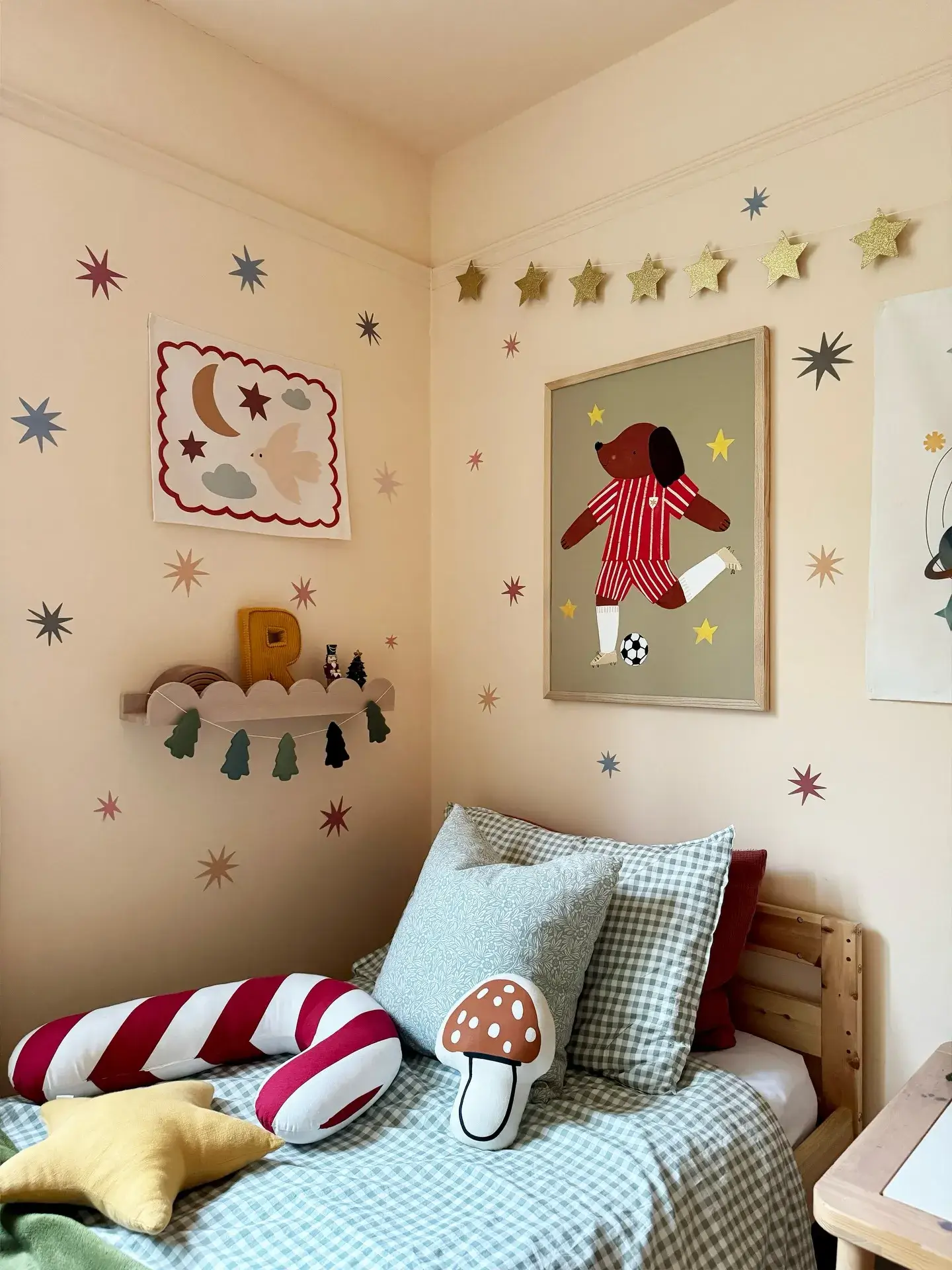
Source: kidofthevillage
• Combine favorite books and a few toys on one dedicated shelf.
• Place frequently used books on the lowest section for easy access.
• Concentrate star decorations around the display rather than the entire wall.
• Leave a small open section where children can place a new favorite item.
Books and toys often end up scattered around a child’s bed, but giving them one little corner changes that habit. A starry display shelf turns those everyday favorites into part of the room, with colorful covers and familiar toys bringing personality to the sleeping area.
Varying heights makes the arrangement much easier to read. Place books upright beside a few small figures rather than stacking everything in one pile. The open gaps matter too. They let the shelf breathe and give children somewhere to place a new treasure without rebuilding the whole arrangement.
One of my favorite tricks for kids rooms is leaving a small section intentionally unfinished. A child can choose what belongs there as the season continues. That tiny bit of freedom makes the decor feel personal and keeps the shelf from looking like something arranged only for a photograph.
16. Candy Cane Cabin Retreat
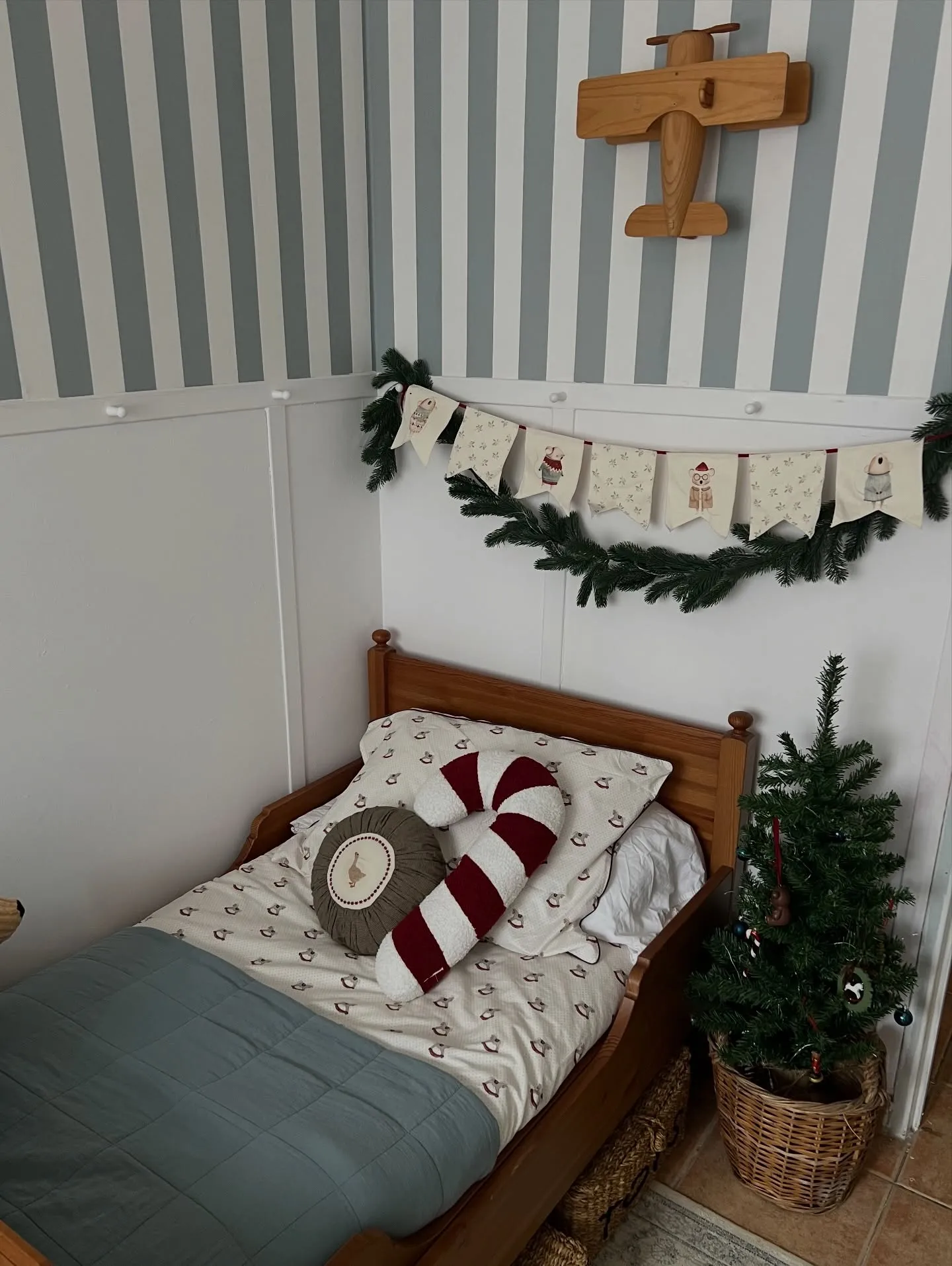
Source: aidaaguade_
• Use red and white stripes on one bedding layer rather than every textile.
• Bring in natural wood beside the striped fabric for a cabin feel.
• Position floor cushions away from the main walkway during everyday use.
• Choose one small green accent to break up the red and white palette.
A little cabin feeling can make bedtime feel like a change of scene. Red stripes, warm wood, and soft layers give the bed that tucked away lodge character without needing a full room makeover. The contrast between crisp white fabric and deeper red details keeps the setting lively for children.
Natural wood keeps the candy cane colors from becoming too sharp. A wooden stool, small shelf, or simple bed frame can soften the strong pattern. Rather than adding more holiday pieces, let the materials do the work. That gives the room character while keeping the decorating plan easy to recreate.
17. Ho Ho Travel Bed
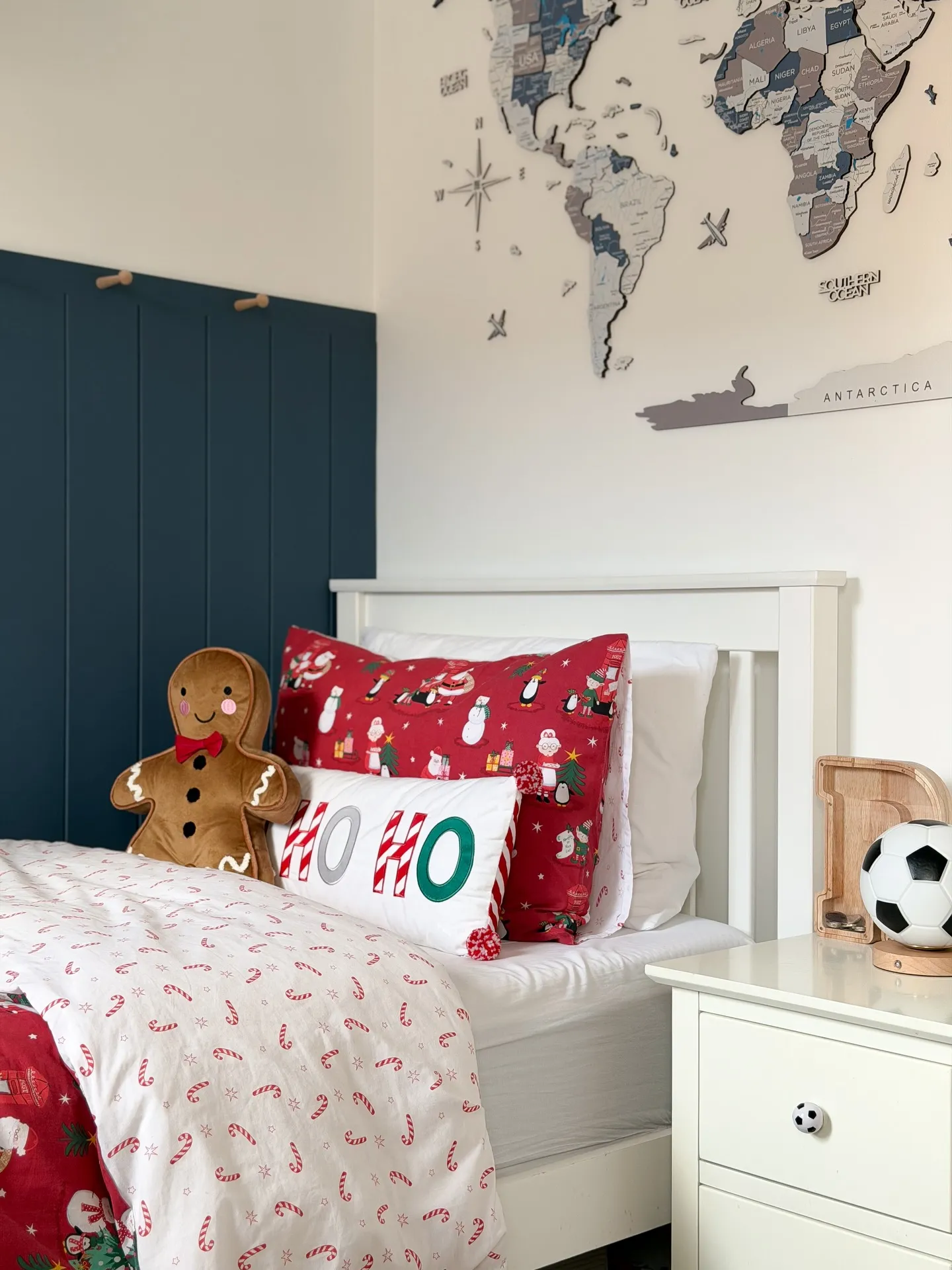
Source: lifewithtanya_xo
• Use a travel themed bed nook as the main playful feature.
• Keep suitcases or storage boxes beside the bed for practical use.
• Choose lightweight props that can be moved when children need floor space.
• Repeat one red accent across the bedding or wall art for visual connection.
What if bedtime could feel like setting off on a tiny holiday adventure? A travel inspired bed setup brings that playful feeling into the bedroom through luggage shapes, cheerful colors, and a little sense of movement. Children can enjoy the theme without the room needing dozens of decorations.
The best part is that travel pieces can serve a purpose after the season. A small suitcase can hold toys, books, or dress up clothes, while a trunk can store spare bedding. That makes the theme feel useful rather than temporary. Position larger pieces beside the bed so the main play area stays open.
A child’s favorite destination can also become part of the setup. Add a postcard, simple map print, or handmade travel tag connected to somewhere they talk about often. Those personal details give the room more meaning and stop the theme from feeling like a generic holiday display.
18. Nutcracker Stripe Sleep Zone
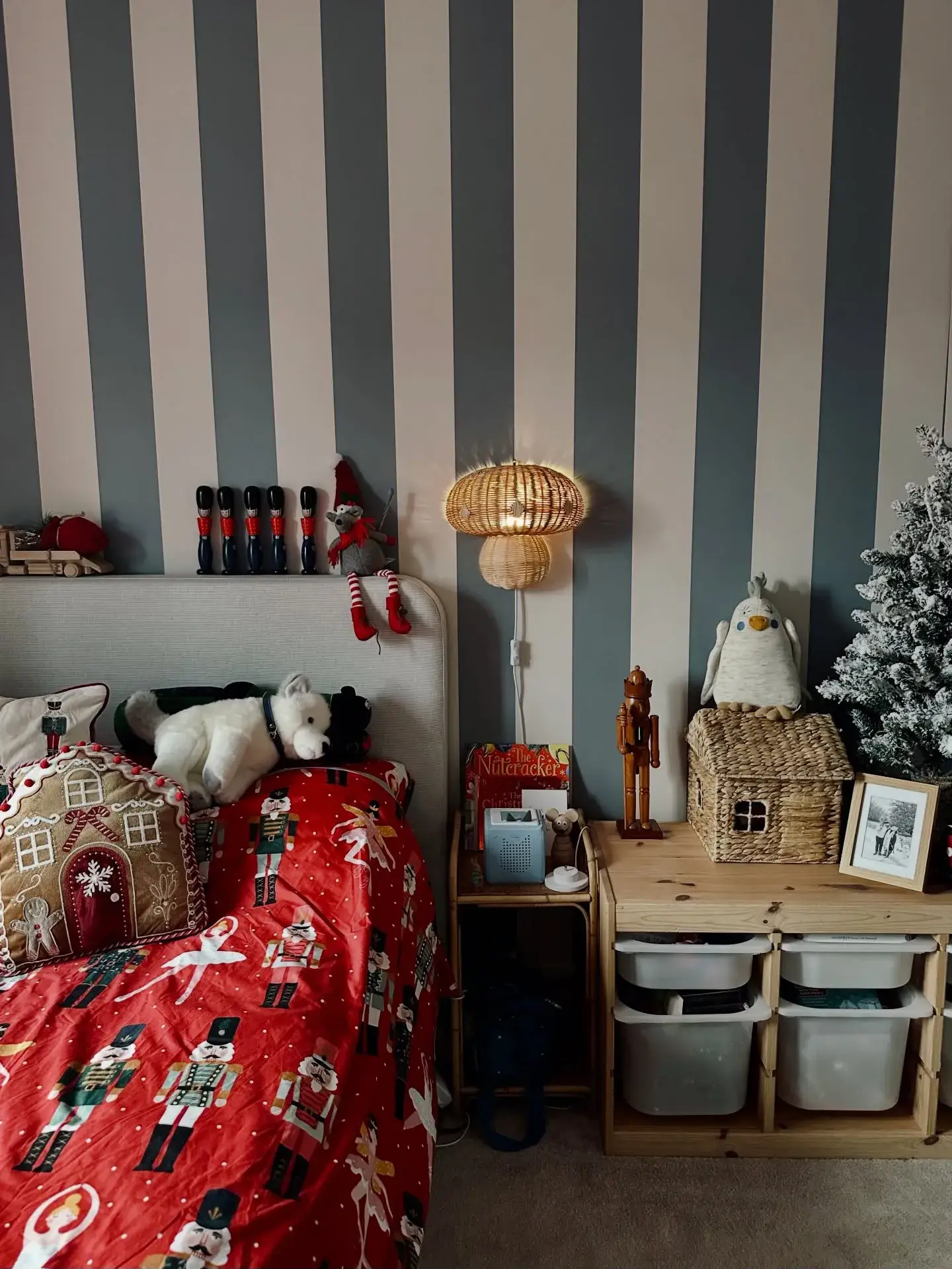
Source: ourownhygge
• Let striped bedding carry most of the visual pattern around the bed.
• Pair strong red stripes with cream rather than adding several bright colors.
• Display decorative figures on a nearby shelf rather than the mattress.
• Use solid curtains or walls to give the patterned bedding breathing room.
Bold stripes immediately draw attention, which makes them useful for defining a child’s sleeping zone. Red and cream bring a traditional holiday character to the bed, while solid surrounding surfaces stop the pattern from becoming overwhelming.
Repetition without excess is what keeps the palette balanced. Echo the stripe in one or two places, then let everything else stay quiet. Too many competing prints can make a small bedroom feel restless. A plain wall behind the bed gives the pattern enough visual space to stand out.
For a personal touch, let children choose one small nutcracker figure or ornament for the bedside shelf. Giving them one decorating decision makes the room feel more like their own. The small selection also keeps the display manageable when toys, books, and bedtime essentials begin filling the nearby surfaces
19. Playful Paper Chain Ceiling
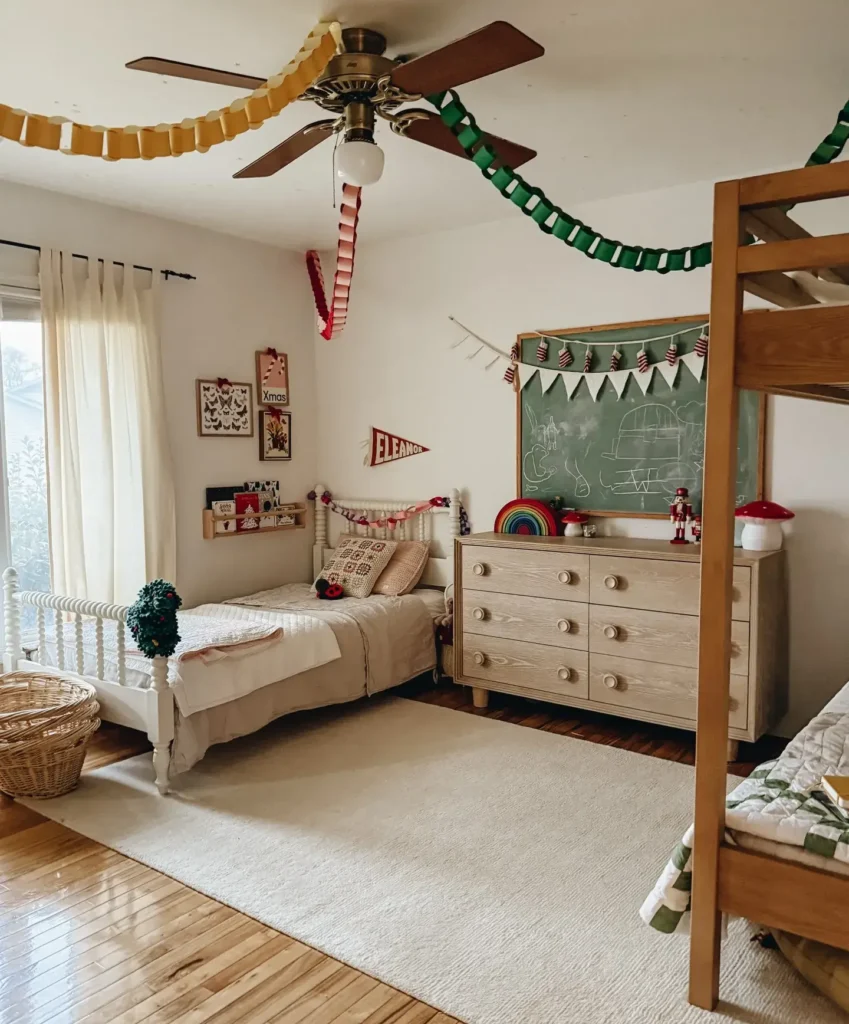
Source: leahfayegaeddert
• Hang paper chains in loose rows so the ceiling remains visually open.
• Keep the longest strands away from ceiling fans, lights, and doorways.
• Mix two or three paper colors instead of using a busy rainbow palette.
• Attach the chains with removable hooks to make seasonal cleanup easier.
A plain ceiling is easy to forget when decorating a child’s bedroom, but looking upward can reveal the most unexpected opportunity. Paper chains stretching overhead turn empty space into a playful canopy while leaving the walls, floor, and furniture free for everyday use.
Lightweight paper brings movement that wall decorations cannot offer. When a door opens or air moves through the room, the chains gently shift and catch the light. Space the rows apart rather than packing them tightly. That breathing room makes the ceiling feel playful instead of crowded.
For a personal touch, let children make some of the chains themselves. Uneven loops and slightly different paper folds give the ceiling character that store bought decorations cannot copy. Save their favorite handmade sections each year and add them back to the arrangement, turning the decor into a small family tradition.
20. Candy Cane Bed Frame
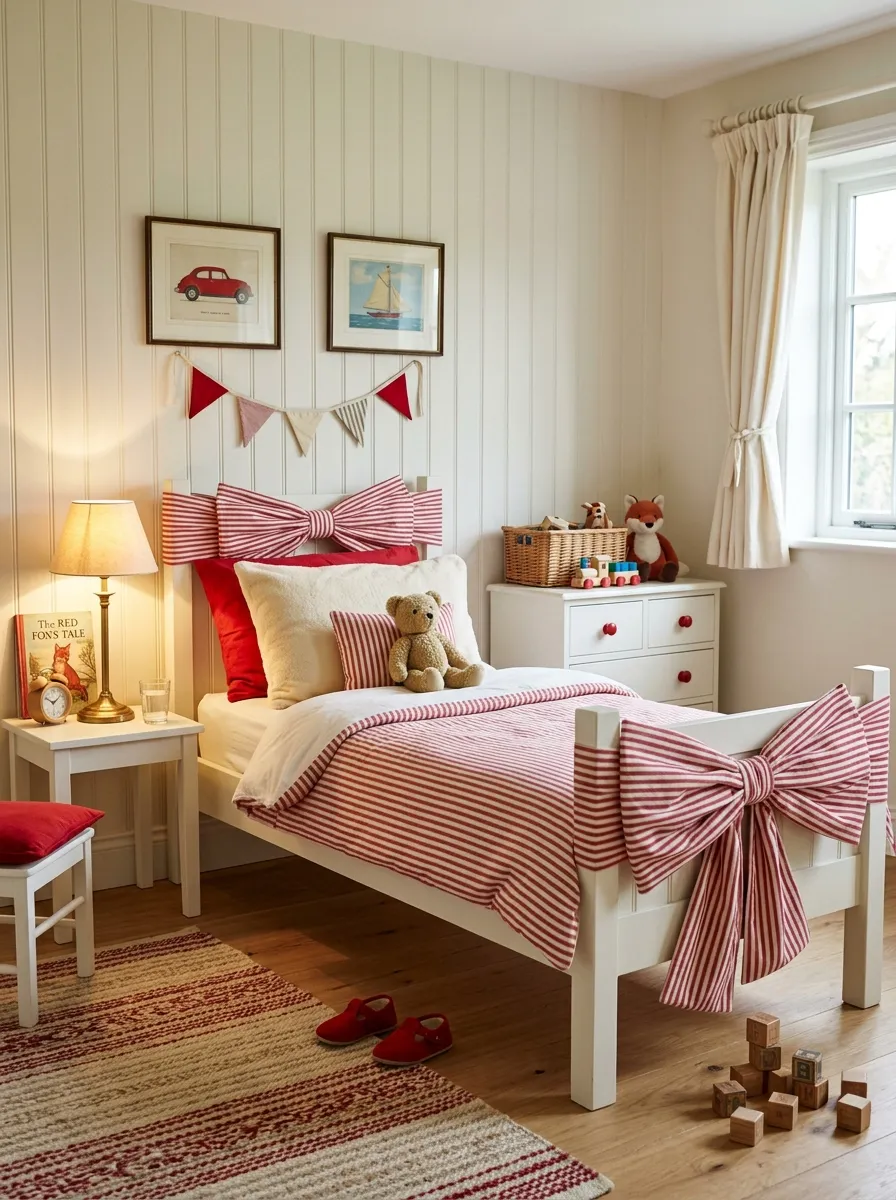
• Wrap striped fabric around the outer bed frame rather than covering the mattress.
• Use cream or white bedding so the red pattern stays prominent.
• Secure every ribbon section firmly against the frame.
• Leave the floor around the bed clear for easy movement.
A plain bed can suddenly feel ready for the holidays with one bold change. Red and white stripes wrapped around the frame give it a candy cane character without taking away the space children need for sleeping, reading, or jumping out of bed each morning.
Restraint gives this treatment its impact. Covering the bed, pillows, curtains, and walls in the same stripes would make the room feel busy. Let the pattern stay on the frame and allow solid bedding to balance it. Soft velvet or cotton ribbon also brings texture that looks richer than shiny plastic trim.
Choose materials that can be folded away without much fuss when the season ends. Fabric ribbons are especially useful because they can be reused on another bed, staircase, or gift wrapping setup later. That makes the decoration more flexible than buying a single use item that spends most of the year in storage.
21. Christmas Ornament Chandelier
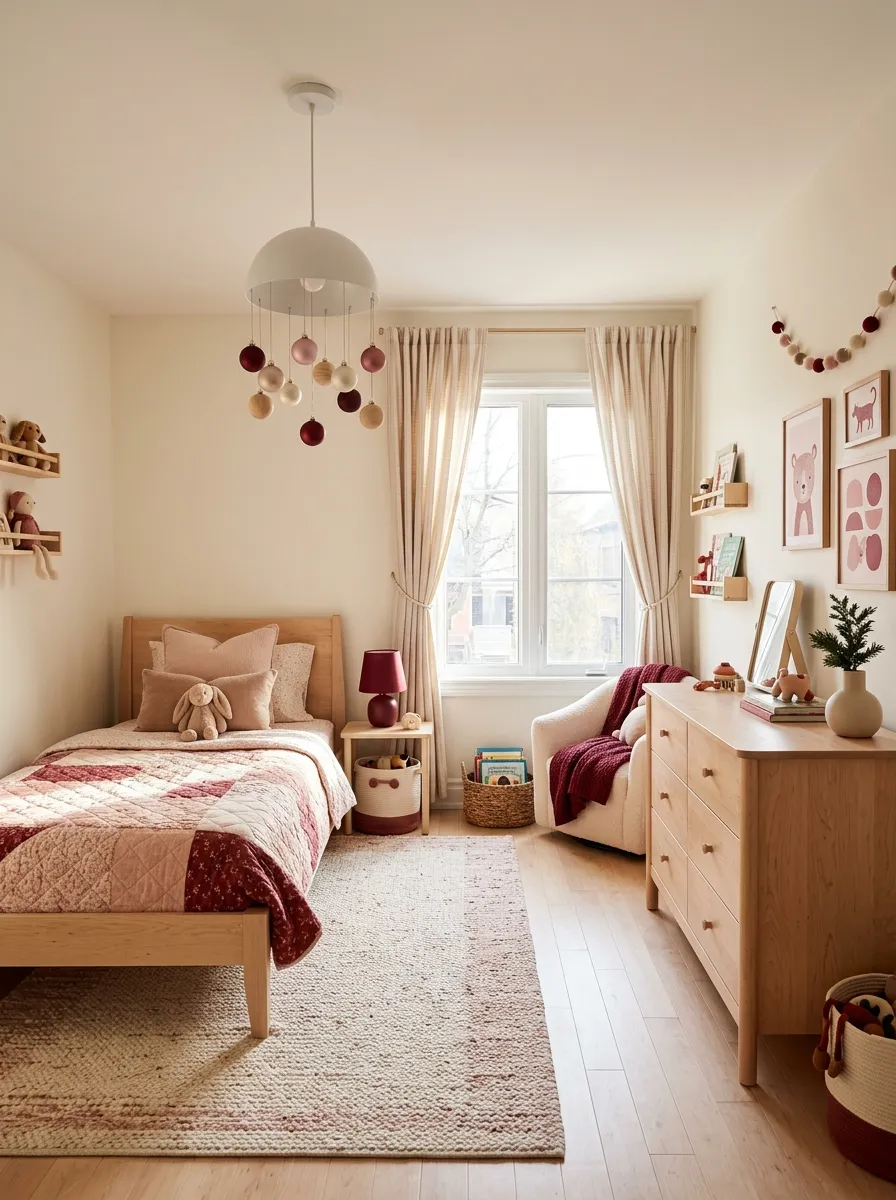
• Hang lightweight ornaments around the existing pendant rather than replacing the fixture.
• Vary ornament sizes to give the arrangement a layered shape.
• Keep every hanging piece well above children’s reach.
• Choose matte finishes that reflect light gently instead of producing glare.
A ceiling light can become the unexpected focal point in a child’s bedroom. Suspending lightweight ornaments around an existing pendant turns an everyday fixture into a floating cluster of color. When the light comes on, the ornaments catch gentle highlights and bring attention upward.
Spacing gives the arrangement its clean shape. Leave visible gaps between the ornaments rather than packing them tightly around the shade. Different sizes can give the cluster depth, while one restrained color palette keeps it connected to the rest of the bedroom.
Safety should guide the placement from the start. Secure ornaments and cords carefully, keeping them away from curious hands and heat sources. Once those details are handled, the chandelier becomes a playful seasonal feature that changes the atmosphere without taking up any floor or wall space.
How to Make a Kid’s Bedroom Feel Festive for Christmas
You do not need to decorate every part of the bedroom for Christmas. Start with the bed, one wall, or a small reading corner, then add a few seasonal details such as festive bedding, greenery, stockings, ornaments, or soft lights.
Keeping the main furniture simple helps the room stay practical for sleeping and playing. A few well placed decorations can make the bedroom feel festive without making it look crowded.
Easy Christmas Bedroom Decor for Kids
Small decorations can make a big difference when you want an easy Christmas bedroom makeover. Focus on items that are quick to add and simple to remove after the holidays.
- Christmas bedding or a festive throw
- A wreath above the bed
- Red, green, or cream pillows
- Paper stars near a window
- Christmas books on a shelf
- Small holiday ornaments
- Festive baskets for toys
- A simple stocking near the bed
Christmas Bedroom Ideas for Small Kids’ Rooms
Small bedrooms can still have plenty of Christmas charm. Use areas that are often left empty, such as walls, windows, the space above the bed, or even the ceiling.
Hanging stars, paper chains, small wreaths, and wall displays keep decorations off the floor. This leaves more open space for children to play while still giving the bedroom a festive makeover.
Christmas Bedding Ideas for Kids
Christmas bedding is one of the easiest ways to change a child’s bedroom for the holiday season. Try candy cane stripes, gingerbread prints, snowflakes, Christmas characters, plaid, or simple red and cream patterns.
If the bedding already has a bold pattern, keep the pillows and nearby decorations simple. This lets the bed remain the main feature without making the whole room feel too busy.
Christmas Bedroom Color Ideas for Kids
The traditional red and green combination is not your only option. Choosing colors that already work with the bedroom can make seasonal decorating easier.
- Red and white for a classic Christmas feel
- Green and cream for a woodland theme
- Red and cream for gingerbread decor
- Blue and silver for a snowy room
- Pink and red for a playful setup
- Brown, cream, and red for a cabin theme
How to Decorate a Kid’s Room for Christmas on a Budget
You can create Christmas bedroom decor for kids without buying decorations for every surface. Paper chains, handmade stars, ribbons, holiday books, soft toys, and existing baskets can all become part of the seasonal setup.
Read More : Room Budget Planner: How to Decorate a Room on a Budget
FAQs
u003cstrongu003e1. How can I decorate my child’s bedroom for Christmas?u003c/strongu003e
Use festive bedding, wreaths, stockings, lights, or small holiday decorations around the bed and walls.
u003cstrongu003e2. What are easy Christmas bedroom ideas for kids?u003c/strongu003e
Try Christmas bedding, paper stars, holiday books, soft toys, festive pillows, or a small Christmas tree.
u003cstrongu003e3. How do I decorate a small kids bedroom for Christmas?u003c/strongu003e
Use walls, windows, and ceiling space for decorations while keeping the floor open for play.
u003cstrongu003e4. How can I decorate a kids’ Christmas bedroom on a budget?u003c/strongu003e
Reuse decorations you already have and add simple DIY pieces like paper chains, ribbons, and handmade stars.
Conclusion
A few thoughtful changes can turn an ordinary child’s room into a cheerful holiday retreat. These Christmas bedroom ideas for kids show how bedding, lighting, shelves, wreaths, playful displays, and small seasonal details can make the space feel fresh without taking away its everyday comfort.
You do not need to recreate an entire room. Start with one idea that fits your child’s personality and build from there. Save this post on Pinterest so you can come back when you are ready to decorate, and share it with another parent looking for festive inspiration. Pick your favorite idea, make it your own, and let the holiday magic begin.