17 Afrohemian Living Room Decor on a Budget
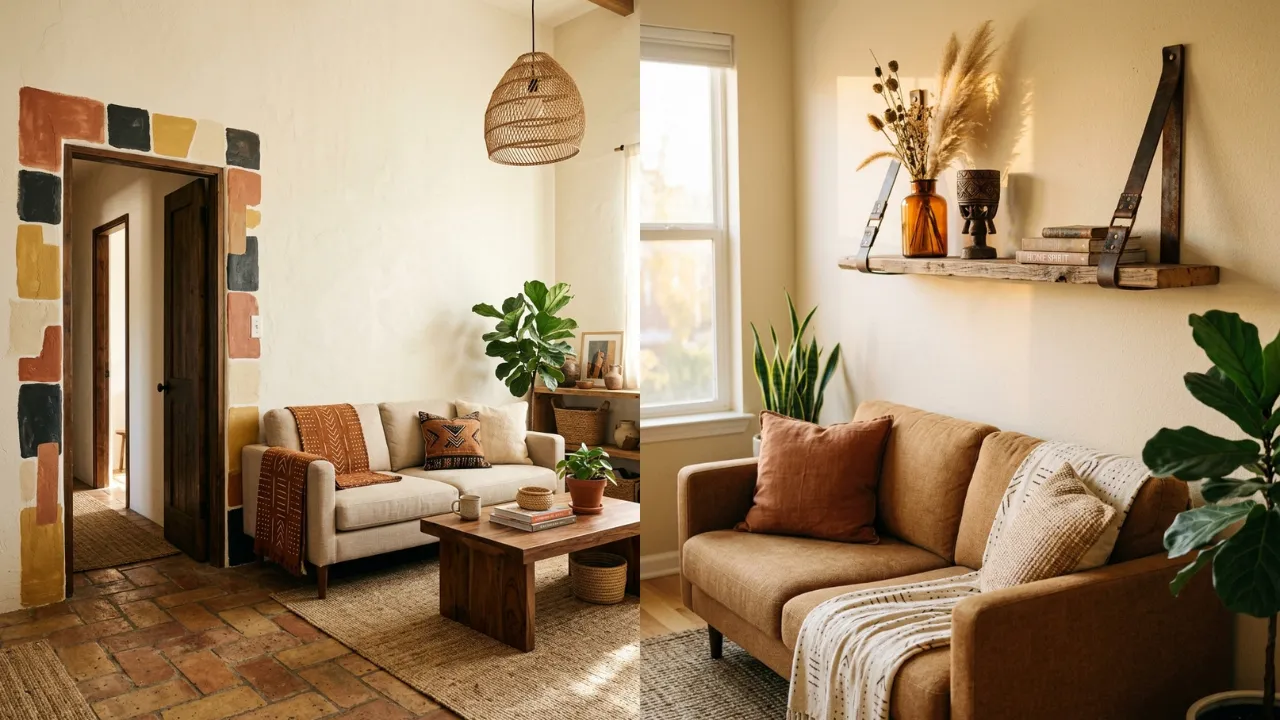
What if your living room could feel rich with texture and character without costing a fortune? You may already have more decor potential at home than you realize.
Afrohemian living room decor on a budget is all about mixing earthy colors, natural textures, handmade details, and clever DIY ideas without relying on expensive furniture or accessories. From an old basket turned into a lighting feature to leftover fabric becoming eye catching wall decor, these ideas show how everyday materials can take on a completely new purpose.
I have found that the most interesting rooms often come from pieces that were not originally meant to decorate a living room. A thrifted find, forgotten scarf, scrap of wood, or leftover paint can become the detail that makes the whole space feel personal. Keep reading for creative ways to refresh your room while spending less and making every piece feel intentional.
Budget Friendly Materials to Look For
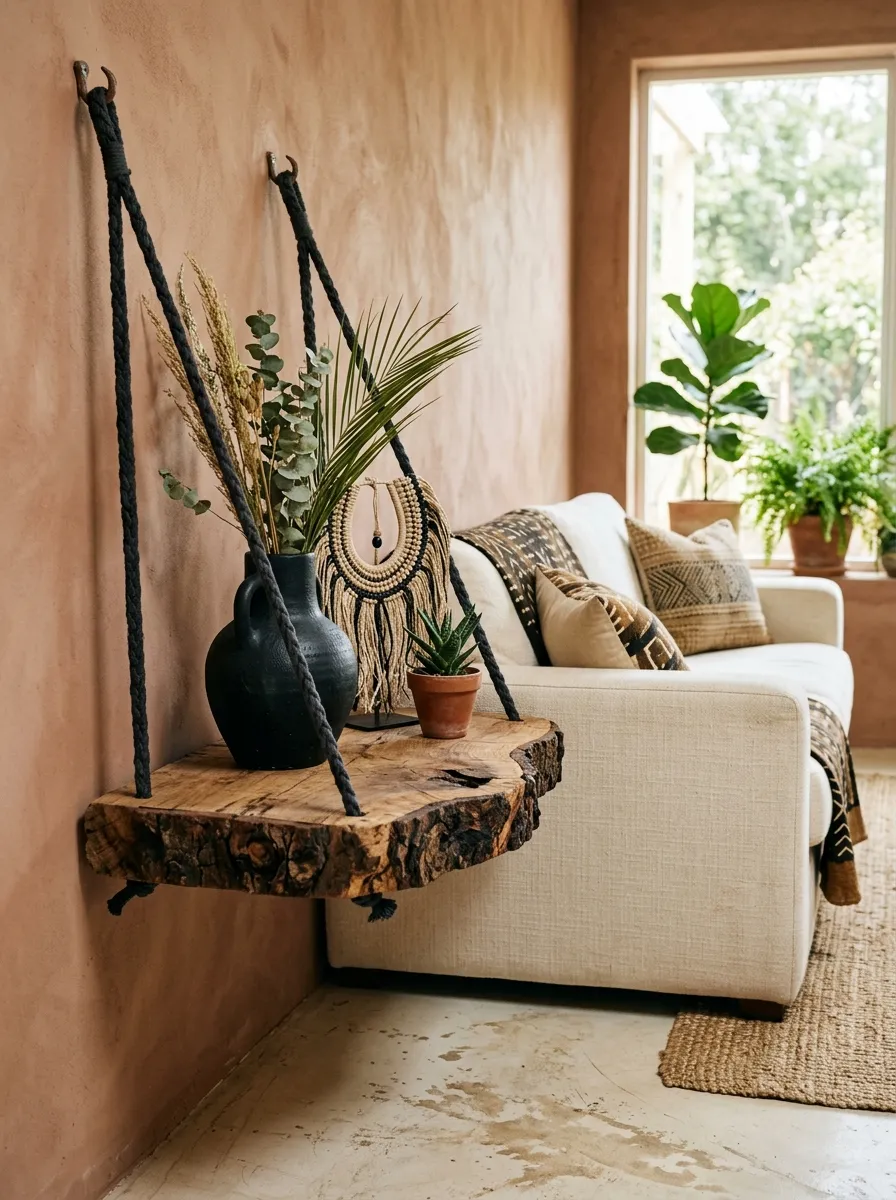
Before starting the ideas, check what you already have at home. Afrohemian decor does not need expensive materials. Old baskets, leftover fabric, scrap wood, jute rope, scarves, leather belts, clay pieces, and leftover paint can all become useful decorative elements.
- Thrifted baskets and woven pieces
- Fabric scraps and old scarves
- Scrap wood and unused shelves
- Jute rope and raffia
- Old leather belts
- Leftover paint and sample pots
- Secondhand furniture
- Unused tiles and clay pieces
The key is to look at ordinary objects differently. A forgotten basket can become a light shade, fabric can become wall decor, and an old piece of furniture can gain new character with a small painted detail. This approach keeps your spending low while making the room feel more personal.
1. Basket Lid Wall Clock
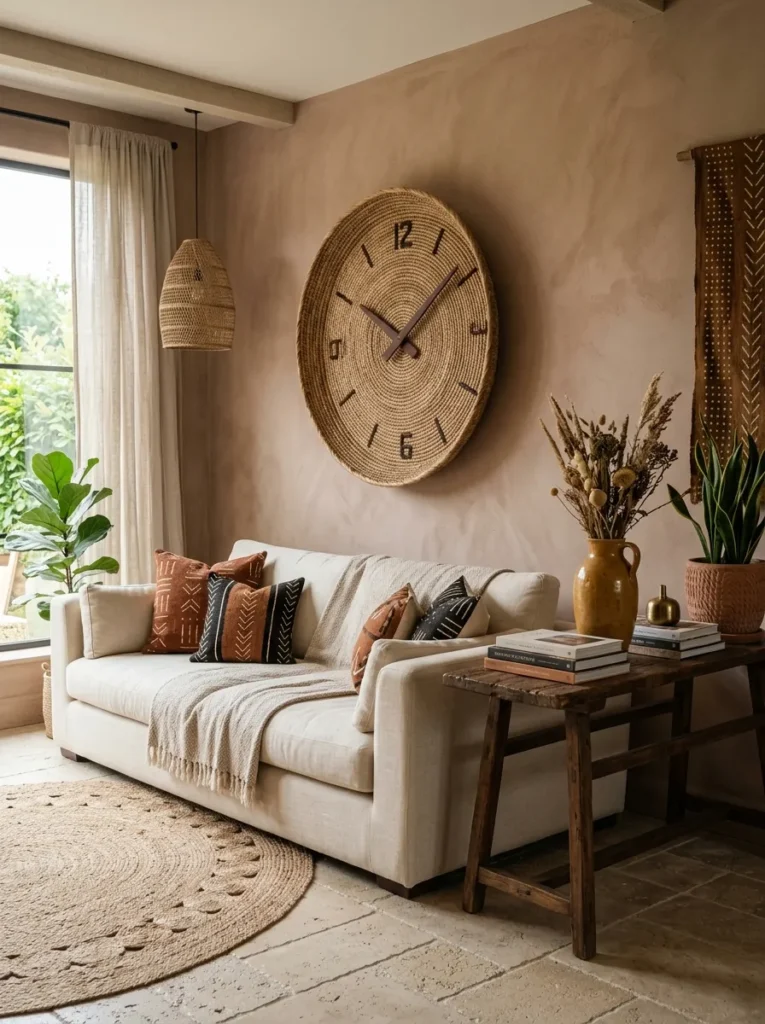
- Find a flat woven basket lid or shallow basket that is no longer being used.
- Install an inexpensive clock mechanism through the center of the woven surface.
- Keep the original weave visible instead of covering it with paint.
- Hang the clock above a low sofa or console where its round shape balances long furniture.
A wall clock does not have to announce itself as a clock from across the room. A flat woven basket lid can become its face, turning an everyday household object into a functional Afrohemian focal point. The circular form also breaks up the straight lines created by a sofa or console.
Keep the clock markings restrained because the woven surface already provides plenty of detail. Small dark hour marks or simple wooden points are enough. I would choose a lid with an interesting weave, uneven fibers, or subtle color variation because those details give the finished piece more character than a perfectly uniform surface.
Check old baskets and household storage before buying anything new. A basic clock mechanism can be inexpensive, and the basket lid provides the decorative part. Measure the center carefully before making an opening for the mechanism. One reused object can provide both function and decoration, which makes the budget stretch further.
2. Fabric Wrapped Wall Arch
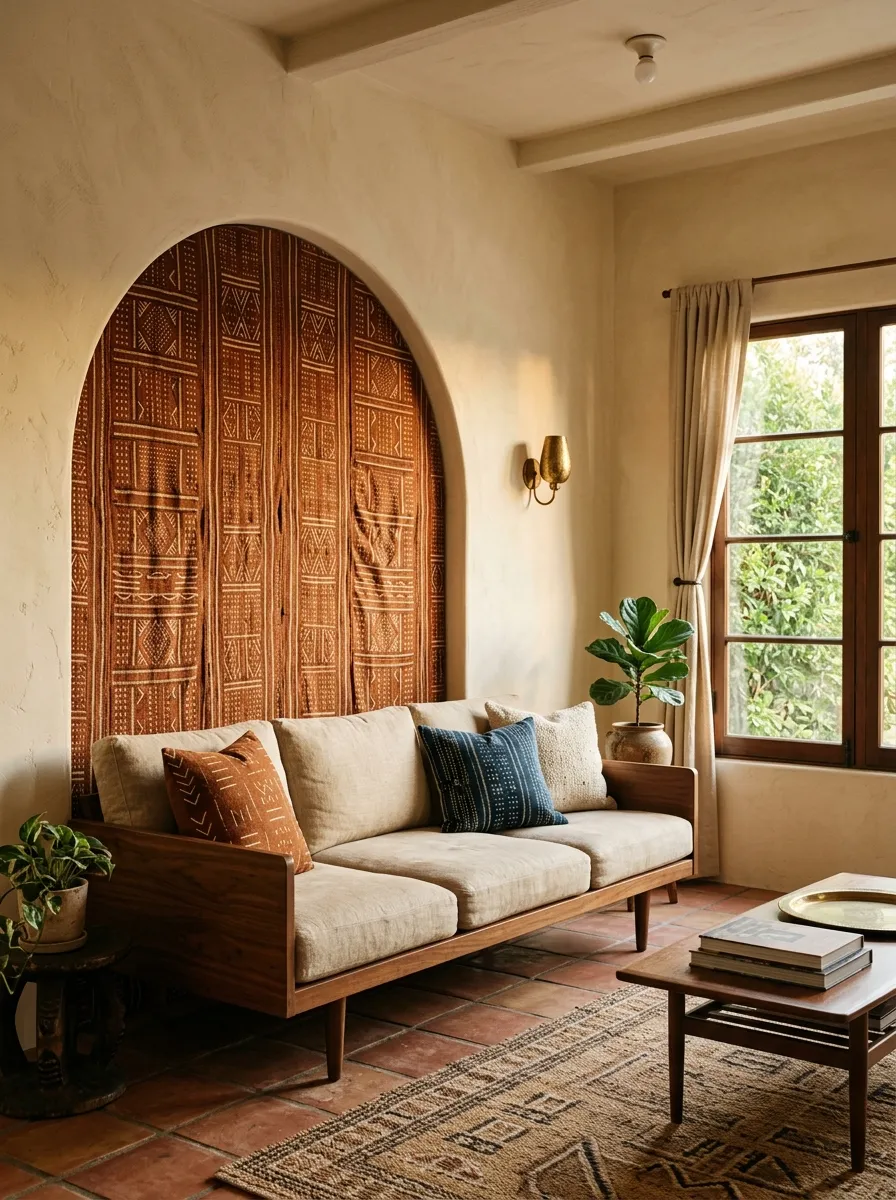
- Cut a large arch from inexpensive cardboard, foam board, or thin leftover wood.
- Cover it with fabric scraps, an old curtain, or a thrifted textile.
- Mount it behind the sofa to make one blank wall the focal point.
- Choose rust, cream, or ochre fabric that works with furniture you already own.
Have you ever looked at a blank sofa wall and felt that adding several frames would cost more than the wall deserves? A single fabric arch takes a different route. Its curved shape immediately draws attention, while the woven surface brings pattern and texture without filling the wall with small decorations.
The clever part is using fabric you already have instead of buying artwork. An old curtain can become the covering, while cardboard provides the hidden structure. I would keep the sofa underneath simple so the arch has room to breathe. The empty wall around it helps the unusual shape feel intentional.
Before cutting the fabric, place it over the arch and check where the pattern falls around the curve. Small wrinkles and woven variations can stay visible because they make the piece feel handmade. With inexpensive adhesive and a lightweight backing, several leftover materials can become one strong focal point for your Afrohemian living room.
3. Painted Basket Shade Pendant
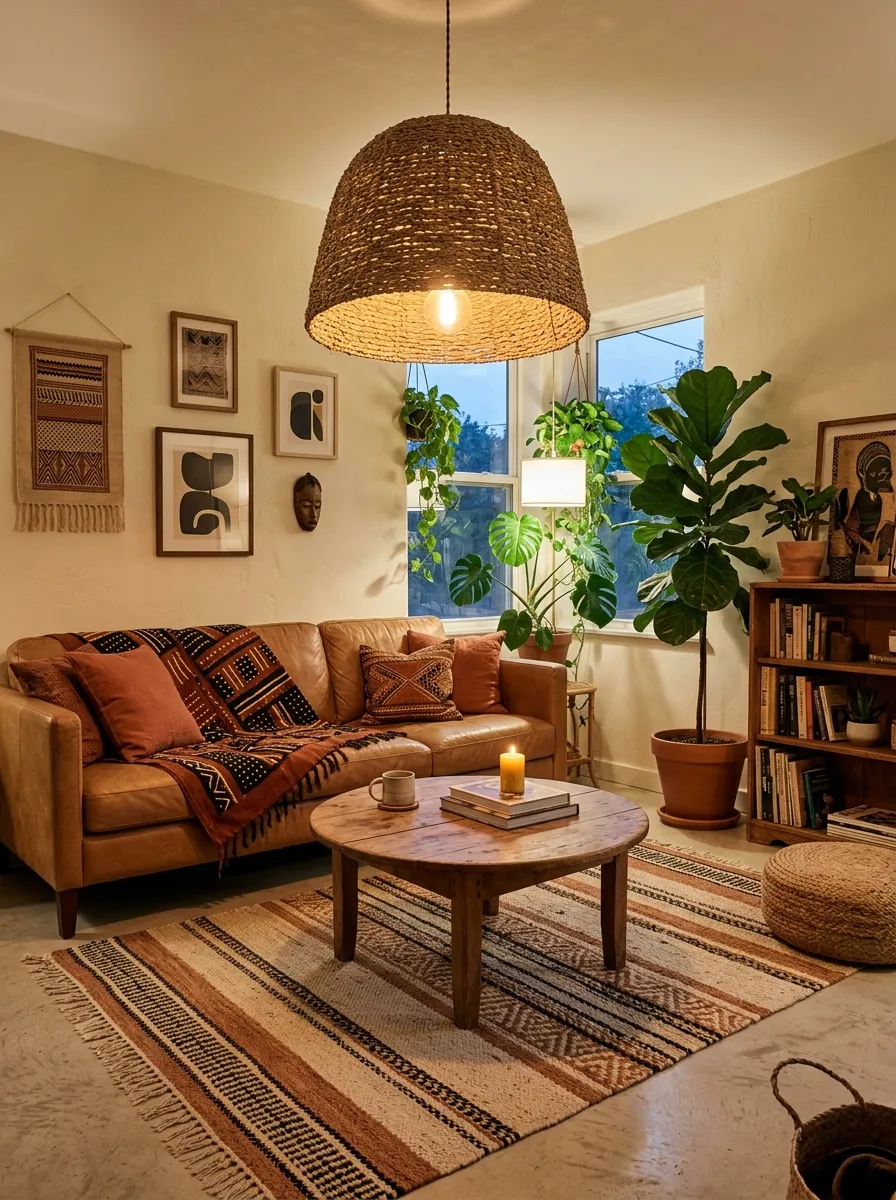
- Choose a lightweight open weave basket from a thrift shop or flea market.
- Reuse an existing pendant fitting if it is compatible with the basket.
- Use a cool running LED bulb and keep the basket safely away from the bulb.
- Hang it above the coffee table so the woven texture becomes the focal point.
A plain ceiling light can leave a living room feeling unfinished, especially when the furniture already has character. A woven basket overhead changes that feeling without requiring new furniture. When the warm bulb shines through the gaps, delicate shadows move across the ceiling and walls, making the inexpensive material feel thoughtfully chosen.
The clever part is using the basket as the shade instead of buying another decorative piece. Look for one with a wide opening and an interesting weave, even if its color is slightly uneven. A camel sofa and terracotta detail can pick up those earthy tones without making the room feel overly coordinated.
Safety should guide the makeover from the start. Choose a cool running LED bulb and make sure the basket cannot touch the bulb or electrical fitting. If the pendant needs electrical changes, have them handled safely. One thrifted basket can give an Afrohemian living room decor on a budget setup far more character without a costly lighting purchase.
4. Mudcloth Drawer Front Makeover
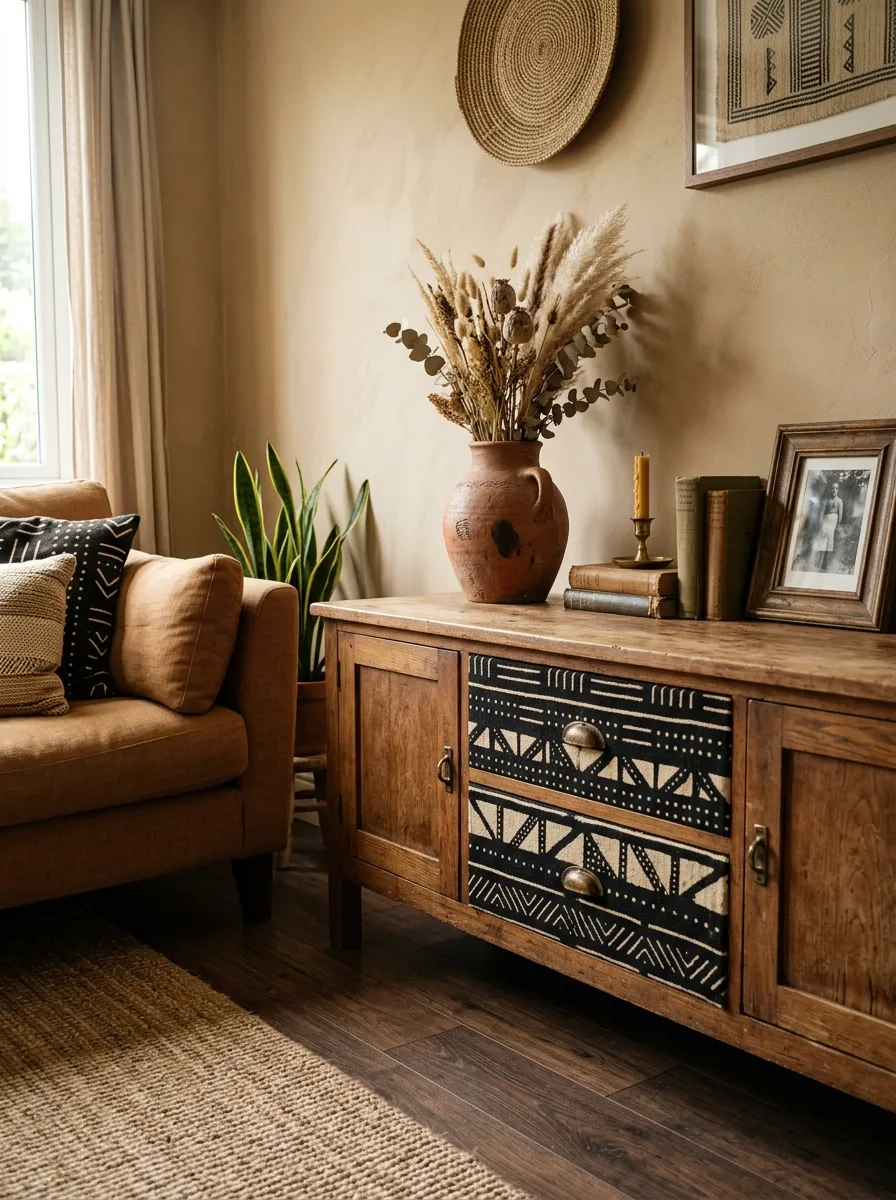
- Cover only selected drawer fronts so the original wood remains visible.
- Use leftover fabric, an old scarf, or a thrifted textile instead of buying new material.
- Measure each drawer before cutting to avoid wasting fabric.
- Use removable adhesive when working with rental furniture.
That scratched cabinet in the corner may need a surface change rather than a replacement. Covering two drawer fronts with black and cream patterned fabric gives the piece a completely different character while keeping the original wood frame visible. The woven texture catches afternoon light in a way a flat printed sticker cannot.
The trick is not covering every drawer. Leaving some wood exposed gives the pattern room to breathe and keeps the furniture from feeling overloaded. I like using fabric because one forgotten textile can become the main decorative material without requiring new artwork, storage, or furniture.
Before cutting anything, make paper templates for the drawer fronts and test the placement. Old cushion covers, scarves, curtain remnants, and thrifted cloth can provide enough material for a small cabinet. For a rental, removable methods are easier to undo later. The cabinet still stores everyday items, so your budget goes toward a change you can use daily.
5. Painted Doorway Tribal Geometry
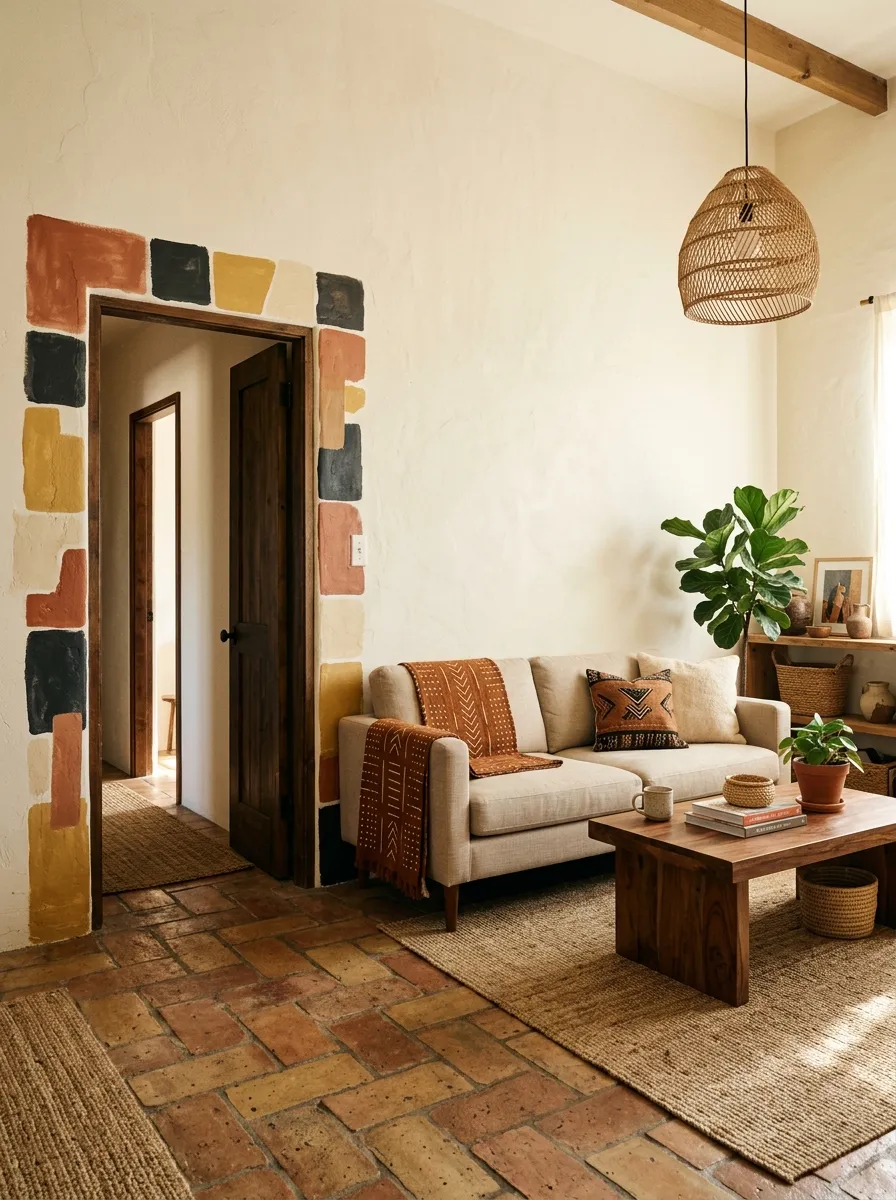
- Paint only the doorway border instead of covering an entire wall.
- Use leftover terracotta, mustard, charcoal, or cream sample paint.
- Sketch two or three simple geometric shapes before painting.
- Keep nearby furniture neutral so the doorway remains the focal point.
A doorway is usually treated as empty architectural space, which makes it an unexpected place for pattern. A narrow geometric border can turn that forgotten edge into a strong Afrohemian detail without adding furniture or wall art. As daylight changes, the painted shapes become small graphic moments around the passage.
The pattern should stay controlled. Repeating a few geometric blocks or triangles will give the doorway rhythm without making the area feel crowded. I would test the colors on paper beside your existing sofa and flooring first. That small step helps you avoid buying several paint colors that do not work together.
Leftover sample pots are enough for a narrow border, so there is no need to purchase large tins. Painter’s tape can sharpen the edges, while small brush variations can remain visible for a handmade finish. The biggest saving comes from decorating the architecture already present instead of spending money on another decorative object.
6. Reworked Tire Ottoman
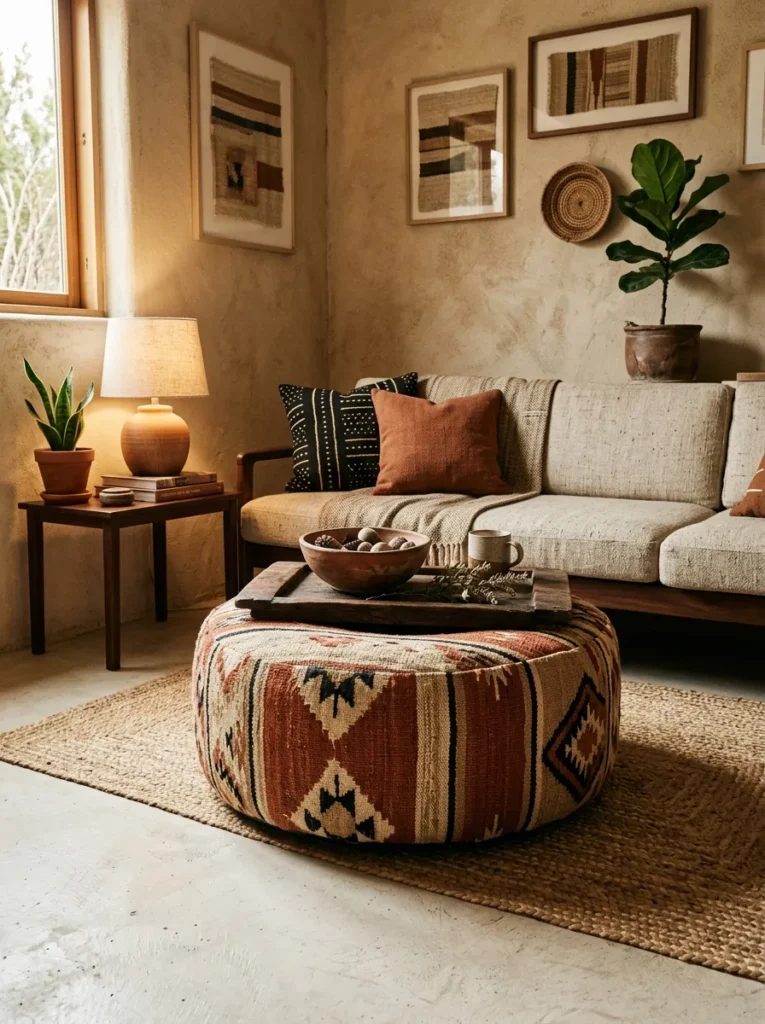
- Use a clean, sturdy old tire as the hidden base for the ottoman.
- Cover the rubber completely with thick woven fabric or reclaimed upholstery material.
- Add a firm round wooden top so the piece can support seating or a tray.
- Choose rust, cream, or deep brown fabric to keep the material palette earthy.
An old tire may seem like the last thing you would put inside a living room, which is exactly what makes this project unexpected. Once completely covered with woven fabric and topped with firm padding, the circular rubber base disappears. What remains is a low ottoman with an unusual rounded shape.
The low height gives the furniture a different rhythm from a standard chair or table. I would keep the upholstery simple and let the circular form carry the visual interest. Rust and cream fabric can bring pattern into the room without requiring several matching accessories around it.
Before starting, clean the tire thoroughly and check that it is structurally sound. A removable cover makes future cleaning easier, while reclaimed wood can provide the top. If you already have an unwanted tire, scrap wood, and leftover upholstery fabric, the project can turn discarded materials into useful living room furniture.
7. Repurposed Leather Wall Ledge
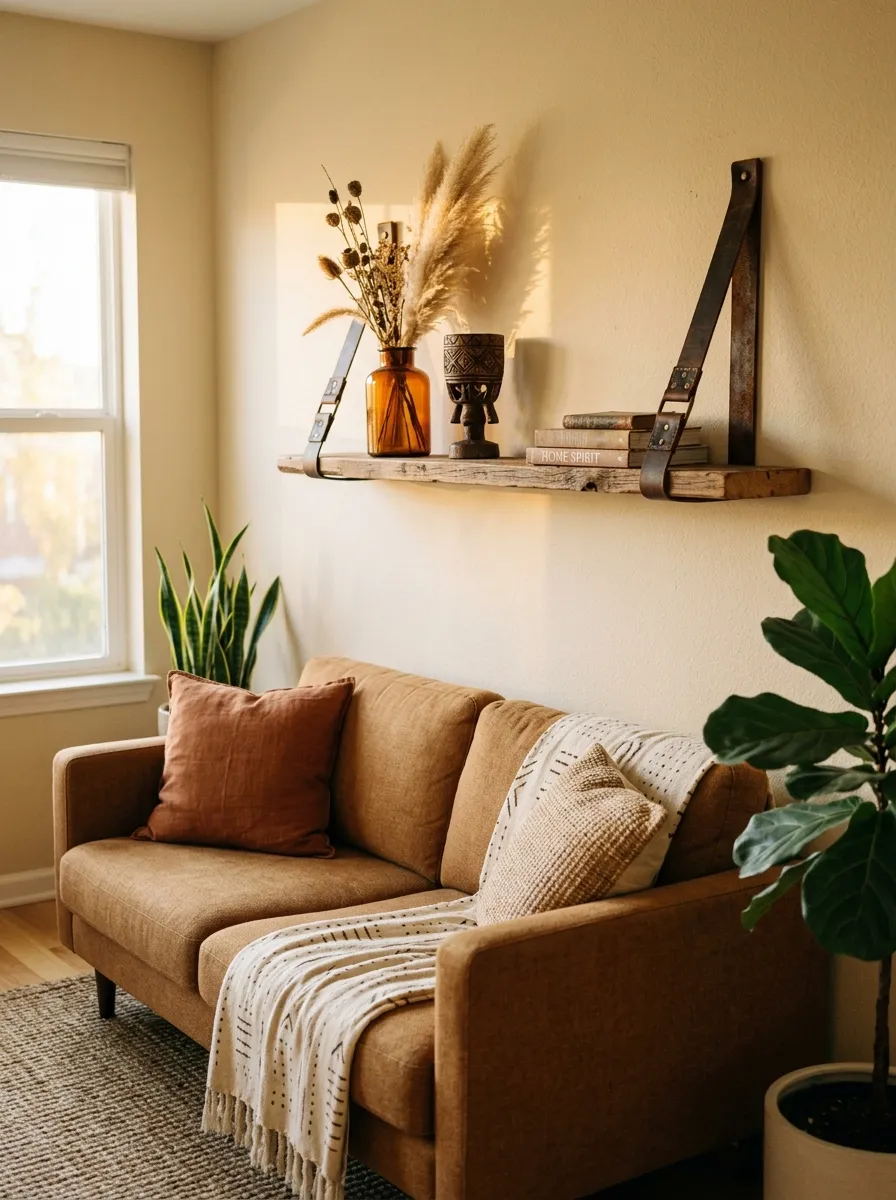
- Find a leftover wooden plank or old shelf board before buying new shelving.
- Use sturdy reclaimed leather belts as visible supports.
- Keep the ledge shallow so it does not interfere with the walking path.
- Display only two or three small objects to keep the shelf visually focused.
What could two old leather belts possibly do for a living room wall? Turn them into the most interesting part of a simple shelf. Suspend a reclaimed wooden plank with the belts left visible underneath, creating a wall ledge where the support hardware becomes part of the decoration.
Warm wood and dark leather bring two different textures together without requiring expensive materials. I would resist filling the shelf with objects because the construction itself is the feature. One handmade ceramic vessel or carved piece can sit on the plank while plenty of wood remains exposed.
Check old belts, damaged leather goods, leftover boards, or furniture offcuts before shopping for materials. Sand the wood and soften any sharp edges, then use secure hardware suited to the wall. The project gives discarded materials a new purpose while providing a useful display surface without buying a finished shelving unit.
8. Patchwork Sofa Backdrop
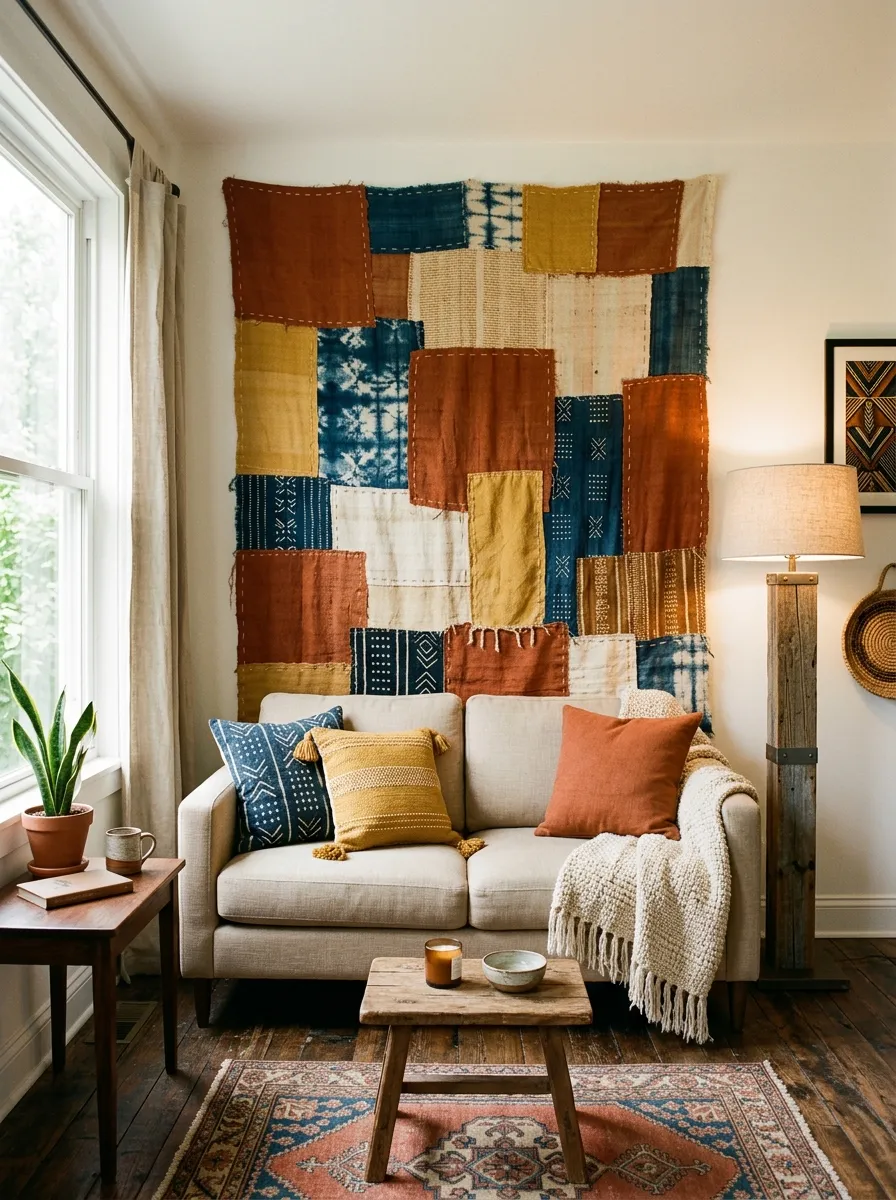
- Collect fabric scraps from old cushion covers, curtains, clothing, or sewing projects.
- Limit the patchwork to three or four connected colors for visual control.
- Hang the finished textile directly behind the sofa as one large focal piece.
- Leave the sofa plain so the handmade backdrop remains the main feature.
What can you do with fabric pieces that are too small to use on their own? Turn them into one oversized textile backdrop. Joining rust, indigo, mustard, and cream scraps creates a layered wall feature that feels collected rather than purchased as a matching set.
Avoid making every fabric square the same size. Different textures, stitching, and small variations give the panel more character. I would place it behind a simple sofa so the busy textile has a calm surface underneath it. The contrast makes each fabric piece easier to notice without filling the entire room with pattern.
The budget comes from using what is already available. Old cushion covers, damaged curtains, clothing, and fabric samples can all contribute pieces. You do not need sewing skills for a perfectly uniform finish either. Simple stitching or fabric joining can work. A wooden dowel can hold the finished panel, keeping the wall installation inexpensive and easy to remove.
9. Curtain Panel Room Divider
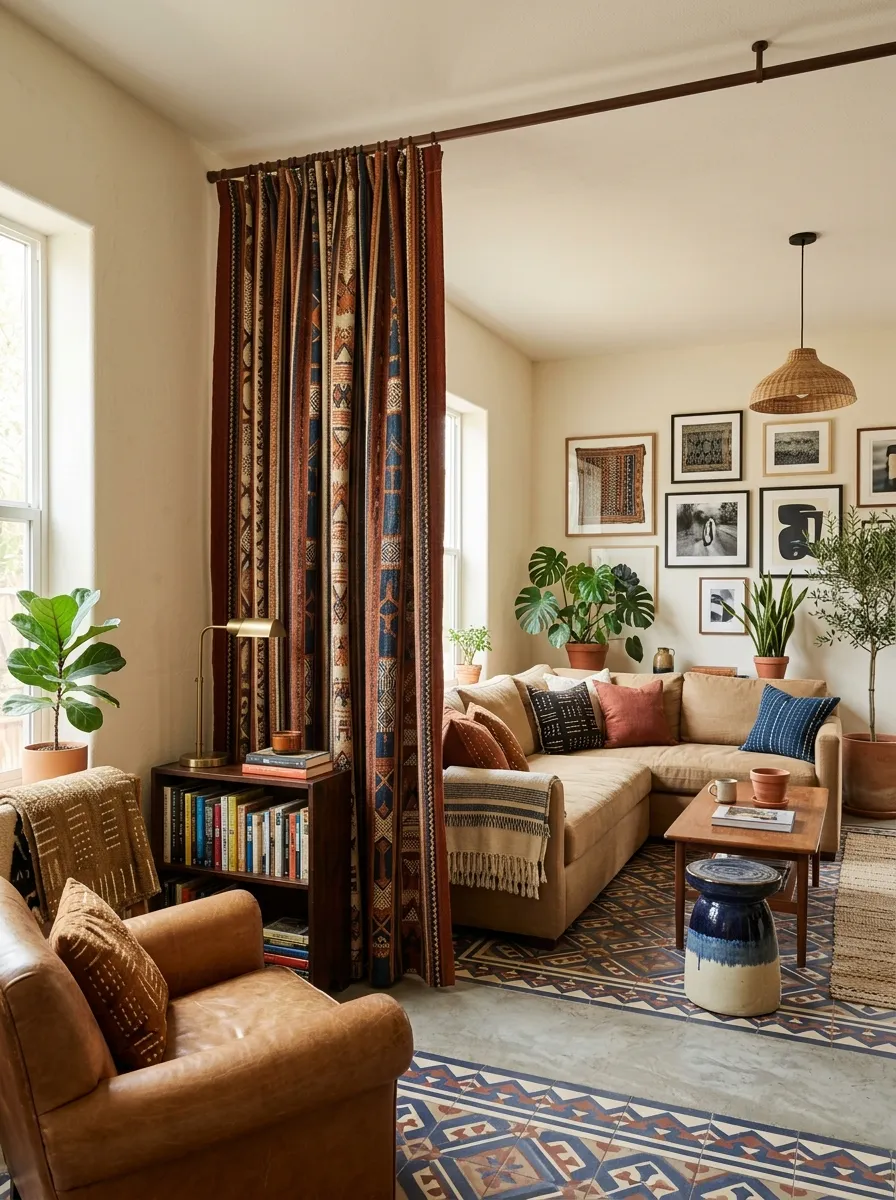
- Use one secondhand curtain, scarf, or large fabric remnant as the divider.
- Hang it between the sofa and an unused corner that needs definition.
- Choose a woven rust and indigo pattern so the fabric becomes the focal point.
- Leave enough open space beside the panel for comfortable movement.
Does your living room have one corner that feels disconnected from everything else? A single textile panel can solve that without bringing in another bulky piece of furniture. Hung between the sofa and a quiet corner, the fabric gives the area a visual boundary while still allowing light to pass around it.
The unexpected part is using a textile instead of a traditional screen. An old curtain, oversized scarf, or fabric remnant can provide the same separation for much less money. I would choose a fabric with a strong woven pattern and let its folds remain visible rather than stretching it completely flat.
Think about what the divider needs to accomplish before hanging it. It can separate a small work area, reading spot, or storage corner while keeping the main seating area open. A simple curtain rod keeps the setup inexpensive and lets you move the panel whenever the room needs a different arrangement.
10. Painted Floor Sun Motif
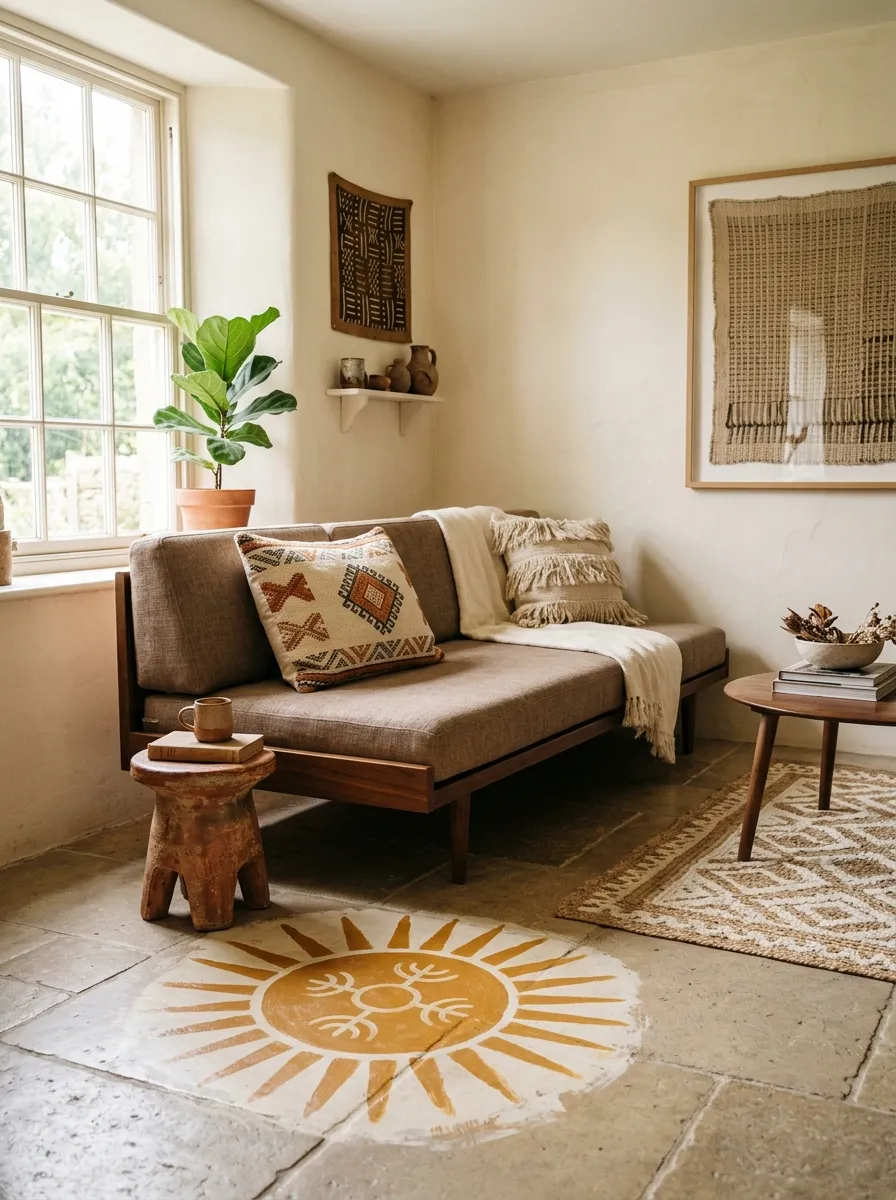
- Paint a small sun motif on an empty floor section instead of buying a large rug.
- Use ochre, terracotta, or muted brown floor paint for an earthy accent.
- Place the motif beside the sofa where its shape stays visible.
- Test the paint on a hidden section before covering the actual floor.
What if an empty patch of floor could become the artwork? A small hand painted sun motif gives an overlooked area a clear purpose without bringing in another piece of furniture. The warm ochre shape looks especially striking against pale stone or concrete when morning light reaches across it.
Keep the design simple rather than trying to cover a large area. A circle with short geometric rays is enough to introduce an Afrohemian reference. I would place it beside the sofa or near a small stool, where the pattern remains visible without sitting underneath heavy furniture.
The project can cost less than a new rug when you already have suitable paint. Test how the floor absorbs it before committing, since different surfaces behave differently. If you rent, recreate the motif on a removable canvas floor mat instead. You still get the hand painted effect without making a permanent change.
11. Beaded Doorway Curtain
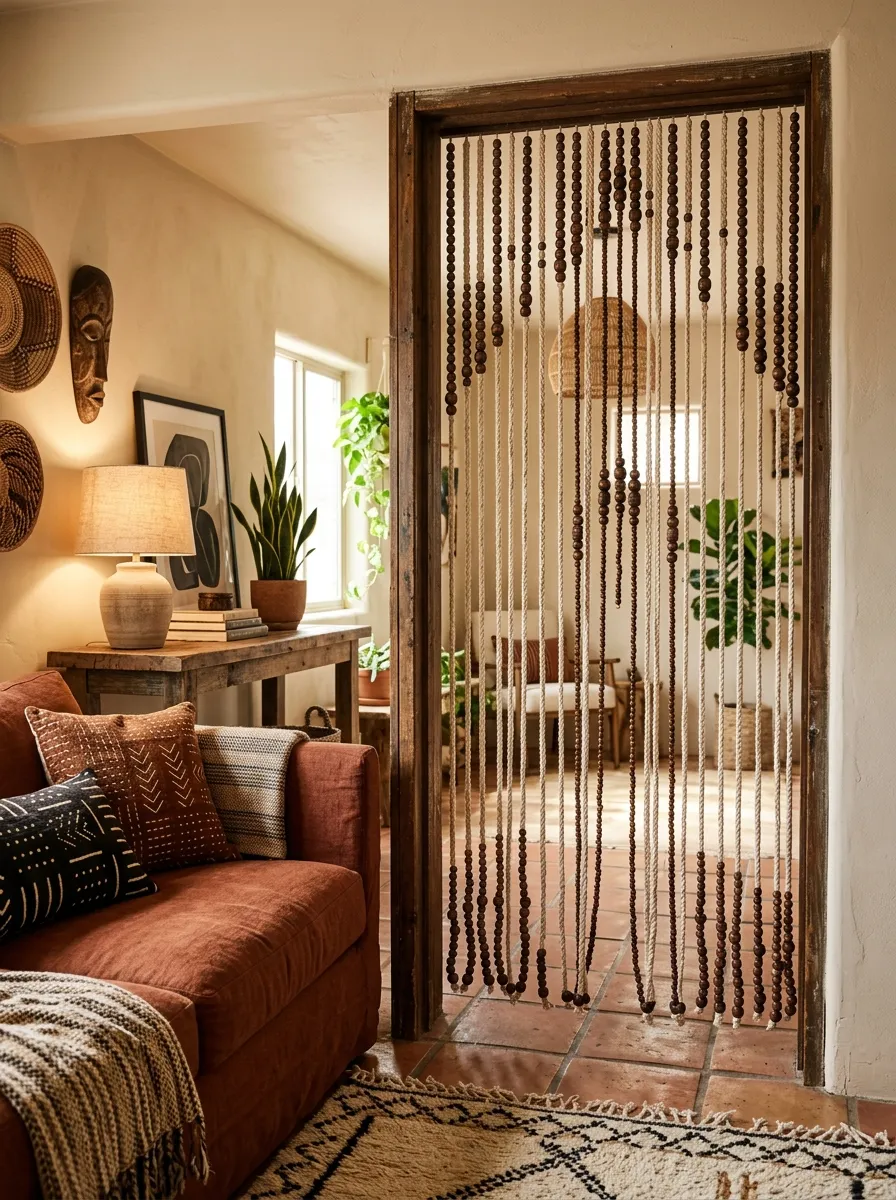
- Use inexpensive unfinished wooden beads with sturdy cotton cord.
- Hang the curtain between the living room and hallway to define the opening.
- Mix larger beads with short sections of cord for an irregular handmade rhythm.
- Measure the doorway first so you buy only the amount of material required.
A doorway usually goes unnoticed, but turning it into a handmade feature can change how the living room connects to the next space. Wooden beads move gently as people pass through, catching light and producing a subtle sound. The effect feels tactile without taking away valuable floor area.
Avoid making every strand identical. Grouping several larger beads together and spacing them with shorter cord sections gives the curtain a more collected appearance. I would keep the surrounding wall and furniture restrained so the movement of the beads remains the main point of interest.
Making the strands yourself keeps the cost under control. Look for unfinished beads in small quantities and use sturdy cord or suitable repurposed twine. A simple curtain rod can hold the finished strands. Measure the opening carefully before starting, because buying excess beads and cord can quickly turn a small DIY project into unnecessary spending.
12. Painted Ceiling Border Detail
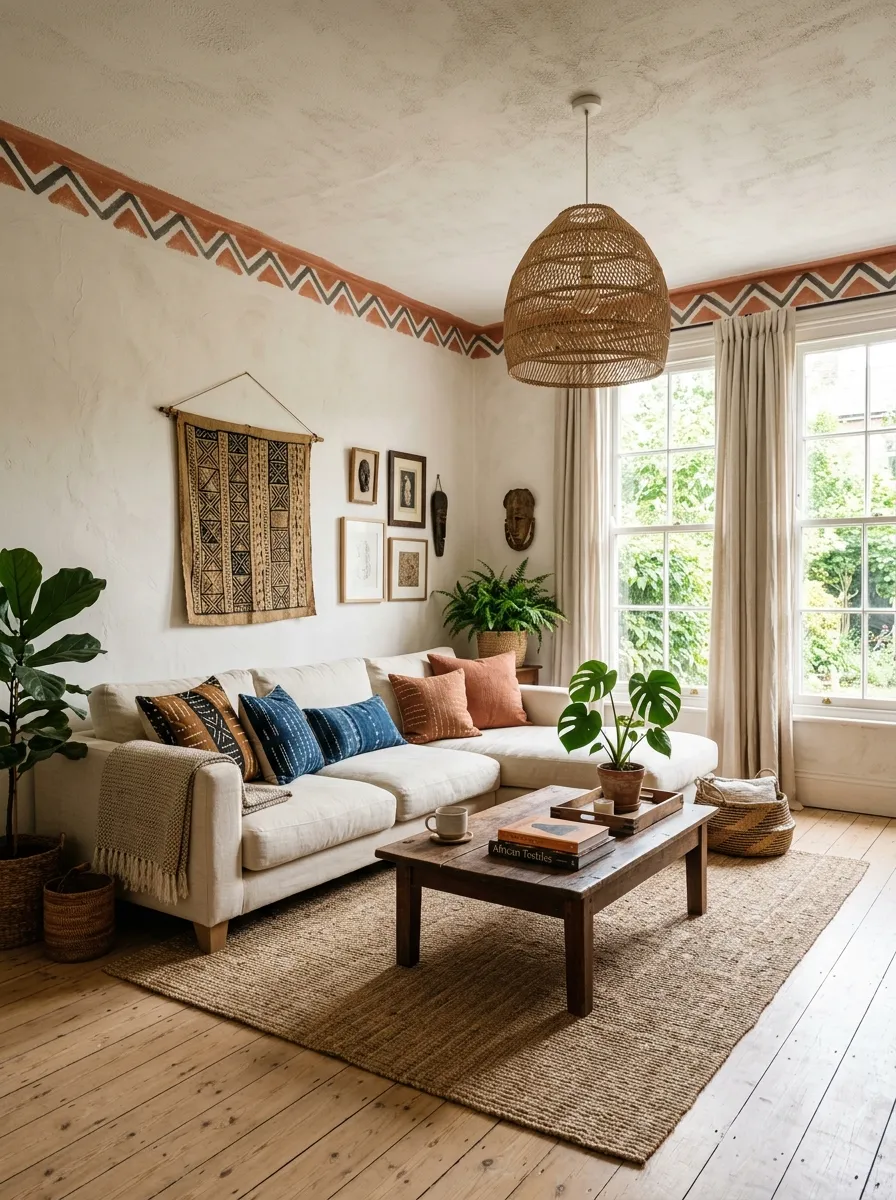
- Paint only a narrow border so a small amount of paint covers the area.
- Use leftover terracotta, charcoal, or ochre sample paint when available.
- Sketch the geometric pattern on paper before marking the ceiling edge.
- Keep the rest of the walls plain so the painted border stays prominent.
Look upward and you may find one of the most overlooked decorating surfaces in the room. A narrow painted border around the ceiling edge brings Afrohemian geometry into an unexpected place. Terracotta and charcoal marks become noticeable as daylight moves across the upper walls, giving the room a graphic detail without new furniture.
The pattern does not need to become a complicated mural. Simple triangles, blocks, or repeated lines can look more intentional than an overcrowded design. I would keep the border narrow and leave plenty of plain wall beneath it. That contrast makes the handmade brushwork easier to notice.
There is also a strong budget reason to work this way. A thin strip uses far less paint than an entire accent wall, so leftover sample pots may be enough. Test the colors beside your existing furniture first, then use painter’s tape and a small brush where needed for cleaner edges.
13. Woven Ceiling Fan Accent
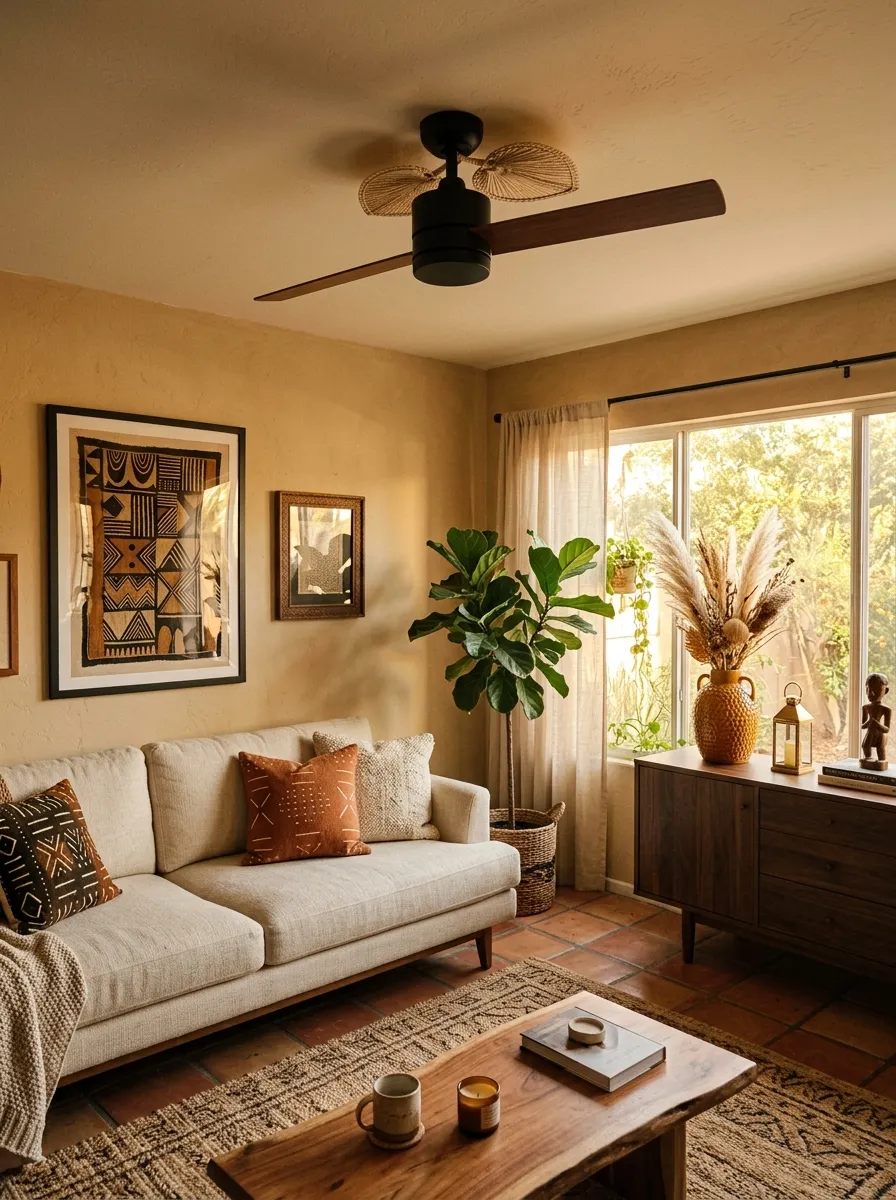
- Use lightweight palm, raffia, or woven scraps around the fixed center area of the fan.
- Reuse pieces from an old basket or damaged woven decoration.
- Keep every decorative piece completely away from the moving blades.
- Use only a small amount of texture so the ceiling does not feel crowded.
A plain ceiling fan can easily disappear into the room, but the area around its fixed center can become an unexpected place for texture. Lightweight raffia or palm pieces bring a handmade Afrohemian touch upward while leaving the floor and walls untouched. The natural fibers also catch soft afternoon light in a subtle way.
Placement matters more than the decoration itself. Nothing should touch the moving blades, block the motor, or interfere with the fan mechanism. I would keep the woven accent close to the fixed center and use only a few pieces. That keeps the fan functional while giving an ordinary ceiling fixture a more considered appearance.
Look through old baskets and damaged woven pieces before buying new materials. Small scraps can provide enough texture for this project, which keeps the cost low. Secure everything firmly and check the clearance before using the fan. Keeping the surrounding ceiling plain also helps the small woven detail stay noticeable without competing with the room.
14. Clay Tile Coffee Table Top
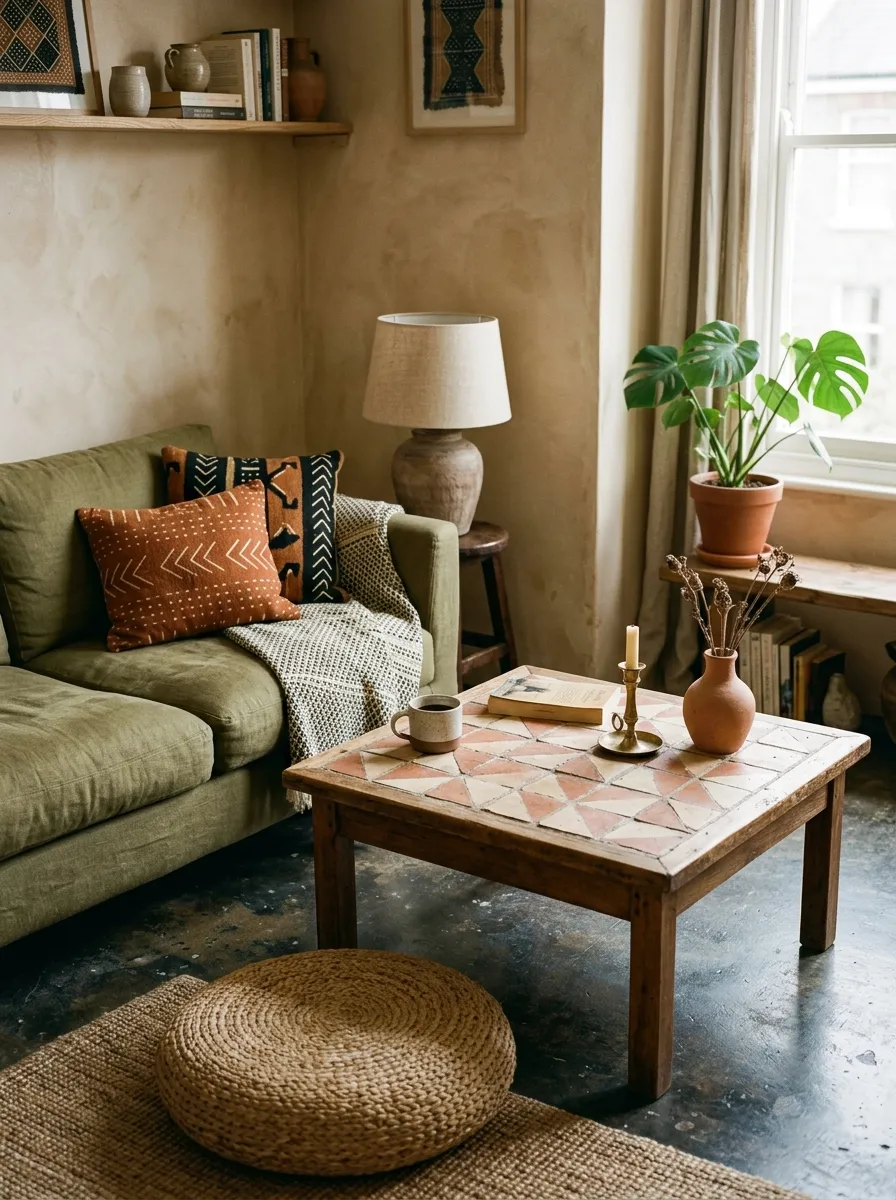
- Search tile shops for loose samples, discontinued pieces, or leftover tiles.
- Cover only the tabletop so you do not spend money replacing the whole table.
- Combine plain cream tiles with a small number of terracotta patterned pieces.
- Dry arrange the complete pattern before applying adhesive.
That scratched coffee table sitting in the living room may not need replacing at all. A small tiled surface can turn its forgotten tabletop into the main feature. Terracotta and cream pieces catch the light differently from the wood beneath them, giving the furniture a tactile handmade quality.
The key is keeping the pattern controlled. A simple border with a few patterned tiles in the center can feel more intentional than mixing every design you find. I would leave the legs in their original wood finish because the contrast between ceramic and wood gives the table a collected character.
For a budget makeover, ask tile stores about loose samples or pieces left from discontinued collections. You only need enough to cover one tabletop, not an entire room. Measure carefully, test your arrangement first, then secure and seal the tiles properly so the finished surface can handle everyday cups, books, and small spills.
15. Rope Wrapped Coffee Table Base
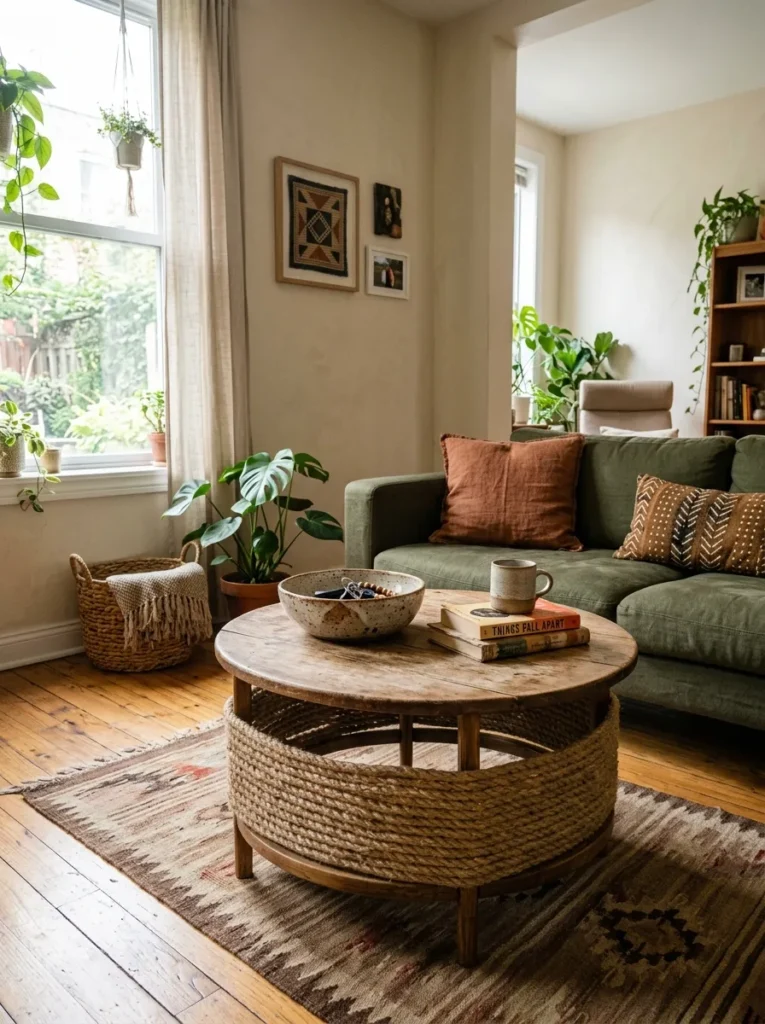
- Wrap only the lower base to keep the jute cost low.
- Search for a used round table with a sturdy frame before buying new furniture.
- Leave the tabletop exposed so smooth wood contrasts with rough rope.
- Apply the rope in tight sections and secure the ends firmly.
A plain secondhand coffee table can look forgettable until you change the part people rarely notice. Wrapping its lower base in thick jute rope gives the furniture a tactile detail that catches the eye from across the room. Morning light reveals the tiny fibers, while the exposed wood keeps the piece grounded.
Covering the entire table would use more material and make the texture too dominant. Keeping the rope low creates a visual divide between the smooth tabletop and rough handmade base. I would pair that contrast with one deep olive or rust textile rather than surrounding the table with multiple competing patterns.
The money saving part is finding the table first, then using inexpensive jute only where it matters. Check your own storage, local marketplaces, or secondhand furniture stalls for a suitable piece. Imperfect wood is useful here because scratches and small marks become part of the reclaimed character instead of something you need to hide.
16. Painted Furniture Side Stripe
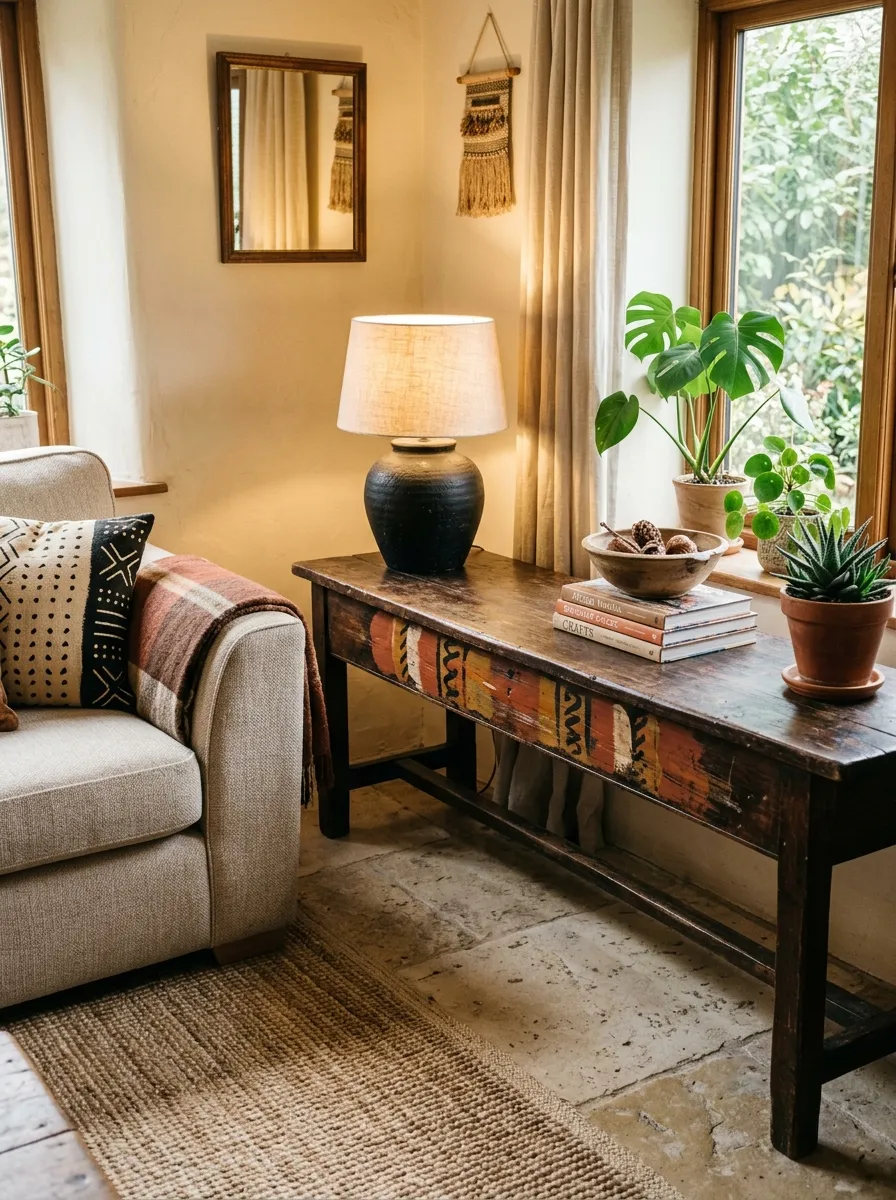
- Paint one narrow stripe instead of repainting the entire furniture piece.
- Use leftover terracotta or ochre paint on dark wood for strong contrast.
- Follow an existing edge so the painted detail looks deliberate.
- Test the paint underneath the furniture before working on the visible surface.
A scratched secondhand console does not need a full makeover to become noticeable. One narrow terracotta stripe along its front edge can shift the entire character of the piece. The dark wood remains visible, while the small painted line catches the eye when afternoon light moves across the furniture.
The trick is keeping the painted section surprisingly small. A broad stripe would cover too much of the original wood and require more paint. I like following an existing edge because the furniture itself guides the placement. The result feels connected to the construction rather than like a random painted decoration.
Look through leftover wall paint, craft paint, or sample pots before buying anything. Test a small hidden section first to check adhesion and color. Painter’s tape can help with a crisp line, while a hand painted edge can give a more handmade feel. One tiny amount of paint can refresh an entire piece without changing its useful function.
17. Scarf Covered Lampshade
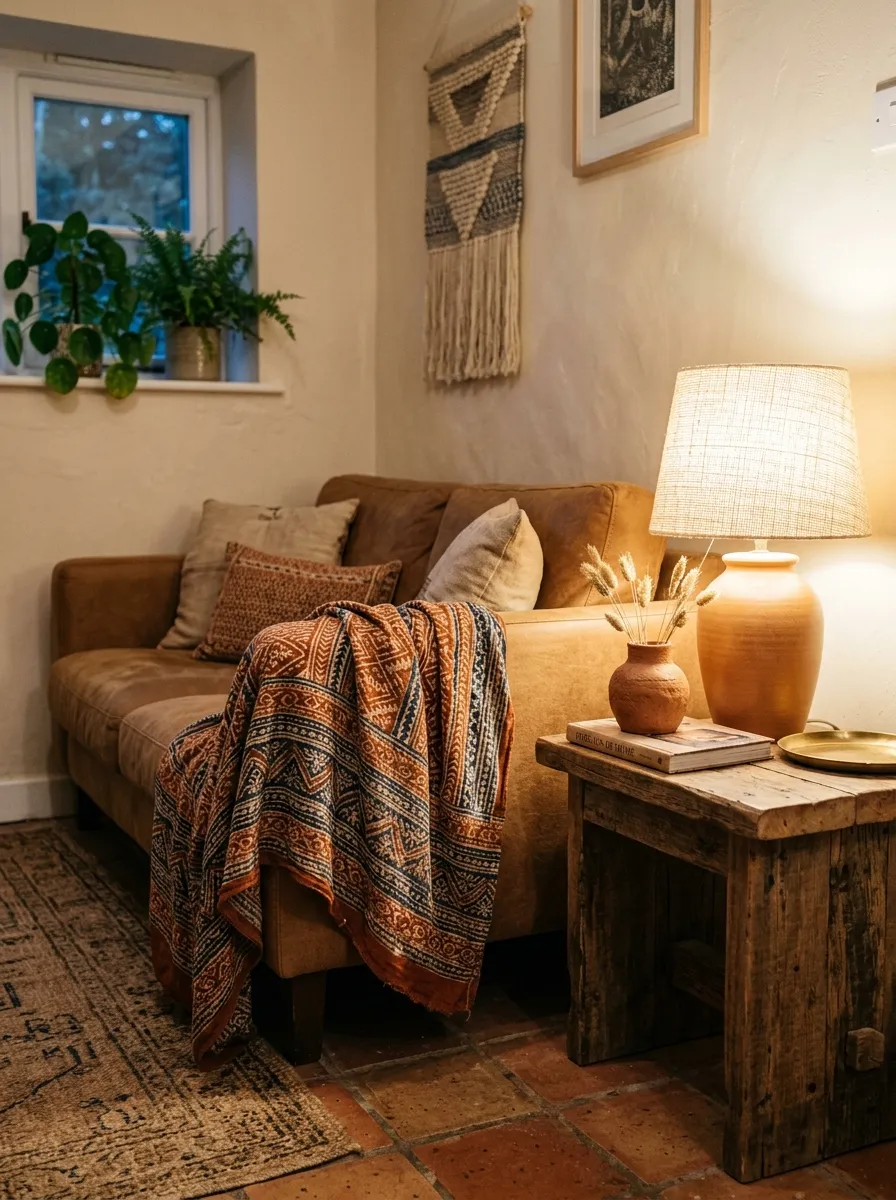
- Reuse a lightweight cotton scarf instead of buying a new lampshade.
- Choose an open weave that allows light to pass through without trapping heat.
- Keep the fabric securely away from the bulb and electrical fitting.
- Leave part of the original shade exposed when the scarf does not cover it fully.
That forgotten scarf in a drawer may have more decorating potential than you think. A lightweight patterned piece can cover part of a plain lampshade and bring rust, indigo, or earthy pattern into the living room. When the lamp is switched on, the fabric becomes softly visible without needing another decorative purchase.
The fabric choice needs more attention than the pattern. Heavy or tightly woven material can block light and sit too close to heat, so a lightweight cotton scarf is a safer starting point. I would use an LED bulb and keep the textile firmly secured around the outside of the shade, away from the bulb and fitting.
Check unused scarves before shopping for fabric. An older cotton scarf with an interesting pattern can provide enough material for a small shade makeover. If the scarf is valuable, avoid cutting it and use a removable covering method. That way, one forgotten textile can become a useful Afrohemian accent without permanently changing the lampshade.
How to Create an Afrohemian Living Room on a Budget
You do not need to replace your whole living room to bring in Afrohemian character. Start with furniture you already own, then introduce natural textures, earthy colors, and handmade details through small changes.
- Shop secondhand before buying new furniture.
- Reuse old baskets, scarves, and fabric scraps.
- Use leftover paint for small furniture details.
- Repurpose scrap wood into simple shelves.
- Choose one or two handmade focal pieces.
A thrifted table, an old basket, or a forgotten textile can become the starting point for the room. Spend money only where it makes a noticeable difference, and use materials you already have for the smaller details.
Afrohemian Living Room Color Palette
Warm earthy shades make it easier to build an Afrohemian color palette without making the room feel disconnected. Terracotta, rust, ochre, cream, brown, indigo, and olive can work together when they are repeated thoughtfully.
- Use cream, beige, or warm white as a base.
- Add terracotta or rust through textiles and painted details.
- Bring in indigo through fabric or artwork.
- Use dark brown wood for contrast.
- Keep stronger colors to a few areas.
You do not need every color in one room. Pick two or three stronger shades and repeat them in small ways so the furniture, walls, and handmade pieces feel connected.
How to Style a Small Afrohemian Living Room
Small rooms need breathing space, especially when using layered textiles and natural materials. Keep the main walking path clear and let the walls carry some of the decorative weight.
- Choose furniture that fits the room scale.
- Use shallow wall shelves instead of bulky storage.
- Hang woven pieces vertically to draw the eye upward.
- Keep the coffee table simple.
- Leave some surfaces completely clear.
A small room can still have strong character when each piece has a reason to be there. Instead of adding many small accessories, choose one noticeable textile or handmade wall piece and let it become the main point of interest.
How to Mix Patterns in Afrohemian Decor
Pattern mixing can give the room a collected feeling, but the colors should connect the different fabrics. Start with one noticeable pattern and build around it with smaller designs.
- Pair large geometric prints with smaller patterns.
- Repeat one color in several textiles.
- Balance busy fabrics with plain cream or brown surfaces.
- Mix woven texture with printed fabric.
- Avoid putting several large patterns beside each other.
Different patterns do not need to match exactly. Repeating one or two colors is usually enough to make the combination feel intentional while leaving some quiet surfaces between the stronger designs.
Natural Materials for an Afrohemian Living Room
Natural materials bring texture without requiring lots of decorative objects. Wood, jute, raffia, leather, clay, cotton, and woven fibers can give even simple furniture a more handcrafted character.
- Use natural wood for tables and shelves.
- Add jute through rope or woven pieces.
- Use raffia for small decorative details.
- Bring in clay through handmade vessels.
- Mix leather with wood for contrast.
The key is mixing different textures rather than using the same material everywhere. A smooth wooden surface beside rough jute or woven fabric gives the room more visual depth without making it feel overloaded.
Afrohemian Living Room Ideas for Renters
You can bring Afrohemian character into a rental without making permanent changes. Focus on textiles, movable furniture, removable wall decor, and pieces that can easily travel with you.
- Use removable hooks for lightweight woven wall pieces.
- Hang a fabric panel instead of painting a wall.
- Use thrifted furniture that can move to your next home.
- Try a removable canvas floor accent.
- Use freestanding shelves instead of built-in storage.
Old scarves, fabric remnants, and lightweight woven pieces are especially useful because they can change the room without damaging the walls. Choose removable methods whenever possible so the original room remains easy to restore.
Common Afrohemian Decor Mistakes to Avoid
Using too many patterns at once can make a layered room feel crowded. Give strong textiles, handmade furniture, and woven pieces enough plain space around them so each one can be noticed.
- Do not use every earthy color together.
- Avoid filling every shelf and table.
- Do not make every piece match.
- Check furniture scale before buying decor.
- Avoid using too many small accessories.
A room does not need to look completely decorated to feel finished. Leaving some walls, surfaces, and floor areas open gives the stronger Afrohemian pieces room to stand out.
How to Make a Living Room Feel More Afrohemian Without Buying New Furniture
Before shopping, look at what you already have. Moving furniture, changing textiles, repainting a small detail, or repurposing an unused object can shift the character of the room.
- Rearrange the sofa and coffee table.
- Change the position of woven textiles.
- Paint a narrow furniture stripe.
- Turn an old basket into useful decor.
- Reuse scarves as fabric accents.
Small changes can have more impact than buying several new accessories. An old cabinet with a fabric covered drawer, for example, can become a stronger focal point than a collection of new decorative objects.
Afrohemian Living Room on a Very Small Budget
When money is tight, start with free materials before spending anything. Check storage areas, unused furniture, old clothing, leftover fabric, baskets, and paint that can be reused.
- Use fabric scraps for wall art.
- Turn old baskets into decorative pieces.
- Look for furniture at thrift stores.
- Use leftover paint for small details.
- Repurpose scrap wood for shelves.
- Check secondhand markets before buying new.
A small budget can also encourage more personal decorating choices. Instead of buying a matching collection, combine individual finds and handmade pieces that already have some history or character.
FAQs
u003cstrongu003e1. What is Afrohemian living room decor?u003c/strongu003e
Afrohemian decor brings together Afro inspired patterns, natural materials, earthy colors, handmade textures, and relaxed bohemian elements. The style can include woven baskets, wood, clay, textiles, leather, and warm earthy shades.
u003cstrongu003e2. What colors work well in an Afrohemian living room?u003c/strongu003e
Terracotta, rust, ochre, cream, brown, indigo, olive, beige, and other warm neutral shades can work well. Start with a simple base and introduce stronger colors through textiles, furniture, and decorative details.
u003cstrongu003e3. How can I decorate an Afrohemian living room on a budget?u003c/strongu003e
Use thrifted furniture, leftover paint, old textiles, baskets, scrap wood, jute, and other materials you already have. Repurposing existing items can help you create handmade details without buying everything new.
u003cstrongu003e4. How do I style a small Afrohemian living room?u003c/strongu003e
Keep the walking areas open and avoid filling every surface. Use vertical wall decor, compact furniture, woven textures, and a few noticeable handmade pieces to bring character without making the room feel crowded.
u003cstrongu003e5. What materials are commonly used in Afrohemian decor?u003c/strongu003e
Natural wood, jute, raffia, woven fibers, leather, clay, cotton, linen, and handmade textiles are useful choices. Mixing rough and smooth textures can make the room feel layered and collected.
Conclusion
Creating Afrohemian living room decor on a budget does not mean settling for a plain or unfinished space. With thrifted furniture, leftover materials, earthy colors, woven textures, and a little creativity, ordinary objects can become meaningful focal points.
You do not need to tackle the whole room at once. Start with one project that catches your eye, then build around what you already own. Save this post to Pinterest so you can return to your favorite ideas when you are ready for your next makeover. Share it with someone who loves affordable DIY decor, and let your living room slowly become a space that feels personal, warm, and completely your own.
Read More : 20 Small Apartment Gaming Room Setup Ideas to Recreate
Read More : 17 Under-Bed Storage Ideas for Small Bedrooms to Maximize Space