Repotting Indoor Herbs: When and How to Do It
Your basil looked healthy a few weeks ago. Now it barely grows, the soil dries out fast, and roots are pushing out of the drainage holes.
This is one of the most common problems in indoor herb gardening. When herbs stay in the same container too long, their roots run out of space and the soil loses nutrients. The plant becomes rootbound, and growth slows down.
Repotting indoor herbs is the easiest way to solve this problem.
It gives roots more space, fresh soil, and better airflow. Done correctly, repotting helps herbs grow fuller, stronger, and more productive.
This guide explains when to repot indoor herbs, how to do it safely, and how to help plants recover after transplanting.
I often see indoor herbs decline simply because they have outgrown their pots, not because they are unhealthy. Repotting at the right time can quickly restore vigorous growth.
Quick Answer
Indoor herbs should be repotted when their roots fill the container, when soil dries out very quickly, or when plant growth slows down. Most herbs benefit from repotting every 6 to 12 months to refresh soil and provide more root space.
What Repotting Indoor Herbs Means
Repotting is the process of moving a plant into a larger container with fresh potting mix.
In container gardening, herbs depend entirely on the soil and space inside their pots. Over time, roots expand until they fill the container. When that happens, the plant struggles to absorb water, nutrients, and oxygen.
Repotting solves several problems at once:
- Gives roots more space to grow
- Replaces old soil with fresh nutrients
- Improves drainage and soil aeration
- Reduces risk of root stress
Most indoor herbs eventually need repotting because they grow faster than their containers allow.
Signs Your Indoor Herbs Need Repotting
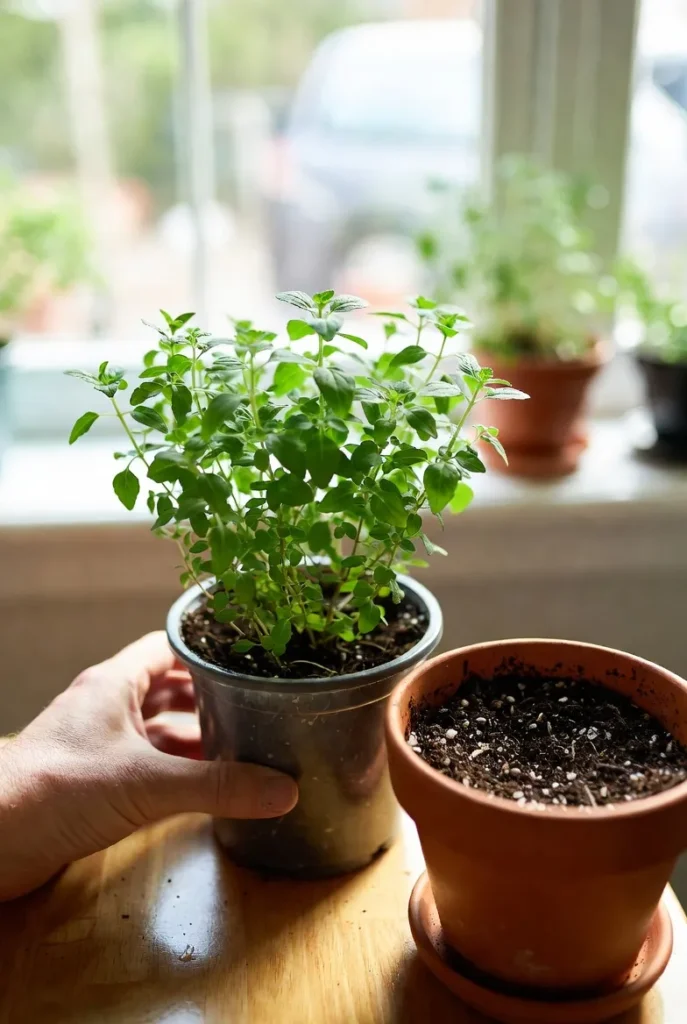
Many gardeners wait until plants look unhealthy before repotting. But herbs usually show early warning signs.
I usually recommend checking the roots whenever herbs stop growing suddenly. In many cases, the plant has simply become rootbound and needs more space.
Roots Growing from Drainage Holes
If roots appear under the pot, the plant has likely filled the entire container.
Soil Dries Out Very Quickly
When soil dries within a day after watering, roots may be taking up most of the space.
Slow or Stunted Growth
Healthy herbs grow steadily during the active season. Slow growth can mean limited root space.
Water Sitting on Soil Surface
Compacted soil prevents water from absorbing properly.
Plant Becomes Top-Heavy
Large leaves and stems may cause the plant to lean if the root system is crowded.
Yellow Leaves Despite Watering
Poor nutrient absorption can cause discoloration.
If you see two or more of these signs, your herb likely needs a larger pot.
When Should You Repot Indoor Herbs?
Most indoor herbs need repotting every 6 to 12 months depending on growth speed.
Fast-growing herbs usually outgrow containers sooner.
Herbs That Need Repotting More Often
- Basil
- Mint
- Lemon balm
- Chives
Herbs That Grow Slower
- Thyme
- Oregano
- Rosemary
Best Time of Year
The ideal time to repot herbs is early spring or early summer. During this period, plants are actively growing and recover quickly.
Avoid repotting when:
- The plant is flowering heavily
- The plant is stressed or wilting
- Indoor temperatures are extremely hot
Do Indoor Herbs Always Need Repotting?
Not always. Sometimes herbs only need a soil refresh instead of a new container.
A soil refresh means removing the top layer of old soil and replacing it with fresh potting mix. This works well when:
- the plant still fits the pot
- roots are not overcrowded
- growth is still healthy
Repotting is only necessary when the plant becomes rootbound or stops growing properly.
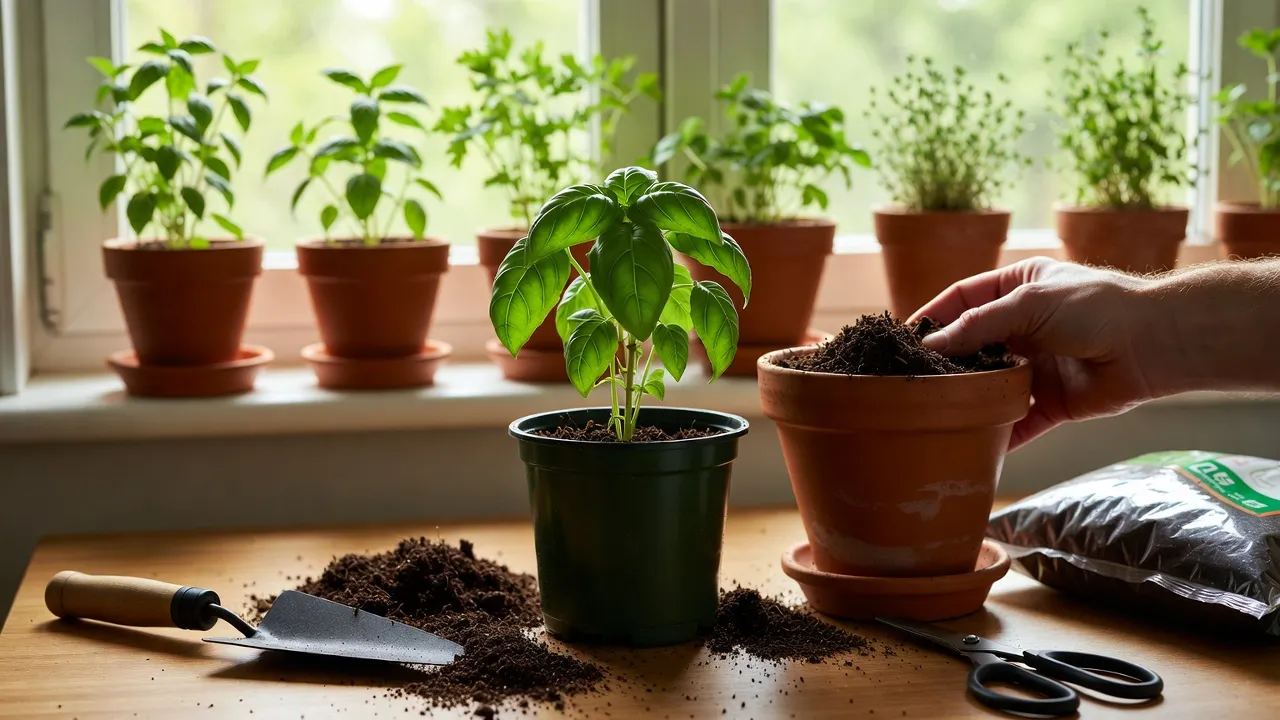
Tools You Need for Repotting Herbs
Repotting does not require complicated tools, but having the right supplies makes the process easier.
Common tools include:
- Plant pots with drainage holes
- Potting soil designed for containers
- Perlite or coconut coir for aeration
- Garden trowel for soil handling
- Pruning scissors for trimming damaged roots
- Watering can
These simple tools help protect the herb’s root system during the move.
How Much Bigger Should the New Pot Be?
When repotting herbs, the new container should be slightly larger than the previous one. Increasing the pot size gradually allows roots to expand while preventing excess moisture from staying in the soil.
Herb | Current Pot Size | Next Pot Size |
|---|---|---|
Mint | 4 inch | 6 inch |
Mint | 6 inch | 8 inch |
Parsley | 6 inch | 8 inch |
Thyme | 4 inch | 6 inch |
Oregano | 4 inch | 6 inch |
Choosing the correct pot size helps maintain balanced moisture and healthy root growth. If you want a deeper explanation of pot types and sizes, see our guide on best containers for indoor herbs.
Use Fresh Potting Mix When Repotting
Fresh potting mix helps herbs establish new roots quickly after being moved to a larger container. Indoor herbs grow best in light, well-draining potting mix that allows air and water to move freely through the soil.
Many gardeners use a simple mix of potting soil, perlite, and compost to improve drainage and soil aeration. Fresh soil also replaces nutrients that may have been depleted in the old pot.
If you’re unsure which soil blend works best for different herbs, see our guide on best soil for indoor herbs.
Make Sure the New Pot Has Drainage
Drainage holes are essential when growing herbs in containers. Without proper drainage, water can collect at the bottom of the pot and damage the plant’s root system.
Good drainage also improves soil aeration and helps prevent common problems like soggy soil and root rot. Choosing containers with proper drainage keeps the root environment healthy and balanced.
Poor drainage can lead to waterlogged soil and eventually cause root rot in indoor herbs, a common issue in container gardening.
Step-by-Step: How to Repot Indoor Herbs
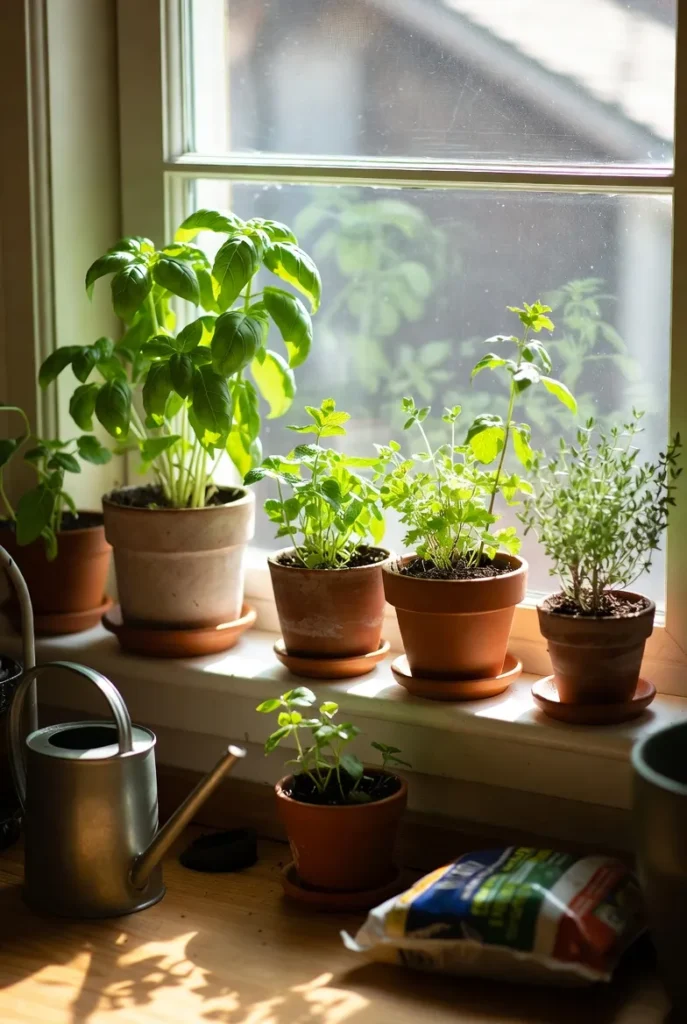
Repotting herbs is simple if done carefully.
Step 1: Water the Plant First
Water the herb lightly about one hour before repotting. Moist soil helps the root ball slide out easily.
Step 2: Prepare the New Container
Fill the bottom of the new pot with a layer of fresh potting mix.
Make sure the container has drainage holes.
Step 3: Remove the Herb Carefully
Hold the base of the plant and gently tilt the container. Tap the sides of the pot to loosen the root ball.
Avoid pulling the stem.
Step 4: Inspect the Roots
Look at the root system.
If roots are tightly wrapped around the soil, gently loosen them with your fingers.
Trim damaged or dark roots using pruning scissors.
Healthy roots are usually white or cream-colored and firm. If you notice dark, mushy, or foul-smelling roots, trim them away before repotting to prevent further damage.
I always take a moment to gently loosen tightly packed roots before placing the plant in its new container. This encourages the roots to spread outward and establish more quickly.
Step 5: Place the Herb in the New Pot
Set the plant in the center of the new container.
Keep the soil line at the same level as before.
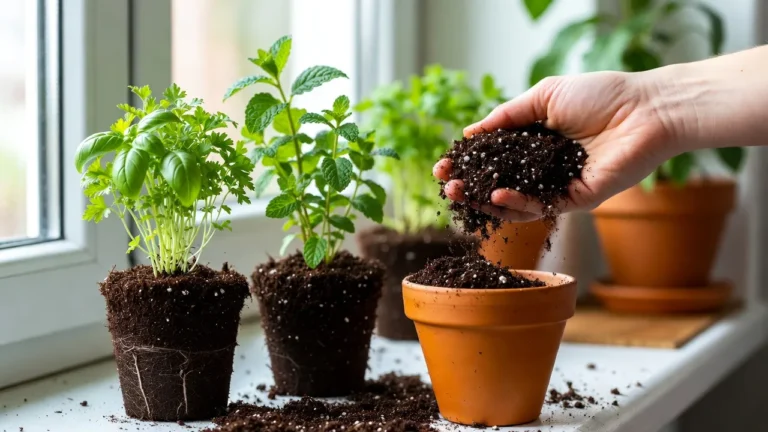
Step 6: Add Fresh Soil
Fill around the roots with potting mix.
Press lightly to stabilize the plant but avoid compressing the soil too much.
Step 7: Water the Plant
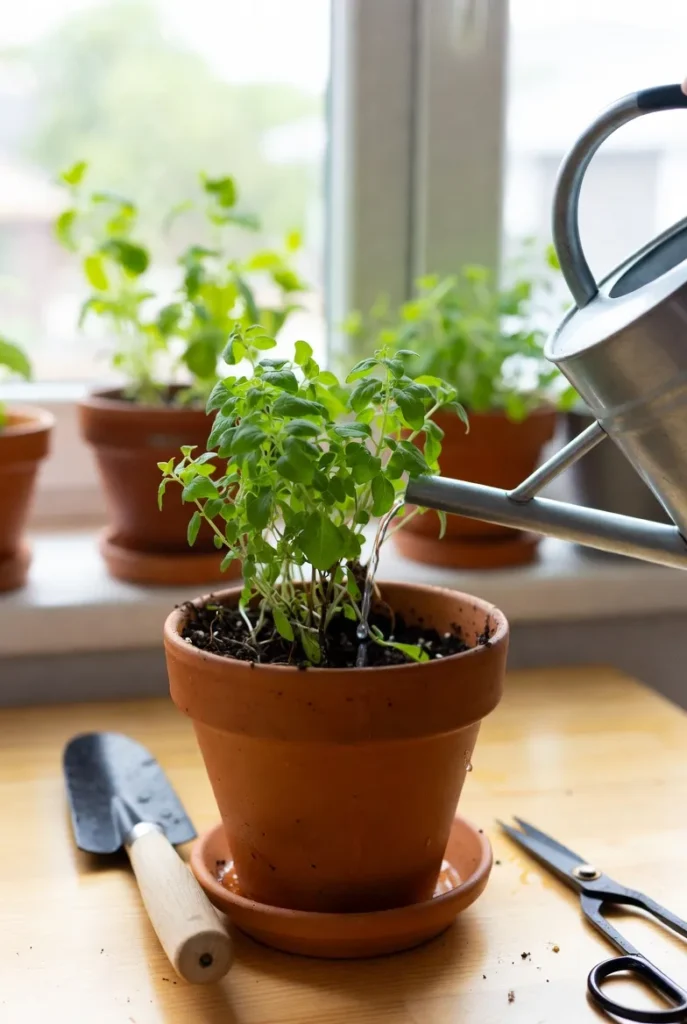
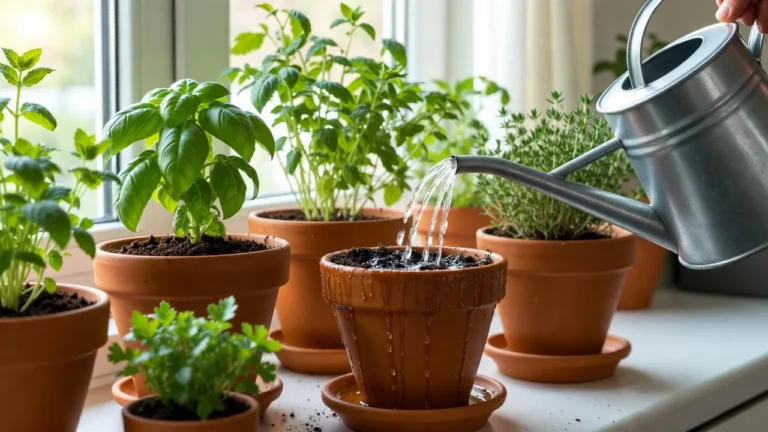
Water until excess moisture drains from the bottom. This helps settle the soil around the roots.
Proper watering is important after repotting because overly wet soil can stress the roots. Learning how to water indoor herbs properly helps keep the soil balanced and prevents common watering mistakes.
Step 8: Return the Plant to Bright Light
Place the herb in bright indirect sunlight for the next few days.
Avoid intense direct sunlight immediately after repotting.
Herb-Specific Repotting Tips
Different herbs respond slightly differently to repotting.
Basil
Basil grows quickly and often becomes rootbound. Repotting every few months helps maintain strong leaf production.
Mint
Mint spreads aggressively. Larger containers help control root crowding.
Parsley
Parsley dislikes root disturbance. Handle the root ball gently.
Thyme
Thyme prefers slightly drier soil, so ensure excellent drainage.
Oregano
Oregano grows steadily and benefits from yearly repotting.
How to Prevent Transplant Shock
Transplant shock happens when plants struggle to adjust after being moved.
Symptoms may include:
- drooping leaves
- slowed growth
- temporary wilting
Most herbs recover within a week if handled correctly.
Reduce Shock by Following These Tips
- Avoid damaging the root system
- Keep soil moist but not soggy
- Provide bright indirect light
- Avoid fertilizer for the first two weeks
Giving herbs time to adapt allows roots to establish in the new container.
Should You Repot Newly Bought Herbs?
Many grocery store herbs are grown in very small containers designed for short-term use.
These plants often contain multiple seedlings crowded into one pot. Repotting them into larger containers gives each plant more room to grow.
In many cases, dividing the herbs into two or three pots improves their health and productivity.
Common Repotting Mistakes to Avoid
Even experienced gardeners sometimes make mistakes during repotting.
Using Oversized Pots
Too much soil holds excess water and increases risk of root rot.
Forgetting Drainage Holes
Without drainage, water accumulates and suffocates roots.
Compacting Soil Too Much
Roots require oxygen to grow.
Repotting Too Often
Frequent disturbance stresses plants.
Placing Herbs in Direct Sun Immediately
Freshly repotted herbs are more sensitive to heat and light.
Avoiding these mistakes helps herbs recover faster.
Can You Repot Grocery Store Herbs?
Yes, and it often improves their health.
Supermarket herbs are usually grown in small crowded containers where several plants share the same pot.
After bringing them home, you can:
- divide the plants
- repot them into multiple containers
- give them fresh soil
This gives each herb enough space to grow.
Repotting Checklist for Beginners
Before repotting indoor herbs, review this quick checklist.
- Plant shows signs of being rootbound
- New pot is only slightly larger
- Pot has proper drainage holes
- Fresh potting mix is prepared
- Plant was watered before repotting
- Roots handled gently
- Herb placed in bright indirect light afterward
Following this checklist prevents many common problems.
FAQs
1. How often should indoor herbs be repotted?
Most indoor herbs need repotting every 6–12 months. Fast-growing herbs like basil and mint may need larger pots sooner.
2. What size pot should I use when repotting herbs?
Choose a container about 1–2 inches wider than the current pot. Larger jumps in size can cause excess moisture buildup.
3. Should herbs be watered after repotting?
Yes. Water the plant lightly after repotting so the soil settles around the roots and removes air pockets.
4. Can I repot herbs anytime?
Repotting can be done when necessary, but early spring is usually the best time because herbs recover faster during active growth.
5. What soil is best for indoor herbs?
Indoor herbs grow best in well-draining potting mix containing potting soil, perlite, and organic compost or coconut coir.
6. Why do herbs stop growing in small pots?
When roots fill the container, the plant becomes rootbound. This limits water and nutrient absorption, slowing growth.
7. How long does transplant shock last?
Most indoor herbs recover from transplant shock within 3–7 days if they receive proper light and moderate watering.
8. Do herbs grow better in clay or plastic pots?
Clay pots provide better drainage and airflow, while plastic pots retain moisture longer. Both can work depending on watering habits.
Conclusion
Repotting indoor herbs is one of the simplest ways to keep a kitchen herb garden healthy.
When roots outgrow their container, plants struggle to absorb nutrients and water. Moving herbs into a slightly larger pot with fresh potting mix restores the balance they need to thrive.
Watch for signs like roots coming out of drainage holes, soil drying too quickly, or slowed growth. When these appear, repotting can quickly revive the plant.
With proper soil, the right pot size, and gentle handling of roots, herbs such as basil, mint, parsley, thyme, oregano, and chives can continue producing fresh leaves for months or even years indoors.
Once your herbs begin producing regularly, you may want to learn how to store fresh herbs and keep them fresh longer so nothing goes to waste.