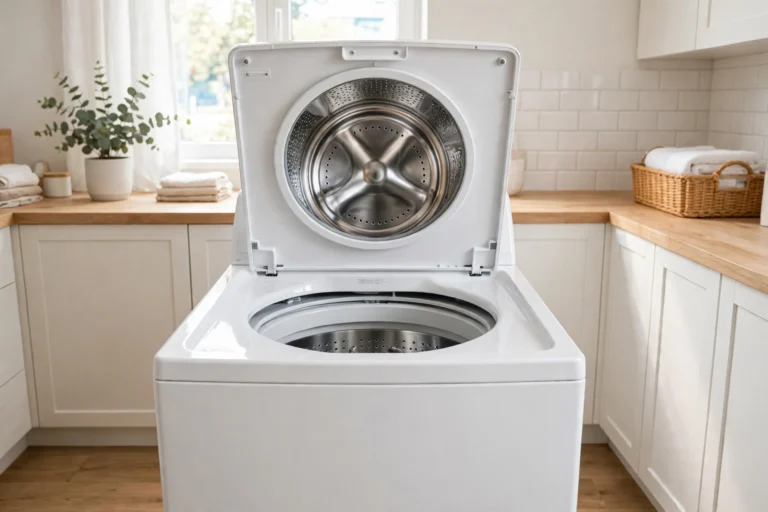
How to Clean Washing Machine with Vinegar and Baking Soda
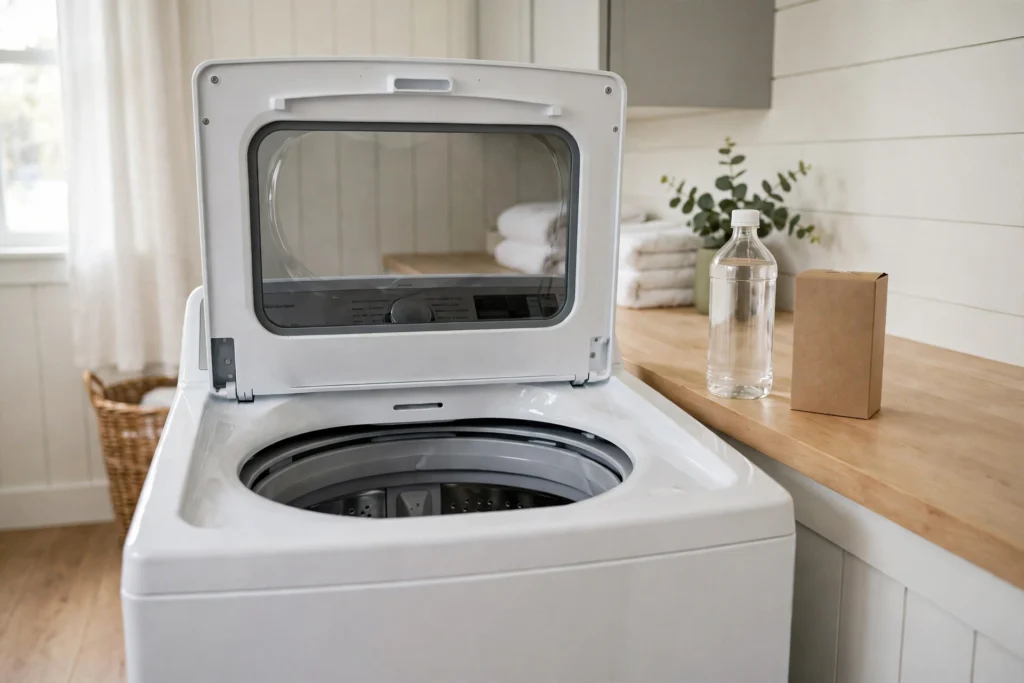
Run two separate hot cycles, vinegar first and baking soda second, and never mix the two in the same cycle. That single rule is the whole trick, because vinegar cuts through soap scum and mineral buildup while baking soda follows up by lifting lingering odors and residue.
You know the moment. You open the washer expecting clean laundry and get hit with that damp, sour smell instead. The towels feel a little stiff, the drum looks dull, and you wonder how a machine built to clean things got so grubby itself.
This guide fixes that, without fancy products or a repair visit. You only need white vinegar, baking soda, a cloth, and about an hour of mostly hands-off time.
What You Need Before You Start
Gather everything first, so you are not hunting for a cloth while a hot cycle is running. You also need an empty machine. No clothes, no detergent, and no fabric softener should be in either cleaning cycle.
- 2 cups distilled white vinegar
- 1/2 cup baking soda
- A clean microfiber cloth or an old towel
- A small brush or an old toothbrush for tight spots
- Warm water for wiping and rinsing
Before you start, check your machine manual. Most machines handle this method fine, but some manuals warn against vinegar or name a preferred cleaner. If your manual says no to vinegar, follow the manual and use its approved cleaner instead. That one check saves you a lot of worry later.
How to Clean a Washing Machine with Vinegar and Baking Soda Step by Step
This is the safest method for most machines, and it works for both top loaders and front loaders. The details for each type follow below, but the order never changes: vinegar first, baking soda second, wipe and dry last.
- Run the vinegar cycle. Pour 2 cups of distilled white vinegar directly into the drum. Select the hottest, longest cycle and let it run all the way through.
- Run the baking soda cycle. Sprinkle 1/2 cup of baking soda directly into the drum. Run a second hot, long cycle with nothing else in the machine.
- Wipe the drum. While the drum is still warm, wipe it with a clean, damp cloth to lift any loosened residue.
- Dry it out. Leave the door or lid and the detergent drawer propped open until everything is fully dry. This step matters as much as the cycles, because a closed, damp machine starts smelling again fast.
The order matters because vinegar is an acid and baking soda is a base. Put them in together and they mostly cancel each other out, with a lot of fizz and very little cleaning. Used one after the other, each one gets a full cycle to do its own job. Whirlpool’s washing machine cleaning guide also walks through safe cleaning steps and machine-specific checks, which is a useful second opinion before you start.
How to Clean a Top Loader with Vinegar and Baking Soda
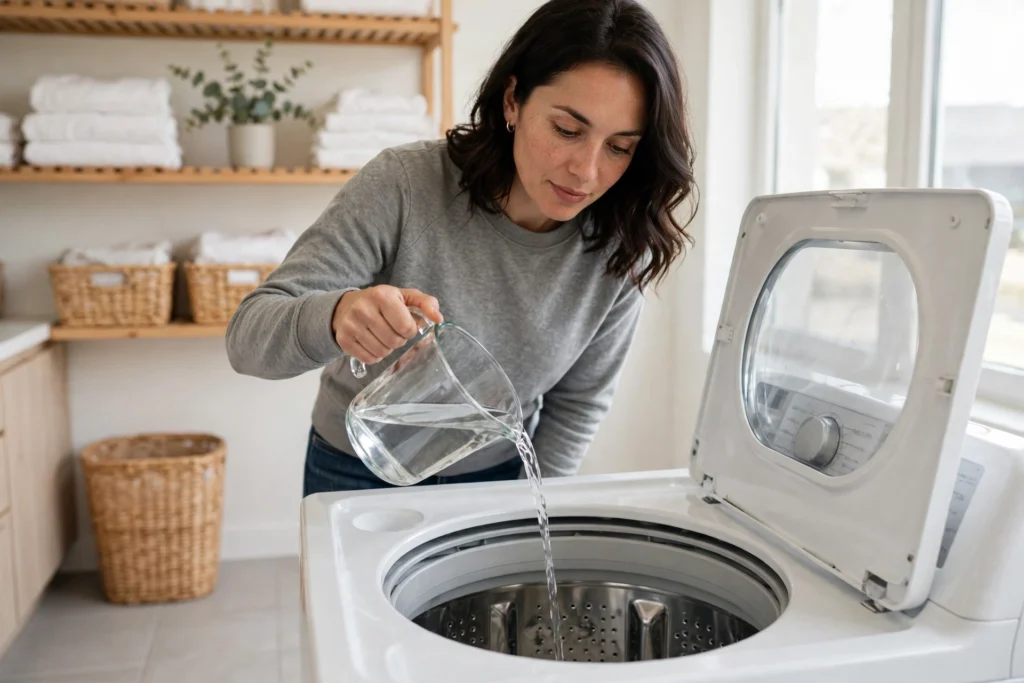
Top loaders are the simplest case, because you can see the drum and reach it easily. Pour the vinegar straight into the drum, not into the dispenser, unless your manual tells you otherwise. Use the hottest water setting your machine offers.
- Let the machine fill and agitate for a few minutes, so the vinegar mixes through the water.
- If the drum is very grimy, pause the cycle and soak for 30 to 60 minutes, then let it finish.
- Run the baking soda cycle the same way, with 1/2 cup sprinkled into the drum.
- Wipe around the top rim and under the lid, where splashes dry into a crust.
For high efficiency top loaders, do not be tempted to add extra vinegar to make up for the lower water level. The standard 2 cups is enough, and more product does not mean a cleaner drum. It usually just means more rinsing.
How to Clean a Front Loader with Vinegar and Baking Soda
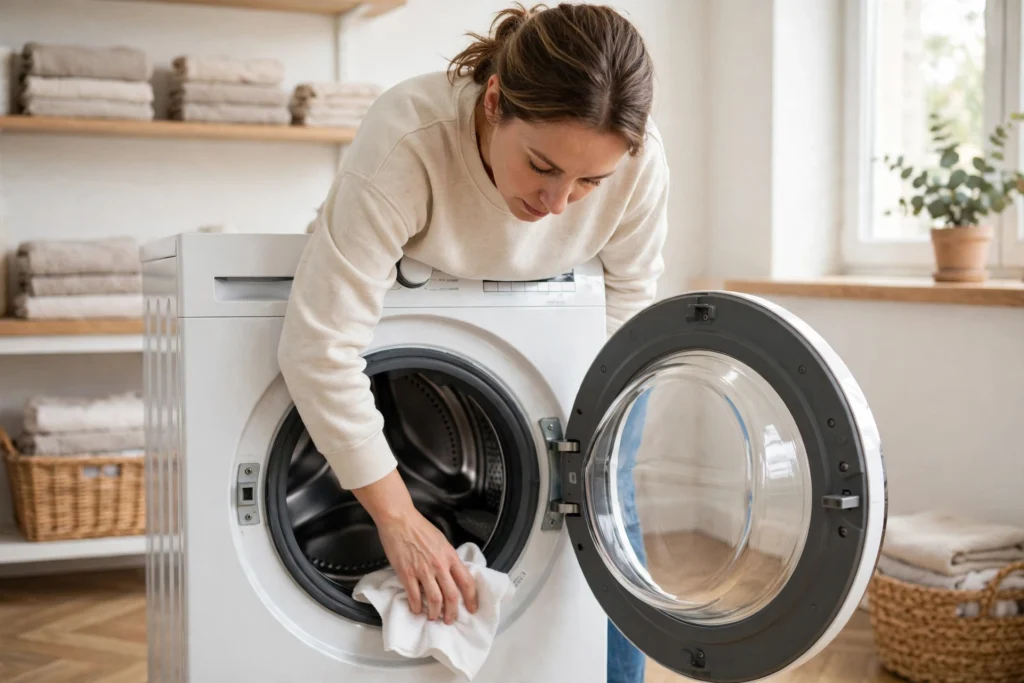
Front loaders need a little more attention, because the door seal traps moisture. The cycles are the same, but the seal work is not optional. Add the vinegar to the drum or the detergent dispenser, as your manual directs, then run the hottest, longest cycle.
- After the vinegar cycle, run the baking soda cycle with 1/2 cup in the drum.
- Open the rubber gasket folds and wipe inside them with a damp cloth. This is where mildew hides.
- Dry the folds with a second cloth. Do not leave the seal damp.
- Leave the door slightly ajar after every wash, not just on cleaning day.
If your front loader has a self-clean or tub-clean cycle, you can use that setting for the vinegar cycle, unless the manual says to use only its own cleaner on that setting. When in doubt, a normal hot cycle does the job, and the manual wins over any online guide, including this one.
How to Get Rid of Washing Machine Smell with Baking Soda
If smell is your main problem, the baking soda cycle is the step that matters most, but it cannot fix a damp seal on its own. Smell usually comes from mildew in the gasket, residue in the dispenser, and water sitting in a closed machine.
- Run both cycles in order, even if the smell seems mild. The vinegar cycle clears the buildup that feeds the odor.
- Wipe and dry the seal, then clean the dispenser drawer (see below).
- Leave the door open until the drum is dry, every time you wash.
- Repeat at most once a month. Cleaning more often will not keep it fresher, and it increases wear on seals.
Once the machine smells fresh, your laundry should too. If towels and shirts still look dull after the machine is clean, the problem may be the wash itself, not the machine. In that case, see how to get stains out of white clothes for stain and brightness steps that work after a clean wash.
How to Clean a Washing Machine Dispenser, Drum and Seal
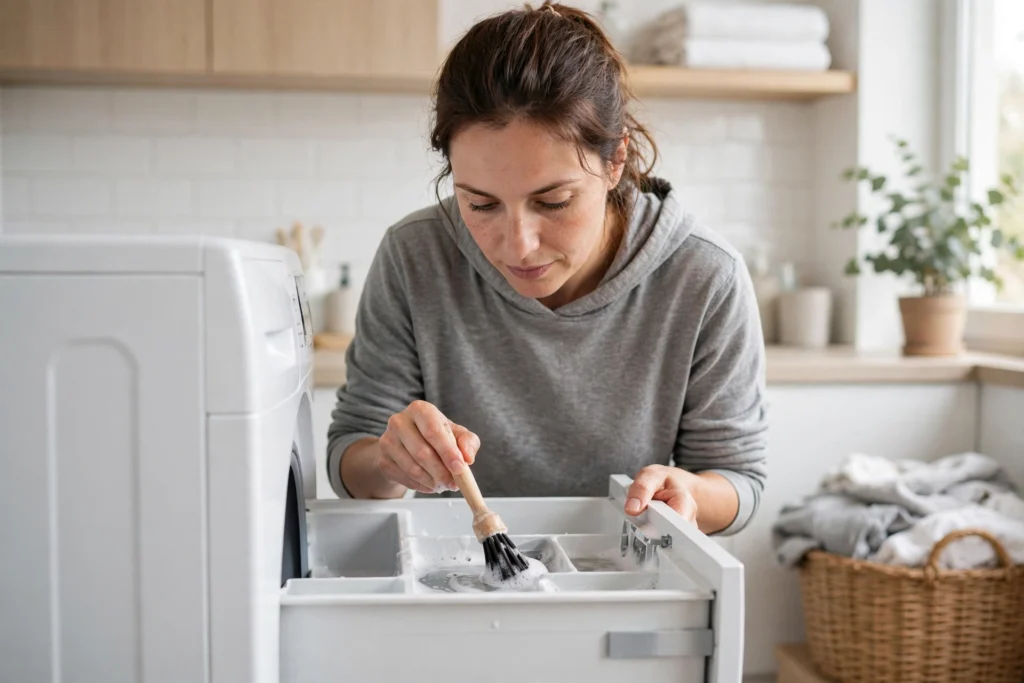
The cycles clean the inside of the drum, but they do not always reach the corners. Do this detail work after the cycles, while any residue is soft and easy to lift.
- Dispenser drawer: Remove it if your machine allows it, soak it in warm water, scrub with a small brush, rinse, and dry it fully before sliding it back.
- Drum: Wipe the full drum surface, including the back wall and the area near the opening, with a damp cloth.
- Seal and gasket: Wipe the folds, then dry them with a clean cloth. Do not scrub rubber hard or soak it in undiluted vinegar.
- Exterior and lid or door: Wipe splashes and detergent drips, which harden into a film if they are left.
Can Vinegar Damage a Washing Machine Seal?
Here is the honest conflict. Many cleaning guides recommend vinegar, while Whirlpool warns that vinegar’s acidity can, over time, damage components, particularly rubber seals and hoses. Both points can be true at once. Occasional, diluted use in a full wash cycle is very different from soaking rubber in undiluted vinegar again and again.
The safe consensus is simple: check your manual, use this method at most monthly, and wipe seals dry. Do not pour straight vinegar onto the seal and leave it sitting there, and do not run vinegar cycles weekly in the hope of a fresher machine. If a seal is already cracked, torn, or leaking, stop and get it checked. No cleaning method fixes damaged rubber.
What Not to Do When Cleaning a Washing Machine with Vinegar and Baking Soda
- Do not mix vinegar and baking soda in the same cycle. They neutralize each other and waste both products.
- Never mix vinegar with bleach, or use them together. The combination can create harmful fumes, and it is not a stronger cleaner. It is a dangerous one.
- Do not clean with clothes or detergent in the machine. Cleaning cycles are for the empty drum only.
- Do not use apple cider vinegar. Use distilled white vinegar, which is clear and leaves less residue.
- Do not scrub seals with undiluted vinegar, and do not leave vinegar sitting in the dispenser. Diluted, occasional use is the safe version of this method.
- Do not clean more than once a month with vinegar. If the smell returns sooner, the cause is usually a damp seal or a closed door, not a dirty drum.
Frequently asked questions
Can you mix vinegar and baking soda in the same cycle?
No. They neutralize each other and waste both products; always run vinegar first in one hot cycle, then baking soda in a second hot cycle.
How much vinegar and baking soda should I use?
2 cups of distilled white vinegar in the first cycle and 1/2 cup of baking soda in the second cycle, in an empty machine.
Can vinegar damage a washing machine seal?
Whirlpool warns vinegar’s acidity can over time damage rubber seals and hoses; the safe consensus is check your manual, use this method at most monthly, and wipe seals dry, never soak rubber in undiluted vinegar.
How often should I clean my washing machine with vinegar and baking soda?
At most once a month; cleaning more often will not keep it fresher and increases wear on seals.
Can I use apple cider vinegar instead of white vinegar?
No. Use distilled white vinegar, which is clear and leaves less residue.
Does this method work for both top loaders and front loaders?
Yes. The cycles are the same; front loaders additionally need the rubber gasket folds wiped inside and dried, and the door left slightly ajar after every wash.
Conclusion
Two hot cycles, in the right order, are all it takes: vinegar first, baking soda second, then wipe and dry. Keep it to once a month, check your manual, and leave the door open so the machine can dry properly. Do that, and the next load should smell like clean laundry again, not like the machine it came from.