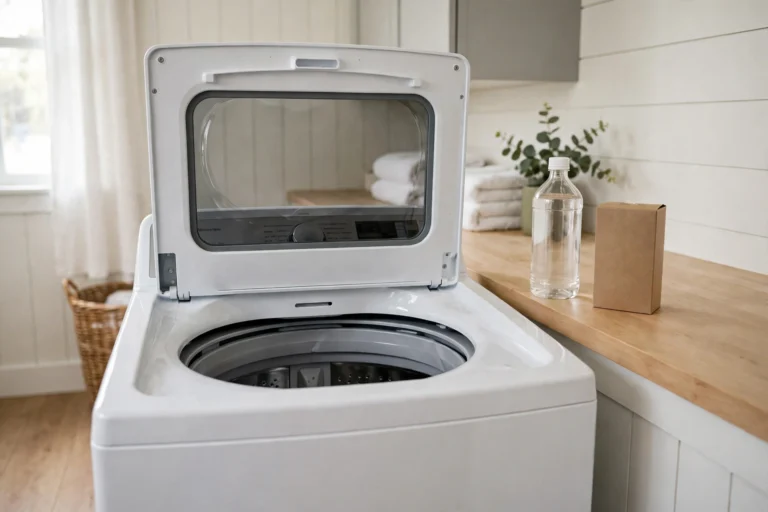
How to Clean Washing Machine Top Loader
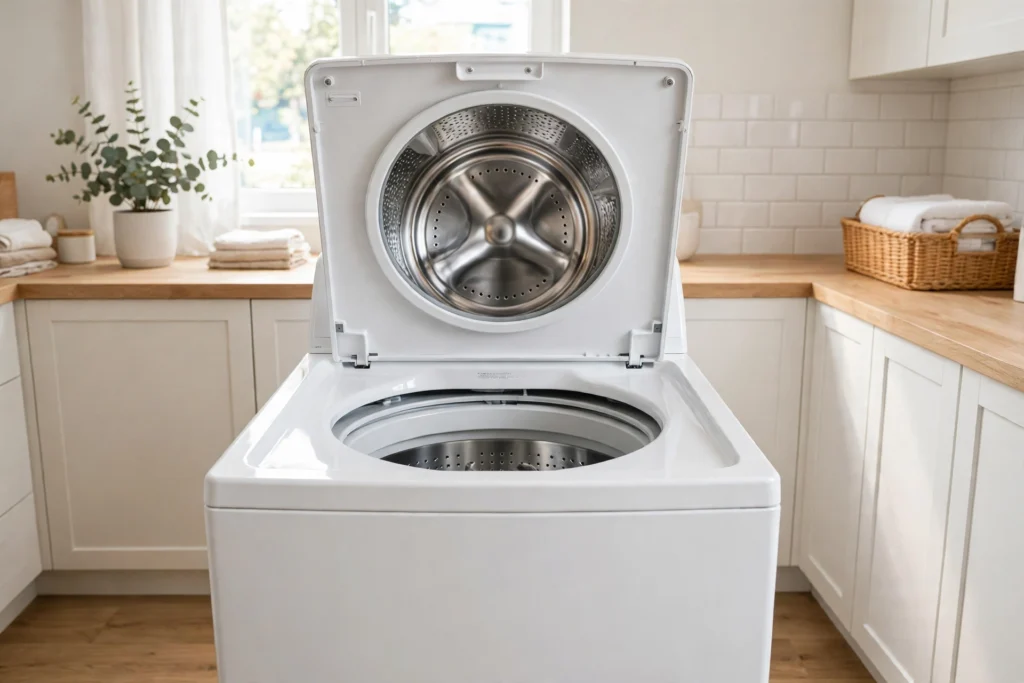
You open the washer and the smell hits you before you see anything. Musty, sour, like a damp towel left too long. Your clothes come out smelling less than fresh, and you start wondering whether the machine that is supposed to clean things is itself dirty.
It is. And the fix is simpler than most people expect.
The best way to clean a top load washing machine is to run its Clean Washer cycle once a month with a washer cleaner tablet in the empty drum. If your machine has no cleaning cycle, a hot water vinegar soak does the same job. Either way, the whole routine takes under an hour of your time, and the machine does most of the work.
What you need
- One washer cleaner tablet, or 1 cup liquid chlorine bleach, or 2 to 4 cups distilled white vinegar
- 1 cup baking soda (only if odor remains after the first cycle)
- Microfiber cloths
- An old toothbrush
- Mild dish soap and warm water for the outside
That is everything. You do not need a special kit, and you do not need to take the machine apart.
Method 1: The Clean Washer cycle (best and safest)
This is the method the manufacturers themselves recommend, so start here if your machine has a Clean Washer, Tub Clean, or Self Clean cycle.
Step 1: Empty the drum. Take out every item, including stray socks and anything caught under the rim. A cleaning cycle with clothes in it cleans nothing well and can damage the load.
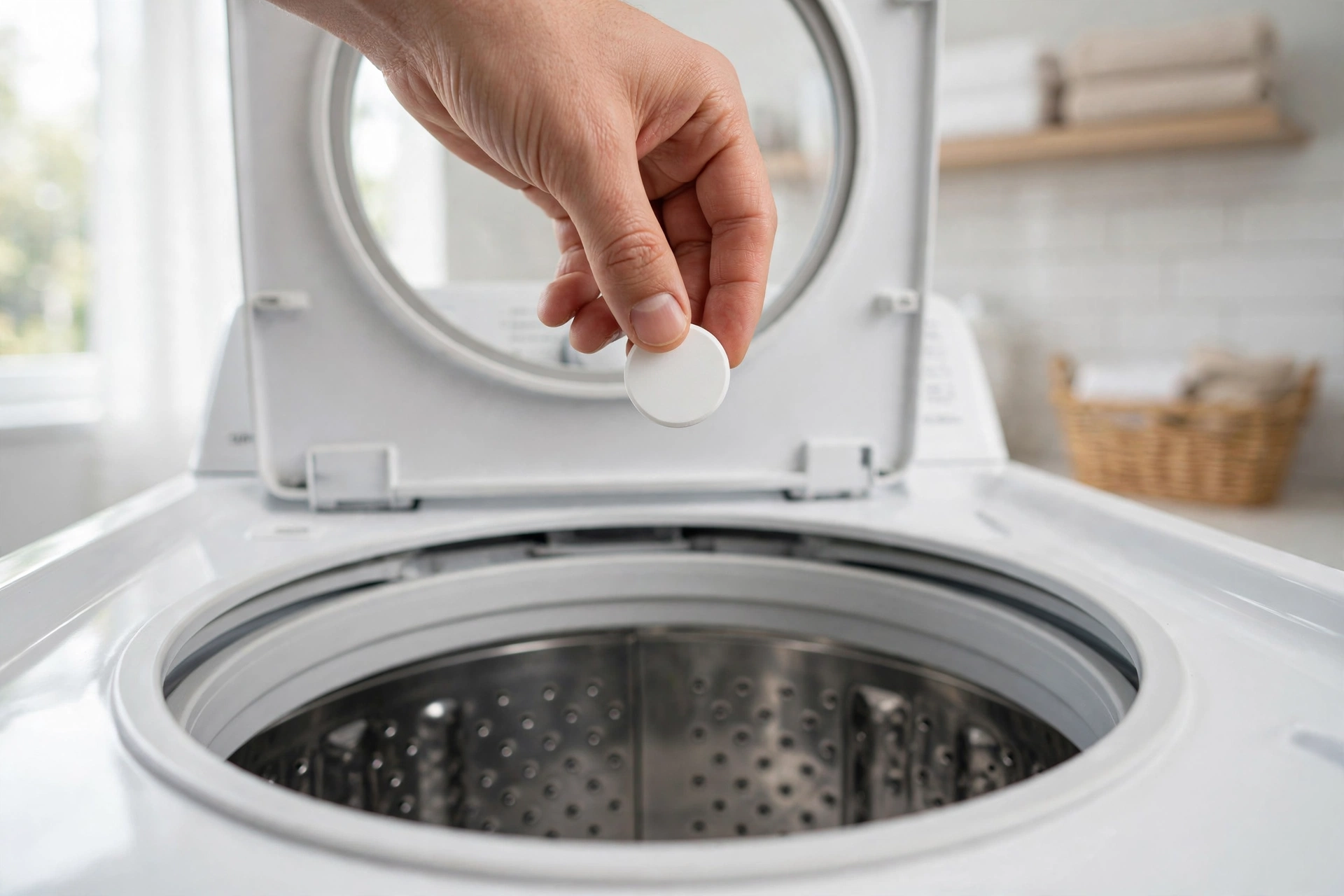
Step 2: Add the cleaner. Place one washer cleaner tablet directly in the empty basket, not in the dispenser. If you are using bleach instead, pour 1 cup of liquid chlorine bleach into the bleach compartment. Add nothing else. No detergent, no vinegar, no second cleaner in the same cycle.
Step 3: Run the cycle. Select the Clean Washer cycle and press start. Do not interrupt it. This cycle fills higher than a normal wash so the water reaches above the usual water line, which is exactly where residue hides.
Step 4: Rinse and dry. When the cycle ends, run a Rinse and Spin cycle to flush the cleaner out. Then leave the lid open so the interior dries completely. A closed, damp drum is how the smell comes back.
The manufacturer guidance behind this method is worth reading once, because it also covers how often to clean and what not to mix in. The Maytag use and care guide sets the routine at once a month or every 30 wash cycles, whichever comes first.
Method 2: Hot water vinegar soak (for machines without a cleaning cycle)
If your machine has no Clean Washer cycle, this is the method to use. It works on the same principle: hot water plus time dissolves the residue that cool washes leave behind.
Step 1: Set the machine. Choose the largest load size, the hottest water temperature, and the longest wash cycle. Start the machine and let the drum fill.
Step 2: Add the vinegar. Once the drum is full, pour in 2 to 4 cups of distilled white vinegar. Close the lid and let the machine agitate for a few minutes so the vinegar mixes through the water. For the full vinegar and baking soda routine, see how to clean a washing machine with vinegar and baking soda.
Step 3: Soak for one hour. Pause the cycle or open the lid and let the hot vinegar water sit for a full hour. This soak is what breaks down soap scum and mineral scale on the drum and the agitator.
Step 4: Finish the cycle. Close the lid and let the cycle run to the end. If a sour smell still lingers, run a second hot cycle with 1 cup of baking soda in the drum. The baking soda neutralizes the vinegar smell and scrubs away loosened grime.
One caution on vinegar: it is generally safe for top loaders, but a few manufacturers advise against it while a machine is under warranty. Check your manual before you use it. If your manual says no, use the tablet method instead.
Method 3: Bleach cycle for a smell that will not quit
Sometimes a monthly clean is not enough, usually after months of cool washes or a machine that sat closed and damp. In that case, a bleach cycle is the stronger option.
Run an empty hot cycle with 1 cup of liquid chlorine bleach and nothing else, then follow with a Rinse and Spin. Bleach kills the bacteria and mold behind a stubborn smell in a way vinegar does not.
The rule that matters most here is simple: never mix bleach with vinegar, and never mix bleach with ammonia. Used in the same cycle, bleach and vinegar give off chlorine gas, which is toxic to breathe. If you want both a bleach clean and a vinegar clean, run them as two separate cycles on different days, never together.
Cleaning the parts the cycle cannot reach
The drum cycle handles the inside of the tub. These smaller parts need your hands, and they are where a lot of the smell actually lives.
Dispensers. Pull out any removable dispenser parts and soak them in warm water with a little dish soap for 15 to 20 minutes. Scrub the corners and grooves with an old toothbrush, rinse, and dry before putting them back. If your dispensers are not removable, wipe them with a damp cloth and use the toothbrush on the grooves in place.
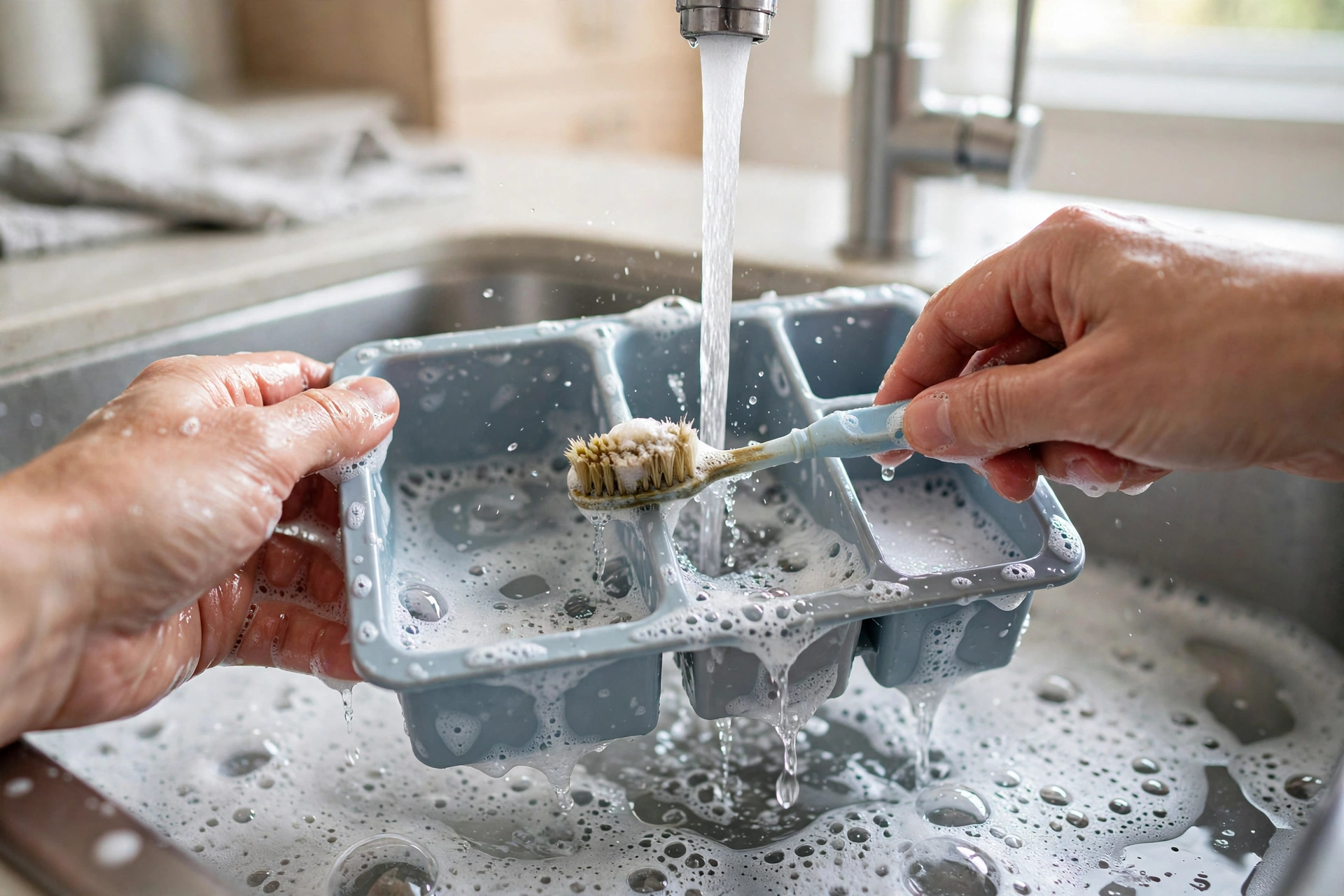
Lint filter. Many top loaders have a lint filter in the drum or near the top. Pull it out, rinse it under running water, brush off stubborn debris, and let it dry before reinstalling. Clean it at least once a month, weekly if you wash often.
Agitator or impeller. Wipe around the base of the agitator or impeller, where grime collects out of sight. If your agitator is removable and your manual shows how, take it out and wash it in warm soapy water, then dry and reattach it.
Rim, lid, and exterior. Wipe the underside of the rim and the lid with a damp cloth, then wipe the outside with mild soap and water. Skip abrasive pads and powders, which damage the finish.
How often should you clean a top load washing machine?
Once a month, or every 30 wash cycles, whichever comes first. That is the manufacturer interval, and it is enough for most households.
Clean more often, every two to three weeks, if you wash heavily soiled clothes, use a lot of fabric softener, run mostly cool cycles, or keep the machine in a hot, humid room. Cool water and heavy softener use both leave more residue behind, so those machines need the extra attention.
What not to do
- Never run a cleaning cycle with clothes in the drum.
- Never mix bleach with vinegar or ammonia in the same cycle.
- Never use more bleach than the manual recommends. Extra bleach does not clean better, and it can damage the machine over time.
- Never use abrasive powders or scouring pads on the exterior or the drum.
- Never close the lid on a damp drum and leave it. That single habit causes more washer smell than anything else.
How to keep a top load washer from smelling
The monthly clean is the foundation, but three small habits do most of the prevention. Leave the lid open between washes so air circulates and the drum dries. Take damp loads out promptly instead of letting them sit for hours. And use the right amount of detergent, because excess detergent is the main source of the residue that turns into smell.
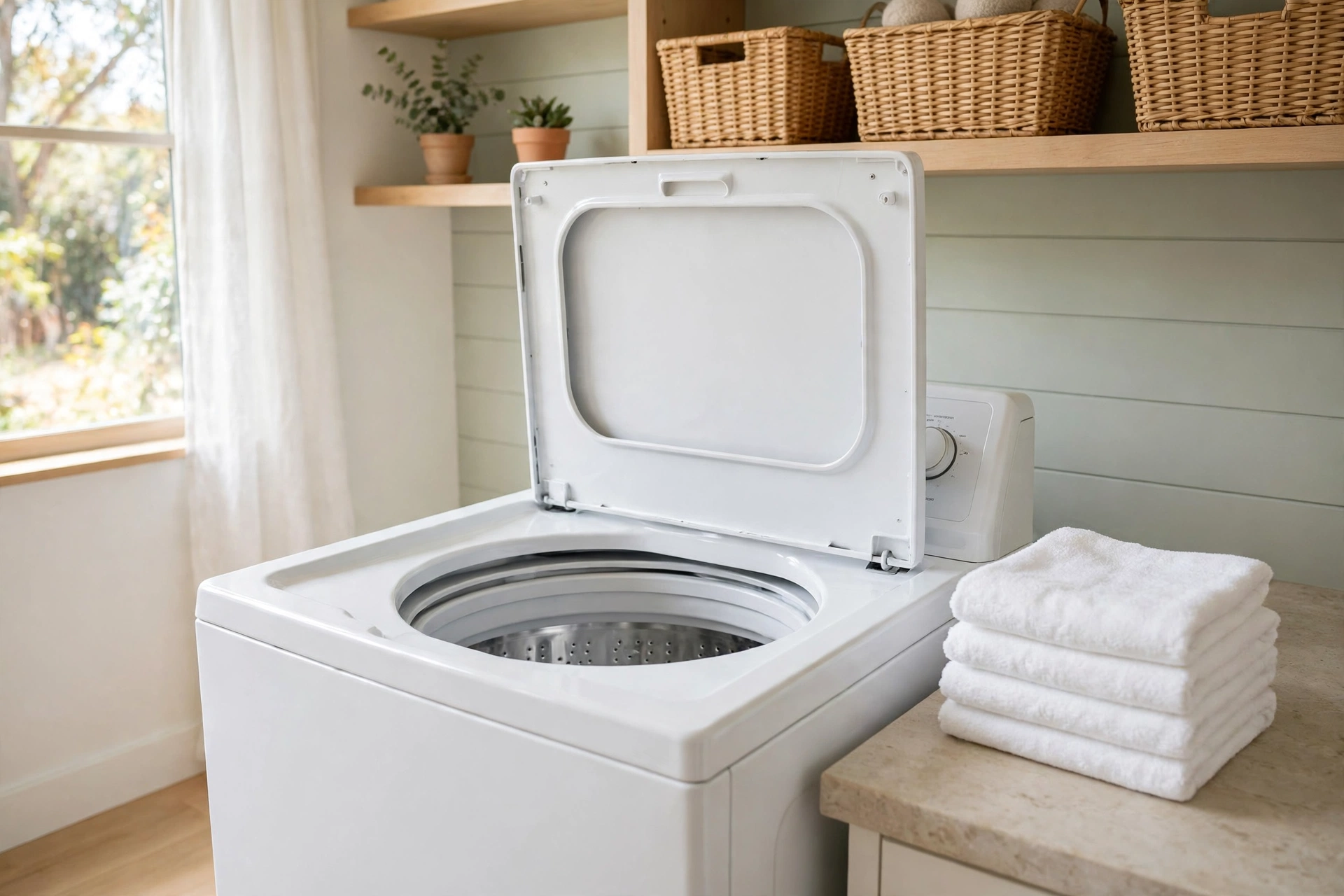
If your machine already smells, run the cleaning cycle once a week for three weeks to clear an established odor, then return to the monthly routine.
Frequently asked questions
Can you use vinegar to clean a top load washing machine?
Yes, in most cases. Run an empty hot cycle with 2 to 4 cups of distilled white vinegar and a one hour soak. Check your manual first, since a few manufacturers advise against vinegar under warranty, and never mix vinegar with bleach in the same cycle.
How often should you clean a top load washing machine?
Once a month or every 30 wash cycles, whichever comes first. Wash more often, every two to three weeks, if you use a lot of softener, run mostly cool cycles, or wash heavily soiled clothes.
Where is the lint filter on a top load washer?
It depends on the model. Check inside the drum, near the top rim, or in the agitator. Pull it out, rinse it under running water, brush off debris, and let it dry before reinstalling.
Can you use bleach to clean a washing machine?
Yes. Run an empty hot cycle with 1 cup of liquid chlorine bleach and nothing else, then a Rinse and Spin. Never mix bleach with vinegar or ammonia, and never use more than the manual recommends.
Why does my top load washer smell even after cleaning?
The usual causes are residue in the dispensers or under the rim, a lint filter that was never cleaned, or a lid that stays closed on a damp drum. Clean those parts by hand, leave the lid open between washes, and repeat the cleaning cycle weekly for three weeks if the smell is established.
Should you leave the lid open after washing?
Yes. Leaving the lid open between washes lets the drum dry out, which prevents the damp conditions that cause odor and mildew. It is the single easiest habit for keeping a top loader fresh.
Conclusion
A top load washer does not need a complicated routine. Run the Clean Washer cycle once a month with a tablet or a cup of bleach, or a hot vinegar soak if your machine has no cleaning cycle. Clean the dispensers, filter, and rim by hand while the cycle runs. Leave the lid open when you are done.
Do that, and the machine that washes your clothes will stop being the reason they smell less than fresh.
With a clean machine, washing whites is much easier — see our guide to how to get stains out of white clothes for keeping whites bright.