14 Christmas Gingerbread House Ideas for Extra Magic
Want to make a gingerbread house that looks like something straight out of a Christmas storybook? These Christmas gingerbread house ideas go beyond basic cookie cottages with creative shapes, colorful icing, and tiny details worth looking at twice.
From candy striped towers and charming little shops to a whimsical carousel and a clockwork workshop, each design brings something different to your holiday baking. You do not need professional decorating skills to create something memorable. A few clever details, the right color combinations, and some patience with royal icing can make a big difference.
Whether you are decorating with family, planning a festive centerpiece, or looking for fresh inspiration for your Pinterest boards, these ideas will help you find a design that feels special. Explore the details, choose your favorite, and get ready to make a gingerbread creation worth displaying.
1. Gingerbread Christmas Windmill
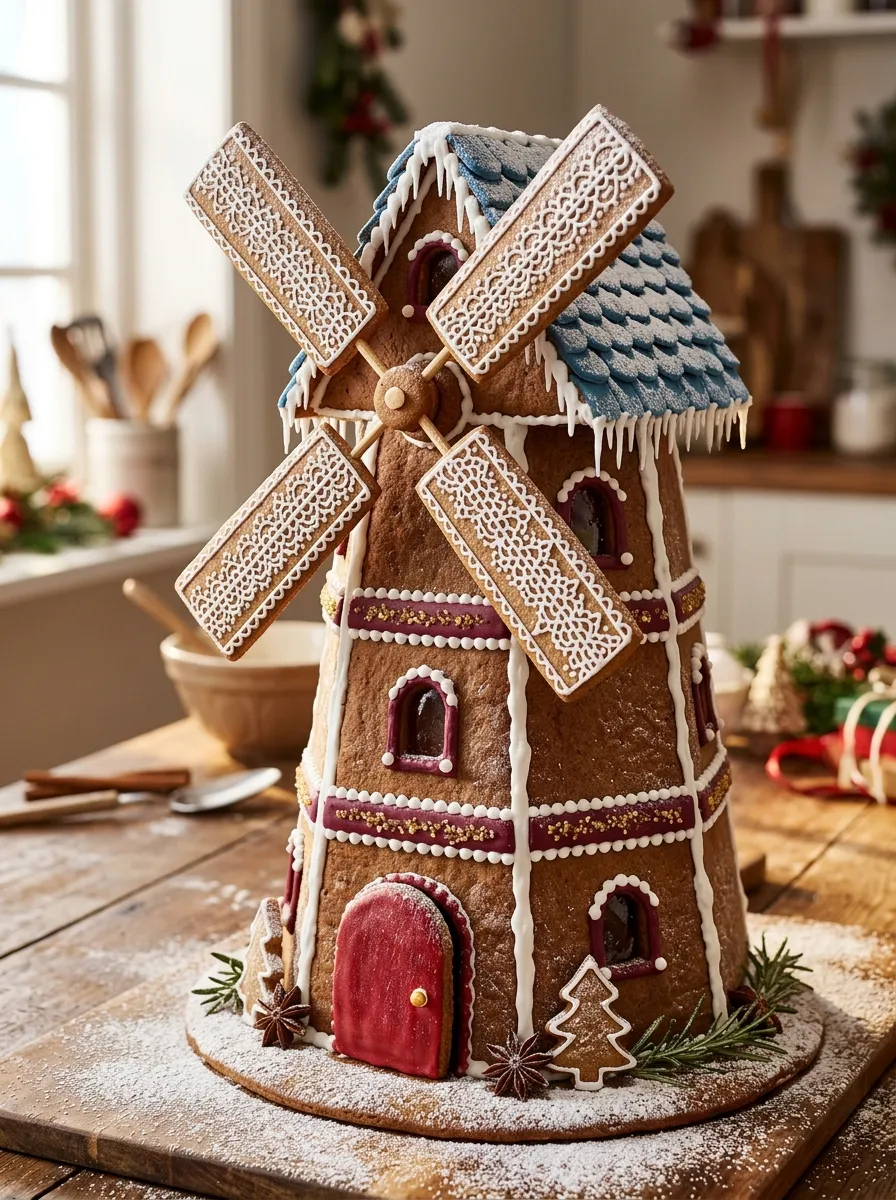
- Shape four broad gingerbread sails with rounded tips, keeping their sizes consistent for a balanced windmill.
- Pipe white scrolls, dots, and fine curved lines across each sail.
- Cover the steep roof with overlapping blue candy or gingerbread shingles.
- Attach the sails to a central cookie hub with thick royal icing and let them dry fully.
Have you ever wanted a gingerbread house that looks different from every little cottage on a Christmas table? This windmill stands out through its tall tower and four decorative sails. Burgundy bands contrast with the blue roof, while white icing patterns make the broad biscuit blades look carefully handcrafted.
The secret is to decorate the sails before attaching them. Flat gingerbread pieces are easier to pipe neatly, especially when you want matching swirls and dots. Arrange the blue shingles in overlapping rows, allowing a little variation between pieces so the roof looks handmade rather than machine cut.
For stability, keep the sails stationary instead of trying to make them turn. I would use a firm cookie hub and plenty of drying time before moving the structure. A small gold sugar accent at the center ties the four sails together without distracting from their detailed patterns.
Read More : 22 Christmas Centerpieces That Won’t Break Budget
2. Gingerbread Christmas Toy Shop
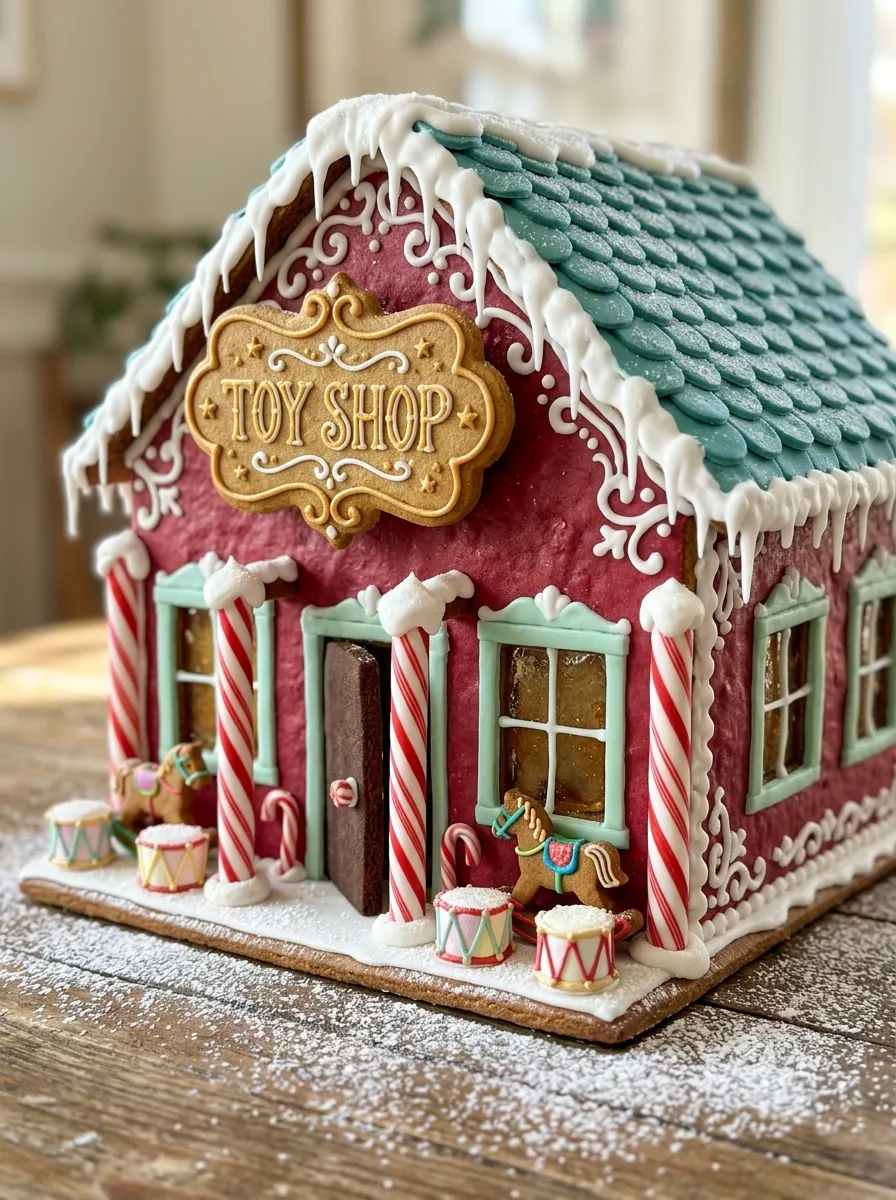
- Decorate each front window as a separate toy display with miniature rocking horses and candy drums.
- Alternate cranberry and white icing details around the entrance columns.
- Pipe mint green scallops beneath the curved teal roof.
- Make the golden shop sign from a small cookie plaque with neatly piped lettering.
Remember those toy shop windows that make you stop and look at every little object inside? That feeling is the focus here. Cranberry walls, mint green frames, and a curved teal roof give the gingerbread storefront a cheerful Christmas palette, while miniature toys make the windows worth examining closely.
Give each display a different arrangement rather than placing identical sweets in every window. Small gingerbread rocking horses can sit beside candy drums, with tiny icing dots suggesting buttons and painted details. Keep the window frames narrow enough to leave the miniature objects visible, and use white piping to define the shop’s architectural edges.
The golden sign should sit directly above the entrance, where it can be seen without competing with the roof. Use thick royal icing to secure the peppermint columns and allow them to set before attaching the curved roof. Small differences in the toy shapes will make the finished shop feel handmade and full of character.
3. Gingerbread Christmas Tram House
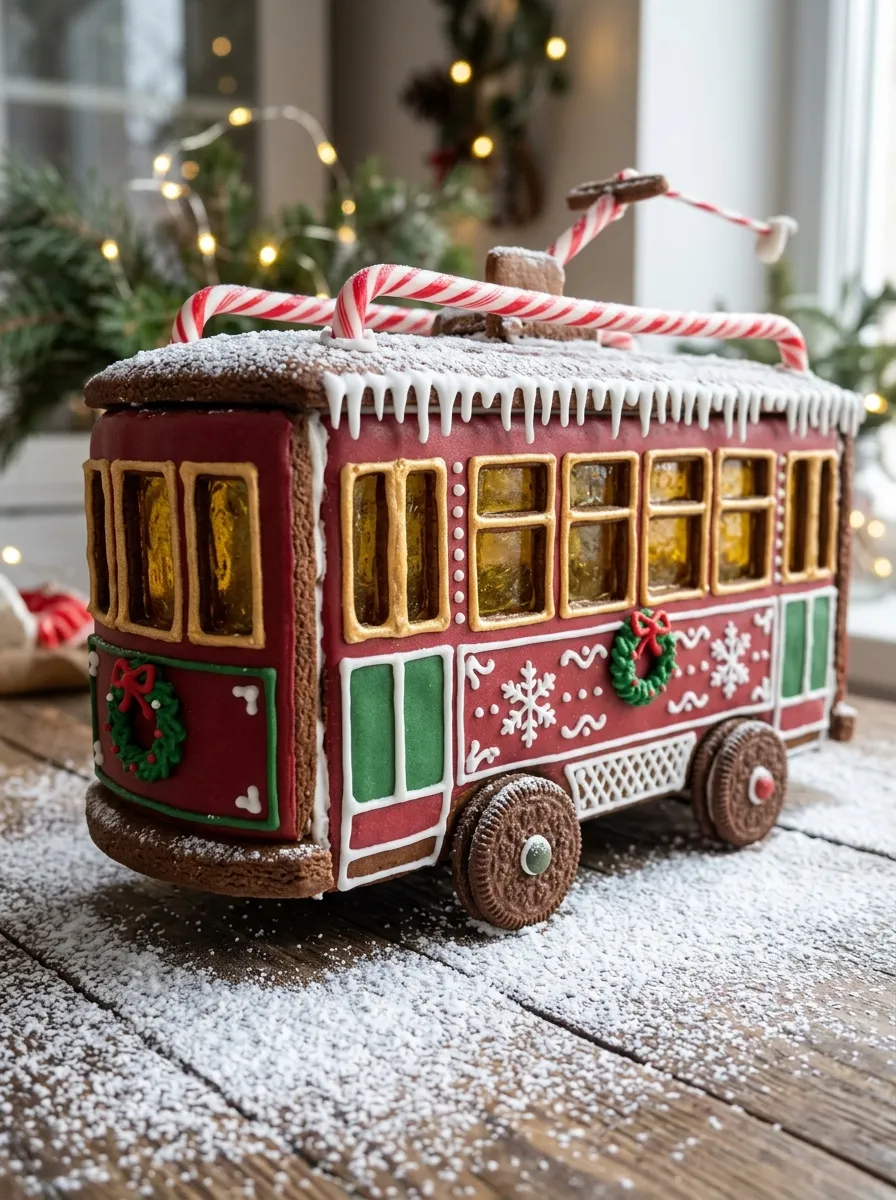
- Cut the tram body as a long rectangular shell with gently rounded front edges.
- Attach circular gingerbread wheels to the lower sides using thick royal icing.
- Frame each window with golden icing and add small amber candy panes.
- Decorate the side panels with white snowflakes and miniature wreaths between the windows.
Why settle for a house with four walls when a Christmas gingerbread display can take the shape of a vintage streetcar? Its long red body gives you room for repeating windows, green panels, and tiny wreaths. Golden frames catch the light, while the circular cookie wheels make the unusual structure instantly recognizable.
The trick is to keep the windows evenly spaced along the sides. Use a paper template before cutting the dough so the openings line up, then decorate the panels while they are still flat. Small white snowflakes break up the red surface, while forest green icing gives the streetcar a traditional holiday feel.
Because the finished tram can be fragile, secure the body to a flat gingerbread base before attaching the wheels and roof rail. Keep the candy cane rail low and firmly attached. The wheels can remain decorative rather than functional, allowing the windows, wreaths, and contrasting icing panels to remain the main attractions.
Read More : 23 Elf on the Shelf Arrival Ideas Full of Surprises
4. Gingerbread Christmas Flower Shop
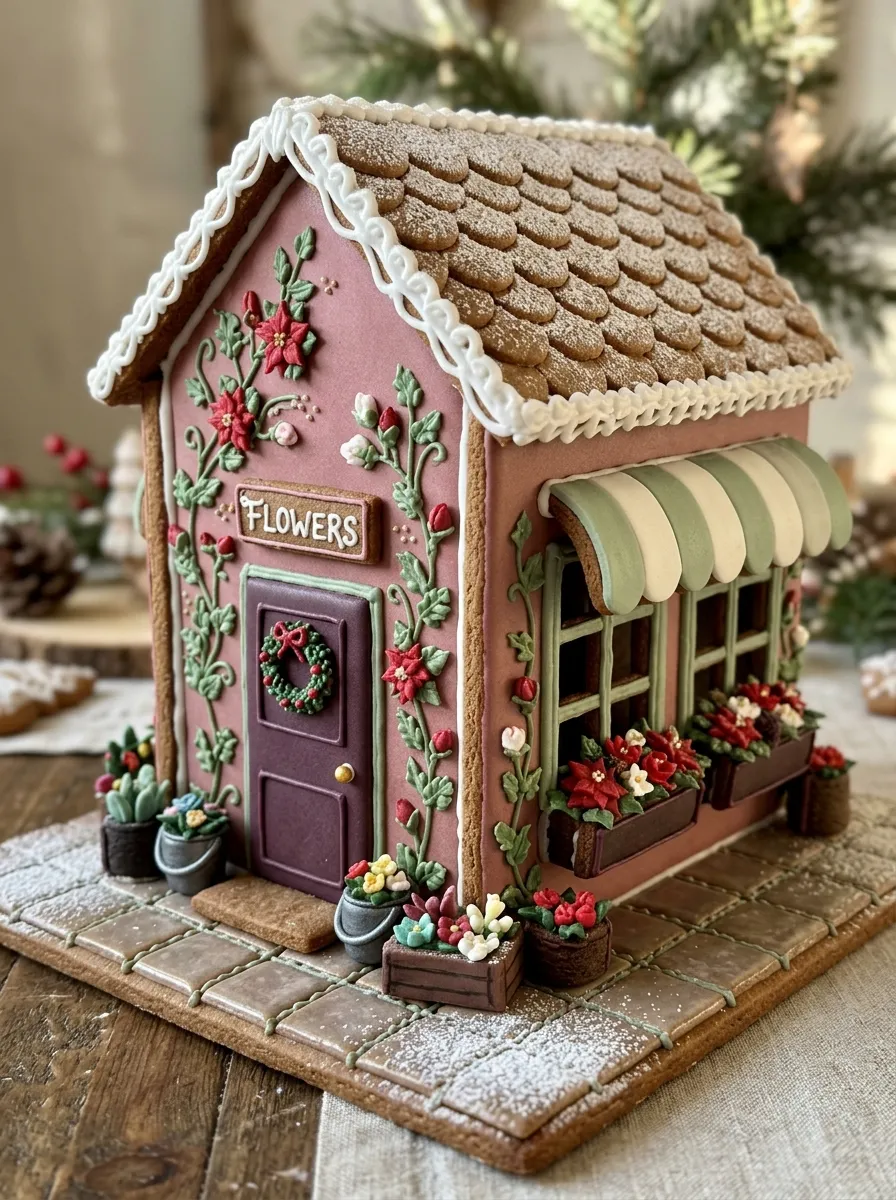
- Pipe climbing green vines around the windows and along the front corners.
- Fill window boxes with tiny red, cream, and pink sugar flowers.
- Make a curved awning from thin cookie panels decorated with alternating rose and ivory stripes.
- Add a small wreath above the plum doorway with miniature piped leaves and berries.
Have you ever stopped to admire a flower shop window filled with little blooms? Bring that feeling to your Christmas gingerbread house with dusty rose walls, sage green frames, and a dark plum door. Tiny poinsettias and curling vines make the facade feel full of detail without covering every inch.
The window boxes are the main attraction, so vary the flower sizes and colors rather than lining up identical pieces. Pipe thin green stems first, then add small red and cream blossoms. The curved striped awning gives the shop a distinct shape, while the climbing vines guide the eye around the windows.
For a convincing handmade finish, leave small gaps between some flowers so the icing leaves remain visible. Attach the awning only after the walls are firm, and keep the wreath compact enough to fit above the door. The mix of botanical details and bakery style stripes makes this storefront different from a traditional gingerbread cottage.
5. Candy Cane Lighthouse Cottage
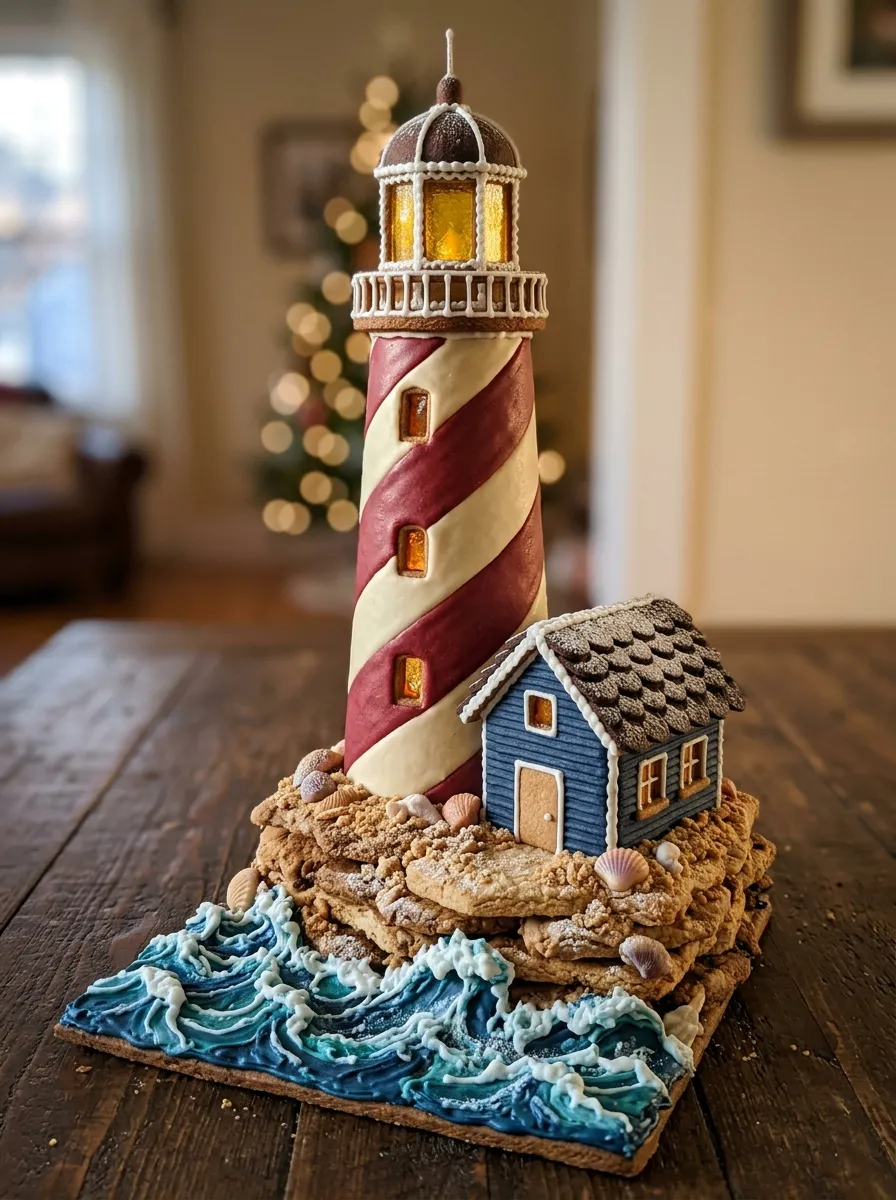
- Alternate red and ivory icing bands around the lighthouse tower.
- Make the lantern room from a small cookie enclosure with translucent yellow candy windows.
- Attach thin pretzel railings around the upper viewing platform.
- Pipe curling white icing waves around the base and scatter tiny edible seashells nearby.
A tall lighthouse joined to a small cottage is an unexpected way to decorate for Christmas. The striped tower draws attention upward, while the navy blue cottage gives the red and ivory bands a strong contrast. A golden lantern room finishes the top, making the structure recognizable even among elaborate gingerbread houses.
The lantern room needs careful detailing because it is the smallest architectural feature. Use translucent yellow candy for the windows and narrow cookie strips for the frame. Pretzel railings can surround the viewing platform, but keep them light so they do not put too much weight on the tower.
Around the base, pipe uneven white icing waves instead of a flat border. A few tiny edible seashells help the coastal theme read clearly without distracting from the striped tower. Assemble the lighthouse and cottage as separate sturdy sections first, then join them once the royal icing has dried.
6. Candy Castle Gingerbread House
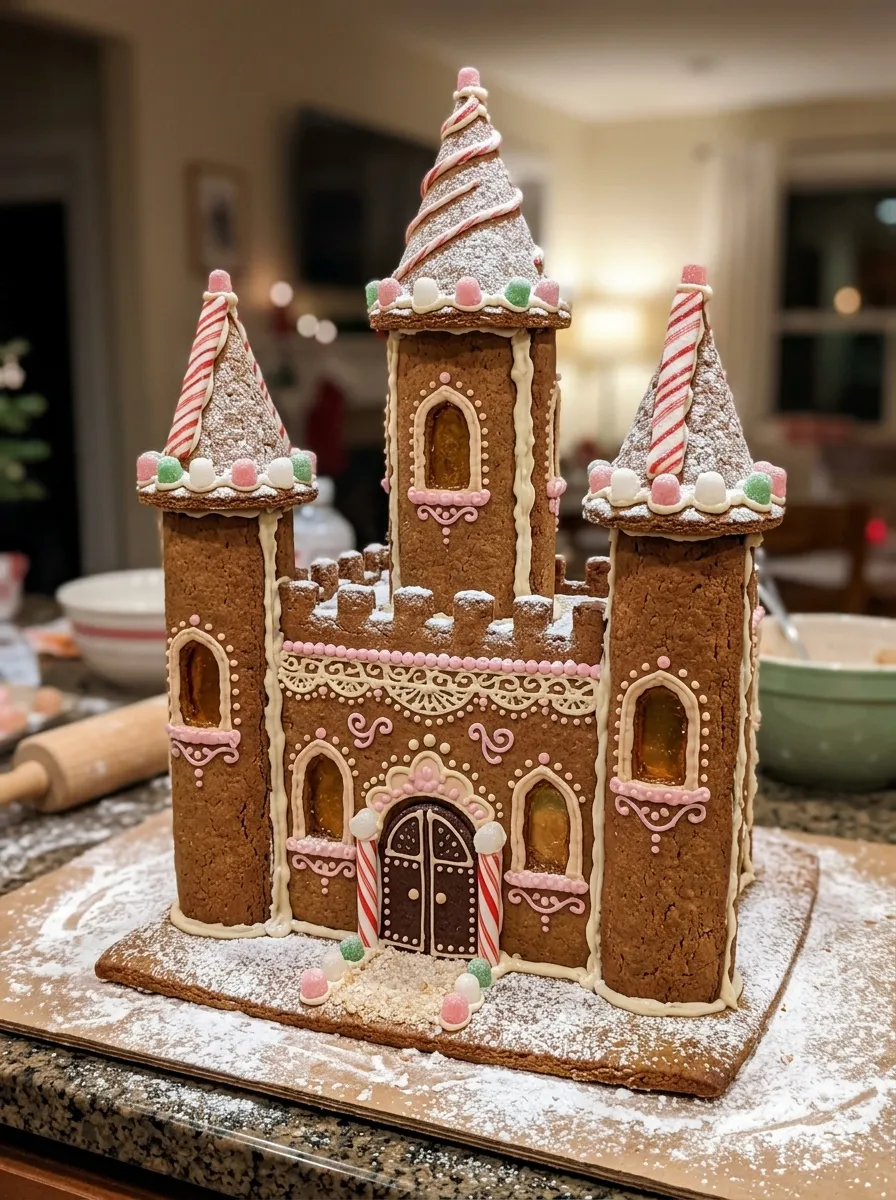
- Decorate each tower with a different pattern of scallops, dots, and fine icing swirls.
- Use pink and white peppermint candies to form stripes around the turrets.
- Add tiny wafer balconies beneath the upper windows.
- Pipe a decorative entrance arch with small sugar pearls along the edges.
When a gingerbread castle has towers at different heights, it instantly feels more detailed than a simple square house. Pastel pink and ivory icing give this castle a playful Christmas palette, while peppermint stripes and arched windows bring each tower to life. The central doorway acts as the visual anchor.
Give every tower its own small detail, but repeat the main colors throughout the structure so the design feels connected. One tower can have piped scallops, another tiny dots, and the tallest one fine curved swirls. Wafer balconies add depth to the facade, especially when placed just below the upper windows.
The most common mistake is decorating every surface so heavily that the cookie structure disappears. Leave sections of golden gingerbread visible between icing patterns. Secure the towers with thick royal icing and let the joints set before adding the sugar pearls around the entrance. The contrast between exposed cookie and raised decoration makes the castle look handmade and intricate.
7. Classic Gingerbread Bakery
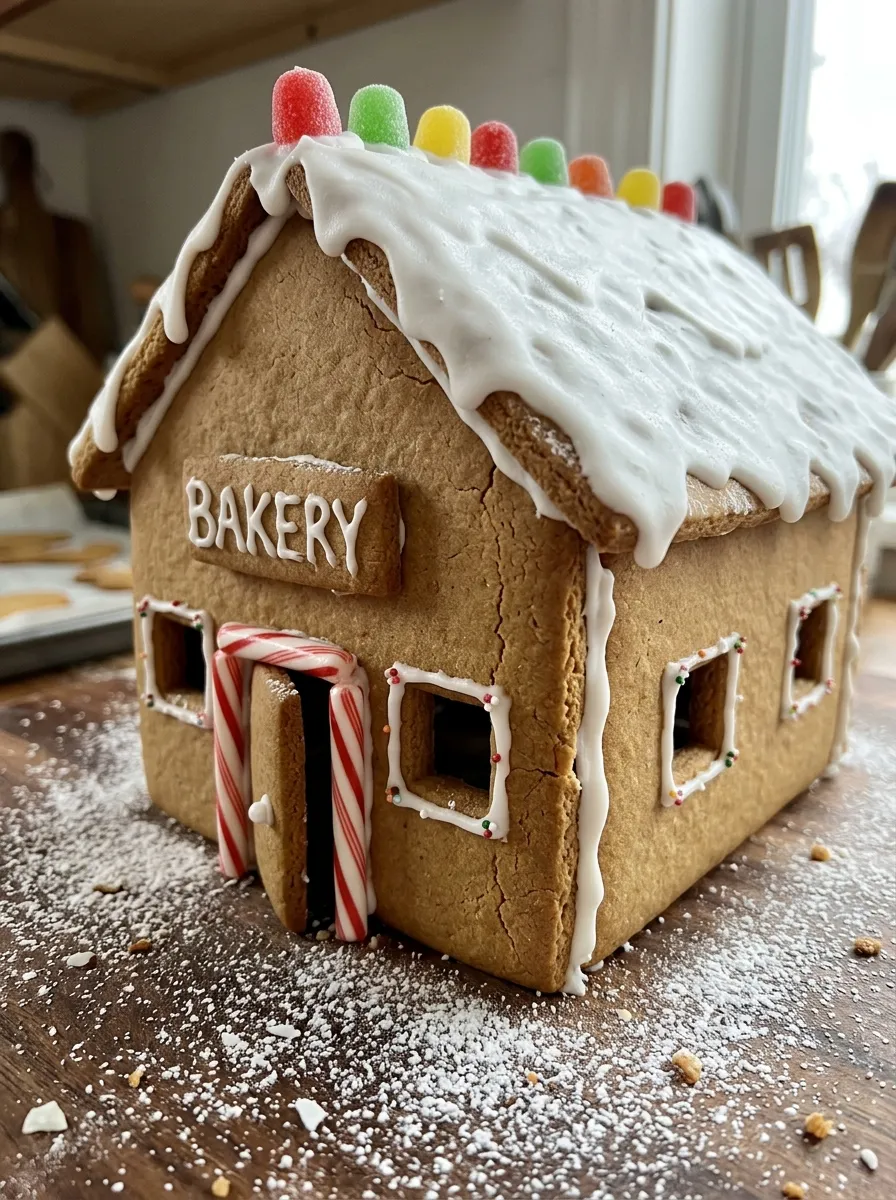
- Pipe thick white royal icing along the roof edges, letting a few drips fall naturally.
- Frame the entrance with two curved candy cane pieces secured with icing.
- Place red and green gumdrops beside the windows, leaving the golden cookie walls visible.
- Add tiny icing wreaths above the windows for a festive bakery finish.
Have you ever baked gingerbread and found that the slightly uneven edges look more charming than perfectly smooth decorations? A classic Christmas bakery celebrates that handmade character. Golden brown walls, white icing borders, and a candy cane entrance give the little building a familiar holiday appearance without making it look plain.
The trick is to decorate the roofline and doorway with care. Let the icing form a few natural drips, then use gumdrops to bring small bursts of red and green beside the windows. Keep the cookie surface exposed between decorations so its toasted color and baked texture remain part of the design.
For extra detail, pipe tiny wreaths above the windows using green icing and small red dots for berries. Allow the walls to dry firmly before attaching the roof, and support the panels while the icing sets. A few visible seams and crumbs help the bakery feel like a real homemade gingerbread creation.
8. Gingerbread Christmas Train Station
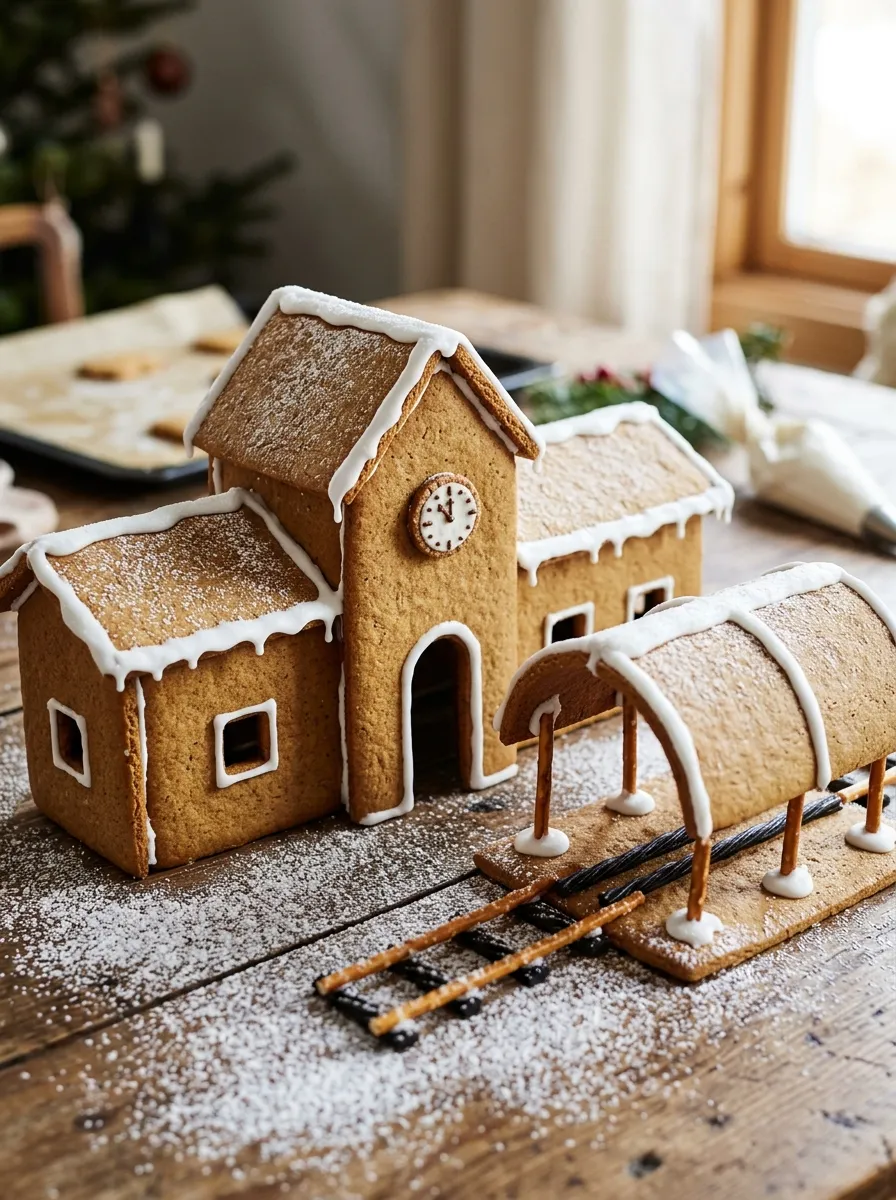
- Build a long rectangular station with a tall central entrance and two smaller side windows.
- Construct the covered platform from narrow gingerbread strips supported by pretzel sticks.
- Place a round candy clock above the entrance and outline it with white icing.
- Pipe a small station name onto a cookie sign beside the doorway.
A gingerbread building can tell a story without looking like a home. This little train station has a long facade, a covered platform, and a central entrance that makes it instantly recognizable. Golden cookie walls and white icing seams keep the architecture clear, while the tiny clock supplies a detail people will notice up close.
The platform canopy is what sets the station apart. Use pretzel sticks as supports and attach narrow gingerbread strips across the top. Keep the canopy shallow enough to avoid putting too much weight on the supports. A small clock above the door and a simple station sign make the structure feel purposeful rather than randomly decorated.
I would assemble the main walls first and let them dry completely before attaching the platform. Add the clock and sign while the front panel is still easy to reach. Leave the side walls relatively plain so the extended roofline, covered platform, and carefully placed entrance remain the main focus.
9. Gingerbread Christmas Carousel

- Shape a circular pavilion with six evenly spaced gingerbread columns.
- Alternate burgundy and cream icing stripes along the columns for a festive pattern.
- Pipe teal scallops, tiny gold sugar pearls, and green garlands around the roof edge.
- Position miniature cookie horses between the columns and finish the roof with a peppermint finial.
What makes a gingerbread display memorable is often its shape, not the number of sweets covering it. A carousel breaks away from the usual house silhouette with an open circular pavilion, striped columns, and tiny edible horses. Burgundy, cream, and teal give the structure a rich color palette, while gold pearls catch the light.
The open sides let every decorative detail remain visible. Space the columns evenly around a round cookie base, then check that the roof rests level before attaching it. The striped columns should follow the same color pattern, while the scalloped teal trim adds a curved detail that contrasts with the straight supports.
The miniature horses need enough room to stand between the columns without touching the roof. Attach them after the pavilion is stable, using small dots of royal icing. A peppermint finial completes the top, while the tiny garlands and gold pearls provide detail without hiding the carousel’s distinctive circular structure.
10. Vintage Bookshop Gingerbread House
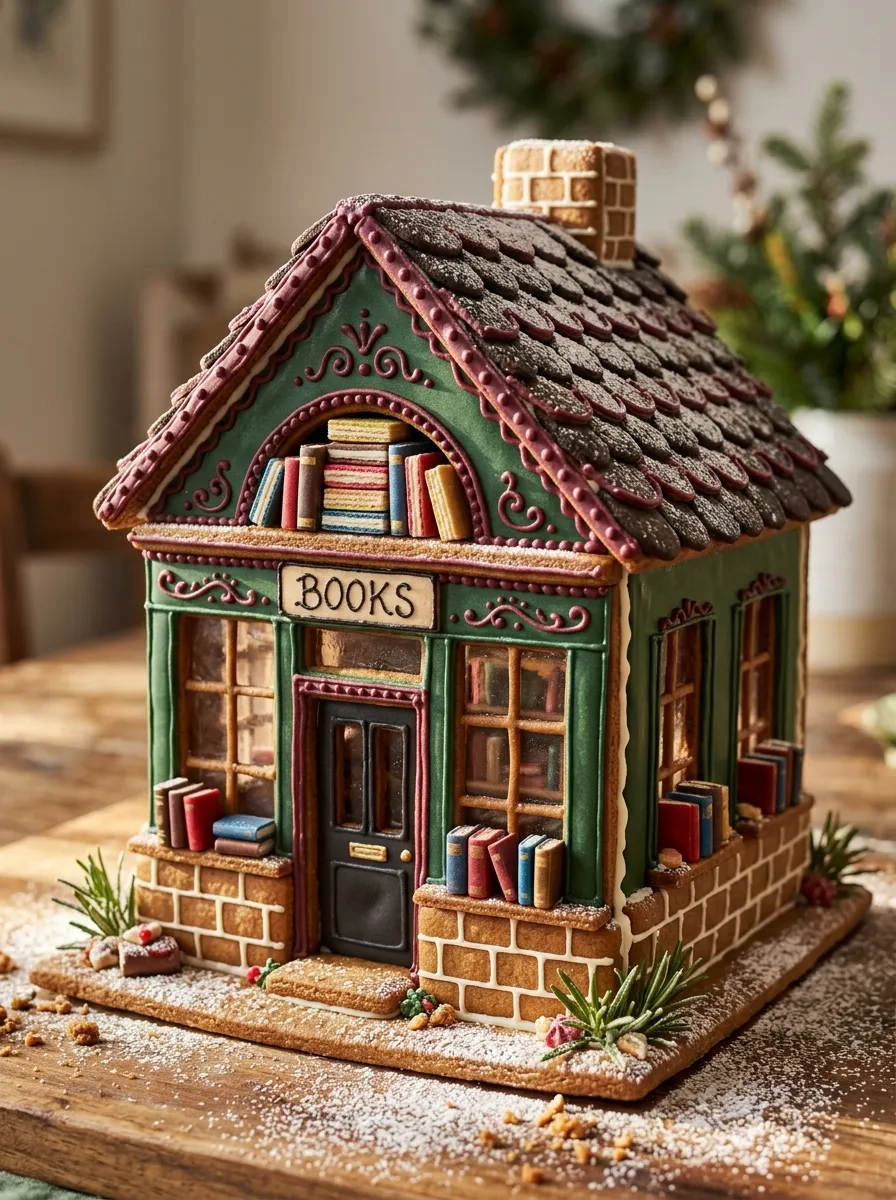
- Cut wafer biscuits into tiny rectangles and stack them above the entrance like miniature books.
- Pipe burgundy icing around the windows to resemble old wooden frames.
- Use deep forest green icing on selected wall sections, leaving some golden gingerbread exposed.
- Add tiny white icing marks to suggest book titles on the wafer spines.
Have you ever walked past an old bookshop and wished you could peek through its little windows? A gingerbread bookshop brings that feeling to a Christmas centerpiece. Deep green walls, burgundy trim, and miniature edible books give the building a collected, old fashioned character that stands apart from candy covered cottages.
The wafer books are the detail that makes the design memorable. Cut them into varied heights, then use thin icing lines to suggest pages and covers. Arrange them in a compact stack above the doorway and inside the windows. Leaving some cookie visible around them keeps the facade from feeling crowded.
For a convincing handmade finish, keep the lettering tiny and simple rather than trying to write full book titles. I would decorate the flat wall panels before assembling the house, since narrow window frames and little icing marks are easier to control on a work surface. The contrast between crisp wafers and textured gingerbread gives the shop plenty of detail.
11. Gingerbread Mushroom Cottage
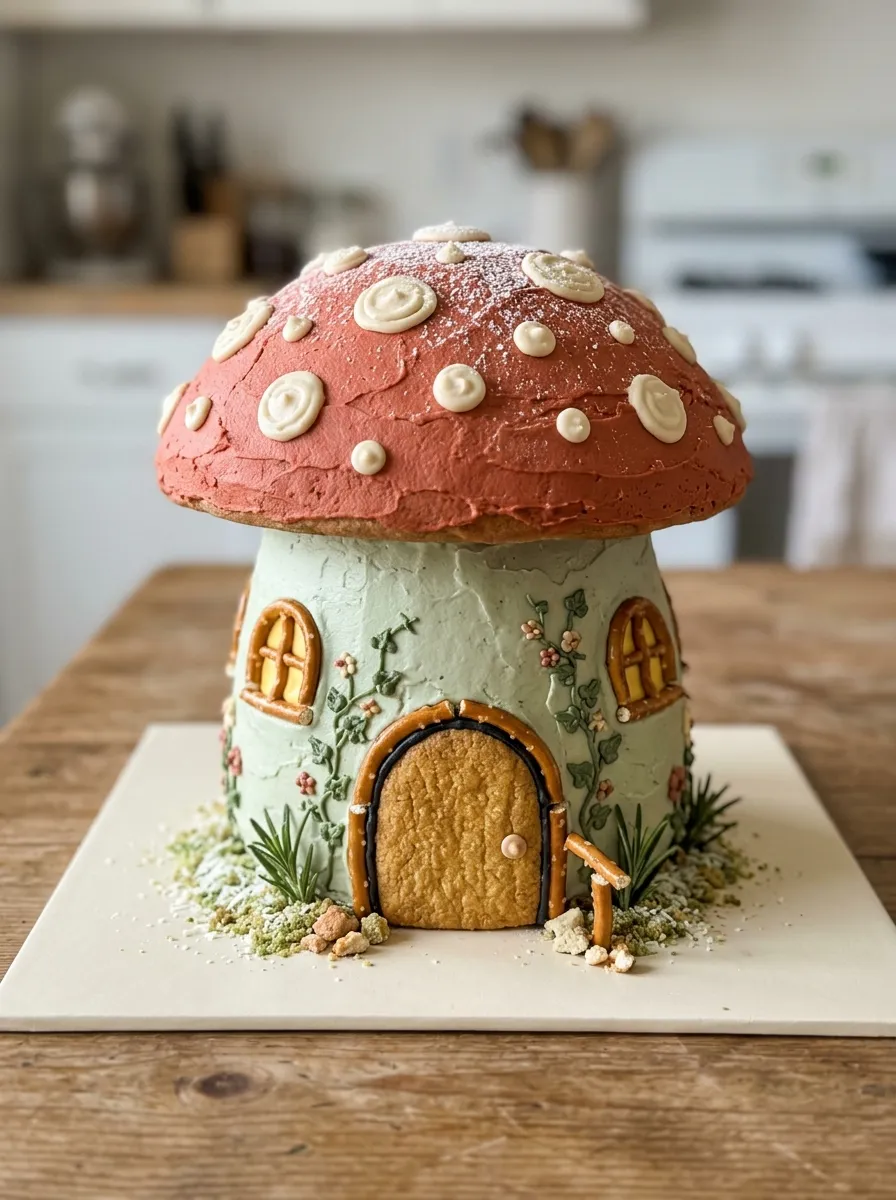
- Shape a broad, rounded terracotta roof that extends beyond the pale sage walls.
- Pipe ivory icing spots in mixed sizes across the roof, with a few raised swirls between them.
- Frame the curved doorway with layered cookie strips and a thin chocolate outline.
- Decorate the lower walls with climbing green vines and tiny pink sugar flowers.
A mushroom shaped roof gives a gingerbread cottage a silhouette that feels playful without relying on piles of candy. The terracotta cap curves over the sage green walls, while ivory icing spots bring contrast across the rounded surface. Tiny flowers and climbing vines make the lower section feel carefully decorated.
The roof needs a strong curved support so the panels keep their shape. Attach the pieces securely and let the royal icing set before adding raised swirls or sugar decorations. Vary the sizes of the ivory spots rather than placing them in exact rows. That small difference helps the roof look handmade.
Keep the doorway visible beneath the wide cap. Layered cookie strips give its curved edge depth, and a narrow chocolate outline separates it from the green wall. Small pink flowers can climb beside the entrance, but leave enough open space to show the sage icing and the shape of the cottage.
12. French Patisserie Gingerbread Shop
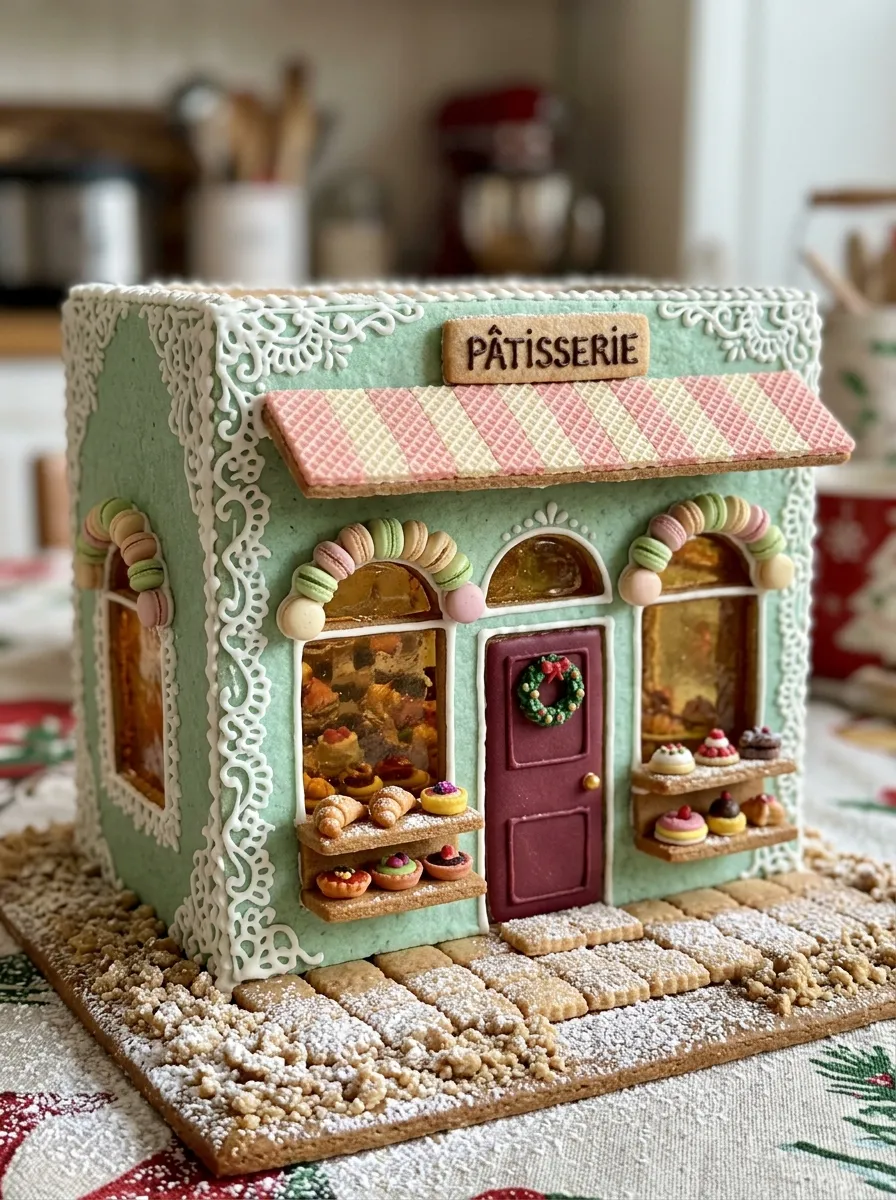
- Build a blush pink and ivory striped awning from narrow wafer strips.
- Arrange miniature macarons above the arched windows in alternating pastel colors.
- Pipe fine white scrollwork around the entrance and upper facade.
- Fill the front window displays with tiny cookie pastries and small icing decorations.
What catches your eye first in a French patisserie is often the striped awning and the little treats displayed behind the glass. Bring those details into a gingerbread shop with mint green walls, blush pink accents, and a burgundy door. The combination feels playful while keeping the storefront recognizable.
The miniature macarons deserve careful placement. Use small round icing discs or tiny sweets, then sandwich them with a thin line of contrasting icing to suggest the filling. Keep the awning stripes evenly spaced, and reserve the finest white scrollwork for the doorway and window edges so the facade stays readable.
For a handmade finish, vary the pastry shapes in the windows instead of repeating identical pieces. Attach the awning only after its supports are secure, and allow the icing to dry before adding the small displays. The shop will feel richly decorated through its tiny details, not through covering every surface with candy.
13. Gingerbread Christmas Peacock Palace
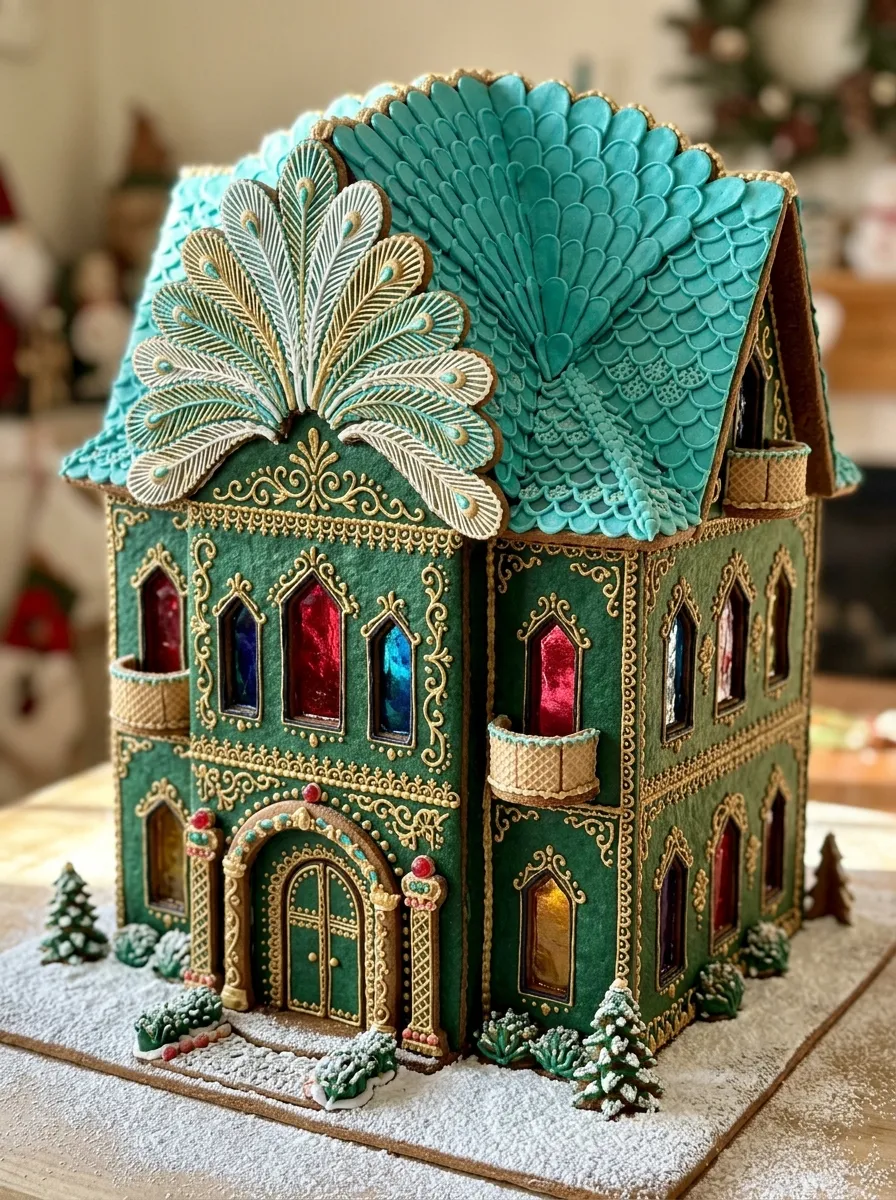
- Arrange turquoise and emerald icing feathers in a fan shape above the main entrance.
- Pipe fine gold scrollwork around the windows and along the roof edges.
- Place jewel toned sugar candies between the feather patterns for small bursts of color.
- Build narrow wafer balconies with pretzel railings beneath the upper windows.
Have you ever wanted a gingerbread house that looks like an ornate palace rather than a traditional Christmas cottage? This design uses a fan shaped roof detail inspired by peacock feathers. Deep emerald walls, turquoise icing, and gold scrollwork give the facade a rich appearance, while tiny candy jewels catch the light.
The feather pattern should spread outward from the center above the entrance. Pipe the largest shapes first, then fill the gaps with smaller curved lines and dots. This layered approach gives the decoration depth without requiring complicated cookie cuts. Keep the windows and balconies simpler so the fan remains the main attraction.
For a balanced finish, repeat the turquoise and gold details in small amounts across the rest of the facade. Wafer balconies add dimension, while pretzel railings provide a textured contrast to smooth icing. Avoid filling every open area with candy. The exposed gingerbread and carefully spaced ornaments help the palace look handcrafted.
14. Gingerbread Christmas Clockwork Workshop
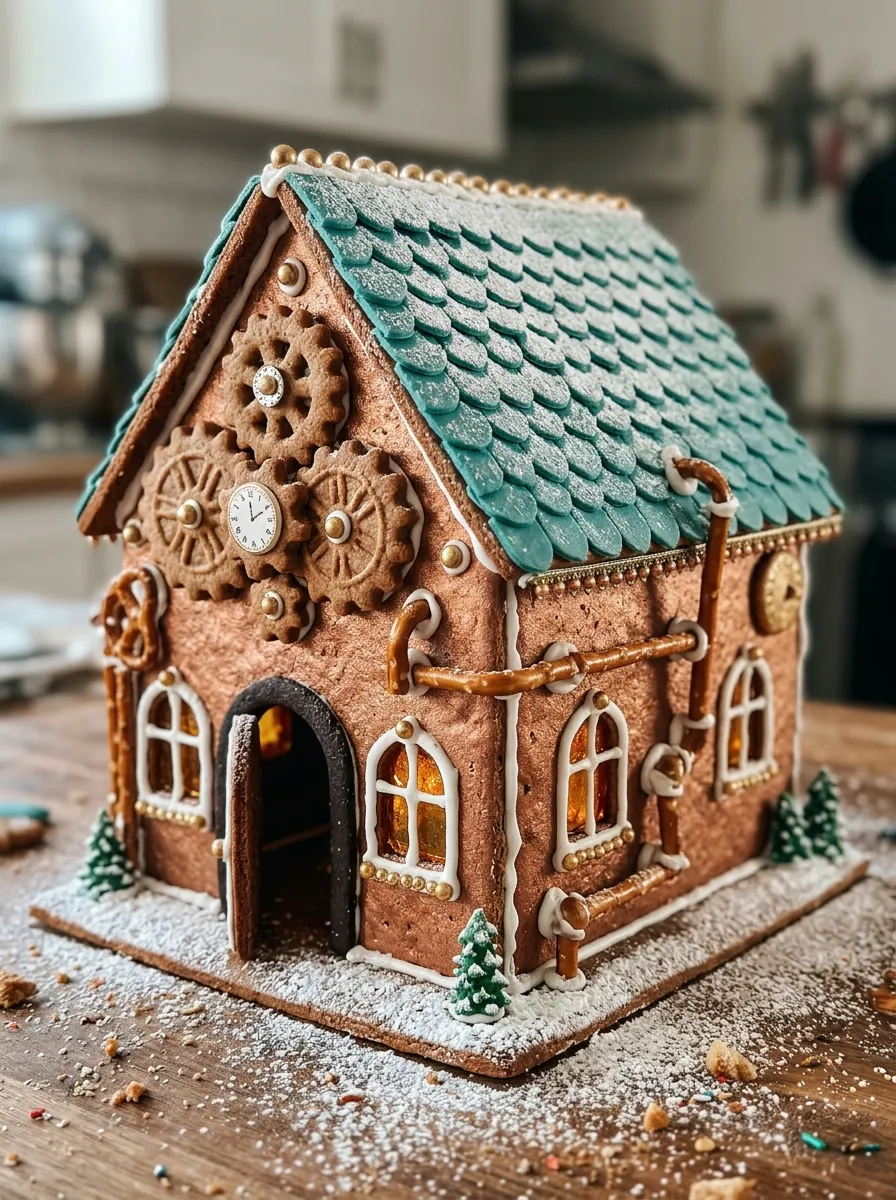
- Cut flat gingerbread circles with simple gear shaped edges and attach them above the entrance.
- Outline the gears with copper colored icing to highlight their shapes.
- Place small round candy clocks between the upper windows.
- Use pretzel sticks as decorative pipes along the side walls.
What if your Christmas gingerbread house looked like a tiny workshop full of old fashioned inventions? Copper brown walls, a teal roof, and oversized cookie gears give this design a mechanical character. Small clock faces and pretzel pipes make the building feel like a miniature place where Christmas toys and clocks are assembled.
The gears should be large enough to stand out against the facade. Cut simple rounded teeth around each circle to reduce the chance of breakage, then pipe copper icing around the edges. Position the gears above the entrance in an uneven arrangement, with the largest one in the center and smaller ones beside it.
Use the candy clocks as supporting details rather than competing focal points. Space them between the upper windows and keep their faces simple enough to read. Pretzel pipes can follow the side walls, with small icing dots suggesting joints. This combination of edible mechanical details gives the workshop a distinctive look without relying on the usual candy roof decorations.
Tips for Making a Gingerbread House That Stays Together
Building a gingerbread house can get tricky when the walls slide apart or the roof starts to sag. Let the gingerbread pieces cool completely before assembling them, and use thick royal icing as edible glue. Hold each section in place until the icing begins to set.
For a stronger structure, assemble the walls first and allow them to dry before adding the roof. If you plan to add heavy candy decorations, keep them small and spread their weight evenly. These simple steps can help your Christmas gingerbread house look neat and stay together longer.
Best Decorations for Gingerbread Houses
The right decorations can turn a simple gingerbread house into a colorful Christmas display. Choose a few details that match your design instead of covering every surface with candy.
- Royal icing: Create snow, roof lines, windows, and decorative borders.
- Candy canes: Make fences, pillars, door frames, and striped details.
- Gumdrops: Add colorful roof accents, garden decorations, or pathways.
- Mini marshmallows: Create snowy landscapes and soft snow covered roofs.
- Pretzel sticks: Build fences, wooden doors, or rustic window frames.
- Shredded coconut: Add a snowy effect around the base of the house.
- Chocolate pieces: Make doors, roof tiles, shutters, and small architectural details.
- Sprinkles: Add festive color to rooftops, shop signs, and decorative borders.
How to Make a Gingerbread House Without Special Tools
You do not need expensive baking tools to create a beautiful gingerbread house. A basic piping bag, a small knife, parchment paper, and a ruler can help you cut and decorate the pieces. If you do not have a piping bag, use a clean food safe plastic bag with a tiny corner cut off.
Start with a simple template and keep the walls and roof pieces as even as possible. Use a small amount of thick royal icing to join the pieces, then add candy decorations once the structure feels stable. This approach makes gingerbread house decorating easier for beginners.
Easy Gingerbread House Ideas for Kids
Decorating gingerbread houses with kids is more enjoyable when the design is simple and the decorations are easy to handle. Choose a small cottage, candy shop, or colorful cookie house that leaves plenty of room for creativity.
- Let kids decorate walls with colorful candies and sprinkles.
- Use pretzel sticks to create simple fences.
- Make snowy rooftops with white icing or shredded coconut.
- Add gumdrops around the house to create a candy garden.
- Prepare the gingerbread pieces in advance so children can focus on decorating.
Helpful tip: An adult should handle hot baking trays, sharp knives, and any difficult assembly steps. Children can safely enjoy choosing colors, placing decorations, and creating their own festive designs with supervision.
How to Store a Gingerbread House
If you want your gingerbread house to last through the holiday season, let the icing dry fully before moving it. Keep the finished creation in a cool, dry place away from direct sunlight, moisture, and heat. A loose cover can help protect it from dust without trapping excess moisture.
If the house contains perishable fillings or other ingredients that require refrigeration, follow the food safety instructions for those ingredients. For a display made with nonperishable decorations, check it regularly for softening, pests, or other signs of spoilage. Do not eat a display that has been left out for an extended period or handled frequently.
FAQs
1. What is the best icing for a gingerbread house?
Royal icing is usually the best choice because it dries firm and helps hold the walls and roof together. Use a thick consistency for construction and a slightly thinner consistency for decorative details.
2. How do you stop a gingerbread house from falling apart?
Make sure the gingerbread pieces are completely cool and use thick royal icing to attach them. Allow the walls to set before adding the roof, and give the completed structure enough time to dry before decorating heavily.
3. What can you use to decorate a Christmas gingerbread house?
Popular decorations include candy canes, gumdrops, chocolate pieces, marshmallows, pretzels, sprinkles, and royal icing. Choose decorations that suit your design and avoid adding too much weight to the roof.
4. Can beginners make elaborate gingerbread houses?
Yes. Start with a stable structure and add decorative details in stages. Simple techniques such as piped icing, candy borders, and small edible accents can make a beginner friendly design look impressive.
5. How far in advance can you make a gingerbread house?
You can prepare the baked pieces in advance and assemble them when you are ready to decorate. The exact storage time depends on the recipe, ingredients, humidity, and storage conditions, so keep the pieces dry and follow appropriate food safety guidance.
Conclusion
A gingerbread house can be much more than a holiday baking project. With unusual shapes, colorful icing, miniature decorations, and thoughtful details, even a simple cookie structure can become a memorable Christmas centerpiece. These Christmas gingerbread house ideas offer inspiration for different tastes, from playful candy shops to intricate architectural designs.
Choose a design that excites you, gather your edible decorations, and enjoy making it your own. Remember that small handmade details often make a creation feel special. Save this article on Pinterest for your next baking day, try your favorite design, and share it with someone who loves Christmas crafts. Let your holiday creativity shine!