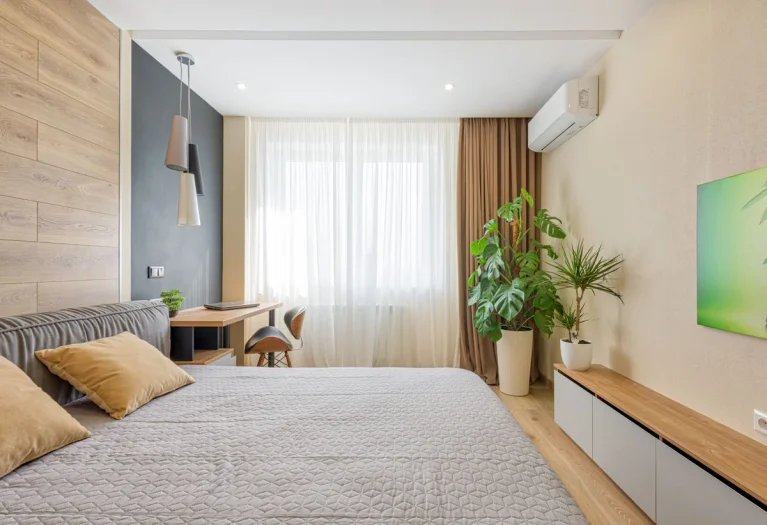
How Much Paint Do I Need? Free Paint Calculator for Small Rooms
Small Room Paint Calculator
Enter your room measurements below and find out exactly how much paint to buy. No waste, no extra trips to the store.
How Much Paint Do I Need for a Small Room?
Nothing is more frustrating than running out of paint halfway through a wall, or ending up with three half-used cans sitting in a closet for years. When you live in a small space, every dollar counts, and paint is one of the cheapest ways to completely change how a room feels. But buying the wrong amount can quietly eat your budget. This free paint calculator takes the guesswork out of it. Measure your room once, enter the numbers, and you will know exactly how much paint to buy before you ever step into the store.
Most people either wildly overbuy because they are afraid of running short, or they underbuy and have to make a second trip, which often means the new can does not match the old one perfectly. Both mistakes cost money. A little math upfront solves the whole problem, and our paint calculator does that math for you in seconds. Whether you are refreshing a tiny bedroom, painting a rental-friendly accent wall, or giving a whole studio apartment a new look, this guide will walk you through measuring, calculating, and choosing paint like someone who has done it a dozen times.
How to Use the Paint Calculator
Using the calculator above is simple and takes less than a minute. Start by choosing your units: feet and gallons if you shop in the US, or meters and liters if you shop anywhere else. Then grab a tape measure and enter your room length, room width, and wall height. Count your doors and windows, because you do not paint over those, and the calculator subtracts their area automatically. Choose whether you plan to apply one coat or two, tick the box if you also want to paint the ceiling, and press the button.
The result shows your total paintable wall area, the total area after multiplying by your number of coats, and exactly how much paint to buy, rounded up to a practical amount. It also gives you a simple shopping list so you can walk into the store with confidence. If you are painting more than one room, just run the calculator once per room and add the totals together.
How to Measure a Room for Paint
Good measurements are the foundation of an accurate paint estimate, so it is worth spending five minutes doing this properly. You only need a tape measure and a piece of paper. Measure the length of each wall at floor level and write it down. Then measure the width of the room the same way. Finally, measure the wall height from the floor to the ceiling. In most apartments and small homes, walls are 8 feet (about 2.4 meters) high, but older buildings and dorm rooms can be different, so measure rather than guess.
If your room is a simple rectangle, you only need three numbers: length, width, and height. The calculator multiplies the perimeter of the room by the height to get the total wall area. If your room has an odd shape, like an L-shaped studio or a nook, break it into rectangles, calculate each section separately, and add them together. For a single accent wall, which is a very popular choice in small spaces, just measure that one wall’s width and height and enter the same number for both length and width. The math still works out.
Do not forget about doors, windows, and closets. A standard interior door is about 21 square feet (roughly 2 square meters), and an average window is about 15 square feet (roughly 1.4 square meters). These add up fast. A small bedroom with one door and two windows has about 50 square feet you will never paint, which is a meaningful chunk of a gallon. The calculator subtracts standard sizes for each door and window you enter, so you do not have to measure them individually unless they are unusually large.
How Much Paint Do I Need? Quick Reference by Room Size
If you want a fast answer without measuring, this table gives typical amounts for common small rooms, assuming two coats on the walls. These are estimates for standard 8-foot ceilings with one door and one window. Your exact room may differ, which is why the calculator above is more accurate, but this is a helpful starting point when you are planning a budget.
| Room | Typical size | Paint needed (2 coats) |
|---|---|---|
| Small bedroom / dorm room | 10 x 10 ft | 2 gallons (7.5 liters) |
| Medium bedroom | 12 x 12 ft | 2–3 gallons (8–11 liters) |
| Studio living area | 15 x 12 ft | 3 gallons (11 liters) |
| Small bathroom | 8 x 6 ft | 1 gallon (4 liters) |
| Home office / nook | 10 x 8 ft | 1–2 gallons (4–7.5 liters) |
| Single accent wall | 12 ft wide | 1 gallon (4 liters) |
| Ceiling (10 x 10 ft room) | 100 sq ft | 1 gallon (4 liters) |
Notice how little paint a small space actually needs. A dorm room refresh can cost less than a takeout dinner when you buy the right amount. That is one of the best things about decorating small spaces: every project is smaller, cheaper, and faster than the same project in a big house.
Understanding Paint Coverage: Gallons and Liters Explained
Paint coverage tells you how much wall area a single can of paint will cover, and it is the key number behind every paint calculation. In the US, one gallon of paint typically covers about 350 to 400 square feet with one coat. In metric countries, one liter of paint typically covers about 10 to 12 square meters. Our calculator uses 350 square feet per gallon and 10 square meters per liter, which are safe, realistic figures for standard wall paint.
Why the range? Coverage depends on the paint quality, the wall surface, and how you apply it. Cheap, thin paint covers less area because you need more of it to get an even color. Rough or textured walls soak up more paint than smooth walls. And if you are painting over a dark color with a light one, the first coat does a lot of the hiding work and the second coat finishes it, which is exactly why two coats are the standard recommendation.
Paint is sold in standard can sizes: quarts, gallons, and five-gallon buckets in the US, or 1-liter, 2.5-liter, 5-liter, and 10-liter cans in metric countries. The calculator rounds your result up to a buyable amount, because paint stores do not sell fractions of a can. Buying slightly more than the exact calculation is smart anyway. A little leftover paint is useful for touch-ups later, and running out mid-wall is one of the most common and most annoying painting mistakes.
Do Not Forget Doors, Windows, and the Ceiling
Beginners almost always forget to subtract doors and windows, which means they buy more paint than they need. In a small room, unpaintable areas make up a bigger percentage of the wall space than in a large room, so this step matters even more for apartments and dorms. Count every door, including closet doors, and every window. The calculator handles the subtraction for you using standard sizes.
The ceiling is a separate decision. Many people skip the ceiling to save money, and that is perfectly fine, especially if the existing ceiling paint is in good shape. But if your ceiling is stained, yellowed, or a different color than you want, painting it makes the whole room feel fresh. Ceiling paint is usually flat white and often cheaper than wall paint. A 10 by 10 foot ceiling needs about one gallon for two coats. If you are on a tight budget, prioritize the walls first. You can always paint the ceiling later.
Trim, baseboards, and door frames are another consideration. They use a different type of paint, usually semi-gloss, and they need far less of it. A single quart is usually enough for all the trim in a small room. Do not include trim in your wall paint calculation. Buy it separately, and choose a semi-gloss or satin finish that can handle scuffs and cleaning.
One Coat or Two? The Honest Answer
Paint cans sometimes claim “one-coat coverage,” and it is tempting to believe them, especially when you are trying to save money. Here is the honest answer: two coats almost always look better. The first coat soaks into the wall and covers the old color. The second coat evens everything out, deepens the color, and gives you a durable finish that lasts. One coat often looks patchy once it dries, especially with darker or richer colors.
There are a few situations where one coat is genuinely enough. If you are repainting with the exact same color and the walls are already in good condition, one fresh coat can be perfect. High-quality paints with strong hiding power also do better in one coat than budget paints. But if you are changing colors, painting over a dark shade, or painting new drywall or patched walls, plan for two coats. The calculator lets you choose either way, so you can compare the cost difference before you decide.
Primer is a related question. You need primer when you are painting over a much darker color, painting new or repaired drywall, or painting a surface that has stains or glossy old paint. In those cases, one coat of primer plus two coats of paint gives the best result. If your walls are already painted a similar light color and are in good shape, you can usually skip primer and just do two coats of paint. Primer roughly follows the same coverage math as paint, so you can use the calculator for primer too.
Choosing Paint Colors for Small Spaces
Paint color has a bigger impact in a small room than anywhere else, because you see every wall at once. The right color can make a tiny bedroom feel calm and open, while the wrong one can make it feel cramped. Light colors are the classic advice for small spaces, and it is classic for a reason: whites, soft creams, pale grays, and light sage greens reflect more light and make walls feel farther away. Our Urban Bloomer palette leans into soft greens and warm neutrals for exactly this reason.
But small does not have to mean boring or all-white. Dark colors can actually work beautifully in small rooms when they are used with intention. A deep green or warm charcoal on all four walls of a small bedroom can feel cozy and cocoon-like rather than cramped, especially with good lighting and light bedding. The trick is commitment: a half-hearted dark accent wall in a tiny room can look random, while fully wrapping the room in a rich color looks deliberate and designer-made.
Accent walls deserve special mention because they are the renter’s best friend. One painted wall gives you all the personality of a full paint job for a fraction of the cost and effort. In a studio apartment, an accent wall behind the bed or sofa can visually separate the sleeping area from the living area without any furniture. And if your lease requires you to repaint before moving out, you only have one wall to fix. For accent walls, the calculator works perfectly: just enter that single wall’s dimensions.
Do not forget the finish, which affects how the color looks. Flat paint hides wall imperfections but is hard to clean. Eggshell and satin are the sweet spot for most small-space walls: they reflect a little light, which brightens the room, and they wipe clean. Reserve semi-gloss for trim, doors, and bathrooms where moisture and scrubbing are factors. In a small room with imperfect walls, which most rentals have, eggshell is usually the smartest choice.
Budget Tips: How to Save Money on Paint
Painting a small space is already one of the cheapest home upgrades, but a few smart moves can make it even cheaper. First, calculate accurately with the tool above. Overbuying is the number one way people waste money on paint. A gallon you never open is money sitting on a shelf. Second, check the “oops paint” or mistint section at your local paint store. These are cans that were mixed in the wrong color for another customer, sold at a deep discount. If you are flexible about the exact shade, you can sometimes find perfect paint for small projects at half price or less.
Third, consider painting just one accent wall instead of the whole room. You get most of the visual impact for about a quarter of the cost. Fourth, buy better paint rather than more cheap paint. This sounds backwards, but quality paint covers better, which means fewer coats, which means fewer cans. A $45 gallon that covers in two coats is cheaper than two $28 gallons that need three coats each. Fifth, borrow or buy secondhand supplies. Brushes, rollers, trays, and drop cloths do not need to be new. Ask friends, check local buy-nothing groups, or look at thrift stores before buying a full kit.
Finally, time your purchase. Paint goes on sale regularly, especially around holidays and spring. If your project is not urgent, wait a few weeks for a sale and stock up. And always keep leftover paint. Label the can with the room and the date, store it somewhere temperature-stable, and you will have free touch-up paint for years. In a rental, that leftover can is also your move-out insurance.
Paint Finishes Explained: Which One for Each Room
Paint finish, also called sheen, describes how shiny the dried paint looks, and it matters more than most beginners realize. Flat or matte finish has no shine at all. It hides wall imperfections beautifully, which makes it popular for ceilings and low-traffic walls, but it scuffs easily and does not clean well. In a small apartment where walls get bumped by furniture, pure flat paint on walls can look tired quickly.
Eggshell has a soft, low glow, like the surface of an eggshell. It is the most popular finish for living rooms and bedrooms because it strikes the best balance: it hides minor flaws, reflects a little light, and can be wiped clean. Satin is a step shinier than eggshell, with a smooth, velvety look. It is tougher and more washable, which makes it great for hallways, kids’ rooms, and bathrooms. The extra sheen also bounces light around, which is a genuine advantage in a small, dark room.
Semi-gloss is noticeably shiny and very durable. It is the standard choice for trim, doors, cabinets, and window frames because it stands up to touching and cleaning. It also highlights imperfections, so it is a poor choice for bumpy rental walls. High-gloss is the shiniest of all, used mostly for furniture and statement front doors. For most small-space wall projects, the decision is simple: eggshell for bedrooms and living areas, satin for bathrooms and kitchens, semi-gloss for trim. When in doubt, eggshell is the safest all-around pick.
Common Paint Calculator Mistakes to Avoid
Even with a calculator, a few classic mistakes can throw off your estimate. The first is measuring in a mix of units, like entering the length in feet and the height in inches. Pick one unit and stick with it. The second is forgetting the second coat. If the calculator says you need two gallons for one coat, you need roughly four gallons’ worth of coverage for two coats, and the tool above already multiplies for you as long as you select two coats.
The third mistake is ignoring the condition of the walls. Fresh drywall, heavily patched walls, and very porous surfaces drink paint. If your walls are in rough shape, add about ten percent to your estimate. The fourth is counting on the old color not mattering. Going from dark navy to white without primer can take three or even four coats. Either budget for primer or budget for extra paint. The fifth is forgetting that ceilings, trim, and doors need their own paint. Wall paint math does not cover them, and they usually need different finishes anyway.
The last mistake is the most human one: not buying a little extra. The calculator rounds up, which gives you a buffer, but if you are between can sizes, round up again. Touch-up paint is not wasted paint. Walls get scuffed, especially in small spaces where furniture sits close to everything. Having the exact color on hand for quick fixes will keep your paint job looking fresh for years.
Frequently Asked Questions
How much paint do I need for a 10×10 room?
A 10 by 10 foot room with 8-foot ceilings needs about 2 gallons (7.5 liters) of paint for two coats on the walls, after subtracting a door and a window. Use the calculator above with your exact measurements for a precise number.
How much paint do I need for one accent wall?
A single 12-foot-wide wall with 8-foot ceilings needs about 1 gallon (4 liters) for two coats. Accent walls are the most budget-friendly paint project and ideal for renters.
Does the paint calculator account for doors and windows?
Yes. Enter the number of doors and windows and the calculator subtracts a standard door (21 sq ft) and window (15 sq ft) area for each one, so you only buy paint for surfaces you will actually paint.
How many square feet does a gallon of paint cover?
One gallon typically covers 350 to 400 square feet per coat. One liter covers about 10 to 12 square meters. Our calculator uses conservative figures so you do not run short.
Do I need primer?
You need primer when painting over a much darker color, painting new drywall, or covering stains or glossy paint. If your walls are a similar light color and in good shape, two coats of paint are usually enough without primer.
Is one coat of paint enough?
One coat is enough when repainting the same color on walls in good condition. For color changes, dark-to-light jobs, or new drywall, two coats give a much better and longer-lasting result.
How much paint do I need for the ceiling?
A 10 by 10 foot ceiling needs about 1 gallon (4 liters) for two coats. Ceiling paint is usually flat white and often cheaper than wall paint. Tick the ceiling box in the calculator to include it.
What paint finish is best for small bedrooms?
Eggshell is the best all-around finish for small bedrooms. It hides minor wall flaws, reflects a little light to brighten the room, and wipes clean. Use satin in bathrooms and semi-gloss on trim.
What colors make a small room look bigger?
Light colors like soft white, pale gray, cream, and light sage reflect more light and make walls feel farther apart. Bold dark colors can also work in small rooms when used on all walls deliberately for a cozy, cocoon-like feel.
How can I save money painting a rental?
Paint one accent wall instead of the whole room, check the discounted mistint section at paint stores, borrow supplies, buy quality paint that covers in fewer coats, and keep leftovers for touch-ups and move-out repaints.
Start Your Small Room Paint Project Today
Painting is the highest-impact, lowest-cost upgrade in home decorating, and in a small space the whole project can be done in a single weekend for less than the cost of one piece of furniture. The hardest part was never the painting itself. It was knowing how much paint to buy and which color would actually work. Now you have a paint calculator that answers the first question and a guide that answers the second.
Measure your room, run the numbers, pick a color you love, and go. Your small space is about to feel brand new. And when you are ready for the next project, Urban Bloomer has budget-friendly ideas for every corner of your apartment, dorm, or tiny home, all designed for real budgets and real small spaces.